

Zone 9 Plants Full Sun
Written with AI assistance, edited and checked against horticultural sources.
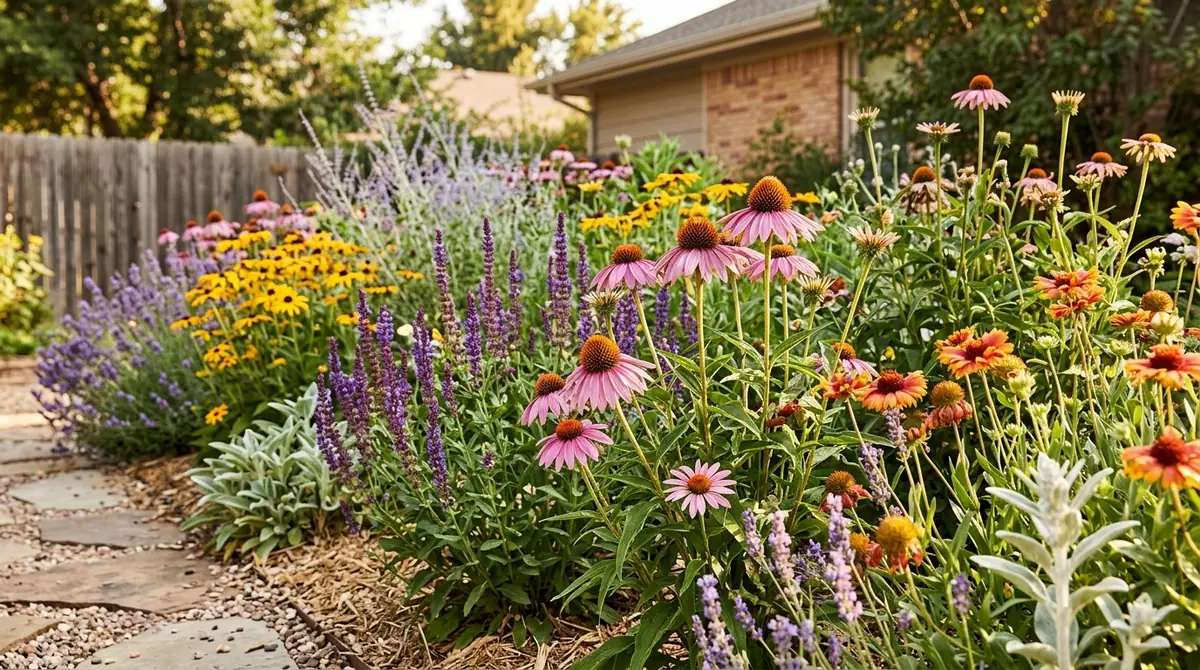
I still vividly remember standing in trial gardens in mid-July, wiping sweat from my brow as the ambient air temperature hit a blistering 102°F (39°C), watching half my landscape design gardeners' prized shade perennials melt into sad, translucent mush. That was the summer I learned a hard botanical truth: gardening in Zone 9 full sun is an entirely different discipline. It requires an intimate understanding of how solar radiation, soil thermodynamics, and plant physiology interact. Horticultural practice has spent decades testing, breeding, and placing sun-worshipping specimens across challenging southern and coastal climates. If you want a landscape that thrives under six to eight hours of relentless ultraviolet rays without turning into a high-maintenance irrigation sinkhole, you need a precise strategy. Let us dive into the science of mastering Zone 9 full sun plants.
1. Botanical Overview & Natural Habitat

To survive and thrive in this environment under full sun, plants have evolved specific xerophytic or heat-tolerant adaptations. Many successful Zone 9 full sun plants originate from Mediterranean, South African, or desert scrub habitats. Botanically, these specimens exhibit distinct evolutionary traits:
- Sclerophyllous Leaves: Thick, leathery, or waxy foliage that minimizes cuticular transpiration and reflects intense solar radiation.
- Indumentum: A dense covering of fine hairs, trichomes, or silvery scales that trap a boundary layer of humid air, shield the epidermis from UV rays, and lower leaf surface temperatures.
- Crassulacean Acid Metabolism (CAM): A specialized carbon fixation pathway utilized by succulents and certain arid-adapted perennials, allowing them to open their stomata at night to capture carbon dioxide while keeping them sealed tightly shut during scorching daylight hours to prevent water loss.
Understanding these evolutionary designs helps us group plants correctly in landscape beds. Whether you are transitioning your garden beds after learning When to Top Pepper Plants or mapping out warm-season companion arrangements inspired by Zucchini Companion Plants Good Bad, selecting species native to arid or subtropical zones ensures your landscape remains vibrant. For a deeper academic dive into regional climatic impacts on horticulture, consult the University of Florida IFAS Extension.
2. Essential Environmental & Care Requirements
Managing full sun in Zone 9 is not just about giving plants light; it is about mitigating heat stress. Direct sunlight combined with radiant heat bouncing off concrete, stone, or sandy soils can push leaf temperatures 10°F to 15°F (5.5°C to 8.3°C) higher than the ambient air.
| Parameter | Optimal Condition | Common Mistake | Why It Matters |
|---|---|---|---|
| Light Exposure | 6–8+ hours of direct morning and midday sun | Placing shade-loving understory plants in southern exposures | Excessive UV radiation destroys chlorophyll and burns cellular walls in non-adapted species. |
| Soil Drainage | Highly porous loam or amended sandy soil (percolation rate 1–2 inches per hour) | Heavy, compacted clay that bakes into a brick | Waterlogged roots under high heat quickly develop root rot pathogens like Phytophthora. |
| Irrigation Frequency | Deep, infrequent soakings delivering 1 inch (2.5 cm) of water weekly | Shallow, daily sprinklers that wet only the top 0.5 inches (1.3 cm) | Shallow watering trains roots to stay near the surface, making them vulnerable to rapid desiccation. |
| Mulch Application | 3 inches (7.6 cm) of organic arborist woodchips, keeping a 2-inch (5 cm) collar clear of stems | Piling mulch directly against the trunk (volcano mulching) | Proper mulch insulates root zones from extreme soil temperatures and retains vital moisture. |
💡 Pro-Tip: In Zone 9, afternoon sun is exponentially more damaging than morning sun. If you are designing a mixed border, position plants with delicate or variegated foliage where they receive gentle eastern morning rays and structural, silver-leaved shrubs where they can handle the fierce western glare from 2:00 PM to 6:00 PM.
3. Step-by-Step Cultivation, Feeding & Propagation
Establishing new full-sun landscape beds in Zone 9 requires precise timing. The ideal planting window spans from October through February, allowing root systems to establish deep architectural networks before the brutal summer heat sets in.
Follow this step-by-step cultivation protocol to ensure long-term plant establishment:
- Site Preparation and Soil Testing: Clear all perennial weeds within a 3-foot (0.9 m) radius of the planting site. Test your soil pH; most sun-loving Zone 9 specimens prefer a slightly acidic to neutral range between 6.0 and 7.0. Work in 2 inches (5 cm) of well-decomposed compost to improve microbial life and moisture retention without causing nitrogen spikes.
- Excavating the Planting Hole: Dig a shallow, broad planting hole that is 2 to 3 times wider than the nursery container, but exactly the same depth as the root ball. The root flare must sit 0.5 inches (1.3 cm) above the surrounding grade to prevent collar rot.
- Root Conditioning: Gently tease out circling or root-bound roots on container-grown specimens using your fingers or a hori-hori knife. For taprooted Mediterranean herbs like lavender or rosemary, avoid disturbing the root ball excessively to prevent transplant shock.
- Initial Watering-In: Place the plant in the center of the excavation, backfill with native unamended soil, and tamp down gently to remove large air pockets. Deliver a slow, deep soak of 2 gallons (7.6 liters) of water per square foot of root zone to settle the soil particles around the fine feeder roots.
- Mulching and Maintenance Feeding: Apply a 3-inch (7.6 cm) layer of organic mulch across the entire bed. Withhold synthetic fertilizers for the first 45 to 60 days. Once actively growing, apply a low-nitrogen, slow-release organic granular fertilizer formulated for Mediterranean or desert plants, incorporating it lightly into the top layer of soil at a rate specified by the manufacturer.
For those expanding their edible and ornamental horizons, understanding regional frost dates and microclimates is vital. While vegetable gardeners up north manage crops like When Plant Potatoes Zone 5 or autumn brassicas such as When to Plant Brussel Sprouts in Zone 7, Zone 9 growers have the unique advantage of growing perennial landscape elements year-round. For authoritative guidelines on regional plant selection, check out the Royal Horticultural Society (RHS).
4. Common Problems, Pests & Troubleshooting
Even the toughest full-sun plants in Zone 9 will occasionally signal distress under extreme environmental pressure. Diagnosing these symptoms early prevents widespread landscape decline.
- Leaf Scorch and Margins Turning Brown: This physiological disorder occurs when water loss via transpiration outpaces the roots' ability to absorb moisture from the soil. Solution: Check soil moisture 4 inches (10 cm) deep. If dry, implement deep irrigation soaking cycles rather than frequent shallow watering. Consider erecting temporary 30% shade cloth during heatwaves exceeding 100°F (37.8°C).
- Spider Mites (Tetranychidae): These microscopic pests thrive in hot, dusty, dry conditions typical of Zone 9 summers. They puncture plant cells, leaving stippled, yellowed leaves covered in fine webbing. Solution: Blast affected foliage with a strong jet of cold water early in the morning to disrupt their breeding cycle, or apply horticultural insecticidal soap directly to the undersides of leaves.
- Root Rot (Phytophthora and Pythium): Paradoxically, over-watering plants in heavy clay soils during hot weather suffocates roots, creating anaerobic conditions where fungal pathogens proliferate. Solution: Improve immediate site drainage by incorporating coarse horticultural sand or pumice, and let the top 2 inches (5 cm) of soil dry completely between irrigation events.
⚠️ Important Caution: Never fertilize heat-stressed plants in the peak of summer. Applying high-nitrogen fertilizers when temperatures exceed 90°F (32.2°C) forces rapid, tender growth that burns instantly under solar radiation and draws predatory sap-sucking insects in droves.

5. Frequently Asked Questions
What are the best drought-tolerant shrubs for Zone 9 full sun?
The top performers include Texas Sage (Leucophyllum frutescens), Crape Myrtles (Lagerstroemia), Bottlebrush (Callistemon), and oleander (Nerium oleander). These species feature deep taproots or waxy leaves engineered to withstand months of intense heat and minimal rainfall once established.
How often should I water newly planted perennials in Zone 9 full sun?
During the first 14 days after planting, new specimens require daily watering. From day 15 to day 60, taper down to watering deeply 2 to 3 times per week. Once established past the 60-day mark, most drought-tolerant Zone 9 full-sun plants only require deep irrigation every 7 to 10 days, depending on rainfall.
Can I grow vegetables in Zone 9 full sun during the summer?
Traditional cool-season crops struggle, but heat-tolerant fruiting vegetables like peppers, okra, eggplants, and sweet potatoes thrive. If you are timing cool-season crops for the cooler autumn and winter shoulder months, reference seasonal planting guides such as When to Plant Carrots in Zone 8a or When to Plant Bok Choy Zone 7 to adapt those timelines slightly earlier or later for your specific Zone 9 microclimate.
Why are the leaves on my full-sun plants turning pale yellow?
Chlorosis in Zone 9 full-sun plants is frequently caused by iron or magnesium lock-up. When alkaline soils get excessively hot and dry, roots cannot uptake essential trace minerals. Test your soil pH; if it is above 7.2, apply a chelated iron drench or elemental sulfur to bring the pH back into the optimal 6.0–6.5 range.
Related Guides
- Bromeliads Full Sun
- 13 Wonderful Herbs That Like Full Sun for Beginners
- What Hardiness Zone is Sacramento
- What Planting Zone is Sacramento Ca
- What Zone is Columbus Ohio
- What Zone is Sc in for Planting
- What Zone is Sc for Planting
- What Zone is Richmond Va for Planting
📋 Table of Contents ▼ Click to expand
Tags:
Keep reading
🌿 Related Plants You Might Like



PlantSavvyWorld
Editorial team
PlantSavvyWorld is an independent botanical education project. Articles are drafted with AI assistance, then edited and checked against university extension services, botanical garden collections and other published horticultural sources.