

Bromeliads Full Sun
Written with AI assistance, edited and checked against horticultural sources.
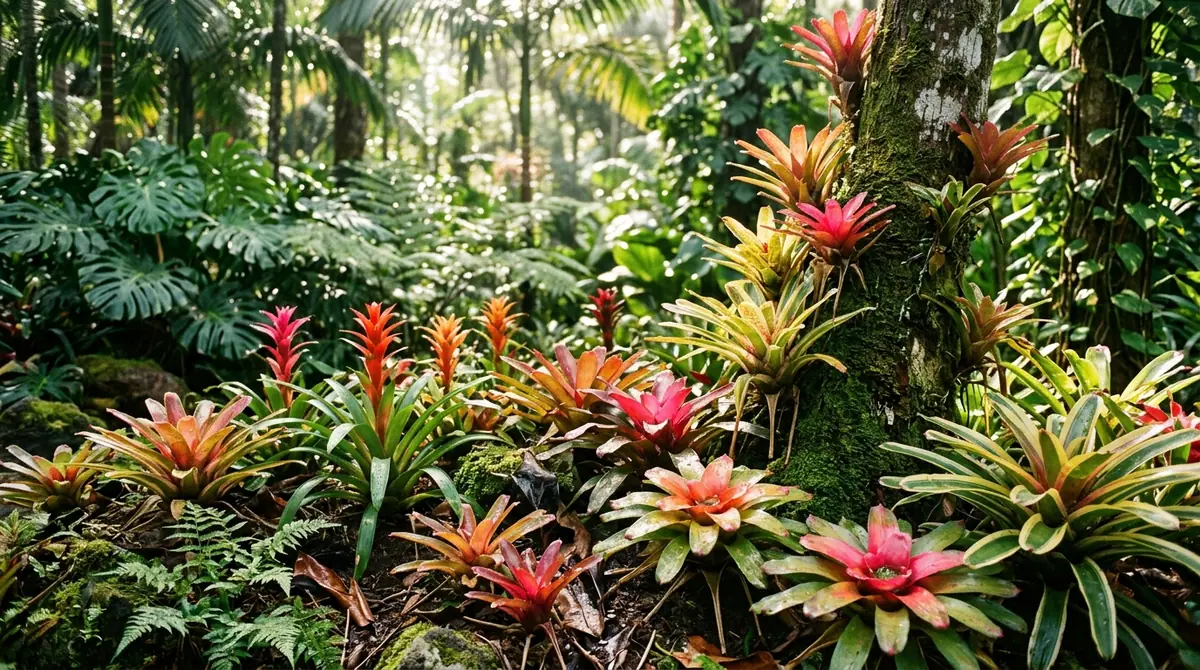
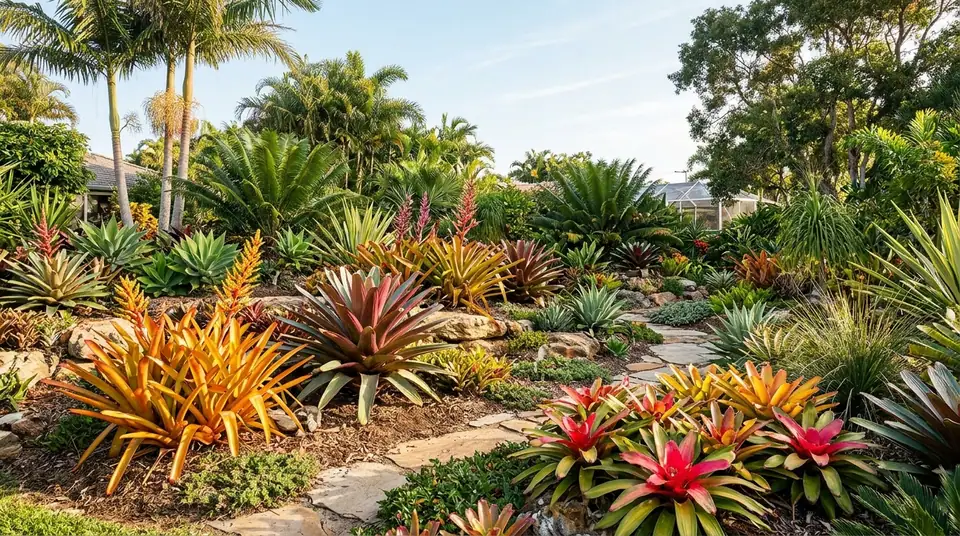
When the mercury hits 96°F (35.6°C) over white gravel beds, most tropical plants would fry to a crisp within an hour, but sun-adapted Neoregelia and Aechmea bromeliads only intensify, flushing into brilliant shades of magenta, tangerine, and electric violet. Although garden myth long dictated that all bromeliads belong deep in the dappled shade of a canopy, matching the right species to the right exposure unlocks some of the most saturated, neon-bright foliage colors available in the plant kingdom.
1. Botanical Overview & Natural Habitat
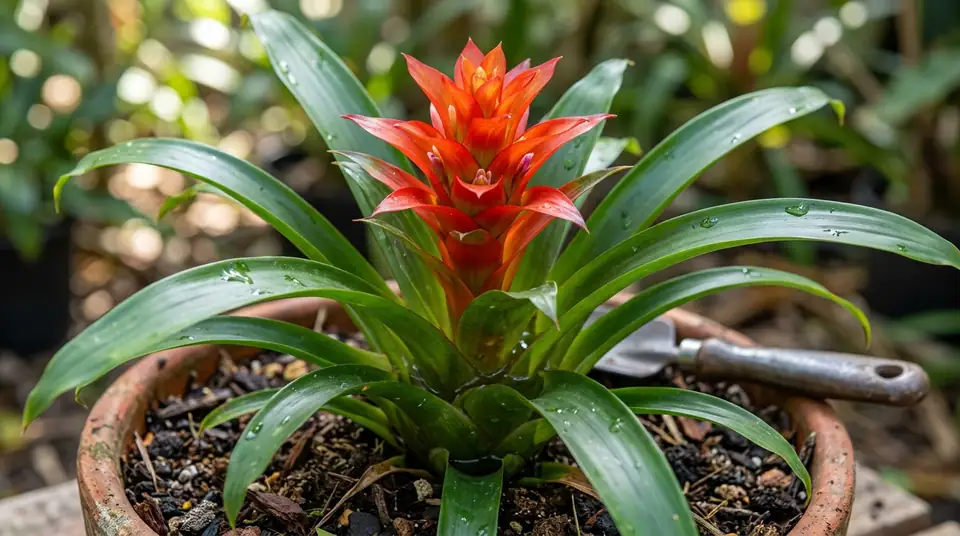
In nature, sun-loving bromeliads do not grow on dark rainforest floors. Instead, they occupy harsh ecological niches: high-altitude cliffs, coastal dunes, arid scrublands, and the topmost, exposed branches of the rainforest canopy. These are epiphytes (growing on other plants without taking nourishment from them), lithophytes (clinging to bare rock), or terrestrial plants exposed to relentless UV radiation, drying winds, and erratic rainfall.
To survive these punishing conditions, sun-adapted bromeliads evolved specialized physiological adaptations:
- Trichomes: Specialized peltate scales cover the leaves, acting like microscopic umbrellas and reflective shields. These scales bounce away harsh solar radiation and trap atmospheric moisture and nutrients. In full-sun varieties, a dense, silvery mat of trichomes is often clearly visible.
- Crassulacean Acid Metabolism (CAM) Photosynthesis: Unlike standard plants that open their stomata during the heat of the day to take in carbon dioxide, sun-tolerant bromeliads keep their stomata tightly sealed during daylight hours to prevent water loss. They open them only at night to fix carbon dioxide, storing it as malic acid until the sun rises.
- The Phytotelmata (Central Urn): The overlapping leaf bases form a central cup or tank that collects rainwater, organic debris, and insect detritus. In a high-sun environment, this aquatic micro-ecosystem acts as an internal thermal buffer and nutrient reservoir, keeping the core of the plant hydrated even when ambient relative humidity drops below 40%.
Understanding this natural architecture is vital for landscape integration. When you place a sun-tolerant bromeliad into a blazing yard, you are replicating a rocky outcrop in coastal Brazil or a scorching tree branch in Central America.
2. Essential Environmental & Care Requirements
Transitioning or planting bromeliads in full sun requires precision. "Full sun" means receiving a minimum of 6 hours of direct, unfiltered sunlight daily. However, afternoon sun in USDA Zones 9 through 11 can be brutally intense, often exceeding 100°F (37.8°C).
| Parameter | Optimal Condition | Common Mistake | Why It Matters |
|---|---|---|---|
| Light Exposure | 6–8 hours of direct morning or filtered all-day sun | Placing deep-shade forest species directly into blazing afternoon rays | Causes rapid cellular breakdown, resulting in severe leaf scorch, white bleaching, and permanent tissue death |
| Watering Volume | Keep the central cup constantly flushed; water soil deeply 1–2 times weekly | Allowing the central tank to run dry or filling it with stagnant, alkaline tap water | Dries out the core, invites rot if the root zone is waterlogged, and causes mineral salt crusting |
| Soil & Drainage | Extremely porous, chunky mix (coarse bark, perlite, charcoal, peat) | Heavy, moisture-retentive garden soil or standard potting compost | Suffocates the anchorage roots, encouraging Phytophthora and other opportunistic fungal rots |
| Temperature Range | 60°F to 90°F (15.5°C to 32.2°C) | Exposing tropical varieties to sustained temperatures below 35°F (1.6°C) | Freezes water stored in the central tank, rupturing plant cell walls and killing the entire rosette |
When designing a full-sun tropical layout, look beyond traditional flower beds. If your microclimate runs exceptionally hot, consider interplanting your sun bromeliads alongside resilient edible companions, drawing inspiration from our guide on 13 Wonderful Herbs That Like Full Sun for Beginners to create drought-tolerant, high-impact landscape vignettes.
💡 Pro-Tip: If you are unsure whether your newly acquired bromeliad can handle full sun, look at the foliage color and leaf thickness. Rigid, stiff leaves with heavy silvery scales (trichomes) indicate sun-adaptation. Soft, lime-green, paper-thin leaves indicate a shade dweller that will scorch within minutes.
3. Step-by-Step Cultivation, Feeding & Propagation
Growing bromeliads successfully in a high-exposure landscape requires a deliberate approach to planting and maintenance. Because they are primarily epiphytic, they do not behave like standard bedding plants.
Step-by-Step Cultivation Protocol
- Select the Right Cultivar: Choose proven sun-tolerant genera and species, such as Aechmea blanchetiana, Alcantarea imperialis, Neoregelia 'Fireball', or sun-hardy Billbergia varieties. Avoid deep-green shade species like Guzmania or Vriesea.
- Prepare the Planting Medium: Mix 40% orchid bark (ranging from 0.25 to 0.5 inches / 0.6 to 1.3 cm in size), 30% coarse perlite, 20% professional peat-based potting soil, and 10% horticultural charcoal. This guarantees rapid drainage.
- Dig the Planting Hole: Dig a shallow hole roughly 3 to 4 inches (7.6 to 10.2 cm) deep. Bromeliads do not possess deep root systems; their roots serve primarily as anchors rather than major uptake organs.
- Position and Anchor: Set the base of the plant firmly into the soil mix. Do not bury the plant too deeply—burying the center of the rosette will cause immediate crown rot. If planting on a landscape log or boulder as an epiphyte, secure the base using natural jute twine or coated wire until the roots take hold (usually within 60 to 90 days).
- Flush the Central Urn: Fill the central cup with clean, low-mineral water immediately after planting.
- Apply a Protective Mulch: Top-dress the surrounding soil with a 1-to-2-inch (2.5 to 5.0 cm) layer of pine bark or coarse gravel to retain surface moisture and reflect ground heat away from the lower leaves.
Feeding and Nutrient Management
Sun-grown bromeliads process nutrients quickly due to high photosynthetic rates, but they are also sensitive to fertilizer burn.
- Use a balanced, water-soluble liquid fertilizer diluted to one-quarter strength.
- Apply the fertilizer directly into the central urn and onto the foliage once every 4 to 6 weeks during the active growing season (spring and summer).
- Never use granular, slow-release chemical fertilizers in the central cup, as high local salt concentrations will rapidly burn the delicate foliar tissue.
Propagation Protocol
Bromeliads are monocarpic, meaning the mother plant blooms once, produces offsets (known as "pups"), and then slowly declines over a 12-to-24-month period.
- Allow the mother plant to produce pups from the base or between the lower leaves.
- Wait until the pups reach at least one-third to one-half the size of the mature mother plant. Cutting them away too early drastically reduces their chance of independent survival.
- Using a sterilized, razor-sharp pruning knife, slice the pup away from the mother plant as close to the main stem as possible, ensuring you retain any embryonic root nubs.
- Dust the cut surfaces with powdered sulfur or cinnamon to act as a natural fungicide.
- Allow the cut base to callus over in a shaded, dry area for 3 to 5 days.
- Plant the pup directly into your custom, well-draining potting mix, and treat it with moderate moisture until established.
⚠️ Important Caution: Never let the water in the central cup become stagnant and foul during freezing winter conditions or extended droughts. Flush the urn out completely with a fresh stream of hose water every 7 to 10 days to prevent mosquito breeding and bacterial soft rot outbreaks.
4. Common Problems, Pests & Troubleshooting
Even with careful planning, growing tropical plants in high-intensity sun environments presents unique diagnostic challenges.
Leaf Scorch vs. Normal Stress Coloration
One of the most common misdiagnoses is confusing healthy sun stress with actual sun damage.
- Sun Stress (Desirable): When exposed to intense light, many Neoregelia species synthesize anthocyanin pigments as a natural sunscreen. The leaves develop vibrant, glowing reds, purples, and oranges while remaining structurally firm and turgid.
- Leaf Scorch (Damage): True scorch manifests as dry, papery, bleached-white, or dark brown patches where cell walls have literally boiled and ruptured. If you notice bleaching, immediately provide 30% to 50% shade cloth coverage during peak afternoon hours (12:00 PM to 4:00 PM).
Pest Management in the Sun
While sun-grown plants are generally tougher than their shaded counterparts, they can still attract specific pests:
- Scale Insects and Mealybugs: These sap-sucking insects hide deep within the tight leaf axils and under the protective leaf armor. Control them by spraying a horticultural oil or insecticidal soap solution directly into the leaf folds during the cooler morning hours. For authoritative guidance on integrated pest management protocols, consult the University of Florida IFAS Extension.
- Weevils (Metamasius callizona): The evil black and yellow bromeliad root weevil is a devastating regional pest in southern zones. The larvae burrow into the stem and core, causing the center leaves to pull away cleanly with a rotting, foul-smelling base. Treat proactively with biological controls like entomopathogenic nematodes applied to the core and soil base.
Rot and Environmental Stress
5. Frequently Asked Questions
Can all bromeliads survive in full sun?
No. Only specific genera and cultivars—such as Aechmea, Alcantarea, and sun-adapted Neoregelia—possess the heavy trichomes and tough cellular structures needed to withstand full sun. Soft, green, shade-dwelling species like Guzmania and Vriesea will scorch, dehydrate, and die rapidly if subjected to all-day direct sunlight.
How often should I water bromeliads planted in a sunny yard?
During hot summer months with minimal rainfall, check the central cups every 3 to 5 days, topping them off with fresh water. The surrounding soil should be watered deeply once or twice a week, allowing it to dry out substantially between irrigation cycles to prevent root rot.
Why is my bromeliad losing its bright red color in the sun?
A loss of vibrant coloration usually points to insufficient light intensity or an excess of nitrogen fertilizer. When plants receive too much nitrogen, they prioritize green chlorophyll production over protective anthocyanin pigments. Switch to a low-nitrogen, balanced fertilizer and ensure the plant is receiving its required 6+ hours of direct sun.
Do bromeliads die after they flower?
Yes, the mother plant is monocarpic and will slowly decline and die after blooming. However, this process takes many months, during which time the plant will produce multiple basal offsets ("pups"). Once the mother plant fades, these pups take over the colony, ensuring continuous perennial growth in your landscape.
Related Guides
- Zone 9 Plants Full Sun
- 13 Wonderful Herbs That Like Full Sun for Beginners
- How to Grow Iris from Seeds
📋 Table of Contents ▼ Click to expand
Tags:
Keep reading
🌿 Related Plants You Might Like






PlantSavvyWorld
Editorial team
PlantSavvyWorld is an independent botanical education project. Articles are drafted with AI assistance, then edited and checked against university extension services, botanical garden collections and other published horticultural sources.