

How to Grow Iris from Seeds
Written with AI assistance, edited and checked against horticultural sources.
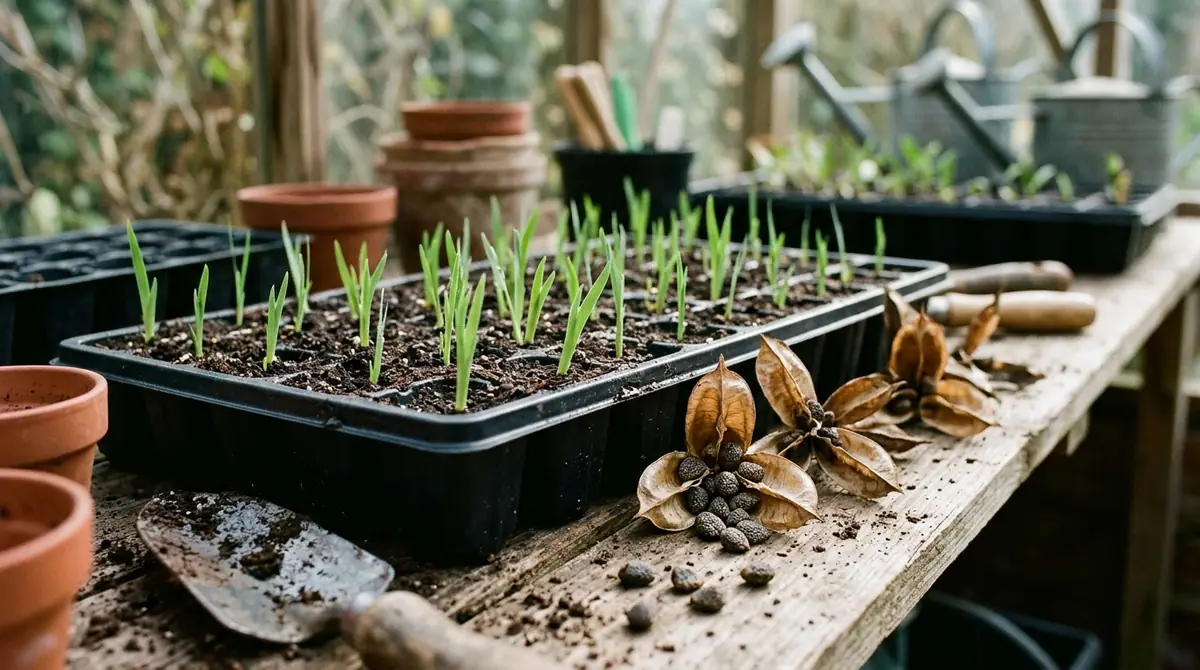
1. Botanical Overview & Natural Habitat

In their natural habitats, irises span an immense ecological range. Species like Iris pseudacorus thrive in saturated wetland margins and shallow standing water, whereas desert-adapted species like Iris persica endure baking summer aridity and rocky, calcareous soils. The aerial architecture of an iris flower is engineered for specialized insect pollination. It features three reflexed outer petals (sepals) known as "falls," often adorned with a fuzzy "beard" in bearded varieties or a colorful nectar guide in beardless species, which direct bumblebees and other hymenoptera toward the reproductive structures beneath the arched styles.
Once pollinated, the ovary swells into a three-chambered (tricarpellate) capsule that dries on the stalk by late summer. Inside, the seeds develop a hard, impermeable seed coat designed to withstand winter weather. In the wild, these seeds drop to the ground or are dispersed by wind and water, lying dormant beneath freezing snowpack or autumn rains until specific chemical and thermal triggers break their embryonic dormancy. This natural stratification process mimics what we must replicate in controlled cultivation to achieve reliable germination.
2. Essential Environmental & Care Requirements
Growing irises from seed requires strict adherence to their environmental parameters. If you have ever experimented with delicate crops—perhaps timing When to Start Stock Seeds Indoors or calculating precise dates for When to Start Tomato Seeds Indoors Zone 6—you know that moisture and temperature control make or break seedling survival. Irises are no exception.
| Parameter | Optimal Condition | Common Mistake | Why It Matters |
|---|---|---|---|
| Stratification Temp | 34°F to 40°F (1°C to 4°C) | Storing seeds in a warm room | Cold stratification breaks biochemical inhibitors in the embryo. |
| Germination Temp | 55°F to 65°F (13°C to 18°C) | Over 75°F (24°C) | High heat triggers secondary dormancy in many iris species. |
| Sowing Depth | 0.25 to 0.5 inches (0.6 to 1.3 cm) | Surface sowing or burying > 1 inch | Proper depth ensures moisture contact while allowing emergence light. |
| Soil pH | 6.8 to 7.0 (Bearded); 5.5 to 6.5 (Siberian) | Highly acidic soil for bearded types | Incorrect pH locks out essential micronutrients like calcium. |
Light requirements shift across the life cycle. Freshly sown seeds require darkness or indirect light during stratification, but once emergence occurs, seedlings demand a minimum of 6 hours of direct sunlight daily to prevent weak, etiolated growth. Soil drainage is non-negotiable. Whether you are dealing with temperate garden soils or assessing regional limits like determining Will Kiwi Grow in Florida, heavy, waterlogged clay will suffocate iris seedlings instantly. Amend heavy garden loam with coarse horticultural sand and well-rotted compost to achieve a light, crumbly texture.
💡 Pro-Tip: When collecting your own iris seeds, harvest the pods just as they begin to split open at the seams, but before they scatter. Shell the seeds immediately and soak them in room-temperature water for 24 hours before starting your cold stratification protocol. This softens the rock-hard seed coat and cuts germination time nearly in half.
3. Step-by-Step Cultivation, Feeding & Propagation
Growing irises from seed is a multi-stage marathon rather than a sprint. Because wild species and complex hybrids behave differently, patience is your greatest asset. Follow this structured protocol to maximize your success rate.
- Seed Collection and Preparation (Late Summer): Harvest mature seed pods from healthy, disease-free plants. Separate the seeds from the chaff and discard any that are shriveled, hollow, or pale green (indicating immaturity).
- Cold Stratification (Winter, 60 to 90 Days): Place your seeds in a damp paper towel mixed with a handful of pre-moistened perlite. Seal the mixture inside a labeled polyethylene bag and place it in your refrigerator crisper drawer, maintained steadily between 34°F and 40°F (1°C and 4°C). Check the bag every two weeks for mold or premature sprouting.
- Sowing Indoors (Late Winter / Early Spring): Fill deep plug trays or 4-inch (10 cm) biodegradable pots with a sterile, well-draining seed-starting mix composed of equal parts peat moss, perlite, and vermiculite. Sow the seeds 0.25 to 0.5 inches (0.6 to 1.3 cm) deep. Water thoroughly from the bottom by setting the trays in a shallow basin until the medium is evenly moist.
- Germination Management: Move the trays to a bright, cool location where ambient temperatures hover between 55°F and 65°F (13°C and 18°C). Germination is erratic and can take anywhere from 30 to 90 days. Keep the medium consistently moist but never waterlogged.
- Initial Feeding and Transplanting: Once seedlings develop their second set of true leaves (typically 3 to 4 inches / 7.5 to 10 cm tall), feed them weakly with a balanced, water-soluble organic fertilizer diluted to one-quarter strength. For deeper botanical insights on perennial propagation standards, consult the Royal Horticultural Society.
- Hardening Off and Outplanting: In late spring, after all danger of hard frost has passed, transition your seedlings outdoors over a 10-day period. Gradually increase their exposure to direct sunlight and wind. Plant them out into their permanent garden beds, spacing them 12 to 18 inches (30 to 45 cm) apart, ensuring bearded iris rhizomes sit partially exposed at the soil surface while beardless species are planted slightly deeper.
⚠️ Important Caution: Never apply high-nitrogen chemical fertilizers to young iris seedlings or newly established rhizomes. Excess nitrogen forces rapid, succulent leaf growth at the expense of root development, making the plants highly susceptible to soft rot (Erwinia carotovora) and winter kill.
4. Common Problems, Pests & Troubleshooting
Even with meticulous care, growing irises from seed presents hurdles. Diagnosing issues early prevents total crop loss.
- Issue: Seeds fail to germinate after 90 days in warm conditions.
- Cause: Lack of cold stratification. Iris seeds possess physiological dormancy that heat alone will not break.
- Solution: Return the seed trays to a refrigerator environment for an additional 6 weeks of cold treatment, then reintroduce them to cool light. For authoritative guidance on seed dormancy mechanics, refer to resources provided by University of Minnesota Extension.
- Issue: Seedling stems turn translucent, pinch at the soil line, and collapse.
- Cause: Damping-off disease, caused by soil-borne fungi (Pythium or Rhizoctonia) thriving in stagnant, overly wet conditions with poor air circulation.
- Solution: Immediately remove infected seedlings. Dust the remaining soil surface with horticultural cinnamon or fine builder's sand, reduce watering frequency, and set up a small oscillating fan to circulate air across the trays.
- Issue: Leaves develop yellowish streaks, brown tips, and curl prematurely.
- Cause: Iris borer (Macronoctua onusta) larvae tunneling down the foliage into the crown, or sucking insects like aphids transmitting viral mosaics.
- Solution: Inspect leaf fans in early spring for pinprick holes and watery frass. Crush larvae manually within the leaf tissue or apply an organic neem oil spray during the cool evening hours. Cut back and destroy infected foliage in autumn to eliminate overwintering eggs.

5. Frequently Asked Questions
How long does it take for iris seeds to flower?
Most iris grown from seed take between two to three years to reach flowering maturity. Species irises like Iris sibirica often bloom in their second year, while complex bearded hybrid crosses may require three full growing seasons of proper feeding and winter chilling before producing their first unique bloom stalk.
Can I plant iris seeds directly in the ground outdoors?
Yes, you can direct-sow iris seeds outdoors in autumn (October through November) in USDA Zones 4 through 8. Natural winter weather will provide the necessary cold stratification. However, germination rates are typically lower outdoors due to predation by rodents, heavy downpours washing seeds away, and weed competition.
Why are my iris seedlings turning yellow?
Yellowing leaves usually point to one of three issues: overwatering that starves the roots of oxygen, iron chlorosis caused by alkaline soil locking out nutrients, or a nitrogen deficiency. Check soil drainage and pH first. If the soil is overly alkaline for beardless types, amend it with elemental sulfur or organic peat moss.
Do iris seeds need light to germinate?
Unlike lettuce or poppy seeds, most iris seeds do not strictly require light for initial germination; in fact, covering them lightly with 0.25 to 0.5 inches (0.6 to 1.3 cm) of soil protects the emerging radicle from drying out. Once the green shoot breaks the soil surface, however, immediate and intense light is essential to prevent leggy, weak growth.
Related Guides
📋 Table of Contents ▼ Click to expand
Tags:
Keep reading
🌿 Related Plants You Might Like
PlantSavvyWorld
Editorial team
PlantSavvyWorld is an independent botanical education project. Articles are drafted with AI assistance, then edited and checked against university extension services, botanical garden collections and other published horticultural sources.