Written with AI assistance, edited and checked against horticultural sources.
I stood in a gardener's damp, shaded courtyard in Zone 9b, clutching a shovel and staring at a sprawling thicket of fan-shaped foliage that hadn't seen a single blossom in three years. The previous landscaper had treated this architectural marvel—Neomarica gracilis, universally known as the apostles iris plant—like a standard garden iris, baking it in blistering afternoon sun and starving it of moisture. Once I relocated the colony to a spot dappled with morning light, enriched the soil with aged compost, and respected its tropical understory heritage, those flat green fans erupted into ephemeral, vanilla-scented porcelain blooms.
That rescue mission cemented my deep appreciation for this resilient Brazilian native. Whether you are transforming a shady patio corner or adding vertical architectural interest to a protected microclimate, mastering the apostles iris plant requires understanding its unique botanical quirks, moisture tolerances, and propagation habits.
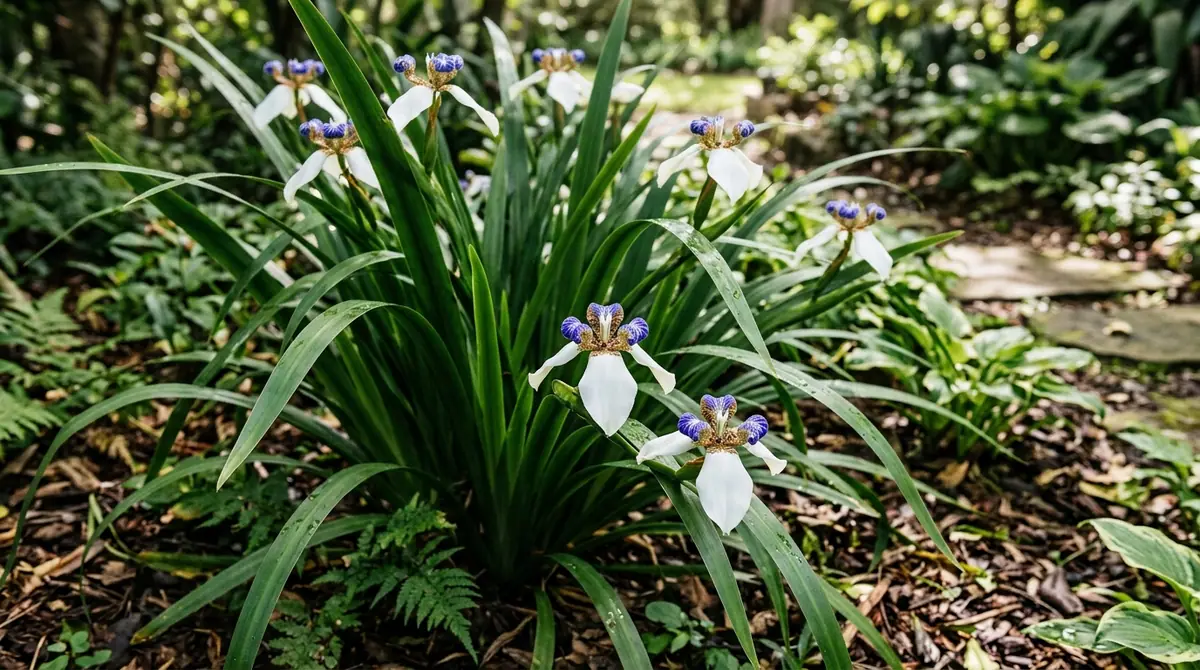
White and purple Apostles iris flower blooming among long green leaves in a garden bed
1. Botanical Overview & Natural Habitat
The apostles iris plant belongs to the Iridaceae family and the genus Neomarica (frequently grouped under the broader Iris umbrella by gardeners, though botanically distinct). Unlike traditional rhizomatous irises that die back in winter, Neomarica species are evergreen perennials boasting rigid, sword-like, fan-shaped foliage that grows 2 to 4 feet (60 to 120 cm) tall and spreads gracefully outward.
The common name "apostles iris" stems from a charming botanical folklore: legend dictates that the plant will not produce its breathtaking blooms until the clump has developed at least twelve distinct leaves, mirroring the twelve apostles. While this is an old wives' tale—flowering is actually triggered by maturity, pot-binding, and seasonal light shifts—it remains a helpful rule of thumb for gardeners waiting for their first flush of flowers.
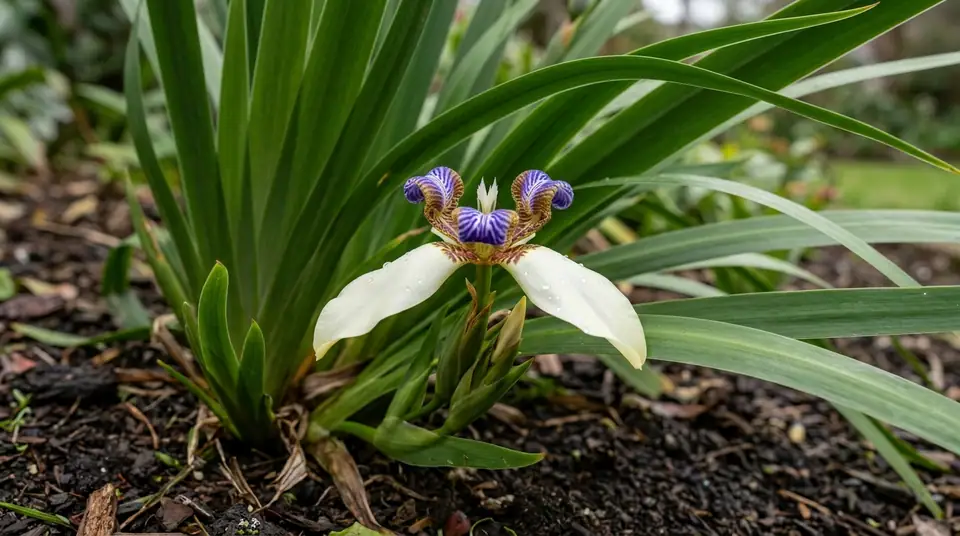
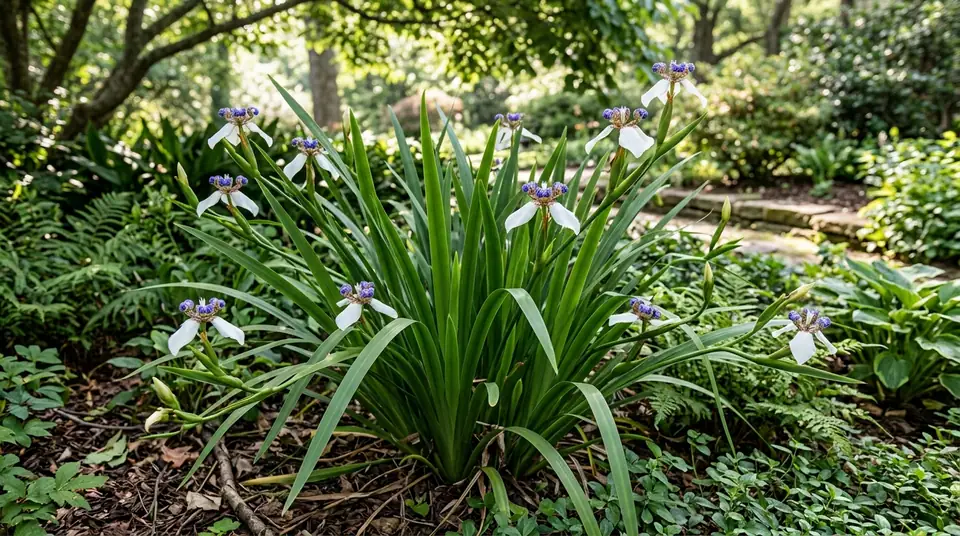
The blossoms themselves are ephemeral masterpieces lasting only a single day, usually emerging in morning and fading by nightfall. However, a mature plant produces a succession of fragrant, orchid-like flowers featuring outer white or pale blue petals splashed with brown, yellow, and deep blue-violet at the center.
In its native habitat of the Central and South American rainforest understory, the apostles iris plant thrives beneath a protective canopy. It receives filtered sunlight, high humidity, and constantly moist, rich, organic soil that drains freely. Understanding this tropical provenance is the master key to keeping your specimens thriving, whether grown directly in the ground or integrated into a seasonal container layout alongside crops like those you might plan when figuring when to plant bok choy zone 7 for an autumn harvest.
2. Essential Environmental & Care Requirements
Creating an artificial rainforest understory in your landscape or home requires precision. The apostles iris plant is remarkably forgiving of neglect, but it reacts poorly to sudden environmental shocks, especially frost and scorching UV rays.
Light and Temperature
Position your apostles iris plant in bright, indirect light or morning sun with afternoon shade. Direct, harsh afternoon rays will scorch the glossy green fans, leaving unsightly bleached patches or brown tips.
Temperature-wise, this plant is hardy in USDA Zones 9 through 11. It can tolerate brief dips to 30°F (-1°C) with minor foliage burn, but sustained freezing temperatures below 28°F (-2°C) will turn the rhizomes to mush. If you garden in cooler regions, treat the apostles iris plant as a patio container specimen to be brought indoors when ambient temperatures drop below 45°F (7°C). For those managing cold-frame schedules or timing root crops such as when to plant carrots in zone 8a, remember that tropicals demand indoor shelter long before your cool-season vegetables face a frost.
Soil and Moisture
The ideal soil is loamy, rich in organic matter, and maintains a slightly acidic to neutral pH between 6.0 and 6.8. Heavy clay will suffocate the roots, while pure sand drains too rapidly for a plant accustomed to riverbanks and forest floors.
Water deeply whenever the top 1 inch (2.5 cm) of soil feels dry to the touch. During the active growing season (spring through summer), keep the soil evenly moist. In autumn and winter, reduce watering frequency slightly, allowing the top 2 inches (5 cm) to dry out between waterings.
Parameter
Optimal Condition
Common Mistake
Why It Matters
Light
Dappled shade to morning sun
Full, scorching afternoon sun
Direct UV rays bleach and scorch the delicate, flat evergreen leaves.
Soil pH
6.0 to 6.8 (Slightly acidic to neutral)
Highly alkaline or compacted clay
Locks out essential micronutrients and causes root rot due to poor drainage.
Watering
Evenly moist, well-draining soil
Allowing soil to bone-dry or stay waterlogged
Triggers leaf tip dieback and fatal rhizome or root rot.
Temperature
60°F–85°F (15°C–29°C)
Exposure to frost below 28°F (-2°C)
Freezing temperatures destroy cell walls in the fleshy rhizomes.
💡 Pro-Tip: If you notice the tips of your apostles iris plant turning brown and crisp, do not automatically assume it needs more water. In 90% of cases, brown tips are caused by low ambient humidity or tap-water chemical buildup (like fluoride and chlorine). Flush the soil thoroughly with rainwater or distilled water every four weeks to leach out accumulated salts.
Propagation is where the apostles iris plant truly earns its secondary moniker, the "walking iris." As flowers fade, the heavy flowering stem bends downward toward the soil under the weight of a developing plantlet (keiki) at the tip. Once the baby plant touches the ground, it roots itself, creating a walking effect across your garden bed.
Step-by-Step Planting and Propagation Protocol
Select Healthy Stock: Choose a mature mother clump of apostles iris that has produced at least two previous rounds of blooms, ensuring genetic maturity and high vigor.
Prepare the Planting Site: Amend your garden bed or container substrate with a 2-inch (5-cm) layer of well-rotted leaf mold or aged compost to optimize moisture retention and microbial life. Dig a hole twice as wide as the root mass but no deeper than the original container depth.
Position the Rhizomes: Set the rhizomatous base just at or slightly below the soil line. Planting them too deep invites stem rot, while planting them too high leaves the root system unstable.
Capture the Walkers (Propagation): Inspect mature flowering stalks that have arched to the ground. If roots have formed at the terminal node, gently sever the baby plantlet from the parent stalk using a sterile, sharp blade.
Pot or Transplant the Offsets: Plant the severed keiki into a small 4-inch (10-cm) container filled with a 50/50 blend of peat moss and perlite. Keep the medium consistently moist in a warm, shaded location (70°F–75°F / 21°C–24°C) until aggressive root growth establishes in 21 to 30 days.
Apply Fertilizer Sparingly: Feed established outdoor or container plants once in early spring and once in mid-summer using a balanced, water-soluble fertilizer (such as a 10-10-10 formulation) diluted to half strength. Heavy feeding causes lush, weak foliage at the expense of those coveted blooms.
For broader landscape planning, keeping your ornamental beds tidy allows you to seamlessly integrate food-producing zones—whether you are checking schedules for when to plant Brussel sprouts in zone 7 or mapping out your spring roots. For authoritative guidance on integrating tropical ornamentals into diverse landscape designs, consult the Royal Horticultural Society.
4. Common Problems, Pests & Troubleshooting
Even the toughest tropical understory dwellers encounter stress in domestic landscapes. Recognizing the early warning signs of environmental imbalance saves plants from terminal decline.
Yellowing Leaves and Soft Rot
If the lower leaves of your apostles iris plant turn a sickly yellow and pull away easily from the base with a foul smell, you are dealing with bacterial or fungal soft rot. This is almost always triggered by overwatering combined with poor soil drainage or planting the rhizome too deep.
The Fix: Immediately cease watering. Unearth the plant, use a sterilized knife to carve away all infected, mushy brown tissue until you hit firm, white-green flesh, and dust the cuts with ground cinnamon or sulfur powder as a natural fungicide. Replant in fresh, sterile, fast-draining media.
Lack of Blooms
If your plant is a lush, massive wall of green fans but refuses to flower, evaluate three factors:
Age: Is the clump less than two years old? Patience is required; let it reach maturity.
Light: Is it trapped in deep, sunless shade? Move it to a spot receiving bright morning light.
Nutrient Imbalance: Have you been over-fertilizing with high-nitrogen lawn fertilizers? Switch to a phosphorus-rich bloom booster or withhold fertilizer entirely for a season.
Pests
Sucking insects like spider mites and mealybugs occasionally target plants kept in dry indoor environments during winter. Look for fine webbing between the leaf fans or white, cottony masses at the leaf axils. Treat infestations immediately by wiping down the foliage with insecticidal soap or a 70% isopropyl alcohol solution on a soft cloth. For comprehensive pest management frameworks across both ornamental and edible zones, reference the University of California Agriculture and Natural Resources guidelines.
⚠️ Important Caution: All parts of the apostles iris plant—especially the rhizomes—contain calcium oxalate crystals and irritating resins. Ingestion by cats, dogs, or small children will cause intense oral irritation, excessive drooling, and severe gastrointestinal distress. Keep containerized specimens safely elevated out of reach of household pets.
Apostles iris plant with white and purple blooms in a garden setting
5. Frequently Asked Questions
Can the apostles iris plant grow indoors as a houseplant?
Yes, absolutely. The apostles iris plant adapts remarkably well to indoor conditions provided it receives bright, indirect light from an east- or west-facing window. Ensure you maintain high indoor humidity around the plant using a pebble tray or humidifier, especially during winter months when indoor heating dries out the air.
Why are the flower buds on my apostles iris dropping before they open?
Bud drop is almost exclusively caused by environmental stress, most commonly drastic temperature fluctuations, sudden drafts from air conditioning vents, or severe underwatering. Once a flower spike forms, keep the watering schedule exceptionally consistent and protect the plant from thermal shock.
How often do apostles iris plants bloom?
Individual plants typically bloom from mid-spring through summer. While individual flowers last only a single day, a healthy, mature clump produces a succession of multiple flower stalks, extending the overall blooming display over a period of 4 to 6 weeks.
Should I cut back the spent flower stalks?
Yes. Once all the buds on a flowering stem have opened and faded, use clean pruning shears to cut the entire stalk back to the base where it emerges from the fan. Do not cut away green foliage, as the leaves continue to photosynthesize and fuel future growth cycles.
PlantSavvyWorld is an independent botanical education project. Articles are drafted with AI assistance, then edited and checked against university extension services, botanical garden collections and other published horticultural sources.