

When to Start Stock Seeds Indoors
Written with AI assistance, edited and checked against horticultural sources.
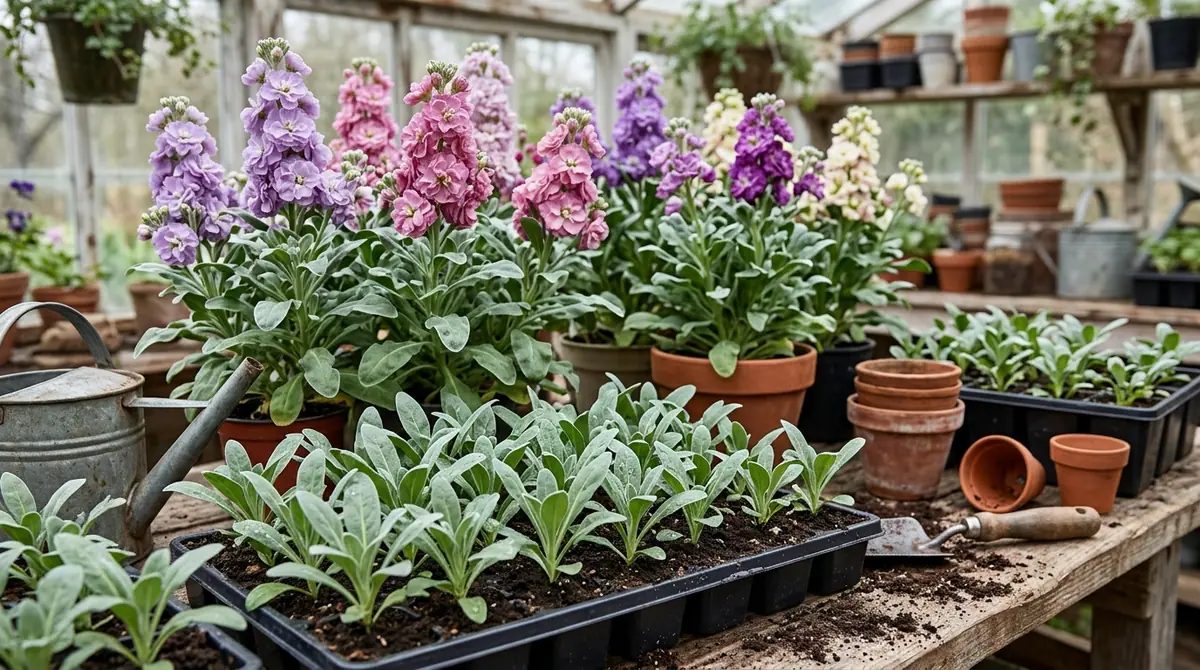
I still vividly remember walking into trial gardens one brisk late-winter morning, shivering in my fleece while staring at a flat of leggy, chlorotic stock seedlings that I had started way too early under ambient basement light. They were gasping for cool air, leaning wildly toward a south-facing window, and utterly failing to thrive because I had treated them like sun-worshiping tomatoes. Stock flowers (Matthiola incana) are entirely different beasts; they possess a distinct Mediterranean constitution that demands precision timing, cool temperatures, and abundant light. If you are asking yourself precisely when to start stock seeds indoors, you need to reverse-engineer your timeline from your local last frost date rather than rushing the season. Horticultural practice has spent decades refining seed-starting schedules so that hardy annuals like stock hit their prime flowering window just as the spring weather turns crisp and invigorating.
1. Botanical Overview & Natural Habitat

Understanding this Mediterranean maritime heritage dictates your entire propagation timeline. Unlike heat-loving tropicals that languish in cold soil, stock seeds germinate rapidly in cool environments and actively resent stifling indoor heat. For those cultivating a diverse seed starting setup, timing stock is vastly different from managing tropical crops; for instance, while you might push warm-season crops early using techniques similar to How to Germinate Eggplant Seeds Fast: Heat, Moisture & 7-Day Protocol, stock requires a deliberately restrained approach that prevents premature bolting and weak stems.
I rely on stock to bridge the awkward gap between late winter bulbs and true summer perennials. To achieve this, you must calculate when to start stock seeds indoors by counting back 6 to 8 weeks before your region's average last spring frost date. If your last frost falls around April 15th, you should sow your stock seeds indoors between February 15th and March 1st. Starting them any earlier traps the seedlings in a stagnant indoor environment where central heating encourages stretched, weak hypocotyls. Conversely, starting them too late means they will flower prematurely during early summer heatwaves, resulting in stunted stems and bitter-smelling foliage. For targeted regional planting timelines—much like checking precise local frost boundaries as you would for When to Plant Strawberries in Kansas: Zone 6a/6b Seasonal Calendar—consult your local agricultural extension service.
| Parameter | Optimal Condition | Common Mistake | Why It Matters |
|---|---|---|---|
| Indoor Sowing Window | 6–8 weeks before last spring frost | Starting 12+ weeks early | Prevents leggy, weak seedlings that cannot support heavy flower spikes. |
| Germination Temperature | 65°F to 70°F (18°C to 21°C) | Using heating mats above 75°F (24°C) | High heat suppresses germination in cool-season Mediterranean crops. |
| Growing-On Temperature | 50°F to 55°F (10°C to 13°C) | Keeping trays in warm, stuffy rooms | Cool nights encourage stocky, robust stem development. |
| Seed Depth | 1/8 inch (0.3 cm) | Burying seeds 1/2 inch (1.3 cm) deep | Stock seeds require light to trigger optimal germination. |
2. Essential Environmental & Care Requirements
Once your stock seeds germinate within 4 to 7 days of sowing, their environmental needs shift immediately toward cooler, brighter conditions. This management style is a cornerstone of professional greenhouse production.
Temperature management is your single greatest tool. While many indoor seed-starters default to room temperatures of 70°F to 75°F (21°C to 24°C), stock seedlings thrive when ambient daytime temperatures hover around 60°F (15°C) and drop down to 50°F to 55°F (10°C to 13°C) at night. This diurnal temperature fluctuation mimics their native Mediterranean climate, signaling the plant to invest energy into building thick, sturdy cell walls rather than racing upward in search of sunlight.
Light intensity is equally critical. Place your trays under high-output LED grow lights positioned 2 to 3 inches (5 to 8 cm) above the foliage, keeping the lights running for 14 to 16 hours daily. Inadequate light results in pale, collapsing stems that easily succumb to damping-off disease.
Soil composition and moisture control go hand-in-hand. Use a sterile, fine-textured, peat-based seed-starting mix with excellent drainage. Stock roots are exceptionally sensitive to waterlogged conditions. Allow the top surface of the potting medium to dry out slightly between waterings, and water from the bottom via capillary mats or tray-soaking to keep the fragile crowns dry.
When managing multi-crop indoor systems—whether you are balancing cool-season flowers or tackling intricate schedules like How to Grow Strawberries Indoors: From Fruit Seeds to Sweet Berries—maintaining strict sanitation and airflow prevents fungal pathogens from taking hold in damp indoor air. For authoritative botanical guidelines on Brassicaceae family cultivation, refer to the Royal Horticultural Society.
💡 Pro-Tip: When your stock seedlings reach about 2 inches (5 cm) tall, use a small oscillating fan on its lowest setting to blow gently across them for a few hours a day. This mechanical stimulation triggers thigmomorphogenesis—a biological response that forces the stems to thicken dramatically, ensuring they never flop over when planted outdoors.
3. Step-by-Step Cultivation, Feeding & Propagation
Mastering the propagation timeline of stock requires discipline. Follow this precise step-by-step protocol to transition your seeds from packet to thriving garden specimens.
- Sanitize and Prepare Trays: Wash multi-cell plug trays or small pots in a 10% bleach solution, then rinse thoroughly. Fill them with a damp, sterile seed-starting mix, pressing the soil gently to eliminate large air pockets while maintaining a loose, aerated structure.
- Sow the Seeds: Sow 1 to 2 seeds per cell, pressing them lightly into the surface. Because stock seeds are photo-blastic and benefit from light exposure, cover them with only a dusting—roughly 1/8 inch (0.3 cm)—of vermiculite or fine soil.
- Moisten and Cover: Mist the surface lightly with a fine-mist spray bottle. Cover the trays with a clear humidity dome or plastic wrap to lock in moisture, and place them in an area where temperatures remain consistently between 65°F and 70°F (18°C to 21°C).
- Monitor Germination: Check the trays daily. As soon as the first green loops break the soil surface (typically within 4 to 7 days), remove the humidity dome immediately and place the trays under your LED grow lights.
- Adjust Temperatures: Drop the ambient room temperature to 50°F–55°F (10°C–13°C). Ensure your grow lights are positioned close to the seedlings to prevent stretching.
- Thin and Feed: When seedlings develop their first set of true leaves, snip out weaker seedlings with clean snips, leaving one robust plant per cell. Begin fertilizing weakly, weekly, using a balanced, water-soluble organic fertilizer diluted to one-quarter strength.
- Harden Off: Approximately 10 to 14 days before your last frost date, begin hardening off your stock seedlings. Move them outdoors to a protected, shady spot for a few hours daily, gradually increasing their exposure to direct sun and wind. Just as you would carefully manage root systems when executing When to Transplant Cucumber Seedlings: Stop Root Shock & Boost Growth, handle stock root balls with care during final planting to avoid transplant shock.
⚠️ Important Caution: Never use high-nitrogen liquid fertilizers to push rapid growth in stock seedlings. Excess nitrogen causes lush, succulent tissue that attracts aphids and makes the plants highly susceptible to stem rots and wind damage.
4. Common Problems, Pests & Troubleshooting
Even with meticulous planning, growing cool-season annuals indoors presents unique diagnostic challenges.
The most prevalent issue is damping-off, a fungal complex involving pathogens like Pythium and Rhizoctonia. It strikes at the soil line, causing seedlings to pinch, water-soak, and topple over overnight. Prevent this by ensuring immaculate sanitation, avoiding over-watering, and running a fan to maintain steady air circulation across the media surface.
Another frequent headache is leggy, stretched seedlings. If your stock stems look like pale thread, your indoor environment is too warm, your lights are too far away, or you started the seeds too early. While tomato seedlings can sometimes be buried deep to correct leggy stems, stock plants do not tolerate deep planting well; their stems will rot if buried past the original root collar. If severe stretching occurs, it is often best to restart a fresh batch at the correct chronological window.

5. Frequently Asked Questions
Can I direct sow stock seeds outdoors instead of starting them indoors?
Yes, you can direct sow stock seeds outdoors as soon as the soil can be worked in early spring, typically 2 to 4 weeks before the last average frost date. However, starting them indoors gives you a significant jump on the season, ensuring earlier, more reliable blooms before summer heat sets in.
How do I tell the difference between single and double-flowered stock seedlings?
Professional growers look at leaf color and vigor. Double-flowered stock—which is prized for its lush, full appearance—typically exhibits slightly lighter green, narrower cotyledons and slower early growth compared to single-flowered variants. Some commercial seed strains are 100% color-selected or select for high double percentages based on temperature treatments during germination.
Why are my stock seedlings turning yellow and wilting?
Yellowing and wilting almost always point to root stress, which is usually caused by over-watering or poorly drained soil. Stock roots require oxygen; when the potting mix stays saturated, the roots suffocate, rot, and can no longer transport nutrients upward, leading to chlorosis and collapse.
What should I do if my stock seedlings get too tall before the outdoor planting date?
If your seedlings are outgrowing their indoor space because the outdoor ground is still frozen solid, pinch back the growing tips slightly to encourage branching, pot them up into slightly larger containers to give their roots more room, and move them to the coolest, brightest indoor location available to slow their vertical growth down.
Related Guides
- When to Start Tomatoes Indoors Zone 6
- When to Start Tomato Seeds Indoors Zone 6
- When to Start Strawberries Indoors
- When to Start Squash Seeds Indoors
- When to Start Seeds Indoors Zone 7a
📋 Table of Contents ▼ Click to expand
Tags:
Keep reading
🌿 Related Plants You Might Like




PlantSavvyWorld
Editorial team
PlantSavvyWorld is an independent botanical education project. Articles are drafted with AI assistance, then edited and checked against university extension services, botanical garden collections and other published horticultural sources.