
When to Start Seeds Indoors Zone 7a
Written with AI assistance, edited and checked against horticultural sources.
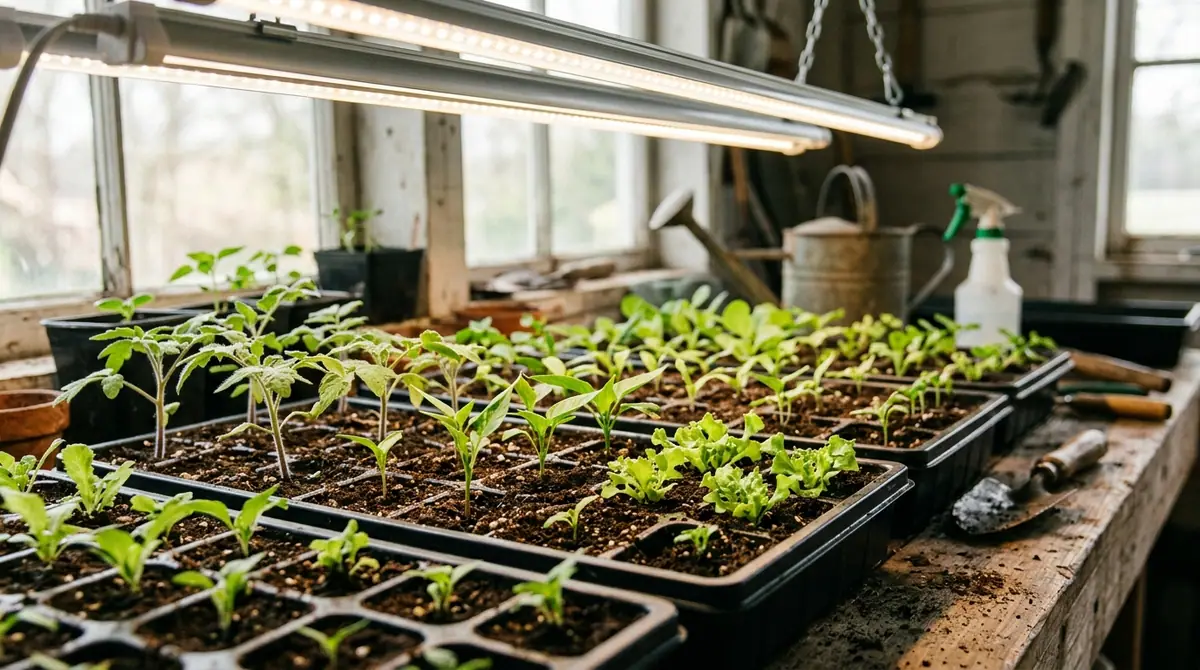
Last March, a greenhouse in Zone 7a smelled sharply of damp peat and warm soil while a late winter sleet pelted the glass. I was holding a flat of pepper seedlings that had gone leggy and pale overnight because I miscalculated our local last frost date by a mere four days. That hard lesson taught me that successful indoor seed starting in USDA Hardiness Zone 7a is an exercise in biological timing, not guesswork. When you are timing when to start seeds indoors zone 7a, you are working backward from an average last spring frost window that typically closes between April 15 and April 30.

1. Botanical Overview & Natural Habitat
Plants cultivated from seed indoors do not experience the natural, gradual hardening cues of an outdoor ecosystem. In their native habitats, wild annuals and perennials rely on environmental triggers like fluctuating soil temperatures, photoperiod shifts, and natural rainfall patterns to break dormancy and initiate cellular elongation. When we bring this process indoors, we replicate these ecological niches using artificial controls.
In Zone 7a, where winter minimums drop to 0°F to 10°F (-17.8°C to -12.2°C) and summers are long and warm, our indoor setup must mimic the vernalization and germination conditions required by diverse plant families. Solanaceae (tomatoes, peppers, eggplants) and Brassicaceae (cabbage, kale, broccoli) have completely different metabolic clocks. If you start a brassica eight weeks too early in a warm indoor room, the plant receives false signals of spring followed by indoor heat stress, triggering premature bolting or stunted vegetative structures.
Understanding how seed coats (testa) and endosperms respond to moisture and thermal energy allows us to trick seeds into sprouting weeks before the native frost-free date arrives. For specialized crops, matching these natural triggers is just as vital as it is when learning how to germinate parsley seeds fast with a hot water soak and 7-day trick. By respecting the botanical lineage of each seed variety, you ensure high cellular turgor pressure, robust root initials (radicles), and healthy cotyledons from day one.
2. Essential Environmental & Care Requirements
Creating a reliable indoor nursery requires balancing four pillars: light intensity, thermal regulation, substrate moisture, and air circulation. Without managing all four simultaneously, seedlings fail to thrive.
Light is the most frequently mishandled variable. South-facing windowsills are rarely sufficient in Zone 7a during February and March; the sun angle is too low and days are too short, resulting in stretching (etiolation). Suspend full-spectrum LED grow lights 2 to 4 inches (5 to 10 cm) above the foliage, running them for 14 to 16 hours daily.
Temperature requirements split sharply between germination and post-germination phases. While most seeds germinate best when soil temperatures range between 70°F and 85°F (21.1°C to 29.4°C)—often requiring electric heating mats—established seedlings prefer cooler ambient air between 60°F and 65°F (15.5°C to 18.3°C) to prevent rapid, weak top-growth.
| Parameter | Optimal Condition | Common Mistake | Why It Matters |
|---|---|---|---|
| Light Duration | 14–16 hours daily | Relying solely on winter windowsills | Insufficient light causes weak, leggy stems that snap easily. |
| Soil Temperature | 70°F–85°F (21.1°C–29.4°C) for sprouting | Germinating on cold basement floors | Cold media delays or prevents enzyme activation in the seed coat. |
| Substrate Moisture | Consistently damp like a wrung sponge | Over-saturating or letting media dry completely | Waterlogged soil starves roots of oxygen and invites fungal pathogens. |
| Air Circulation | Gentle sway from an oscillating fan 24/7 | Stagnant, humid indoor air | Air movement thickens cell walls and deters damping-off fungi. |
💡 Pro-Tip: Run a small clip-on oscillating fan on low speed near your seedling trays from the moment the first green loops break the soil surface. The mechanical stress forces plants to produce stronger, thicker stems through a process called thigmomorphogenesis.
3. Step-by-Step Cultivation, Feeding & Propagation
Executing a seamless indoor seed-starting schedule in Zone 7a requires discipline and timing. Use this step-by-step framework to map out your indoor nursery.
- Calculate Your Timeline: Determine your Zone 7a last frost date (typically April 15–30). Count backward based on crop requirements: Alliums and slow herbs at 10–12 weeks; peppers and eggplants at 8–10 weeks; tomatoes at 6–8 weeks; squash and cucumbers at 3–4 weeks. If you are comparing regional schedules, note how different this is from when to plant onions in southern California (zone 9 & 10 planting calendar).
- Sanitize Containers and Prepare Media: Wash old seed trays in a 10% bleach solution to eliminate fungal spores. Fill cells with a sterile, fine-textured seed-starting mix composed of sphagnum peat moss, perlite, and vermiculite. Moisten the mix thoroughly before planting so water doesn't wash tiny seeds away.
- Sow at the Correct Depth: Plant seeds at a depth equal to two to three times their width. Tiny seeds like lettuce and petunias need light to germinate and should only be pressed lightly onto the surface. Cover trays with plastic domes or humidity film to lock in moisture.
- Apply Heat and Monitor Daily: Place trays on a propagation heating mat set to maintain a media temperature of 75°F (23.9°C). Check moisture levels daily using a spray bottle.
- Transition to Light and Air: The moment green shoots emerge, remove the plastic humidity dome immediately, turn off the heating mat, and position your LED grow lights 2 inches above the canopy. Turn on your oscillating fan.
- Initiate Dilute Feeding: Once the first set of true leaves appears—replacing the seed-leaf cotyledons—begin feeding weekly with a balanced, water-soluble organic fertilizer diluted to one-quarter strength.
- Harden Off Before Transplanting: Seven to ten days before your target outdoor planting date, gradually introduce seedlings to outdoor conditions. Much like managing stress when dealing with when to transplant cucumber seedlings: stop root shock & boost growth, this adjustment period prevents sunburn and wind shock.
⚠️ Important Caution: Never use garden soil or heavy topsoil in indoor seed trays. Garden soil lacks proper drainage, compacts easily into a concrete-like brick under indoor watering, and frequently contains dormant fungal pathogens or insect eggs that thrive in warm indoor environments.
4. Common Problems, Pests & Troubleshooting
Indoor environments lack the natural predators and environmental checks found outdoors, making vigilance essential.
The most devastating adversary is damping-off disease, caused by soil-borne fungi such as Pythium or Rhizoctonia. Symptoms include seedlings suddenly pinching at the soil line, falling over, and dying. This is almost exclusively triggered by overwatering combined with poor air circulation. Combat this by bottom-watering your trays—letting the cell packs absorb water from a shallow tray for 20 minutes before draining the excess—and keeping your oscillating fan running continuously.
Fungus gnats are another frequent indoor nuisance. While adult gnats are harmless, their subterranean larvae feed on tender root hairs, stunting growth. Allow the top inch of your growing medium to dry slightly between waterings, and apply biological controls like Bacillus thuringiensis israelensis (Bti) or beneficial nematodes to break their reproductive cycle.

5. Frequently Asked Questions
When is the exact window to start tomato seeds indoors in Zone 7a?
Start your tomato seeds indoors 6 to 8 weeks before your local average last frost date, which places your sowing window between March 1st and March 15th. Starting them earlier often leads to root-bound, woody plants before outdoor soil temperatures warm up enough to support vigorous root expansion.
Do I really need a grow light, or is a south-facing window enough in Zone 7a?
A south-facing window is rarely sufficient during late winter and early spring in Zone 7a. The window glass filters crucial light wavelengths, and the low sun angle provides too few hours of direct intensity. Without LED or fluorescent grow lights, seedlings will stretch toward the window, resulting in weak, etiolated stems that struggle to survive transplantation.
How do I know when my seedlings are ready for outdoor hardening off?
Seedlings are ready to harden off when they have established a robust root system that holds the root ball together, possess at least three to four sets of true leaves, and daytime outdoor temperatures consistently stay above 50°F (10°C) with nighttime lows reliably above 45°F (7.2°C).
Should I use heating mats for all seeds started indoors?
No. While warm-season crops like tomatoes, peppers, eggplants, and basil require soil temperatures between 70°F and 85°F (21.1°C to 29.4°C) for optimal germination, cool-season crops like broccoli, kale, lettuce, and spinach prefer cooler media temperatures between 55°F and 65°F (12.8°C to 18.3°C) and can sprout without supplemental bottom heat.
For further scientific guidance on regional frost dates and horticultural extensions, consult the USDA Plant Hardiness Zone Map and the Royal Horticultural Society Seed Growing Guidelines.
Related Guides
- When to Start Tomatoes Indoors Zone 6
- When to Start Tomato Seeds Indoors Zone 6
- When to Start Peppers Indoors Zone 6
- When to Start Pepper Seeds Indoors Zone 5
- When to Start Strawberries Indoors
📋 Table of Contents ▼ Click to expand
Tags:
Keep reading
🌿 Related Plants You Might Like

PlantSavvyWorld
Editorial team
PlantSavvyWorld is an independent botanical education project. Articles are drafted with AI assistance, then edited and checked against university extension services, botanical garden collections and other published horticultural sources.