

When to Start Tomatoes Indoors Zone 6
Written with AI assistance, edited and checked against horticultural sources.
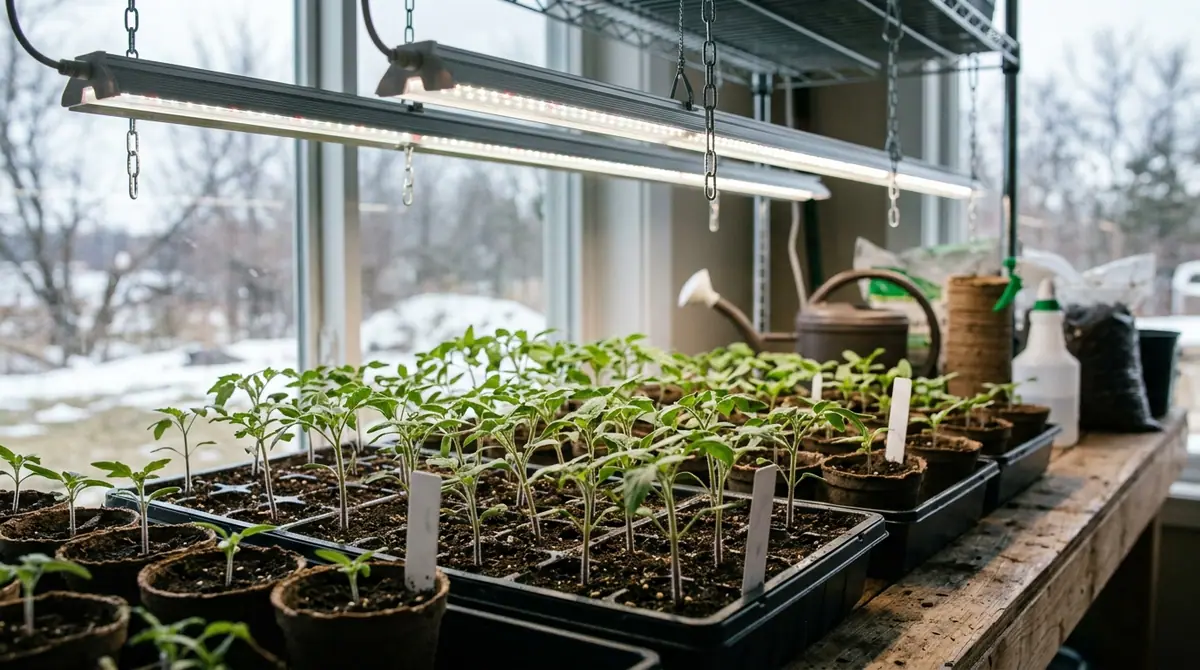
Starting tomato seedlings a full eight weeks too early in USDA Hardiness Zone 6 results in leggy, pale plants that slump over against their humidity domes because damp, overcast spring days do not provide enough light to compensate. Precision in your indoor sowing timeline is everything. When you are timing when to start tomatoes indoors zone 6, counting backward from your final spring frost date is the only reliable compass. Let’s dive into the botanical science and practical steps required to get your tomato crops thriving from seed to harvest.
1. Botanical Overview & Natural Habitat

In their native habitat, they are short-lived perennials, but in the cooler climate of USDA Zone 6—where winter temperatures plunge between −10°F and 0°F (−23°C to −18°C)—we grow them strictly as warm-season annuals. Understanding this tropical highland ancestry tells us a lot about their physiology. Tomatoes crave heat, high-intensity light, and deep, uncompacted soil. They possess a robust taproot system when grown from seed, which quickly transitions into a dense, fibrous root mass capable of supporting heavy vine growth and abundant fruit production.
Because Zone 6 features a relatively short outdoor growing season—typically stretching from mid-May through early October—starting seeds indoors is non-negotiable if you want a reliable harvest of slicing tomatoes, paste varieties, or cherry types before the autumn frost arrives. For gardeners juggling multiple microclimates, matching your indoor start date to your outdoor soil prep is vital; if you are also transitioning other tender crops, you can cross-reference our guide on When to Transplant Cucumber Seedlings: Stop Root Shock & Boost Growth to synchronize your spring indoor nursery schedule.
2. Essential Environmental & Care Requirements
To produce vigorous transplants in Zone 6, you must replicate the high-energy environment of the tomato's native range inside your home or greenhouse. Germination and early seedling development hinge on four core parameters: temperature, light, moisture, and growing media.
| Parameter | Optimal Condition | Common Mistake | Why It Matters |
|---|---|---|---|
| Germination Temp | 75°F to 85°F (24°C to 29°C) | Using room temp (65°F / 18°C) | Low soil heat delays germination, inviting fungal pathogens like Pythium. |
| Growing Light | 14 to 16 hours daily, 2–3 inches (5–8 cm) above seedlings | Relying on an unassisted north-facing windowsill | Insufficient light causes rapid internodal stretching and weak, leggy stems. |
| Soil pH | 6.2 to 6.8 | Highly acidic or alkaline native garden soil | Incorrect pH locks out essential macronutrients like phosphorus and calcium. |
| Air Circulation | Gentle oscillating fan running 4–6 hours daily | Stagnant air in enclosed seed trays | Air movement strengthens stem walls and prevents damping-off disease. |
💡 Pro-Tip: Always use a sterile, soilless seed-starting medium composed of peat moss, perlite, and vermiculite. Never dig up soil from your garden beds to fill indoor seed trays; outdoor soil is too dense, drains poorly, and frequently harbors weed seeds and fungal spores.
For comprehensive regional climate data and frost averages to help you lock in your exact calendar dates, consult the USDA Plant Hardiness Zone Map.
3. Step-by-Step Cultivation, Feeding & Propagation
In USDA Zone 6, the average last spring frost typically occurs between April 25 and May 15. Because tomato seedlings require 6 to 8 weeks of indoor growth before they are resilient enough to face outdoor conditions, you should time your indoor sowing between March 15 and April 1.
Follow this sequential protocol to grow stocky, high-yielding tomato transplants:
- Sanitize Your Equipment: Wash all reusable seed trays, cell packs, and humidity domes in a solution of 1 part household bleach to 9 parts water. Rinse thoroughly to eliminate lingering fungal spores.
- Moisten the Growing Medium: Place your sterile soilless mix into a large bucket and add warm water until it reaches the consistency of a wrung-out sponge. Fill your seed cells to within 0.25 inches (0.6 cm) of the top and gently tap the tray to settle the mix without compacting it.
- Sow the Seeds: Plant two seeds per cell at a depth of 0.25 inches (0.6 cm). Cover lightly with mix and press down gently to ensure good seed-to-soil contact. Label the varieties using waterproof plant markers.
- Provide Bottom Heat and Moisture: Cover the trays with a clear humidity dome to lock in moisture. Place the tray on a seedling heat mat set to maintain a soil temperature of 75°F to 85°F (24°C to 29°C). Check daily; mist with a spray bottle if the surface appears dry.
- Transition to Light Upon Emergence: As soon as the first green loops break the soil surface (usually within 5 to 10 days), remove the humidity dome and place the tray directly under full-spectrum LED grow lights. Keep the lights positioned 2 to 3 inches (5 to 8 cm) above the foliage, running them for 14 to 16 hours per day. Turn on a small oscillating fan on low speed to strengthen the stems.
- Pot Up (Transplanting to Larger Containers): When the seedlings develop their first set of true leaves (around 3 weeks post-germination), gently lift them out using a dibble or pencil and transplant them into individual 3-inch or 4-inch (7.5 to 10 cm) pots. Bury them slightly deeper than they were growing previously—up to the base of the cotyledons—to encourage adventitious root growth along the buried stem.
- Initiate Fertilization: Once seedlings are established in their larger pots, begin feeding them weekly with a balanced, water-soluble organic fertilizer diluted to one-quarter strength.
- Harden Off: Starting 10 to 14 days before your planned outdoor planting date (typically mid-to-late May in Zone 6), move your plants outdoors for a few hours each day into a sheltered, shady spot. Gradually increase their exposure to direct sunlight and wind over two weeks until they can tolerate a full 24 hours outdoors.
If you are planning a diverse kitchen garden, you can also explore our companion guide on How to Grow Strawberries Indoors: From Fruit Seeds to Sweet Berries to optimize your indoor growing setup for multiple crops.
4. Common Problems, Pests & Troubleshooting
Growing tomatoes indoors in Zone 6 presents a few predictable hurdles. Recognizing them early saves your crop.
- Damping-Off Disease: Caused by soil-borne fungi (Rhizoctonia or Pythium), this condition causes seedlings to pinch at the soil line and collapse overnight. It is triggered by overwatering, cold soil, and poor ventilation. Prevent it by bottom-watering your trays, using a fan, and never letting seedlings sit in standing water.
- Leggy, Weak Stems: If your seedlings look like spindly threads, your light source is either too weak or too far away. Lower your LED fixtures immediately to 2 inches (5 cm) above the canopy.
- Edema: Water-soaked, blistered bumps appearing on the undersides of leaves indicate that the plant is taking up water faster than it can transpire. Reduce your watering frequency and increase air movement with your fan.
- Nutrient Deficiencies: Yellowing lower leaves (chlorosis) often point to a lack of nitrogen, while purple-tinted foliage usually indicates a phosphorus lockout caused by temperatures dropping below 55°F (13°C) at night. Maintain warm indoor ambient temperatures between 65°F and 70°F (18°C to 21°C).
For an authoritative reference on managing soil-borne pathogens and vegetable disorders, review the resources provided by the University of Illinois Extension Vegetable Gardening Guide.
⚠️ Important Caution: Never plant your indoor tomato starts directly into cold garden soil in Zone 6. If soil temperatures remain below 55°F (13°C), tomato roots will halt nutrient uptake, turning the foliage purple and stunting plant growth for the entire season. Wait until nighttime air temperatures consistently stay above 50°F (10°C) and soil reaches 60°F (15°C) before setting plants into open ground.

5. Frequently Asked Questions
Can I start tomato seeds on a sunny windowsill in Zone 6?
While you can germinate seeds on a windowsill, it is rarely successful for growing robust tomato transplants in Zone 6 spring conditions. Window glass filters out critical light spectrums, and short, overcast spring days cause seedlings to stretch violently toward the light, resulting in weak, etiolated stems that struggle to survive outdoors. Supplementing with artificial LED grow lights is strongly recommended.
What happens if I start my tomato seeds too early in Zone 6?
Starting seeds before early March in Zone 6 usually results in overgrown, root-bound plants long before the weather is warm enough for outdoor planting. These oversized seedlings suffer massive transplant shock, drop their first clusters of blossoms, and ultimately produce a lower overall yield than vigorous, stocky 6-to-8-week-old starts.
Do I need to bury tomato seedlings deeper when potting them up?
Yes. Unlike most vegetable crops, tomatoes possess the unique botanical ability to develop roots all along their stems wherever they come into contact with soil. When potting up or transplanting into the garden, bury the stem up to the base of the top few leaves. This encourages a massive root network, anchoring the plant securely and boosting its ability to absorb water and nutrients.
How do I know when my tomato seedlings are ready to plant outside in Zone 6?
Your transplants are ready when they are 6 to 8 weeks old, stand 6 to 10 inches (15 to 25 cm) tall, possess thick, sturdy stems, and have well-developed root systems that hold the potting mix together when gently tapped out of their containers. Crucially, verify that all danger of hard frost has passed and that your outdoor soil temperature has warmed to at least 60°F (15°C).
Related Guides
- When to Start Tomato Seeds Indoors Zone 6
- When to Start Seeds Indoors Zone 7a
- When to Start Peppers Indoors Zone 6
- When to Start Pepper Seeds Indoors Zone 5
- When to Start Strawberries Indoors
- When to Plant Tomatoes in Zone 7a
- When to Plant Tomatoes in Zone 6b
- When to Plant Tomatoes in Zone 5
📋 Table of Contents ▼ Click to expand
Tags:
Keep reading
🌿 Related Plants You Might Like


PlantSavvyWorld
Editorial team
PlantSavvyWorld is an independent botanical education project. Articles are drafted with AI assistance, then edited and checked against university extension services, botanical garden collections and other published horticultural sources.