

When to Start Tomato Seeds Indoors Zone 6
Written with AI assistance, edited and checked against horticultural sources.
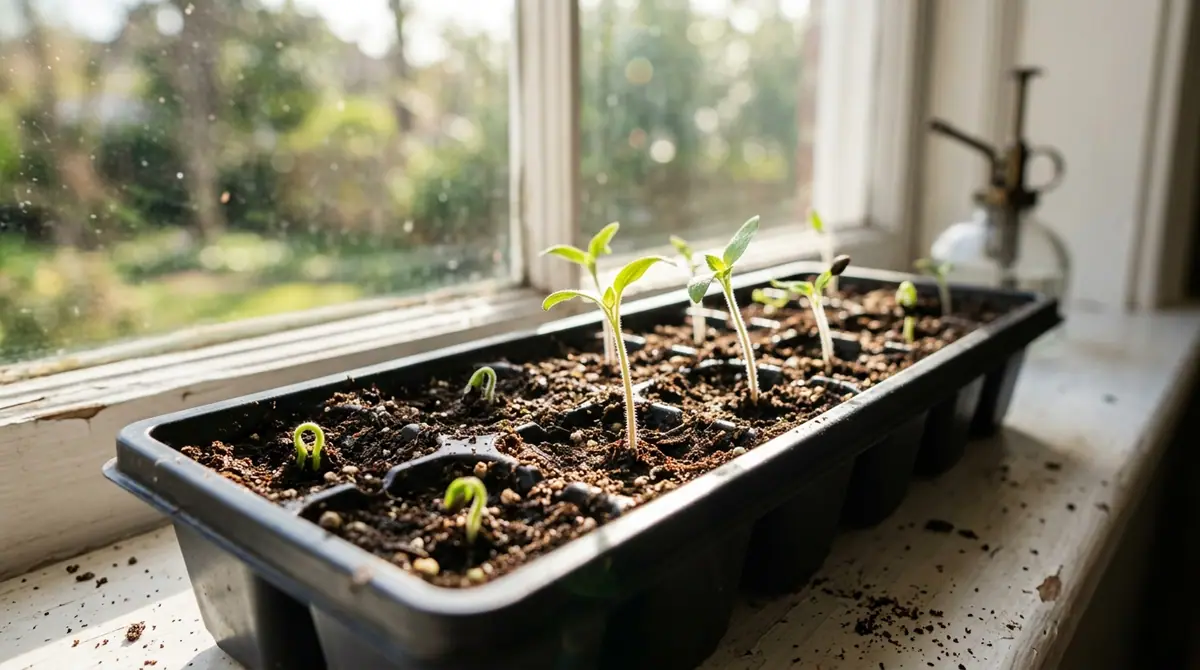
I am still pulling damp bits of peat moss off my fingernails from last March, remembering the exact morning I panicked because my Cherokee Purple starts in Zone 6 were leaning violently toward a north-facing window like a colony of desperate sea-monsters. That was the year I learned that mastering when to start tomato seeds indoors in Zone 6 is less about calendar dates and more about choreography: matching the natural rhythms of the tropical Andes to the stubborn, late-frost realities of the American Midwest and Northeast. If you start your seeds too early in Zone 6, you end up with root-bound, woody giants begging for a garden they cannot yet inhabit. Start them too late, and your harvest is cut short by the autumn chill. Let’s get the timing, temperature, and technique dialed in precisely so your indoor nursery yields the heaviest harvests possible.
1. Botanical Overview & Natural Habitat

In USDA Hardiness Zone 6—which spans regions experiencing average annual extreme minimum temperatures between -10°F and 0°F (-23.3°c to -17.8°c), such as parts of Missouri, Ohio, Pennsylvania, and Massachusetts—the frost-free growing season typically runs from mid-May through mid-October. Because Zone 6 spring weather can swing from a balmy 75°F (23.9°C) in April to a sudden 28°F (-2.2°C) freeze in early May, starting seeds indoors is mandatory to bypass the short outdoor season.
For reliable outdoor planting after your local average last spring frost date (which generally falls between April 25 and May 15 across Zone 6), you must count backward. The golden botanical window for sowing tomato seeds indoors is 6 to 8 weeks before your specific local last frost date. For most Zone 6 gardeners, this means starting seeds indoors between March 15 and April 1.
If you are looking to branch out your indoor seed-starting operation to other nightshades, check out our detailed guide on How to Germinate Eggplant Seeds Fast: Heat, Moisture & 7-Day Protocol. To understand how these early indoor practices pay off later in the season, reference our strategies on How to Grow Huge Tomato Plants: Pruning, Trenching & Heavy Yields.
2. Essential Environmental & Care Requirements
Achieving rapid germination and sturdy seedling development requires managing four core environmental variables with precision.
| Parameter | Optimal Condition | Common Mistake | Why It Matters |
|---|---|---|---|
| Soil Temperature | 75°F to 85°F (23.9°C to 29.4°C) | Relying on room temperature (65°F / 18.3°C) | Cold soil slows germination to 14+ days, inviting fungal pathogens like damping-off. |
| Seedling Light | 14 to 16 hours daily, 2 to 3 inches above foliage | Using an unassisted south-facing windowsill | Low light causes etiolation (leggy, weak stems that collapse under their own weight). |
| Air Circulation | Gentle breeze from an oscillating fan for 1–2 hours daily | Stagnant indoor humidity | Air movement thickens cell walls (thigmonasty), preventing stem rot and fungal disease. |
| Soil Moisture | Consistently damp like a wrung-out sponge | Over-saturation or letting media dry completely | Waterlogged roots suffocate; dry roots suffer irreversible cell damage. |
💡 Pro-Tip: Never rely on ambient room heat for germination. Tomato seeds will sit dormant or rot in soil sitting below 60°F (15.6°C). Always invest in a thermostatically controlled seedling heat mat to keep the root zone at a steady 78°F (25.6°C) until emergence.
For comprehensive botanical insights on soil science and regional frost charts, consult the USDA Plant Hardiness Zone Map and the Royal Horticultural Society Vegetable Growing Guidelines.
3. Step-by-Step Cultivation, Feeding & Propagation
Getting your Zone 6 tomato timeline right is only half the battle. You need a rigorous protocol from seed tray to transplant bed. Follow this step-by-step procedure:
- Sanitize and Prepare Containers: Wash recycled cell trays or 2-inch pots in a solution of one part household bleach to nine parts water to eradicate lingering fungal spores. Fill them with a pre-moistened, sterile, fine-textured seed-starting mix—never heavy garden soil, which compacts and retains too much water.
- Sow at the Correct Depth: Press tomato seeds into the medium at a depth of 0.25 inches (0.64 cm). Sowing them deeper exhausts the seed's energy reserves before it breaks the surface; sowing them shallower risks drying out the seed coat. Cover lightly with mix and press down gently to ensure seed-to-soil contact.
- Manage Germination Heat and Moisture: Mist the surface thoroughly with a spray bottle, cover the trays with a clear humidity dome or plastic wrap to lock in moisture, and place them on your heating mat. Keep the ambient temperature around 70°F to 75°F (21.1°C to 23.9°C). Check daily.
- Deploy Intense Lighting Upon Emergence: The absolute second you see loops of green breaking the soil surface (typically within 5 to 10 days), remove the humidity dome immediately and place the seedlings under grow lights. Position full-spectrum LED fixtures 2 to 3 inches (5.1 to 7.6 cm) above the top leaves, adjusting the lights upward as the plants grow. Run lights for 14 to 16 hours daily on an automatic timer.
- Pot Up at the True Leaf Stage: When seedlings develop their first set of true leaves (distinguished from the smooth, rounded cotyledons by their serrated edges, usually around 14 to 21 days post-emergence), transplant them individually into deeper 4-inch (10.2 cm) pots. Bury them slightly deeper than they were growing previously—up to the base of the cotyledons—to encourage adventitious roots along the buried stem.
- Initiate Dilute Feeding: Once plants are established in their 4-inch pots, begin feeding weekly with a balanced, water-soluble organic fertilizer (such as a 5-5-5 fish emulsion or seaweed extract) diluted to one-quarter strength. Avoid high-nitrogen fertilizers, which create lush, succulent foliage vulnerable to pests.
- Harden Off Before Transplanting: In mid-to-late May (after Zone 6 night temperatures reliably stay above 50°F / 10°C), begin hardening off your seedlings. Set them outside in a protected, shady spot for 1 hour on day one, gradually increasing sun exposure and outdoor time over 7 to 10 days until they can withstand full sun and wind all day and night.
⚠️ Important Caution: Never skip the hardening-off phase. Exposing tender, indoor-grown tomato seedlings directly to unfiltered ultraviolet radiation, wind shear, and temperature drops in Zone 6 will cause severe leaf scorch, stem breakage, and transplant shock that can stunt the plant for weeks.
4. Common Problems, Pests & Troubleshooting
Even experienced designers face challenges when pushing the indoor growing season in the Northeast and Midwest. Watch out for these common issues:
- Leggy Seedlings (Etiolation): If your stems look like pale, translucent threads, your lights are too far away or not bright enough. Lower your lights immediately to 2 inches above the leaves. Unfortunately, severely etiolated seedlings cannot be saved; it is best to restart or bury the stems deeply when potting up.
- Damping-Off Disease: Caused by soil-borne fungi (Pythium, Rhizoctonia), this condition causes seedlings to suddenly pinch at the soil line and topple over dead. Prevent this by using sterile mix, bottom-watering rather than top-watering, and running an oscillating fan to keep air moving.
- Edema: Water-soaked, blistered, or bumpy spots appearing on the undersides of leaves indicate that the roots are taking up water faster than the leaves can transpire it. Reduce watering frequency, increase airflow, and ensure your humidity levels are not trapped above 60%.
- Purple Stems and Lower Leaves: While minor purpling can be a genetic trait in certain heirloom varieties (like Brandywine), widespread purple discoloration usually signals a phosphorus deficiency caused by soil temperatures dropping below 60°F (15.6°C). Warm up the root zone.

5. Frequently Asked Questions
Can I start tomato seeds indoors in February in Zone 6?
Starting tomato seeds in February in Zone 6 is generally a mistake. Because your last spring frost does not occur until late April or mid-May, February-started seeds will be indoors for 10 to 12 weeks. They will outgrow their containers, become root-bound, exhaust their nutrient supply, and turn woody long before the soil warms up enough for outdoor planting. Stick to the 6-to-8-week window (mid-to-late March).
What temperature do tomato seeds need to germinate?
Tomato seeds require a soil temperature between 75°F and 85°F (23.9°C and 29.4°C) for optimal germination. While they can sprout at lower temperatures, germination slows dramatically below 65°F (18.3°C), taking up to three weeks and drastically increasing the risk of seed rot and fungal pathogens.
How many hours of light do indoor tomato seedlings need?
Indoor tomato seedlings need 14 to 16 hours of direct light daily. Relying on a natural windowsill in Zone 6 during early spring will not provide enough intensity or duration, resulting in weak, stretched plants. High-output LED grow lights positioned a few inches above the canopy are essential.
When should I transplant my tomato seedlings into the garden in Zone 6?
You should transplant your tomato seedlings outdoors in Zone 6 once all danger of frost has passed and night temperatures consistently remain above 50°F (10°C). For most Zone 6 locations, this falls between May 15 and June 1, provided the plants have been thoroughly hardened off over a 7-to-10-day period.
Related Guides
- When to Start Tomatoes Indoors Zone 6
- When to Start Seeds Indoors Zone 7a
- When to Start Peppers Indoors Zone 6
- When to Start Pepper Seeds Indoors Zone 5
- When to Start Strawberries Indoors
📋 Table of Contents ▼ Click to expand
Tags:
Keep reading
🌿 Related Plants You Might Like




PlantSavvyWorld
Editorial team
PlantSavvyWorld is an independent botanical education project. Articles are drafted with AI assistance, then edited and checked against university extension services, botanical garden collections and other published horticultural sources.