

When to Start Peppers Indoors Zone 6
Written with AI assistance, edited and checked against horticultural sources.
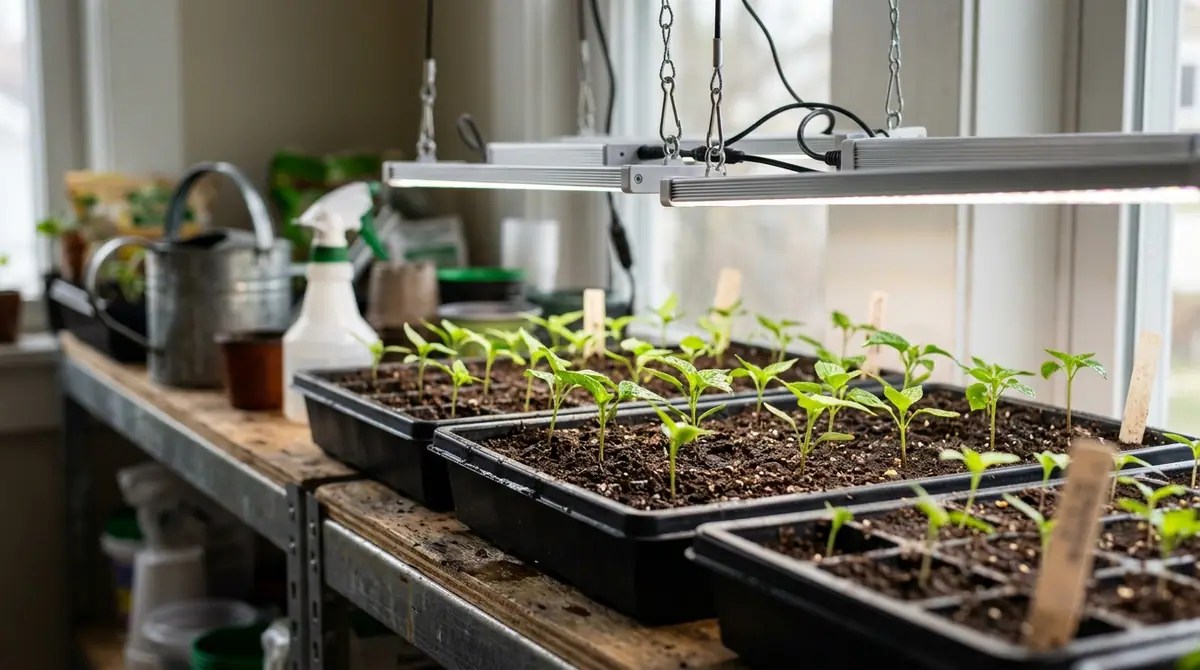
My hands were caked in damp, peat-heavy soil last March when I realized my experimental Anaheim pepper seedlings had turned a translucent, ghostly yellow. It was the classic symptom of cold feet—literally. I had started them too early in a drafty Zone 6 basement where the ambient air hovered at 60°F (15.5°C) and the soil temperature was a stagnant 55°F (12.8°C). Peppers are not like tomatoes; they refuse to forgive impatience. That season taught me that calculating when to start peppers indoors in Zone 6 is an exact botanical science, governed not by our eagerness for spring, but by the relentless mathematics of frost dates, soil respiration rates, and thermal mass.

1. Botanical Overview & Natural Habitat
To understand when and how to start peppers indoors, we must first understand their evolutionary history. Capsicum is a genus of flowering plants in the nightshade family, Solanaceae, native to the tropical and subtropical regions of the Americas—specifically stretching from Central and South America up through the Caribbean. In their natural habitat, wild peppers are perennial subshrubs (as detailed in our guide on Are Bell Peppers Perennial: Expert Gardening Guide & Science-Backed Tips). They evolved under intense solar radiation, consistent ambient warmth, and well-drained, nutrient-dense soils.
Botanically, peppers are classified into five domesticated species: Capsicum annuum (bell peppers, jalapeños, cayenne), Capsicum chinense (habaneros, ghost peppers), Capsicum baccatum (ajis), Capsicum pubescens (rocotos), and Capsicum frutescens (tabascos). Each species exhibits a different days-to-maturity timeline. While a standard C. Annuum jalapeño might mature in 60 to 70 days from transplant, a fiery C. Chinense habanero can easily require 90 to 120 days of sustained warmth.
In Zone 6, our outdoor growing season provides roughly 150 to 180 frost-free days. However, soil temperatures in May often lag far behind ambient air temperatures, lingering below 60°F (15.5°C) for weeks. If you direct-sow or plant outside too early, the plant's vascular system goes into stasis. Phosphorus uptake ceases, roots rot in cold muck, and the plant essentially stalls out for a month. Starting seeds indoors 8 to 10 weeks before your average last frost date—typically falling between mid-February and early March for Zone 6—bypasses this chilling bottleneck, giving your plants the heat accumulation they need before facing the unpredictable swings of spring weather.
2. Essential Environmental & Care Requirements
Successful indoor pepper propagation hinges on four non-negotiable environmental pillars: heat, light, moisture, and root-zone aeration. If any one of these factors is compromised, your germination rates and seedling vigor will plummet.
For reliable germination, pepper seeds require soil temperatures between 80°F and 85°F (26.7°C to 29.4°C). While seeds will technically sprout at 70°F (21.1°C), the process stretches from a brisk 7 to 10 days out to an agonizing 21 to 28 days, during which time the damp seed coats are highly susceptible to fungal pathogens like Pythium. Once the cotyledons (seed leaves) unfurl, drop the ambient air temperature slightly to 70°F–75°F (21.1°C–23.9°C) during the day and no lower than 65°F (18.3°C) at night to prevent leggy, etiolated growth.
Light is the second major stumbling block. Standard window sills in Zone 6 during February and March simply do not provide the intensity or duration required for stocky, dark-green pepper starts. You need a dedicated full-spectrum LED or T5 fluorescent shop light positioned precisely 2 to 3 inches (5 to 7.6 cm) above the foliage, running for 14 to 16 hours daily.
| Parameter | Optimal Condition | Common Mistake | Why It Matters |
|---|---|---|---|
| Germination Soil Temp | 80°F – 85°F (26.7°C – 29.4°C) | Relying on room temperature (68°F) | Slows sprouting, invites fungal damping-off |
| Seed Planting Depth | 0.25 inches (0.6 cm) | Burying seeds 1 inch deep | Deprives the seed of light cues and exhausts energy |
| Light Intensity | Full-spectrum LED, 14–16 hrs/day | Relying on a cloudy northern/eastern window | Causes weak, stretched stems (etiolation) |
| Transplant Out Soil Temp | 60°F+ (15.5°C+) measured at 4" depth | Planting out when air feels warm in April | Stunts root growth and triggers nutrient lockout |
💡 Pro-Tip: Never rely on guesswork for soil temperatures. Buy a simple digital kitchen thermometer with a probe, stick it 4 inches (10 cm) deep into your outdoor garden bed in May, and do not transplant your peppers until that thermometer reads a steady 60°F (15.5°C) or higher at 9:00 AM.
For broader insights on managing transition phases for delicate garden starts, you can cross-reference our protocol on When to Transplant Cucumber Seedlings: Stop Root Shock & Boost Growth.
3. Step-by-Step Cultivation, Feeding & Propagation
Getting your Zone 6 pepper timeline right requires precision. Count backward 8 to 10 weeks from your specific town's historical last frost date. For most of Zone 6, this places seed sowing right between February 15 and March 10.
- Sanitize and Prepare Containers: Wash recycled cell packs or plug trays in a 10% bleach solution, or use fresh, sterile peat pots. Fill them with a fine, pre-moistened seed-starting mix composed of sphagnum peat, perlite, and vermiculite. Avoid heavy garden soil, which compacts easily and lacks drainage.
- Sow the Seeds: Poke indentation holes exactly 0.25 inches (0.6 cm) deep using a pencil eraser or your finger. Drop one or two seeds per cell. Lightly cover with mix and firm it down gently to ensure seed-to-soil contact.
- Apply Bottom Heat and Moisture: Mist the surface lightly with a spray bottle. Place the trays on an electric seedling heat mat. Cover the trays with a clear plastic dome or humidity dome to lock in moisture until germination occurs.
- Monitor and Uncover: Check daily. The moment the first loops of green emerge from the soil line, remove the humidity dome immediately and position your full-spectrum grow lights 2 inches (5 cm) above the leaves.
- Pot Up (First Transplants): When the seedlings develop their first true set of leaves—usually about 3 to 4 weeks after sprouting—gently tease them apart and pot them up into individual 3-inch (7.6 cm) containers using a nutrient-rich, all-purpose potting soil containing worm castings or mild organic compost.
- Feed and Prune: Once established in their 3-inch pots, begin fertilizing weekly with a half-strength, balanced organic liquid fertilizer (such as a 5-5-5 fish emulsion or seaweed extract). When plants reach about 6 to 8 inches (15 to 20 cm) tall, pinch out the growing tip if you want to encourage a bushier, multi-stemmed plant structure.
- Harden Off: Exactly 10 to 14 days before your planned outdoor planting date, begin the hardening-off process. Move your peppers outside for 1 hour on the first day in a sheltered, shady spot, gradually increasing sun exposure and wind duration over two weeks until they can withstand 24 hours of full elements.
For further reading on advancing specialized edible propagation indoors, explore our comprehensive guide on How to Grow Strawberries Indoors: From Fruit Seeds to Sweet Berries.
4. Common Problems, Pests & Troubleshooting
Indoor pepper starts are resilient, but they telegraph their stress immediately. Diagnosing these signals early saves crops.
- Leggy, Floppy Stems: If your seedlings look like spindly toothpicks leaning toward a light source, your light is too far away or your photoperiod is too short. Lower your lights immediately to 2 inches (5 cm) above the canopy and place a small oscillating fan nearby on a low setting for a few hours a day. The gentle breeze simulates natural wind stress, forcing the stems to lay down thicker cellular walls.
- Purple Leaves: A purplish tint on the underside of leaves or stems typically indicates a phosphorus deficiency. This happens frequently in Zone 6 indoor setups if the room drops below 60°F (15.5°C) at night, which locks out the plant's ability to absorb phosphorus even if it is present in the soil. Warm up the room and apply a liquid kelp or bone meal drench.
- Damping-Off Disease: If seedlings suddenly pinch at the soil line and topple over, you are dealing with soil-borne fungi (Rhizoctonia or Pythium). This is triggered by overwatering, poor air circulation, and lack of drainage. Discard affected plants immediately, let the soil dry out significantly between waterings, and sprinkle a thin layer of cinnamon or vermiculite over the surface to suppress fungal spores.
- Edema: Water-soaked, blistered bumps or white crusts on the underside of leaves mean the roots are taking up water faster than the leaves can transpire it. Reduce your watering frequency and increase air circulation with a fan.
To expand your regional gardening knowledge base, consult the Penn State Extension Vegetable Production Guide for localized agronomic insights, or review the comprehensive horticultural resources provided by the Royal Horticultural Society (RHS) regarding nightshade cultivation.
⚠️ Important Caution: Never rush your peppers into the ground just because the calendar says May 1st. A single late frost or a stretch of 45°F (7.2°C) nights will stunt a young pepper plant for the entire season, cutting your eventual harvest by up to 50%. Patience is your highest-yielding tool.

5. Frequently Asked Questions
What happens if I start my pepper seeds too early in Zone 6?
Starting peppers too early (such as in January) often results in root-bound, woody, and stressed plants before the weather outside is warm enough for them to be safely planted. Because they sit in small indoor containers for too long, their root systems circle tightly, stunt their growth, and fail to establish well once transplanted into garden soil. Stick strictly to the 8-to-10-week window prior to your last frost date.
Do I need a heat mat to germinate pepper seeds?
While not strictly mandatory if your home maintains a consistent 80°F to 85°F (26.7°C to 29.4°C) ambient room temperature near a heat source, a seedling heat mat dramatically increases germination speed and success rates. Room temperatures in typical Zone 6 homes during late winter fluctuate around 68°F (20°C), which causes pepper seeds to germinate erratically over 3 to 4 weeks, increasing the risk of seed rot.
When should I pinch off the first flowers on my indoor pepper seedlings?
If your pepper plants set flower buds while still indoors in their 3-inch or 4-inch pots, pinch them off immediately with your fingernails or small snips. Allowing a young, indoor seedling to set fruit diverts vital metabolic energy away from root development and structural stem growth, resulting in a weak, under-sized plant.
Can I use regular garden soil for starting pepper seeds indoors?
Never use native garden soil or heavy topsoil for starting seeds indoors. Garden soil is too dense, compacts easily under indoor watering, impedes delicate root penetration, and frequently harbors weed seeds, insect eggs, and fungal pathogens like damping-off fungi. Always use a sterile, soilless seed-starting medium.
Related Guides
- When to Start Tomatoes Indoors Zone 6
- When to Start Tomato Seeds Indoors Zone 6
- When to Start Seeds Indoors Zone 7a
- When to Start Pepper Seeds Indoors Zone 5
- When to Start Strawberries Indoors
📋 Table of Contents ▼ Click to expand
Tags:
Keep reading
🌿 Related Plants You Might Like
PlantSavvyWorld
Editorial team
PlantSavvyWorld is an independent botanical education project. Articles are drafted with AI assistance, then edited and checked against university extension services, botanical garden collections and other published horticultural sources.