

When to Plant Tomatoes in Zone 7a
Written with AI assistance, edited and checked against horticultural sources.
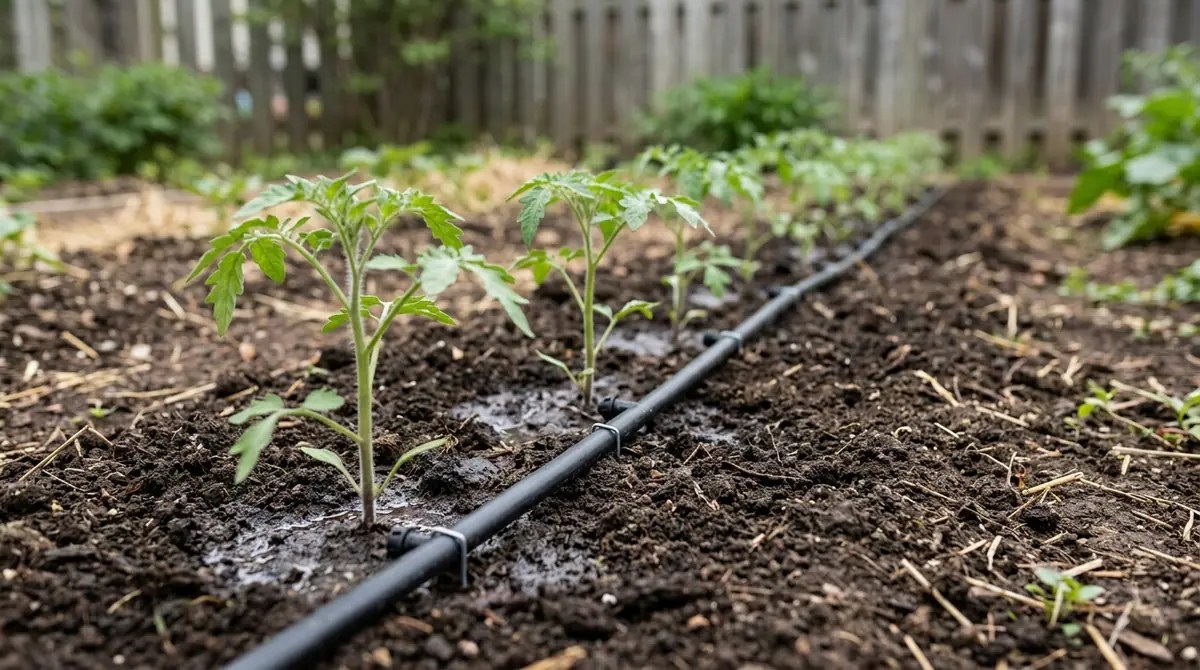
I was standing knee-deep in trial gardens beds on a brisk April morning three years ago, holding a tray of leggy 'Brandywine' tomato seedlings in one hand and checking my soil thermometer in the other, when the spring weather pulled its classic Zone 7a trick. The air felt deceptive—a warm 72°F (22°C) breeze made it feel like high summer. But when I plunged my stainless steel soil thermometer four inches deep into the earth, the dial hovered stubbornly at 52°F (11°C). If I had listened to the calendar or the afternoon sun, I would have set those tender nightshades straight into a cold, wet trap that stunts root growth and invites fungal pathogens. Instead, I waited three crucial weeks until the overnight lows stabilized above 55°F (13°C) and the soil hit a warm 65°F (18°C). That patience yielded a harvest that lasted until the first October frost.

1. Botanical Overview & Natural Habitat
To understand how to grow exceptional tomatoes (Solanum lycopersicum) in a landscaped edible garden, we have to look back at their ancestry. Native to the high-altitude, arid western slopes of the Andes mountains, as well as the coastal regions of Ecuador, Peru, and northern Chile, wild tomatoes evolved as short-lived perennials in tropical highland climates. They are accustomed to intense, direct sunlight, well-draining soils rich in organic matter, and diurnal temperature swings where warm days are followed by cool, refreshing nights.
Botanically, Solanum lycopersicum belongs to the nightshade family (Solanaceae), making them close cousins to peppers—which you can read more about in our How Deep Do Pepper Plant Roots Go? Pot Size & Substrate Depth Guide—as well as potatoes, eggplants, and petunias. Unlike tropical houseplants that demand high humidity and filtered light—such as the specimens in our Lipstick Plant (Aeschynanthus Radicans) Complete Care & Bloom Guide—tomatoes demand wide-open, sun-drenched architectural spaces.
In a Zone 7a landscape, we treat these tropical perennials as tender annuals. Our typical spring frost-free window opens between April 15 and May 1. However, relying solely on historical frost dates is a recipe for botanical disaster. Tomatoes are biologically hardwired to halt growth when soil temperatures drop below 55°F (13°C). Below 50°F (10°C), phosphorus uptake ceases, leading to purpling leaves and severe root stunting. Conversely, pollen production drops sharply when daytime temperatures exceed 90°F (32°C) or nighttime temperatures stay above 75°F (24°C), making precise seasonal timing vital for fruit set.
2. Essential Environmental & Care Requirements
Creating a thriving habitat for tomatoes in Zone 7a requires balancing sunlight, soil architecture, moisture, and nutrition. Because tomatoes are heavy feeders and vigorous growers, they leave little room for error if environmental parameters are neglected.
- Sunlight Exposure: Tomatoes require a minimum of 8 to 10 hours of direct, unobstructed sunlight daily. Shaded sites lead to weak, spindly stems, reduced flowering, and heightened susceptibility to foliar diseases like early blight.
- Soil Composition & pH: They thrive in loamy, well-draining soil rich in decomposed compost, with an optimal pH range between 6.2 and 6.8. Heavy clay soils, common across many Zone 7a regions, must be amended with organic matter to prevent waterlogging and root rot.
- Moisture Management: Consistent moisture is non-negotiable. Fluctuations between drought and heavy watering cause physiological disorders, most notably blossom end rot—a calcium deficiency induced by erratic water uptake—and fruit cracking. Aim for 1 to 2 inches (2.5 to 5 cm) of water weekly, delivered via drip irrigation or soaker hoses at the base to keep foliage dry.
- Air Circulation: Plant spacing must account for mature canopy size. Indeterminate varieties need 36 to 48 inches (91 to 122 cm) of spacing to allow prevailing winds to dry morning dew rapidly, breaking the infection cycle of fungal spores.
For additional region-specific planting guidance, consult the Clemson Cooperative Extension Home & Garden Information Center, which offers exceptional resources on vegetable production in temperate climates.
3. Step-by-Step Cultivation, Feeding & Propagation
Timing your planting in Zone 7a means starting seeds indoors 6 to 8 weeks before your local average last frost date—typically falling between late February and early March. By the time you transplant them outside in late April or early May, your seedlings should possess sturdy, pencil-thick stems and robust root systems.
Here is the exact step-by-step cultivation protocol I use in my design projects:
- Harden Off the Seedlings: Begin the hardening-off process 10 to 14 days before your planned outdoor planting date. Move your indoor-started seedlings to a sheltered, shaded outdoor spot for 2 hours on day one, gradually increasing exposure to direct sun and wind over two weeks until they can withstand 24 hours outdoors.
- Prepare the Planting Bed: Clear the bed of debris and incorporate 3 to 4 inches (7.5 to 10 cm) of aged compost and a balanced organic slow-release fertilizer into the top 8 to 12 inches (20 to 30 cm) of soil. Verify that the soil temperature has reached a consistent 60°F (15°C) at a 4-inch (10 cm) depth.
- Trench or Deep Plant: Remove the lower two sets of leaves from your tomato transplant. Dig a vertical hole 6 to 8 inches (15 to 20 cm) deep—or dig a horizontal trench if your starts are leggy—and bury the stem up to the top remaining leaves. Adventitious roots will sprout along the buried stem within 7 to 10 days, creating a massive, drought-resistant root network.
- Install Support Structures: Drive stakes, Florida weave systems, or heavy-duty cages into the ground immediately upon planting. Waiting until the plant is established risks driving stakes directly through the main root ball.
- Water and Mulch: Water the planting basin thoroughly with a dilute liquid kelp or seaweed solution to reduce transplant shock. Apply a 2-inch (5 cm) layer of clean wheat straw, shredded leaves, or untreated grass clippings around the base to suppress weeds and prevent soil-borne fungal spores from splashing onto lower leaves.
💡 Pro-Tip: When transplanting tomatoes into cool Zone 7a spring soils, pre-warm your garden beds 14 days prior by laying down black plastic sheeting or installing low tunnels (removable cold frames). This simple technique can elevate ground temperatures by 5°F to 8°F (-15°C to -13°C), allowing you to plant up to a week earlier without risking root check.
4. Common Problems, Pests & Troubleshooting
Even with perfect timing, Zone 7a gardeners face specific biotic and abiotic stresses. Recognizing these issues early saves your harvest.
| Parameter | Optimal Condition | Common Mistake | Why It Matters |
|---|---|---|---|
| Soil Temperature | 60°F–70°F (15°C–21°C) | Planting when air is warm but soil is cold (<50°F / 10°C) | Cold soil halts phosphorus uptake, stalls root growth, and invites fungal rot. |
| Planting Depth | Buried 6–8 inches (15–20 cm) deep | Setting plants at the exact depth they sat in the nursery pot | Shallow planting results in weak anchorage and poor drought tolerance. |
| Watering Cadence | Deep, consistent moisture (1–2 inches/week) | Frequent, shallow sprinkling on the surface | Shallow watering encourages surface root growth, making plants vulnerable to drought. |
| Foliar Hygiene | Dry leaves, good airflow, morning watering | Overhead evening irrigation | Wet foliage sitting overnight creates a primary breeding ground for blight and septoria spot. |
Fungal pathogens like Early Blight (Alternaria solani) and Septoria Leaf Spot are constant threats during humid Zone 7a springs. Prune away the lowest 12 inches (30 cm) of foliage once the plant reaches 3 years of maturity to eliminate splash-zone infections. For organic management of hornworms and aphids, encourage beneficial insects by interplanting with bright annuals, drawing inspiration from landscape strategies found in our The Complete Guide to Coleus Plants: 50+ Varieties, Care, Propagation & Landscaping.
⚠️ Important Caution: Never apply synthetic nitrogen heavy fertilizers once your tomato plants begin setting fruit. Excess nitrogen triggers explosive vegetative green growth at the expense of blossoms and fruit, while simultaneously attracting sap-sucking pests like aphids and whiteflies.

5. Frequently Asked Questions
What is the exact date to plant tomatoes outside in Zone 7a?
In Zone 7a, the average last spring frost occurs between April 15 and May 1. However, the exact planting date is determined by soil temperature rather than the calendar. You should plant outdoors only when night temperatures consistently remain above 55°F (13°C) and the soil temperature at a 4-inch (10 cm) depth reaches at least 60°F (15°C), which typically falls during the last week of April or the first week of May.
What happens if I plant my tomatoes too early in Zone 7a?
Planting too early exposes tender roots to cold, wet soils. This causes root stunting, phosphorus deficiency (manifested as purpling stems and leaves), and leaves the plant highly vulnerable to damping-off fungi and soil-borne pathogens. Cold-stressed tomatoes rarely catch up to plants set out at the proper time.
Should I plant determinate or indeterminate tomatoes in Zone 7a?
Both types perform exceptionally well in Zone 7a, but they serve different landscape goals. Determinate varieties (bush types) produce all their fruit in a concentrated 3-to-4-week window, making them ideal for canning or small gardens. Indeterminate varieties (vining types) grow and produce fruit continuously until the first autumn frost, providing a steady harvest for fresh eating all season long.
How can I protect my early-planted tomatoes from a late frost?
If an unexpected late spring frost threatens your newly transplanted tomatoes, cover them immediately with heavy frost cloth, cloches, or inverted 5-gallon buckets before sunset. Weigh down the edges with soil or stones to trap ground heat. Remove the covers by mid-morning once temperatures rise above freezing to prevent solar heat buildup. For comprehensive climate data and regional frost mapping, check the USDA Plant Hardiness Zone Map tool.
Related Guides
- When to Start Tomatoes Indoors Zone 6
- When to Plant Tomatoes Zone 7b
- When to Plant Tomatoes Zone 7
- When to Plant Tomatoes Zone 6b
- When to Plant Tomatoes Zone 6
📋 Table of Contents ▼ Click to expand
Tags:
Keep reading
🌿 Related Plants You Might Like






PlantSavvyWorld
Editorial team
PlantSavvyWorld is an independent botanical education project. Articles are drafted with AI assistance, then edited and checked against university extension services, botanical garden collections and other published horticultural sources.