

The Complete Guide to Coleus Plants: 50+ Varieties, Care, Propagation & Landscaping
Written with AI assistance, edited and checked against horticultural sources.
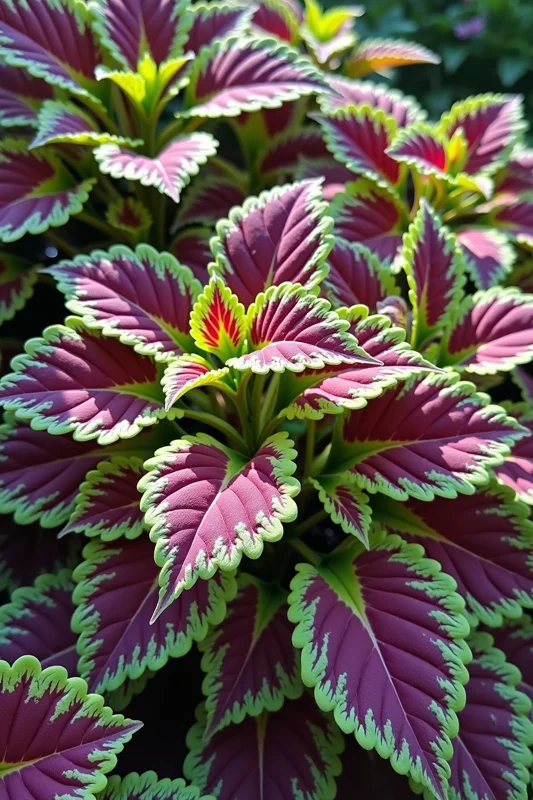
1. Botanical Overview & Natural Habitat
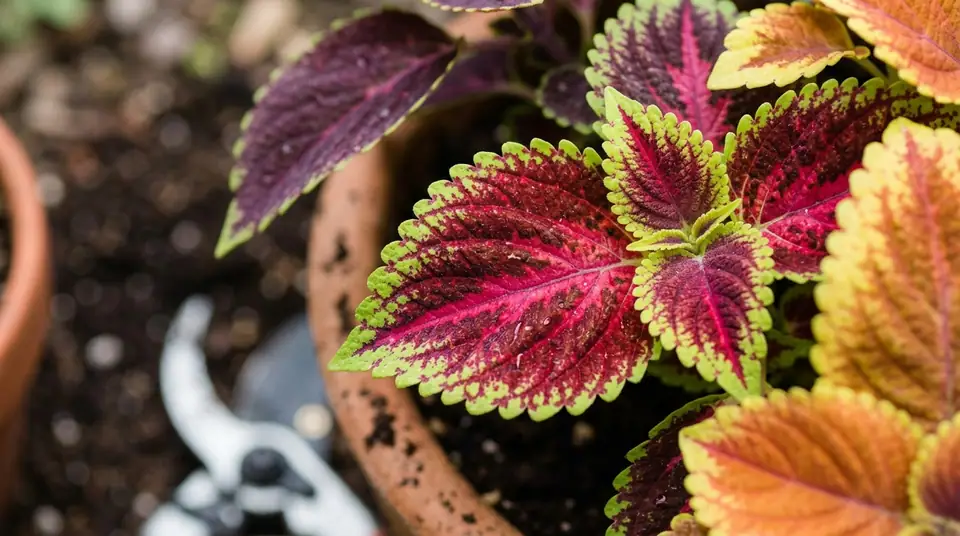
In their native understory habitats, coleus plants grow as semi-woody subshrubs receiving filtered sunlight, high ambient humidity, and consistently moist, organic-rich leaf mold. They have evolved square stems—a hallmark of the Lamiaceae (mint) family—and opposite, serrated or lobed leaves that showcase an astonishing spectrum of anthocyanin and carotenoid pigmentation. While they produce spikes of small, blue or white tubular flowers, experienced growers pinch these blooms off immediately to maintain vegetative vigor and rich leaf color.
For companion planting and contrasting textures in shady garden designs, I often pair coleus with species that share similar moisture requirements, such as trailing shade lovers detailed in our Lipstick Plant (Aeschynanthus Radicans) Complete Care & Bloom Guide, which offers a brilliant structural contrast to broad-leafed coleus varieties.
2. Essential Environmental & Care Requirements
Mastering coleus plant care means balancing light, soil moisture, and ambient temperature. Get these three variables right, and your plants will flourish whether grown in containers or directly in garden beds.
Light Intensity and Duration
Light dictates leaf coloration. Varieties with deep purples, maroons, and dark greens generally handle—and often require—morning sun to express their rich hues. Bright, indirect light or filtered shade is the golden standard. If your coleus turns pale green or washed out, it needs more light. If the leaf edges crisp and turn brown, it is getting too much direct solar radiation.
Temperature Parameters
As tropical natives, coleus plants hate the cold.
- Optimal Growth Range: 70°F to 85°F (21°C to 29°C)
- Minimum Threshold: Growth halts and tissue damage begins below 50°F (10°C).
- Frost Tolerance: Absolute zero; frost turns foliage into translucent mush instantly.
Soil and Hydration Mechanics
Coleus requires a rich, loamy, exceptionally well-drained growing medium with a pH between 6.0 and 6.5. If you are container gardening, use a peat-perlite blend that retains moisture without becoming waterlogged. For advanced container setups or when experimenting with subterranean root behavior similar to the principles in our How Deep Do Pepper Plant Roots Go? Pot Size & Substrate Depth Guide, ensure your pots are at least 8 to 12 inches (20 to 30 cm) deep to support robust root architecture.
| Parameter | Optimal Condition | Common Mistake | Why It Matters |
|---|---|---|---|
| Light | Bright indirect light to 3 hours of morning sun | Full, scorching afternoon sun | Direct heat bleaches pigments and scorches delicate leaf tissue. |
| Soil Moisture | Consistently damp, never soggy | Letting soil dry out completely | Drought causes irreversible wilting and lower leaf drop. |
| Temperature | 70°F–85°F (21°C–29°C) | Exposure below 50°F (10°C) | Cold shock stunts root uptake and causes cellular collapse. |
| Fertilizer | Balanced water-soluble feed at half-strength monthly | Over-fertilizing with high nitrogen | Excess nitrogen produces lush, weak stems and dulls color intensity. |
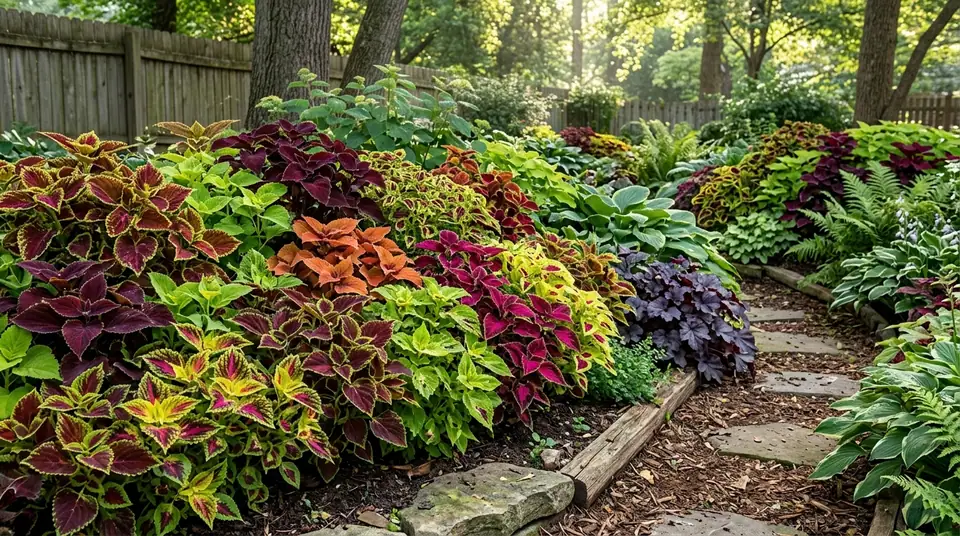
💡 Pro-Tip: When designing shaded borders, use dark-burgundy coleus varieties like 'Black Dragon' as a visual anchor behind chartreuse plants. The contrast amplifies the perceived luminosity of the lighter foliage, making shady corners of the garden pop even on overcast days.
3. Step-by-Step Cultivation, Feeding & Propagation
Propagating coleus is so reliable that it serves as an ideal horticultural project for beginners. Because modern cultivars are frequently patented hybrids, growing them from seed does not always guarantee traits true to the parent plant; stem cuttings are the gold standard.
Step-by-Step Stem Cuttings Propagation
- Select a Stock Plant: Choose a healthy, disease-free parent coleus with vibrant coloration and strong stems.
- Take the Cutting: Using sterilized shears, cut a 4 to 6-inch (10 to 15 cm) terminal shoot directly below a leaf node.
- Strip Lower Foliage: Remove the bottom two sets of leaves, leaving only one or two pairs of leaves at the top.
- Rooting Medium Insertion: Dip the cut end into rooting hormone (optional) and insert the cutting 2 inches (5 cm) deep into a pre-moistened mixture of half perlite and half peat moss.
- Maintain Humidity: Enclose the pot in a clear plastic bag or propagation dome to lock in moisture, placing it in bright, indirect light at 72°F to 75°F (22°C to 24°C).
- Transplant: Roots will develop in 14 to 21 days. Once roots reach 1 inch (2.5 cm) in length, pot the cutting into its permanent container or garden location.
For home gardeners expanding their edible or ornamental landscapes into cooler microclimates, aligning your outdoor planting schedules with regional frost dates is vital—much like timing seasonal crops using resources such as the When to Plant Onions in Southern California (Zone 9 & 10 Planting Calendar).
⚠️ Important Caution: Coleus plants contain diterpenoid compounds that can be toxic to domestic pets, particularly cats and dogs, if ingested in large quantities, causing severe gastrointestinal distress and loss of coordination. Keep prized specimens out of reach of curious animals.
4. Common Problems, Pests & Troubleshooting
Even with meticulous care, coleus plants can encounter environmental stress and pest pressures. Early identification is your best defense.
Leggy Growth and Sparse Stems
If your coleus looks stretched out with wide gaps between the leaves, it is starving for light or needs to be pinched back. Use clean fingers or snips to pinch off the growing tips of every main stem right above a leaf node. This triggers dormant side buds to activate, resulting in a dense, bushy plant within 14 days.
Root Rot (Pythium and Rhizoctonia)
Soggy soil combined with cool temperatures invites soil-borne fungi that attack the root system, causing sudden wilting despite wet earth. To prevent this, always ensure pots feature adequate drainage holes. For academic guidance on managing soil pathogens and plant health, consult resources provided by the Royal Horticultural Society (RHS).
Common Insect Pests
- Mealybugs: Look for white, cottony masses in leaf axils. Dab them with a cotton swab dipped in 70% isopropyl alcohol.
- Aphids: These soft-bodied sap-suckers cluster on new growth tips. Blast them off with a strong stream of water or treat with insecticidal soap.
- Whiteflies: Undersides of leaves buzzing with tiny white moths indicate an infestation; deploy yellow sticky cards and neem oil applications.
5. Frequently Asked Questions
Can coleus plants survive the winter outdoors?
Coleus plants are strictly tropical tender perennials. In USDA Hardiness Zones 10 through 11, they can live outdoors year-round. In zones 9 and colder, they will die the moment freezing temperatures hit. To preserve your favorite cultivars through winter, take stem cuttings in late summer and grow them indoors as houseplants until spring.
Why are the leaves on my coleus turning brown and crispy?
Crisp, brown leaf edges indicate sunburn from excessive direct sunlight, combined with low ambient humidity or underwatering. Move your plant to a location receiving gentle morning light and check your watering frequency to ensure the root ball never completely dries out.
Should I cut off the flowers on my coleus?
Yes, you should snip off flower spikes as soon as they appear. Coleus flowers are modest and insignificant compared to their foliage. Allowing the plant to flower diverts metabolic energy away from leaf production and can trigger the plant to enter a woody, decline phase earlier than normal.
How often should I fertilize potted coleus plants?
Feed potted coleus plants every 4 weeks during their active growing season (spring through early autumn) using a balanced, water-soluble fertilizer diluted to half-strength. Stop fertilizing entirely during late autumn and winter when natural light levels drop and growth slows down.
Related Guides
- Best Cucumber Varieties
- Sphagnum Moss for Propagation
- Texas Landscaping Ideas
- Planting Landscaping Under Pine Trees
- Creative Landscaping Ideas Around Tree Roots
📋 Table of Contents ▼ Click to expand
Tags:
Keep reading
🌿 Related Plants You Might Like



PlantSavvyWorld
Editorial team
PlantSavvyWorld is an independent botanical education project. Articles are drafted with AI assistance, then edited and checked against university extension services, botanical garden collections and other published horticultural sources.