

When to Plant Tomatoes Zone 6
Written with AI assistance, edited and checked against horticultural sources.
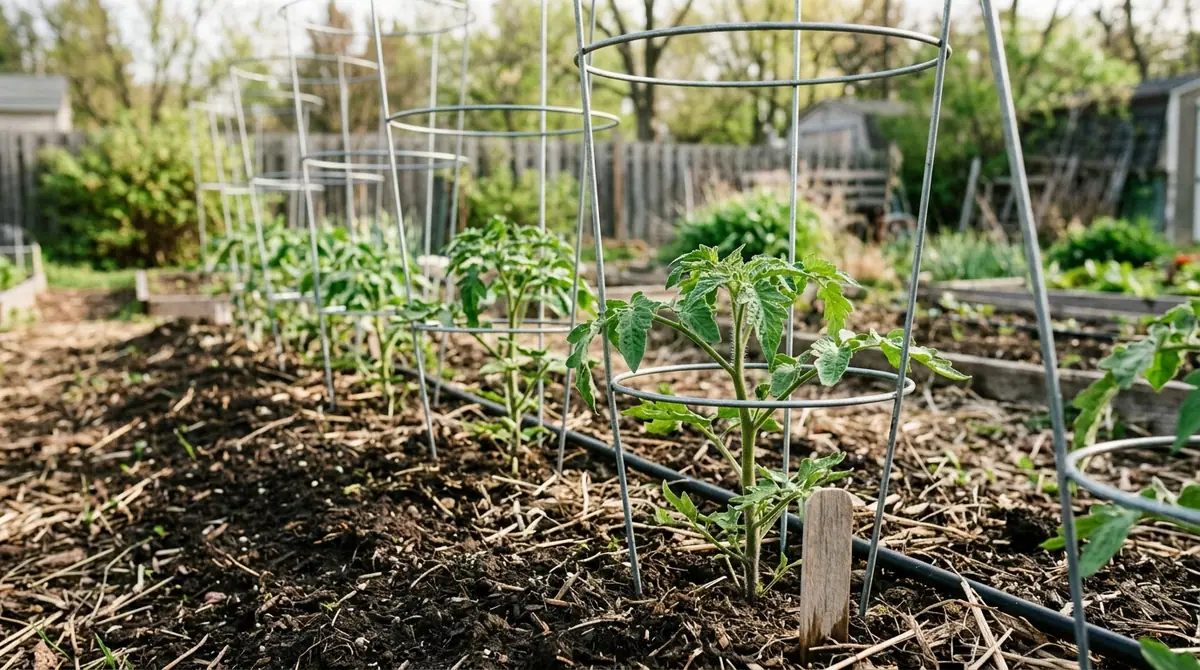
I stood in trial gardens on May 12th last spring, holding a tray of leggy 'Brandywine' seedlings in one hand and a soil thermometer in the other, watching a stubborn, unseasonal frost crust the tips of my mulch. Every instinct whispered that the calendar said May, so it must be time. But the soil probe told the real story: 52°F (11°C) at a four-inch depth. If I had planted that morning, those tender tropical perennials would have stalled, turned purple with phosphorus lockout, and spent the next month just trying to survive instead of growing. In USDA Hardiness Zone 6—where average last frost dates span from April 15 to May 15 depending on whether you are nestled in urban heat islands or sweeping suburban valleys—timing is everything when growing Solanum lycopersicum.
1. Botanical Overview & Natural Habitat

In their native South American habitat, tomatoes evolved under intense UV light, rocky, well-draining soils, and wide diurnal temperature swings. When we transport them to Zone 6—where winter temperatures plunge to -10°F to 0°F (-23°C to -18°C) and spring transitions can be violently erratic—we are forcing a tropical mountaineer to behave like a temperate sprinter.
The biological clock of a tomato plant starts indoors, usually 6 to 8 weeks before your local average last frost date. In Zone 6, seeding indoors typically occurs between mid-March and early April. By the time you transplant them outside—usually between late April and late May—you want a sturdy, stocky plant with a stem diameter roughly the thickness of a pencil (0.25 inches or 0.6 cm) and the beginnings of first flower buds, but ideally no open blossoms yet.
Understanding this native habitat explains why tomatoes throw tantrums when planted too early. They do not merely dislike the cold; their metabolic processes grind to a halt below certain thermal thresholds. When soil temperatures drop beneath 60°F (15°C), root elongation stops, and mycorrhizal partnerships fail to establish.
2. Essential Environmental & Care Requirements
Zone 6 weather requires calculated patience. You cannot plant by the calendar alone; you must plant by the soil thermometer and atmospheric stability.
| Parameter | Optimal Condition | Common Mistake | Why It Matters |
|---|---|---|---|
| Soil Temperature | 60°F to 70°F (15°C to 21°C) | Planting when air feels warm but soil is cold (<55°F / 13°C) | Cold soil halts phosphorus uptake, causing stunted, purple-veined foliage and root rot. |
| Air Temperature | 70°F to 85°F (21°C to 29°C) | Leaving plants exposed to sudden late-spring frosts (<32°F / 0°C) | Ice crystals rupture cell walls, turning foliage to mush and killing unhardened tissue. |
| Sunlight | 6 to 8+ hours of direct, unfiltered sun | Placing plants in partial shade or morning-only light | Low light reduces photosynthetic capacity, leading to leggy vines and watery, tasteless fruit. |
| Soil pH | 6.2 to 6.8 | Ignoring pH extremes (acidic <5.5 or alkaline >7.5) | Extreme pH locks up essential micronutrients like calcium and magnesium, triggering blossom end rot. |
| Moisture | 1 to 2 inches (2.5 to 5 cm) of water weekly | Shallow, daily sprinkling | Deep watering encourages roots to chase moisture downward, building drought-tolerant plants. |
To achieve these conditions in Zone 6, site selection is your first line of defense. Choose a southern or southwestern exposure protected from prevailing spring winds. If you are integrating tomatoes into an existing edible landscape, make sure they aren't shaded by structures or large trees coming into leaf. For those transitioning other warm-weather crops, the principles of avoiding transplant shock here are remarkably similar to When to Transplant Cucumber Seedlings: Stop Root Shock & Boost Growth.
⚠️ Important Caution: Do not rush the hardening-off process. Exposing indoor-grown seedlings to direct Zone 6 UV rays, wind, and fluctuating temperatures without a 7-to-10-day graduation period will cause leaf scorch, sunscald, and irreversible cellular shock.
3. Step-by-Step Cultivation, Feeding & Propagation
Planting tomatoes in Zone 6 requires a precise operational sequence. Follow this step-by-step protocol to transition your plants from indoor trays to high-yielding garden centerpieces.
- Verify Soil Temperature and Weather Stasis: Insert a soil thermometer 4 inches (10 cm) deep into your garden bed at 9:00 AM. Do not plant until the reading hits a consistent 60°F (15°C) for three consecutive days, and ensure the extended forecast shows no night temperatures dipping below 50°F (10°C).
- Prepare the Trench or Deep Hole: Dig a hole or a horizontal trench 6 to 8 inches (15 to 20 cm) deep. If your transplants are leggy, trenching is superior; tomatoes possess adventitious roots along their stems and will root entirely along the buried portion.
- Amend the Root Zone: Mix 2 inches (5 cm) of aged compost, a handful of organic bone meal (for phosphorus), and a half-cup of crushed eggshells or agricultural lime directly into the bottom of the planting hole to provide slow-release calcium.
- Strip Lower Foliage: Gently pinch off the bottom set of leaves from each seedling, leaving only the top cluster of foliage. This prevents soil-borne pathogens from splashing onto lower leaves during rain.
- Set the Plant and Backfill: Place the root ball (or the angled, trenched stem) into the soil. For leggy plants laid horizontally, gently curve the top of the plant upward so it points toward the sky. Backfill firmly to eliminate air pockets around the roots.
- Water in with Liquid Kelp: Drench the root zone thoroughly with a diluted seaweed or kelp extract solution (following manufacturer dilution rates, typically 1 oz per gallon) to stimulate rapid root hair development and mitigate transplant shock.
- Apply Mulch and Install Supports: Apply a 3-inch (7.5 cm) layer of clean straw, shredded leaves, or untreated grass clippings around the base to suppress weeds and retain moisture. Install cages, stakes, or Florida weave trellises immediately while the plants are small to avoid damaging root systems later.
💡 Pro-Tip: When trenching tomato stems horizontally, make sure to orient the top of the plant toward the south. The plant will naturally correct itself and grow upright toward the sun within 48 hours, while gaining an extra-long, ultra-vigorous root system along the buried stem.
For those interested in expanding their seasonal kitchen garden calendar beyond solanaceous crops, mastering succession planting techniques is invaluable. For instance, northern growers balancing cool-season transitions can cross-reference strategies with guides like When to Plant Strawberries in Kansas: Zone 6a/6b Seasonal Calendar to optimize every square foot of growing space.
4. Common Problems, Pests & Troubleshooting
Even with perfect timing, Zone 6 weather can throw curveballs—from late May cold snaps to humid July heatwaves that invite fungal spores.
Blossom End Rot
Appearing as a sunken, leathery black patch on the bottom of developing fruit, this physiological disorder is caused by a localized calcium deficiency. Even if your soil has adequate calcium, irregular watering patterns prevent the plant from transpiring enough water to pull calcium up into the fruit tissue. Maintain consistent soil moisture and avoid letting beds swing wildly between bone-dry and saturated.
Early Blight (Alternaria solani)
Triggered by warm, humid spring rains and splashing soil, early blight manifests as dark brown spots with concentric rings on lower leaves, eventually causing yellowing and defoliation. Combat this by practicing strict crop rotation, pruning lower leaves up to 18 inches (45 cm) from the ground as the plant grows, and applying a preventive bio-fungicide like Bacillus subtilis during wet spells.
Tomato Hornworms (Manduca quinquemaculata)
These massive green caterpillars can strip a tomato plant of its foliage and green fruit overnight. Look for dark green frass (droppings) on the leaves below them. Hand-picking is effective for small gardens; if you spot white, rice-like cocoons on a hornworm's back, leave it alone—those are parasitic braconid wasp larvae that will hatch and decimate the pest population naturally.

5. Frequently Asked Questions
What happens if I plant my tomatoes too early in Zone 6?
If you plant tomatoes into cold Zone 6 soil (below 55°F or 13°C), the plant's metabolism stalls. Phosphorus uptake drops to near zero, causing the leaves to turn a purplish color, roots to stop growing, and the plant to become highly susceptible to root rot and fungal pathogens. At best, early planting buys you zero growth advantage; at worst, it stunts your plants for the entire season.
How do I know when the soil is warm enough in Zone 6?
Do not rely on the air temperature or how the dirt feels to your hands. Use a digital kitchen or soil thermometer inserted 4 inches (10 cm) deep into the garden bed around mid-morning. When the thermometer reads a stable 60°F (15°C) or higher for three consecutive days, your soil is officially ready for tomatoes.
Should I bury tomato stems sideways or straight down?
If your tomato seedlings are tall, spindly, or leggy from indoor lighting, burying them sideways in a horizontal trench (leaving the top 3 to 4 inches upright) is the superior choice. Tomatoes form roots all along their buried stems, resulting in a massive, anchor-like root system. If your seedlings are short, thick, and stocky, planting them straight down in a deep hole works wonderfully.
Can I use frost cloth to plant earlier in Zone 6?
Floating row covers and frost blankets can raise ambient temperatures around the plant by 4°F to 8°F (-15°C to -13°C) and protect against light frosts. However, they do not warm the underlying soil. You can use frost cloth in late April or early May to protect plants from wind and minor chill, provided the soil temperature has already reached the critical 60°F (15°C) threshold.
Related Guides
- When to Start Tomatoes Indoors Zone 6
- When to Plant Tomatoes Zone 7b
- When to Plant Tomatoes Zone 7
- When to Plant Tomatoes Zone 6b
- When to Plant Tomatoes in Zone 7b
📋 Table of Contents ▼ Click to expand
Tags:
Keep reading
🌿 Related Plants You Might Like



PlantSavvyWorld
Editorial team
PlantSavvyWorld is an independent botanical education project. Articles are drafted with AI assistance, then edited and checked against university extension services, botanical garden collections and other published horticultural sources.