

Plectranthus Velvet Elvis
Written with AI assistance, edited and checked against horticultural sources.
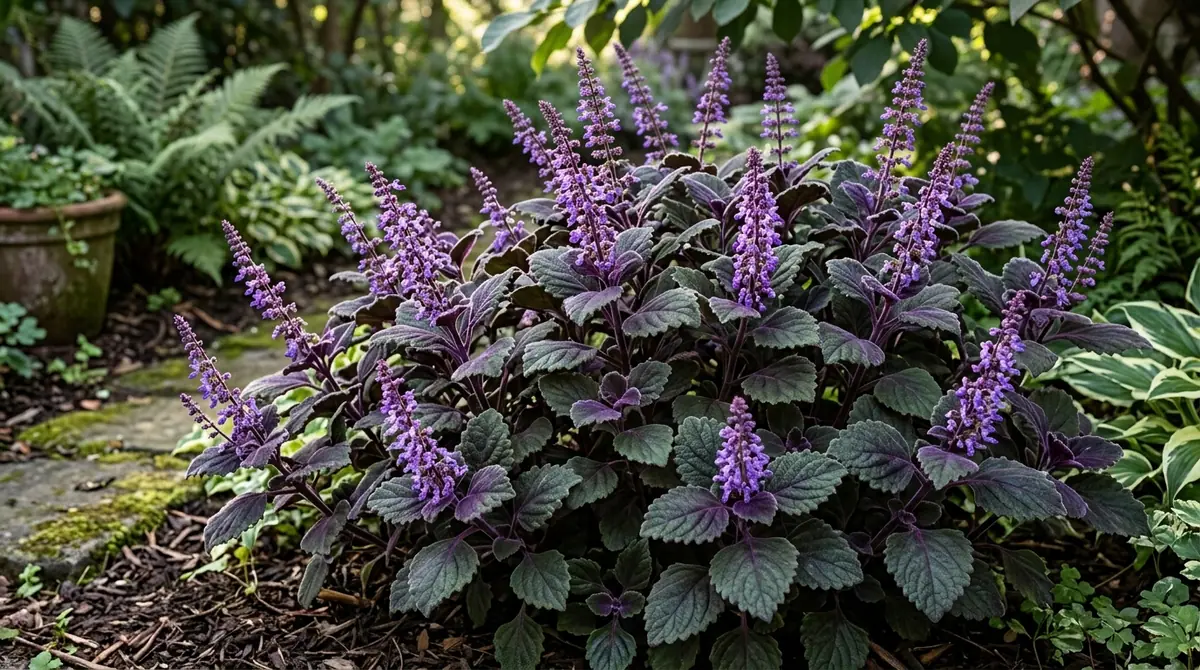
I first trialed Plectranthus 'Velvet Elvis' in trial gardens during a brutally hot, humid July when half my shade collection was melting from fungal rot. While the traditional coleus cultivars turned to mush and my begonias scorched, this South African native stood out with dark, velvety purple blooms and rich, indumentum-fuzzed leaves that seemed to radiate an inner light. It didn't just survive the heat wave; it anchored the entire shade border, putting on a floral show well into December. If you have been searching for a reliable perennial that brings rich color to dappled shade without the fuss of high-maintenance annuals, this hybrid is about to become your secret weapon.
1. Botanical Overview & Natural Habitat

Understanding its lineage helps explain its quirks. Native to the forest margins and wooded kloofs of eastern South Africa, this plant evolved beneath a canopy of deciduous trees. This means it is accustomed to filtered sunlight, rich and loose organic debris underfoot, and seasonal shifts in moisture. The stems are semi-succulent, storing water to help the plant weather brief dry spells between rainfall events. The undersides of the leaves feature tiny glandular hairs that release a subtle, pleasant camphor-like fragrance when bruised, which naturally deters browsing herbivores.
| Parameter | Optimal Condition | Common Mistake | Why It Matters |
|---|---|---|---|
| USDA Hardiness | Zones 10–11 (perennial); Zones 8–9 (tender perennial); grown as an annual elsewhere | Treating it as a fully cold-hardy perennial in Zone 5 | Freezing temperatures below 30°F (-1°C) turn the semi-succulent stems to mush, killing the root crown. |
| Mature Size | 24 to 36 inches (60 to 90 cm) tall and wide | Crowding plants too tightly in a border | Lack of air circulation around the dense canopy promotes fungal diseases like powdery mildew. |
| Bloom Period | Late summer to first frost (typically September through November) | Heavy pruning in late summer | Cutting the plant back late removes the developing flower buds that form on terminal growth. |
| Foliage Color | Deep green with dark purple undersides and velvety texture | Planting in full, scorching afternoon sun | Direct midday sun bleaches the foliage, burns leaf margins, and causes rapid moisture stress. |
2. Essential Environmental & Care Requirements
To get the absolute best performance out of Plectranthus 'Velvet Elvis', you must balance light, moisture, and soil composition to mimic its native subtropical woodland edge habitat.
Light Conditions In USDA Zones 9 through 11, plant 'Velvet Elvis' in bright, dappled shade or morning sun with protection from harsh afternoon rays between 12:00 PM and 4:00 PM. In cooler climates (Zones 4 through 7), it can handle several hours of direct morning sun, which actually intensifies the purple coloration of the blooms. Never place it in deep, dark shade; without at least 3 to 4 hours of bright, indirect light, the stems will stretch, become leggy, and fail to set flowers.
Temperature and Hardiness This plant thrives in ambient temperatures between 65°F and 85°F (18°C to 29°C). It is reliably perennial only in USDA Zones 10 and 11. In Zones 8 and 9, it will often die back to the ground after a hard frost but reliably re-emerge from the roots in spring. In colder zones, treat it as a show-stopping annual or bring container-grown specimens indoors before the first autumn frost drops temperatures below 35°F (1.7°C).
Soil and Drainage The golden rule of growing Plectranthus is simple: soil must drain freely. While the plant appreciates moisture, standing water is a death sentence. Amend heavy clay or dense native soil with a 2 to 3-inch (5 to 7.5 cm) layer of compost, coarse sand, or bark fines to ensure a loose, loamy texture with a neutral to slightly acidic pH between 6.0 and 6.8.
💡 Pro-Tip: When planting 'Velvet Elvis' in containers, avoid standard potting soils that retain too much moisture. Mix 60% high-quality potting mix with 30% perlite and 10% orchid bark. This creates the exact aerated, fast-draining matrix that prevents the semi-succulent root system from suffocating or rotting during prolonged autumn rains.
Watering Protocol Water deeply whenever the top 1.5 to 2 inches (3.8 to 5 cm) of soil feels dry to the touch. During peak summer heat, established garden beds may need deep irrigation twice a week. Container plants drying out faster may require daily watering. Always water the base of the plant directly rather than overhead, keeping the foliage dry to prevent foliar pathogens.
3. Step-by-Step Cultivation, Feeding & Propagation
Establishing a healthy stand of Plectranthus 'Velvet Elvis' requires precise timing, proper soil preparation, and strategic pruning. Follow this protocol for lush growth and maximum flower production.
- Site Selection and Soil Preparation: Choose a location with morning sun and afternoon shade. Dig a hole twice as wide as the nursery container and equal in depth. Mix a handful of organic, slow-release balanced fertilizer into the excavated native soil.
- Planting: Gently ease the plant from its container, teasing out any circling roots. Set the root ball so the top of the soil sits level with the surrounding garden bed. Backfill firmly and water thoroughly to settle the soil around the roots.
- Initial Pinching: When the plant reaches 12 inches (30 cm) in height, use clean pruning shears to pinch back the growing tips by 1 to 2 inches (2.5 to 5 cm). This encourages lateral branching and prevents a sparse, single-stem habit.
- Fertilization Schedule: Feed container plants every 3 to 4 weeks throughout the spring and summer using a water-soluble, low-nitrogen, high-phosphorus fertilizer (such as a 5-10-10 or bloom-booster formula) to encourage floral development over excessive green foliage. In garden beds, a single application of slow-release organic fertilizer in early spring is generally sufficient.
- Mid-Season Maintenance: Prune back leggy stems by up to one-third in early July to maintain a dense, compact shrubby form. Stop all major pruning by August 1st to ensure you do not clip off the emerging flower buds.
- Propagation via Cuttings: Take 4 to 6-inch (10 to 15 cm) stem cuttings from non-flowering tips in late summer. Strip the lower leaves, dip the cut end in rooting hormone, and insert it into a moist mix of perlite and peat. Roots typically form within 14 to 21 days at a stable temperature of 70°F (21°C).
⚠️ Important Caution: Because Plectranthus 'Velvet Elvis' has semi-succulent stems, never allow containers to sit in saucers filled with standing water for more than 15 minutes. Extended water saturation rapidly causes stem rot at the soil line, which can kill a mature plant within 48 hours. For more detailed guidelines on managing tender perennials, consult the Royal Horticultural Society.
4. Common Problems, Pests & Troubleshooting
Even with ideal care, you may occasionally encounter environmental stress or pest pressures. Here is how to diagnose and resolve them quickly.
Leggy Growth and Poor Bloom If your plant is tall, floppy, and lacks the signature purple spikes, it is almost certainly starved for light or over-fertilized with nitrogen. Relocate container plants to a brighter exposure. If planted in the ground, prune back the longest stems by half to stimulate bushier growth, and switch to a phosphorus-heavy fertilizer. For further research on optimal light exposures in residential landscapes, reference resources provided by the University of Florida IFAS Extension.
Wilting Despite Moist Soil If the leaves droop but the soil is wet, check the base of the stems. Soft, mushy, or blackened tissue indicates stem rot caused by Pythium or Rhizoctonia fungi, often triggered by overwatering or compacted soil. Discard infected plants immediately to prevent spread, and adjust your watering frequency for remaining specimens.

5. Frequently Asked Questions
Can I grow Plectranthus Velvet Elvis indoors as a houseplant?
Yes, absolutely. Plectranthus 'Velvet Elvis' adapts remarkably well to indoor culture during the winter months. Place it in a bright, south- or west-facing window where it receives at least 6 hours of indirect light daily. Reduce your watering frequency significantly during winter, allowing the top 2 inches (5 cm) of soil to dry out completely between waterings, as indoor heating and lower light levels slow down the plant's metabolic rate.
Is Plectranthus Velvet Elvis toxic to cats and dogs?
According to horticultural toxicology databases and the ASPCA, most plants within the Plectranthus genus are considered non-toxic to domestic cats and dogs. However, because the leaves contain aromatic essential oils, chewing on large quantities of raw foliage can occasionally cause mild gastrointestinal upset, vomiting, or drooling in curious pets. It is always best to place plants out of reach of heavy-chewing household animals.
How do I overwinter Plectranthus Velvet Elvis in cold climates?
If you live in USDA Zone 7 or colder, you cannot leave the plant in the ground over winter. Take 4-inch (10 cm) stem cuttings in late August or September and root them indoors in small pots to act as your starter plants for the following spring. Alternatively, you can dig up your entire garden specimen, pot it in a container, prune it back by half, and bring it indoors to a sunny, frost-free room before outdoor temperatures drop below 35°F (1.7°C).
When should I prune my Plectranthus Velvet Elvis for maximum flowers?
Perform your structural pruning and heavy shaping in late spring (May to June) after the threat of frost has passed. You can do a light pinch or tip-trimming up until early July to encourage bushiness. Cease all pruning by August 1st. Because 'Velvet Elvis' sets its flower buds on new terminal growth developed during late summer, cutting the plant back in August or September will directly sacrifice your autumn floral display.
Related Guides
📋 Table of Contents ▼ Click to expand
Tags:
🌿 Related Plants You Might Like
PlantSavvyWorld
Editorial team
PlantSavvyWorld is an independent botanical education project. Articles are drafted with AI assistance, then edited and checked against university extension services, botanical garden collections and other published horticultural sources.