

How to Plant Comfrey
Written with AI assistance, edited and checked against horticultural sources.
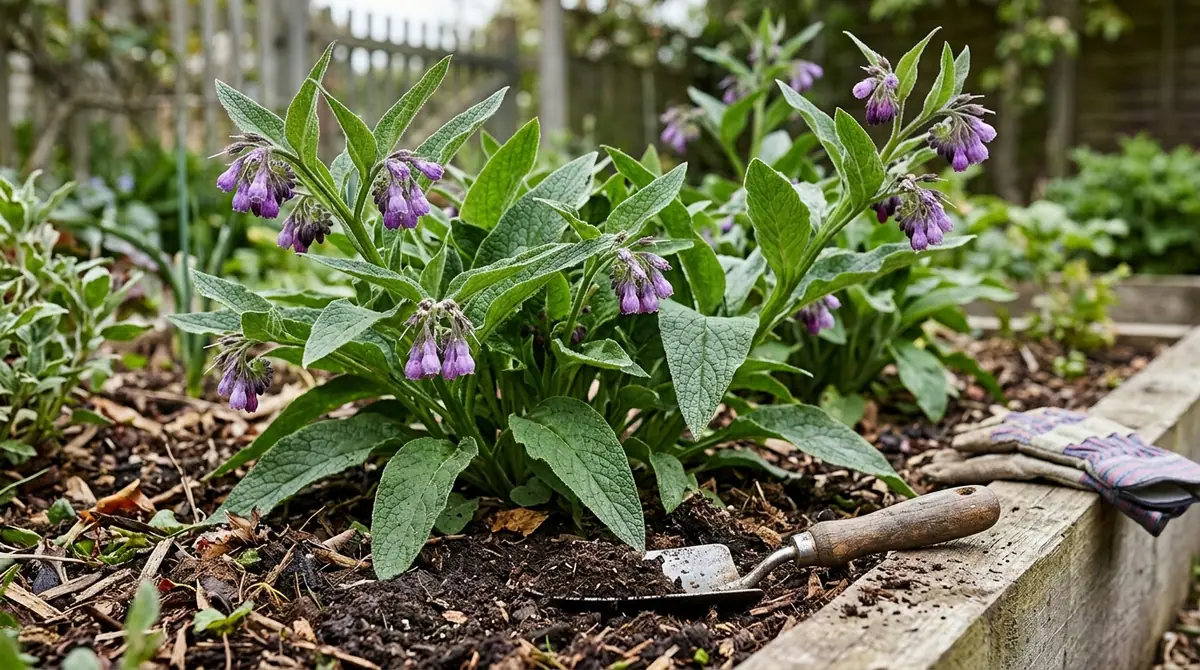
I was down on my knees in the nursery gardens three springs ago, trying to yank a stray piece of Symphytum officinale out from beneath a row of overwintered brassicas, when the root snapped clean in half. I thought nothing of it, tossed the broken fragment aside onto the bare soil, and moved on. Two months later, I walked past that exact bed to check on my trial When to Plant Brussel Sprouts in Zone 7 crop, only to find a lush, dark-green comfrey crown thriving right where that discarded root fragment had landed. That day cemented my absolute respect for this plant's biological tenacity. Comfrey does not merely survive cultivation; it demands to be propagated. Whether you want to establish a living mulch, build a powerhouse green manure factory, or mine deep subsoil nutrients for your heavy feeders—such as the ones you might plant when figuring out When to Plant Pumpkins in Southern California—mastering how to plant comfrey is the ultimate skill for any forward-thinking landscape designer.
1. Botanical Overview & Natural Habitat

Morphologically, comfrey is a herbaceous perennial built like an ecological tank. It features a thick, fleshy, highly branched taproot system that can easily plunge 6 to 10 feet (1.8 to 3 meters) deep into the soil profile. This exceptional root architecture acts as a vertical mineral mining operation, pulling up potassium, calcium, magnesium, and trace elements that remain entirely out of reach for shallow-rooted crops like the ones managed in a typical When to Plant Carrots in Zone 8a schedule. Above ground, comfrey forms a dense, upright clump of coarse, hairy, lanceolate leaves that can reach 3 feet (90 cm) in height and spread equally wide.
In its native Eurasian habitats, comfrey thrives along damp woodland edges, riverbanks, and nutrient-rich ditches. It has evolved to handle seasonal flooding, high nitrogen loads, and heavy, moisture-retentive clays. Understanding this natural habitat dictates everything we do when we bring it into our designed landscapes. It is not a drought-tolerant desert plant; it is a riparian-adapted biomass machine that rewards you exponentially for providing adequate moisture and rich organic matter.
2. Essential Environmental & Care Requirements
Getting comfrey to thrive requires matching its environmental preferences to your site conditions. While it is remarkably adaptable, ignoring its core requirements will result in stunted, chlorotic foliage that fails to provide the heavy harvests of leaves you need for chop-and-drop mulching or liquid fertilizers.
Light is your first consideration. Comfrey performs best in full sun to partial shade. In cooler climates receiving 6 hours or more of direct sunlight daily, it produces maximal leaf biomass. In hotter, arid regions, afternoon shade prevents leaf scorch and reduces transpirational stress.
Soil composition dictates root health. Comfrey demands deep, fertile, moisture-retentive soils with a neutral pH between 6.0 and 7.0, though it tolerates down to 5.5 and up to 7.5. Because its taproots go deep, heavy clay is acceptable, provided it is not waterlogged year-round. Sandy soils require heavy amendments of compost to retain the moisture comfrey craves.
Water is the primary driver of comfrey growth. Established plants require roughly 1 inch (2.5 cm) of water per week, either from rainfall or irrigation. During prolonged dry spells, growth stalls noticeably.
| Parameter | Optimal Condition | Common Mistake | Why It Matters |
|---|---|---|---|
| Soil pH | 6.0 to 7.0 | Planting in highly acidic soil (<5.5) | Locks out essential micronutrients, stunting leaf production. |
| Watering | 1 inch (2.5 cm) per week | Allowing root ball to dry out completely | Causes premature dormancy and reduces harvestable biomass. |
| Sunlight | Full sun to partial shade | Deep, dense shade | Results in spindly stems, weak cell walls, and low nutrient density. |
| Spacing | 3 feet (90 cm) on center | Crowding plants closer than 2 feet | Promotes fungal diseases like powdery mildew due to poor airflow. |
💡 Pro-Tip: When planning your comfrey patch layout, site your plants directly uphill or adjacent to heavy-feeding vegetable beds, such as those you establish when working out When to Plant Bok Choy Zone 7. This positioning ensures that when you harvest the leaves for liquid fertilizer or chop-and-drop mulch, you are moving the nutrient bounty downhill with minimal physical effort.
3. Step-by-Step Cultivation, Feeding & Propagation
True comfrey (specifically Bocking 14) does not produce viable seeds. Therefore, propagation is strictly vegetative—accomplished using root cuttings (called root sets or crown divisions). Purchasing certified Bocking 14 root cuttings from a reputable propagator is the gold standard for starting your patch.
Here is the exact step-by-step protocol for planting comfrey successfully:
- Site Preparation: Clear the chosen area of perennial weeds. Dig the soil down to a depth of 12 to 18 inches (30 to 45 cm) to loosen the profile, and incorporate a generous 3-inch (7.5 cm) layer of well-rotted compost or aged manure to jumpstart microbial activity.
- Timing Your Planting: Plant your root cuttings in early spring as the soil warms to 50°F (10°C), or in early autumn while the soil is still retaining summer warmth. Avoid planting during freezing winter periods or scorching mid-summer droughts.
- Preparing Root Sets: Cut your purchased or harvested comfrey root sections into lengths of 2 to 3 inches (5 to 7.5 cm). Ensure each section has at least one visible, plump growth bud (eye).
- Digging Planting Holes: Dig individual holes spaced 3 feet (90 cm) apart in a grid pattern. This generous spacing is crucial because a mature plant forms a massive crown that easily spans 3 feet across.
- Positioning the Root Set: Place the root cutting horizontally or vertically at a depth of 2 to 3 inches (5 to 7.5 cm) below the soil surface. If the orientation of the bud is ambiguous, lay the root completely flat horizontally; gravity and plant hormones will sort out the upward growth automatically.
- Backfilling and Tamping: Backfill the planting hole gently with the excavated soil-compost blend, pressing down firmly with your hands to eliminate large air pockets around the root tissue.
- Initial Watering: Water the planting bed thoroughly immediately after installation, delivering roughly 1 inch (2.5 cm) of water to settle the soil around the cuttings. Keep the soil consistently moist—never soggy—over the next 21 to 30 days until green shoots emerge from the surface.
⚠️ Important Caution: Never plant comfrey near sensitive perennial borders or structural foundations where you cannot easily contain its spread. Even with sterile Bocking 14, leaving a tiny 1-inch piece of root in the soil during weeding can result in an unexpected new plant popping up months later. For detailed guidance on managing garden layouts and soil profiles in specific regions, consult resources from the Royal Horticultural Society and the Utah State University Extension.
4. Common Problems, Pests & Troubleshooting
Even though comfrey is notoriously tough, it is not completely immune to environmental stress and opportunistic pathogens.
Powdery Mildew (Erysiphe species): This fungal disease appears as a white, powdery dusting on the upper leaf surfaces during humid mid-summer conditions with poor air circulation. To prevent it, ensure your plants are spaced at least 3 feet apart. If it appears, remove severely affected lower leaves to improve airflow, and avoid overhead watering late in the evening.
Slug and Snail Damage: Young comfrey shoots emerging in spring are vulnerable to slug feeding, which leaves ragged holes in the lush foliage. Control populations by applying certified organic iron phosphate baits around the crown perimeter or clearing away heavy leaf litter that serves as daytime hiding spots.

5. Frequently Asked Questions
Can you grow comfrey in a container?
Yes, but you need an exceptionally large container—at least a 15-to-20-gallon (57-to-75-liter) pot or a half-whiskey barrel. Because comfrey develops a massive, deep taproot, standard pots will stunt its growth within a single season. Ensure the potting mix is rich in compost and do not let the container dry out completely between waterings.
How many times a year can you harvest comfrey leaves?
Once established (usually by its second growing season), you can harvest comfrey leaves 3 to 5 times per year, depending on your local climate and growing season length. Cut the foliage back to about 2 inches (5 cm) above the soil level just as the flower stalks begin to emerge, as this is when nutrient concentration in the leaves peaks.
Does Bocking 14 comfrey produce seeds?
No. Bocking 14 is a sterile triploid hybrid produced by crossing Symphytum officinale with Symphytum asperum. It produces flowers that yield sterile pollen and no viable seeds, making it entirely safe to plant in vegetable gardens without worrying about it becoming an uncontrolled invasive weed.
Is comfrey toxic to livestock or pets?
Comfrey contains pyrrolizidine alkaloids (PAs), which can cause liver damage if ingested in large quantities over a long period. While small amounts are traditionally fed as a nutritious, mineral-rich supplement to poultry, pigs, and ruminants, you should avoid feeding large quantities to horses or pets on a daily basis.
Related Guides
📋 Table of Contents ▼ Click to expand
Tags:
🌿 Related Plants You Might Like




PlantSavvyWorld
Editorial team
PlantSavvyWorld is an independent botanical education project. Articles are drafted with AI assistance, then edited and checked against university extension services, botanical garden collections and other published horticultural sources.