

Diatomaceous Earth Plants
Written with AI assistance, edited and checked against horticultural sources.
1. Botanical Overview & Natural Habitat
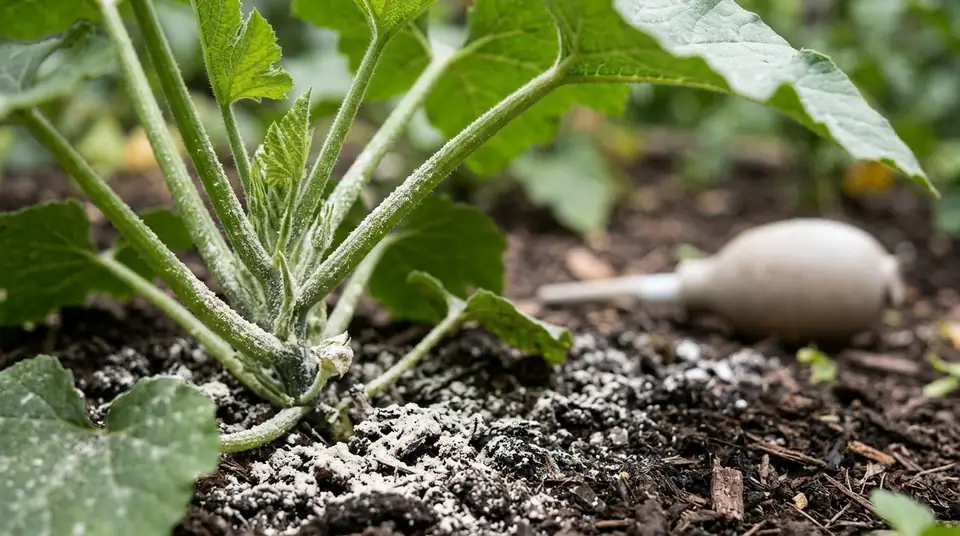
In its natural habitat deposits—often mined from ancient dry lake beds in regions like Nevada and Oregon—diatomaceous earth is geologically inert. However, when deployed in our home gardens, container arrangements, and greenhouse floors, it behaves as a mechanical powerhouse. Each microscopic particle features razor-sharp, jagged edges composed of amorphous hydrated silicon dioxide.
When applied correctly around plants, DE interacts directly with the waxy epicuticular layer of soft-bodied arthropod exoskeletons. It does not poison pests chemically; instead, it absorbs lipids from their protective outer cuticle, causing rapid desiccation and death within 24 to 72 hours. Unlike systemic pesticides that alter plant chemistry, food-grade DE leaves the vascular systems of your ornamentals and edibles completely untouched. Whether you are managing container-bound tropicals, protecting sprawling cucurbits—much like planning your layout with Zucchini Companion Plants Good Bad—or hardening off tender seedlings, deploying DE requires an intimate knowledge of its physical interactions with both plant tissues and garden microfauna.
2. Essential Environmental & Care Requirements
Integrating diatomaceous earth into your plant care routine requires careful attention to environmental factors, particularly ambient moisture and relative humidity. Because DE is essentially microscopic glass shards, its efficacy is entirely dependent on its physical state: dry powder works; wet sludge does not.
| Parameter | Optimal Condition | Common Mistake | Why It Matters |
|---|---|---|---|
| Moisture Level | Completely dry surface application | Applying immediately before heavy overhead irrigation | Water dissolves the abrasive micro-structure, rendering the powder temporarily useless until it dries out completely. |
| Particle Grade | Food-grade amorphous silica | Using pool-grade DE (crystalline silica) | Pool-grade is chemically treated and heat-treated, making it extremely toxic to inhale and unsafe for garden ecosystems. |
| Application Depth | A fine, translucent dusting (1/16 to 1/8 inch / 1.5mm to 3mm) | Piling thick, cement-like mounds of powder | Thick layers choke soil oxygen exchange, trap excess root moisture, and can physically suffocate beneficial ground-dwelling insects. |
| Reapplication Frequency | Every 7 to 10 days, or post-rainfall | Leaving a single application indefinitely through rainy seasons | Wind, heavy dew, and irrigation wash away or clump the microscopic shells, requiring fresh coverage to maintain pest barriers. |
When managing outdoor garden beds—such as timing your crops based on regional frost dates, similar to figuring out What Zone is Virginia for Plants or managing microclimates like What Zone is South Carolina for Plants—always check local precipitation forecasts before dusting your perimeter zones.
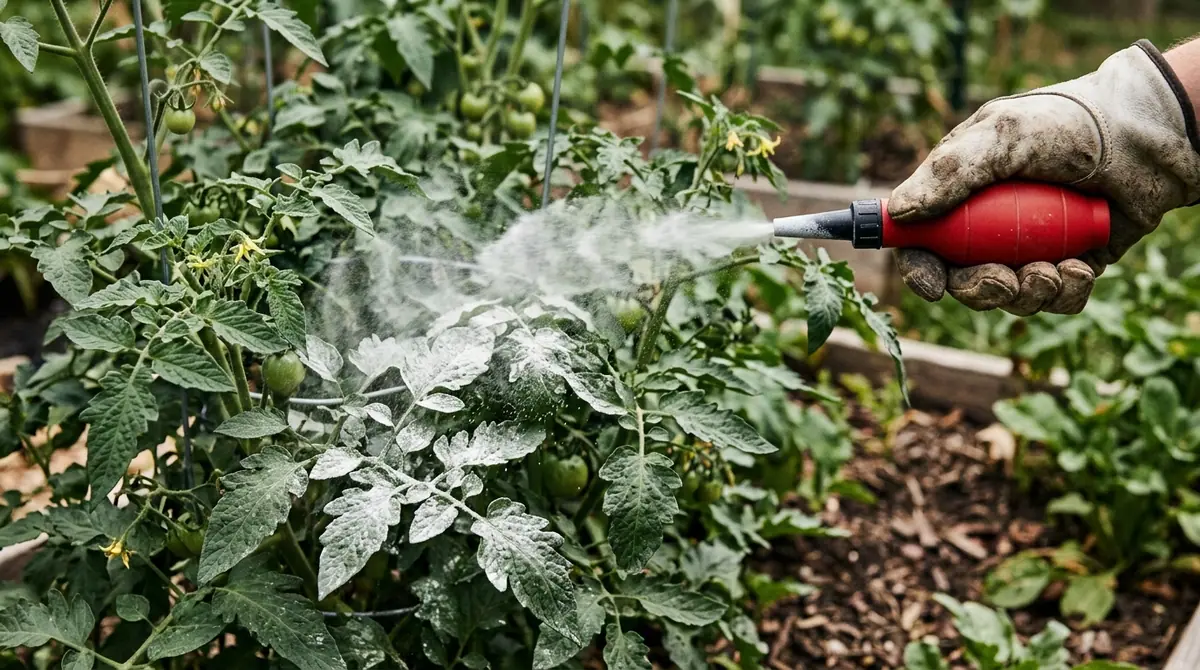
💡 Pro-Tip: Always apply diatomaceous earth using a dedicated bulb duster or hand-pump powder applicator rather than dumping it straight from the bag. A fine, smoke-like cloud coats the underside of lower leaves and stem bases evenly, using a fraction of the product while maximizing pest contact.
3. Step-by-Step Cultivation, Feeding & Propagation
While DE is primarily used for pest mitigation, its high silicon content plays an intriguing role in structural plant health. Plants that absorb soluble monosilicic acid from amended soils build thicker epidermal cell walls, showing dramatically increased resistance to fungal pathogens like powdery mildew and mechanical lodging.
Follow this rigorous, five-step protocol to safely introduce and manage diatomaceous earth around your valuable plants:
- Inspect and Clean the Target Zone: Clear away dead foliage, rotting mulch, and debris within a 6-inch (15 cm) radius of the plant base. Pest larvae frequently overwinter in damp organic litter right at the soil line.
- Verify Soil Moisture: Ensure the top 0.5 inches (1.2 cm) of your growing medium is completely dry. If you need to water your container plants or raised beds, do so before applying the DE, and wait at least 24 hours for the surface to dry out.
- Load Your Duster: Fill a manual powder duster halfway with certified organic, food-grade diatomaceous earth. Never overfill the chamber, as air circulation is required to create a fine, uniform cloud.
- Execute Strategic Application: Don protective eyewear and an N95 dust mask. Pump the duster gently, creating a faint, silvery-white barrier around the base of the stems and extending outward across the topsoil for 2 to 4 inches (5 to 10 cm). This creates an impassable mechanical moat for crawling insects like earwigs, cutworms, and fungus gnat larvae.
- Monitor and Maintain: Check the dusted areas every 5 to 7 days. If you experience a sudden rainstorm or heavy overhead misting, allow the soil surface to dry completely before reapplying a light maintenance dusting.
For growers working in warmer, arid microclimates—such as those utilizing guides for What Zone is San Diego for Plants—dry-climate pests like thrips and spider mites can be exceptionally stubborn, requiring careful combination of DE dusting and targeted foliar spraying.
⚠️ Important Caution: Never dust open, nectar-rich flowers with diatomaceous earth. Because DE is a non-selective mechanical killer, it will severely injure or kill beneficial pollinators such as honeybees, bumblebees, and predatory hoverflies if they land on coated petals. Always restrict your application strictly to the soil surface, stem bases, and non-blooming lower foliage.
4. Common Problems, Pests & Troubleshooting
Even experienced horticulturists occasionally run into issues when incorporating mineral powders into their garden management programs. Here is how to diagnose and correct the most frequent challenges:
- Pests Persisting Despite Heavy Powdering: If crawling insects continue to thrive, your soil surface is likely too damp. DE loses its abrasive edge when saturated. Move your containers to a drier location, withhold water until the topsoil crusts over, and reapply.
- Yellowing Lower Leaves (Chlorosis): Piling thick layers of DE directly against tender plant stems can block vital lenticels and trap humidity against the bark, causing stem rot or localized nutrient uptake issues. Rake away excess powder immediately and maintain a 0.25-inch (6 mm) breathing gap around the main stem.
- Respiratory Irritation During Application: Inhaling fine amorphous silica dust can irritate your nasal passages and lungs. Always wear a properly fitted particulate respirator mask, and apply your powder on calm days when ambient wind speeds remain below 5 mph (8 km/h).
- Fungal Outbreaks Following High Humidity: If you use DE incorrectly as a wet foliar spray paste in humid weather, it can cake onto leaves, blocking critical sunlight and encouraging fungal spores. Stick to dry dusting methods, and consult authoritative resources like the Royal Horticultural Society (RHS) Pest Management Guide for alternative biological controls if humidity remains persistently above 85%.
5. Frequently Asked Questions
Can I mix diatomaceous earth into my potting soil for plants?
Yes, you can mix food-grade diatomaceous earth directly into your soilless potting mix at a rate of roughly 1 cup per cubic foot of soil. This internal incorporation helps control soil-dwelling fungus gnat larvae and root aphids while slowly leaching beneficial silica into the root zone to strengthen cell walls.
Will diatomaceous earth harm my earthworms?
Earthworms generally burrow deeper into the moist sub-soil layers (below 2 inches / 5 cm) and rarely encounter surface-applied DE. However, any surface-dwelling compost worms that come into direct contact with thick, dry deposits can be desiccated. Apply DE judiciously to avoid disrupting your beneficial soil macrofauna.
How long does diatomaceous earth last outdoors?
Outdoors, dry diatomaceous earth remains effective indefinitely as long as it is undisturbed. However, reality dictates that wind, dew, overhead watering, and heavy rain will wash away or clump the particles within 3 to 7 days. You must reapply after every significant rain event to maintain active pest control.
Can I use pool-grade diatomaceous earth on my houseplants?
No, absolutely not. Pool-grade diatomaceous earth is chemically treated and contains high percentages of crystalline silica, which is a known carcinogen and severe respiratory hazard. Furthermore, it is toxic to aquatic life and beneficial garden organisms. Always verify that your packaging explicitly states "100% Food Grade" and lists amorphous silica as the sole active ingredient, a standard emphasized by the National Pesticide Information Center (NPIC).
Related Guides
📋 Table of Contents ▼ Click to expand
Tags:
🌿 Related Plants You Might Like





PlantSavvyWorld
Editorial team
PlantSavvyWorld is an independent botanical education project. Articles are drafted with AI assistance, then edited and checked against university extension services, botanical garden collections and other published horticultural sources.