

Trico Pro Deer Repellent
Written with AI assistance, edited and checked against horticultural sources.
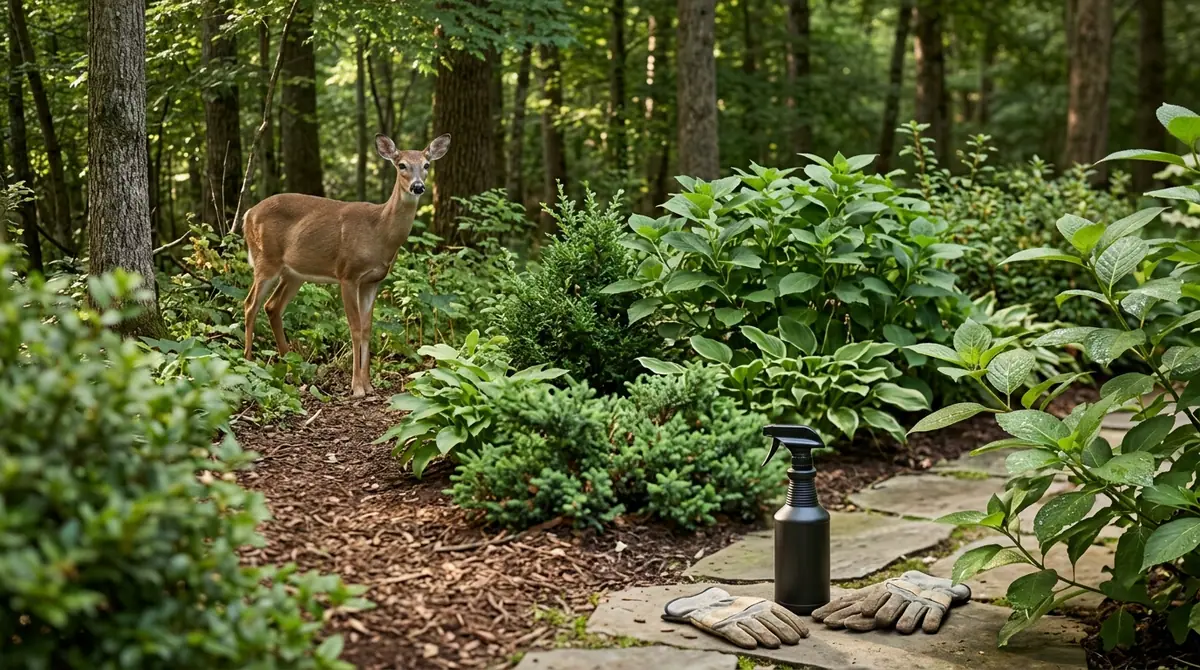
A six-point buck can casually strip every single bud off a prized Hydrangea macrophylla collection, exposing the failure of DIY garlic sprays and human hair against relentless winter browsing. Deploying Trico Pro Deer Repellent protects vulnerable ornamental and edible plantings.

1. Botanical Overview & Natural Habitat
To understand why Trico Pro works so effectively, we first have to understand the targets: Odocoileus virginianus (White-tailed deer) and Cervus elaphus (Elk). These ruminant herbivores possess highly evolved olfactory and gustatory systems. In their natural woodland and forest-edge habitats, deer browse across hundreds of plant species, showing distinct preferences based on seasonal nutrition needs, leaf texture, and chemical defenses like secondary metabolites.
When deer encounter a plant treated with Trico Pro, their sensory receptors register an immediate physiological deterrent. The active ingredient in Trico Pro is natural sheep fat (refined tallow), formulated at a concentration of approximately 1.05 oz/gal or roughly 7.5% to 8% active content depending on the specific professional batch formulation. Sheep fat mimics the scent of predator territorial markers and decaying organic matter, triggering a hardwired flight-or-fight avoidance response.
Unlike contact-only systemic deterrents that rely on scorching taste (such as bitterants like denatonium benzoate), Trico Pro creates an olfactory barrier that convinces the deer a predator or an unpalatable hazard occupies the immediate microclimate. Because it coats the foliage in a semi-permeable lipid layer, it also alters the textural mouthfeel of the leaf, making it physically unappealing even if a hungry browser tests it with their lips.
Understanding the botanical architecture of your landscape helps contextualize this protection. Tender, rapidly growing meristematic tissues—such as the flush of spring growth on Acer palmatum (Japanese maple) or the juicy stems of Solanum lycopersicum (tomatoes)—contain high concentrations of nitrogen and sugars, making them prime targets. Trico Pro acts as an invisible, weatherproof shroud over these vulnerable structures, shielding cellular walls from destructive mechanical shredding during peak feeding windows at dawn and dusk.
2. Essential Environmental & Care Requirements
Applying any repellent requires strict adherence to environmental parameters to ensure chemical stability, optimal adhesion, and maximum longevity on the plant cuticle. Trico Pro is not a set-it-and-forget-it liquid; it interacts dynamically with temperature, humidity, and rainfall.
The ideal application temperature range is between 41°F and 77°F (5°C and 25°C). Applying the product when ambient temperatures drop below 35°F (1.7°C) causes the lipid emulsion to freeze prematurely on the leaf surface, preventing proper polymerization and film formation. Conversely, spraying in direct sunlight when temperatures exceed 85°F (29°C) can cause rapid droplet evaporation, leading to uneven coverage and potential phytotoxicity on ultra-tender, newly emerged foliage.
Moisture management is equally critical. The product must be applied to dry foliage and requires a minimum of 3 to 4 hours of completely dry curing time to bond securely to the plant's waxy cuticle. If a heavy downpour occurs within 2 hours of application, the emulsion will wash off before setting, rendering the treatment ineffective.
| Parameter | Optimal Condition | Common Mistake | Why It Matters |
|---|---|---|---|
| Application Temperature | 41°F – 77°F (5°C – 25°C) | Spraying below 35°F (1.7°C) or above 85°F (29°C) | Prevents proper emulsion curing and avoids leaf scorch on tender tissue. |
| Curing Time | 3 to 4 hours dry window | Spraying right before evening dew or rain | The lipid matrix requires uninterrupted drying time to bond to the leaf cuticle. |
| Dilution Ratio | 1:2 to 1:4 (Product to Water) | Eyeballing measurements or over-diluting | Incorrect ratios compromise the scent barrier and wash off prematurely. |
| Reapplication Interval | 30 to 60 days (dormant vs. Active) | Waiting until browsing damage reappears | Deer establish grazing habits; proactive defense breaks their routine. |
💡 Pro-Tip: Always check the 48-hour local weather radar before mixing your batch. I schedule my Trico Pro applications for clear, breezy mornings when the relative humidity is below 60%, which guarantees the fastest possible curing time for the lipid film.
3. Step-by-Step Cultivation, Feeding & Propagation
While Trico Pro is a protective liquid rather than a growing medium, integrating it into your routine cultivation practices requires a disciplined, step-by-step protocol. I enforce this exact workflow with my field crew.
- Calculate Surface Area and Volume: Assess the linear footage of your ornamental borders or the acreage of your orchard. For standard backpack sprayers, calculate a mix ratio of 1 part Trico Pro to 2 or 3 parts clean water, depending on whether you are defending against light browsing or high-pressure winter starvation.
- Calibrate and Clean Equipment: Rinse your pump sprayer thoroughly to remove residual herbicides or systemic fertilizers that could react with the sheep fat emulsion. Use a flat-fan nozzle tip (such as an 8002 or 11002 nozzle) to ensure an even, ultra-fine mist rather than large, dripping droplets.
- Perform a Patch Test: If you are treating rare or sensitive herbaceous perennials for the first time, spray a single, inconspicuous lower leaf. Wait 48 hours to confirm zero signs of chlorosis or burning before broadcasting across the entire specimen.
- Prepare the Plant Material: Prune away dead, diseased, or heavily damaged branches prior to spraying. Trico Pro should coat healthy, actively growing or dormant architectural wood that you intend to protect.
- Execute the Spray Technique: Maintain a distance of 12 to 18 inches (30 to 45 cm) from the plant canopy. Sweep the wand in a smooth, sweeping motion, ensuring complete coverage of both the adaxial (upper) and abaxial (lower) leaf surfaces, as well as terminal buds and main stems.
- Allow Complete Curing: Keep pets, children, and tools away from the treated zone for at least 4 hours until the milky white spray dries into a virtually invisible, matte protective shield.
- Schedule Growth-Flush Updates: Remember that new plant tissue emerges unprotected. During the spring flush—when plants grow rapidly at rates exceeding 0.5 to 1 inch (1.2 to 2.5 cm) per week—reapply every 21 to 30 days to cover newly developed shoots.
⚠️ Important Caution: Never apply Trico Pro directly to open flower petals or ripe fruit intended for immediate harvest. While the ingredients are natural, lipid residues on edible fruit skins or delicate blooms will ruin flavor profiles and cause aesthetic discoloration. Always spray around the fruit clusters and target stems, leaves, and structural branches instead. For official guidance on managing wildlife interactions in agricultural settings, consult the Penn State Extension Wildlife Management Resources.
4. Common Problems, Pests & Troubleshooting
Even with professional-grade repellents, environmental anomalies and extreme wildlife pressures can challenge your landscape strategy. Here is how to diagnose and correct the most common issues associated with Trico Pro applications.
Issue: Rapid Wash-Off During Heavy Rainstorms Symptom: Deer resume browsing within 7 days of application despite following initial mixing instructions. Cause: Unusually high precipitation rates exceeding 2.0 inches (5 cm) within the first week can erode the outer lipid layers of the repellent film. Solution: Inspect leaf surfaces with a magnifying glass or test for the faint, characteristic tallow scent. If the scent is entirely gone, reapply the treatment after a dry window of 4 hours, ensuring the temperature remains above 41°F (5°C).
Issue: Clogged Spray Nozzles Symptom: The sprayer sputters, leaks, or produces uneven, heavy streams instead of a fine mist. Cause: The natural sheep fat emulsion can separate slightly if left sitting in direct heat or mixed with hard water containing high calcium and magnesium levels. Solution: Always add Trico Pro to water while agitating, rather than water to the product. If clogging occurs, dismantle the nozzle tip and filter screen, soak them in warm soapy water for 15 minutes, and flush the wand with clean water.

5. Frequently Asked Questions
How long does Trico Pro deer repellent actually last after application?
Under normal weather conditions, Trico Pro lasts between 30 and 60 days. During the winter dormant season when plant growth stops and rainfall is less frequent, protection can extend up to 2 months. During the rapid spring growth phase, frequent irrigations and new shoot development require reapplication every 3 to 4 weeks.
Is Trico Pro safe to use around edible vegetable gardens and fruit trees?
Yes, Trico Pro is safe for use around food crops when applied correctly. Because its active ingredient is natural sheep fat, it poses no systemic toxicity risk to plants or soil microbiomes. However, you must avoid spraying the product directly onto consumable fruit skins or leafy vegetables meant for immediate harvest to prevent flavor contamination.
Will Trico Pro stain or damage my patio furniture, vehicles, or hardscapes?
Trico Pro is formulated as a water-based emulsion, but its lipid content can leave a faint oily residue or whitish film on dark stone, painted siding, or glass if oversprayed. Always point your spray wand away from hardscapes, and immediately wash away accidental overspray with warm soapy water and a stiff brush before it dries.
Can I mix Trico Pro with liquid fertilizers or systemic insecticides in the same tank?
As a general rule in professional horticulture, I strongly advise against tank-mixing repellents with fertilizers or pesticides. Mixing Trico Pro with other chemicals can alter the emulsion stability, break down the lipid bonding agents, and cause unexpected phytotoxicity or leaf burn on delicate ornamental plants. Apply Trico Pro as a standalone foliar treatment.
Related Guides
📋 Table of Contents ▼ Click to expand
Tags:
Keep reading
🌿 Related Plants You Might Like






PlantSavvyWorld
Editorial team
PlantSavvyWorld is an independent botanical education project. Articles are drafted with AI assistance, then edited and checked against university extension services, botanical garden collections and other published horticultural sources.