

Do Deer Eat Lily of the Valley
Written with AI assistance, edited and checked against horticultural sources.
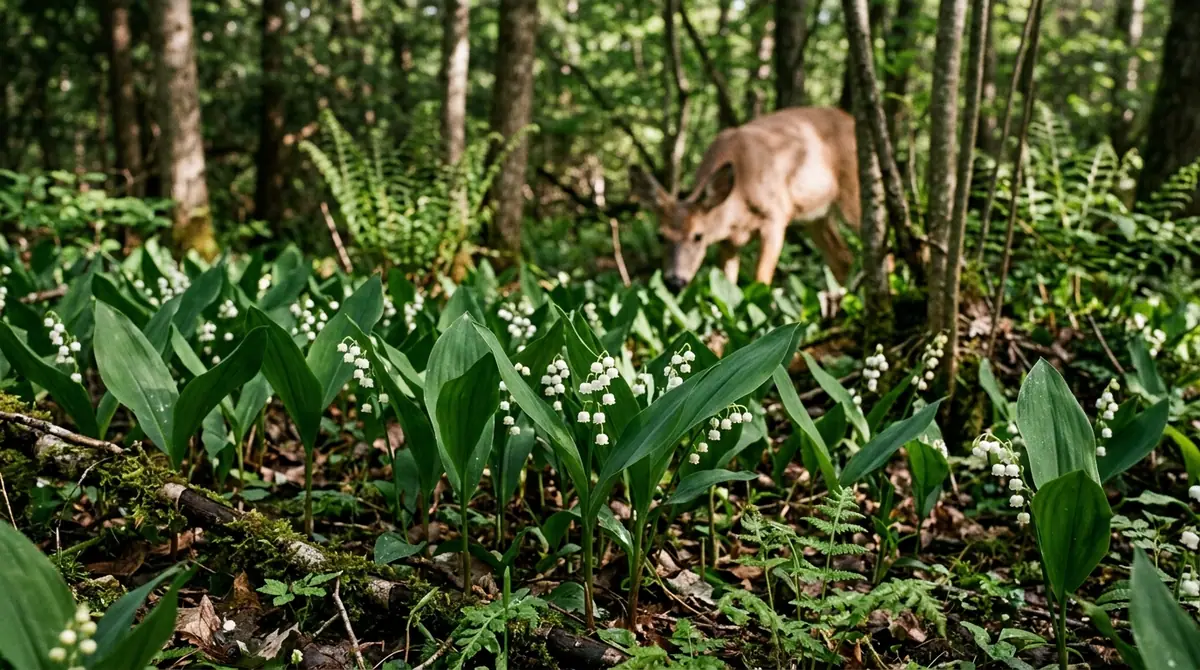
I stood frozen on the back stone patio last April, coffee mug half-raised to my mouth, watching a massive eight-point buck step delicately through a sea of white bell-shaped blossoms. For three seasons, gardeners had warned me that hungry woodland browsers would completely decimate my shade borders. Yet that buck lowered his nose, sniffed the lush green carpet of Convallaria majalis, and casually turned his head away to munch on my hostas instead. That exact moment cemented what field research and university trials had long suggested: Lily of the Valley possesses a chemical defense system so potent that even starving deer give it a wide berth.
1. Botanical Overview & Natural Habitat
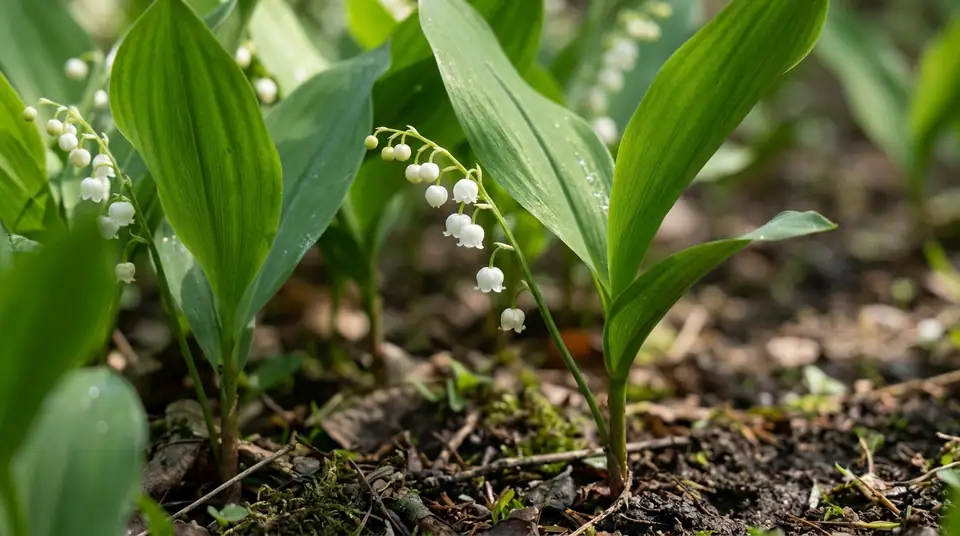
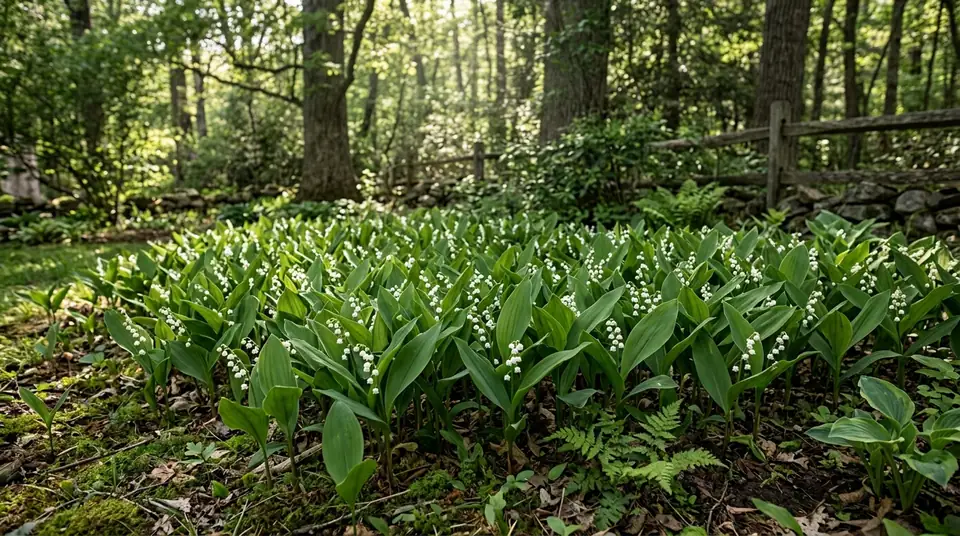
The plant spreads aggressively via slender underground stems called rhizomes or pips, forming dense, weed-suppressing mats that stand 6 to 12 inches (15 to 30 cm) tall. Its iconic, nodding, bell-shaped white flowers emerge in mid-spring—typically April through May—exuding a rich, sweet fragrance that has made it a favorite in perfumery for centuries. Following bloom, it produces spherical red berries roughly 0.25 to 0.33 inches (6 to 8 mm) in diameter.
Every single part of Convallaria majalis—from the fleshy roots and creeping rhizomes down to the glossy green leaves and bright red berries—contains over 38 different cardiac glycosides, most notably convallatoxin and convallamarin. These compounds have a direct, potent effect on the human and animal myocardium, disrupting normal heart rhythm. Because evolution has equipped these plants with such an unpalatable and toxic chemical arsenal, white-tailed deer (Odocoileus virginianus) and other mammalian herbivores instinctively recognize the danger. They bypass the foliage entirely, making Lily of the Valley one of the most reliable deer-resistant ground covers available for shade gardens.
2. Essential Environmental & Care Requirements
Creating a thriving colony of Lily of the Valley requires mimicking its native forest-floor environment. While the plant is famously tough and difficult to eradicate once established, failing to meet its basic environmental thresholds will result in sparse flowering and stunted foliage.
| Parameter | Optimal Condition | Common Mistake | Why It Matters |
|---|---|---|---|
| Light Exposure | Partial shade to full shade (2–4 hours of morning sun maximum) | Planting in baking afternoon sun (USDA zones 4–8) | Intense heat scorches leaf margins and halts rhizome expansion. |
| Soil Composition | Rich, humus-heavy loam with high organic matter | Heavy, compacted clay that retains standing water | Waterlogged soil causes the delicate rhizomes to rot during winter dormant phases. |
| Soil pH | Slightly acidic to neutral (6.0 to 6.8) | Excessively alkaline soil (>7.5) | Locks out essential micronutrients, leading to chlorosis and yellowing leaves. |
| Moisture Level | Consistently moist, well-draining soil (1 inch / 2.5 cm of water weekly) | Allowing soil to dry out completely during summer | Triggers premature dormancy and drops next season's flower bud count. |
Soil preparation is the foundational step for this species. Incorporating 2 to 3 inches (5 to 7.5 cm) of well-rotted leaf mold or compost into the top 6 inches (15 cm) of earth replicates the rich forest humus it naturally craves.
💡 Pro-Tip: If you are trying to establish Lily of the Valley under large deciduous trees like maples or oaks, remember that root competition is fierce. Water your established colonies deeply twice a week during July and August to compensate for the moisture stolen by tree roots, ensuring the pips plump up adequately for the following spring's bloom cycle.
3. Step-by-Step Cultivation, Feeding & Propagation
Establishing Lily of the Valley from dormant root segments, commonly known as "pips," is a straightforward horticultural process. Follow this exact sequence to ensure rapid establishment and a dense, flowering ground cover within two growing seasons.
- Source Healthy Pips: Purchase dormant, plump pips in late autumn or early spring from a reputable nursery. Each pip should feature a visible, swollen growing tip and a cluster of fleshy, fibrous roots attached at the base.
- Select and Clear the Site: Choose a shaded location beneath trees or along the north-facing foundation of a building. Clear all perennial weed roots from an area spanning at least 3 feet (1 meter) in all directions, as young Convallaria struggle against aggressive grass competition.
- Amend the Soil: Excavate the planting bed to a depth of 8 inches (20 cm). Blend in a 2-inch (5 cm) layer of aged organic compost and coarse builder's sand to optimize both nutrient retention and drainage.
- Position the Pips: Dig individual planting holes or a continuous trench 2 to 3 inches (5 to 7.5 cm) deep. Place each pip vertically in the soil, ensuring the pointed growing tip sits roughly 0.5 inches (1.3 cm) below the final soil surface.
- Space Correctly: Space individual pips 4 to 6 inches (10 to 15 cm) apart in a staggered grid pattern to allow room for lateral rhizome expansion without immediate overcrowding.
- Backfill and Water In: Fill the trench gently with the amended soil blend. Tamp down lightly to remove large air pockets, and apply a thorough, deep watering of 1 inch (2.5 cm) to settle the soil around the fibrous roots.
- Apply Organic Mulch: Top-dress the bed with a 1-inch (2.5 cm) layer of shredded hardwood bark or leaf mulch to conserve soil moisture and suppress emerging weeds while the pips break dormancy.
- Manage Nutrition: Apply a balanced, slow-release organic granular fertilizer (such as a 5-10-5 formulation) at a rate of 1 pound per 100 square feet (450g per 9 square meters) every spring just as the first green shoots pierce the mulch.
For deeper insights into safe, sustainable shade gardening practices, consult the Royal Horticultural Society guidelines on woodland perennials.
4. Common Problems, Pests & Troubleshooting
Even though Lily of the Valley is famously resilient against mammalian browsers like deer and rabbits, it is not entirely immune to environmental stressors and occasional pathology.
Leaf spot diseases, primarily caused by fungal pathogens such as Septoria or Cercospora, can manifest during excessively humid summers with prolonged leaf wetness. You will notice small, circular brown or purplish spots with darker borders appearing on the foliage. To manage this, immediately prune away and dispose of heavily infected leaves in the trash—never add them to a cold compost pile where fungal spores can overwinter. Ensure proper air circulation by thinning out surrounding overgrown shrubs or perennials.
⚠️ Important Caution: Because Lily of the Valley contains cardiac glycosides that can cause severe gastrointestinal distress, irregular heart rhythms, and bradycardia in humans and pets, always wear heavy gardening gloves when dividing roots, pulling spent foliage, or handling any part of the plant. Wash your hands thoroughly immediately afterward, and never plant it near vegetable gardens or children's play areas.
Another common issue is a sudden decline in flower production. If your colony produces plenty of lush green leaves year after year but fails to display those iconic white bell-shaped blooms, the planting bed has likely become overcrowded. When rhizomes form a dense, impenetrable mat, they choke each other out and exhaust the local soil nutrients. To fix this, lift the entire clump in early autumn, gently tease the tangled rhizomes apart with a garden fork, discard the woody center sections, and replant vigorous outer pips into freshly amended soil at the proper spacing.
5. Frequently Asked Questions
Do deer eat Lily of the Valley?
No, deer virtually never eat Lily of the Valley. The plant contains potent cardiac glycosides that make it extremely toxic and unpalatable to mammalian herbivores, prompting deer to actively bypass it even when other food sources are scarce.
Is Lily of the Valley poisonous to dogs and cats?
Yes, all parts of the plant—including the leaves, flowers, stems, and red berries—are highly toxic to dogs, cats, and horses. Ingestion can cause vomiting, low blood pressure, disorientation, seizures, and potentially fatal cardiac arrhythmias.
How fast does Lily of the Valley spread?
It spreads moderately to aggressively via underground rhizomes once it is fully established, typically forming a dense ground cover within two to three growing seasons. Because of this vigorous spreading habit, it can sometimes behave invasively in ideal woodland garden conditions.
Can Lily of the Valley grow in full sun?
It struggles significantly in full sun, especially in regions with hot summers. Intense afternoon sunlight will scorch the foliage, turn the leaves yellow, and drastically reduce the number of flowers produced the following spring. It performs best in partial to full shade.
When is the best time to divide Lily of the Valley?
The ideal time to divide and transplant Lily of the Valley is in early autumn after the foliage has died back naturally, or very early in spring before new green shoots emerge from the soil.
Related Guides
- Sun Valley Maple Tree
- Trico Pro Deer Repellent
- Asiatic Lily vs Oriental
- Why Are My Peace Lily Flowers Green
- Do Deer Eat Mint
📋 Table of Contents ▼ Click to expand
Tags:
Keep reading
🌿 Related Plants You Might Like



PlantSavvyWorld
Editorial team
PlantSavvyWorld is an independent botanical education project. Articles are drafted with AI assistance, then edited and checked against university extension services, botanical garden collections and other published horticultural sources.