

Asiatic Lily vs Oriental
Written with AI assistance, edited and checked against horticultural sources.
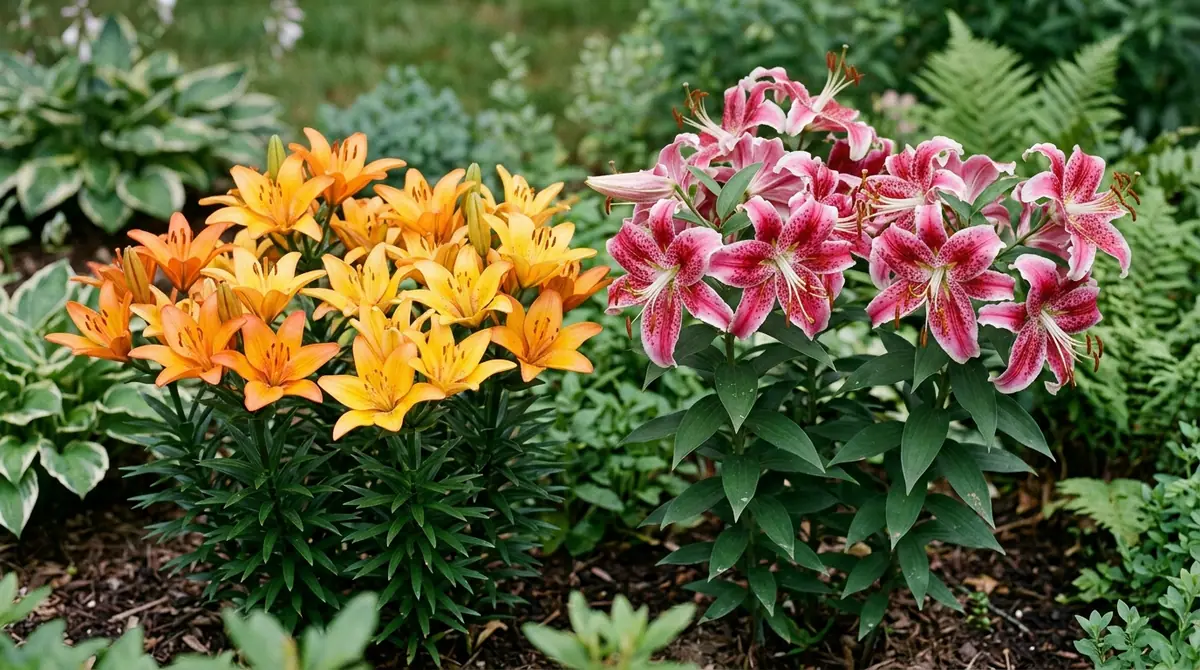
Standing over my perennial border one humid July afternoon, a basket of freshly cut stems resting on the grass, I found myself inhaling deeply—and walking away disappointed. Half of my bouquet delivered a sweet, heavy perfume that filled the entire room, while the other half offered brilliant, neon-orange color without a single trace of scent.
1. Botanical Overview & Natural Habitat
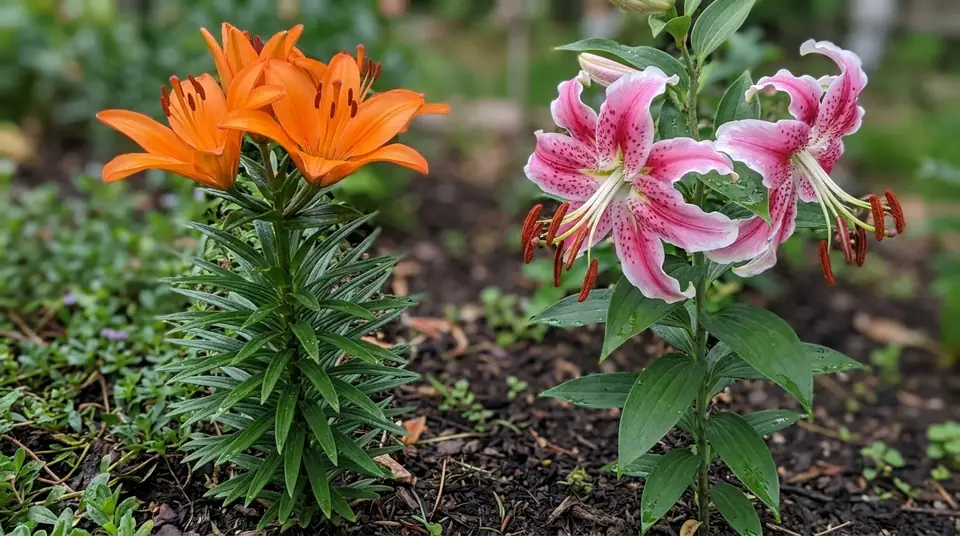
To understand how these plants behave in your garden, we have to look at their ancestral homes. Asiatic lilies are derived from species native to the chilly, high-altitude meadows and woodlands of central and eastern Asia, including China, Japan, and Siberia. Because of this genetics, they are extraordinarily tough, waking up early in spring and shrugging off freezing temperatures down to -40°F (-40°C). They feature stiff, upright stems ranging from 2 to 4 feet (60 to 120 cm) tall, adorned with narrow, glossy green leaves. Their flowers face upward or outward and span 4 to 6 inches (10 to 15 cm) across, bursting into shades of yellow, orange, red, pink, and deep mahogany, entirely devoid of fragrance.
Oriental lilies, on the other hand, originate from the mountainous regions of Japan and Korea, growing in damp, organic-rich forest floors under dappled shade. They are the divas of the lily world. Growing taller—often reaching 3 to 6 feet (90 to 180 cm)—they sport broader, darker foliage and massive, bowl-shaped blossoms that measure 6 to 9 inches (15 to 23 cm) across. Their signature trait is their rich, intoxicating perfume, which peaks in the evening. Their color palette leans heavily into sophisticated whites, pinks, crimsons, and bi-colors with contrasting speckles and raised papillae.
| Parameter | Optimal Condition | Common Mistake | Why It Matters |
|---|---|---|---|
| Soil pH | Asiatic: 6.0–6.5 (Slightly Acidic) Oriental: 5.5–6.0 (Moderately Acidic) | Planting in alkaline soil (>7.0) | High pH blocks iron uptake, leading to severe chlorosis and stunted bulb growth. |
| Sun Exposure | Full Sun: 6 to 8 hours daily | Shading the lower stems | Lilies need sun on their foliage to fuel the bulb, though shaded roots keep them cool. |
| Planting Depth | 6 to 8 inches (15 to 20 cm) deep | Planting too shallow (2–3 inches) | Shallow planting exposes bulbs to winter freeze-thaw cycles and causes top-heavy stems to topple. |
| Watering | 1 inch (2.5 cm) of water weekly | Keeping soil constantly saturated | Bulbs rot rapidly in stagnant moisture due to fungal pathogens like Phytophthora. |
2. Essential Environmental & Care Requirements
While both groups belong to the genus Lilium and share a basic structural blueprint, their environmental tolerances diverge significantly due to their distinct evolutionary histories.
Asiatic lilies are bulletproof survivors. They demand full sun—at least 6 hours of direct sunlight daily—to produce sturdy stems and rich bud counts. Soil drainage is non-negotiable for both types, but Asiatics tolerate heavier loam as long as it doesn't puddle after a heavy rain. They emerge early in spring, often pushing through the mulch while frost still nips the ground. Because of this early start, late spring freezes can occasionally burn the tender tips, though established plants recover quickly.
💡 Pro-Tip: When planning your garden layout, remember that Asiatic lilies bloom first, typically in early to mid-summer (June in USDA Zones 5–7), while Oriental lilies take the stage in late summer (July through August). Planting both extends your seasonal color palette across a solid 8-to-10-week window.
Oriental lilies are far more particular. They despise baking heat. In USDA Zones 8 through 9, Oriental lilies desperately appreciate afternoon shade to protect their massive blossoms from scorching and to keep their root zones cool. They require a distinctly acidic soil rich in organic matter. If your native soil is heavy clay or alkaline, you must amend it generously with peat moss, compost, or leaf mold before planting. For rigorous gardening guidelines based on your specific climate zone, consult the Royal Horticultural Society database for perennial cultivation standards.
3. Step-by-Step Cultivation, Feeding & Propagation
Getting lilies established successfully comes down to timing and technique. Whether you are planting a bag of dry-packed bulbs from the nursery or dividing overgrown clumps, follow this precise sequence to guarantee success.
- Select and Inspect Bulbs: Purchase firm, heavy bulbs in autumn or early spring. Reject any bulbs that feel spongy, show signs of mold, or have broken basal plates.
- Prepare the Planting Bed: Choose a location with excellent drainage. Dig a trench or individual holes to a depth of 6 to 8 inches (15 to 20 cm). Work a handful of low-nitrogen, high-phosphorus organic bulb fertilizer (such as a 5-10-10 blend) into the soil at the base of the hole.
- Position the Bulb: Place the bulb root-side down. Spread the fleshy roots out naturally against the soil. Ensure the pointed tip of the bulb faces upward.
- Backfill and Settle: Fill the hole halfway with your amended soil, tamp gently to eliminate large air pockets, and water thoroughly to settle the soil around the roots. Finish filling the hole and water a second time.
- Apply Mulch: Apply a 2-to-3-inch (5-to-7.5-cm) layer of shredded hardwood mulch or pine straw over the bed. This retains vital moisture and insulates the roots against summer heat waves and winter freezes.
- Post-Bloom Maintenance: Once flowering finishes, let the foliage yellow and die back naturally for 6 weeks before cutting it down to ground level. This allows the plant to photosynthesize and store vital carbohydrates in the bulb for next year's display.
Propagation is easily achieved by lifting mature clumps every 3 to 4 years in late autumn after the foliage has died back. Gently dig around the root ball, separate the newly formed bulb offsets (bulblets) from the mother bulb, and replant them immediately at the standard 6-to-8-inch depth. For academic insights into bulb physiology and propagation science, review the resources provided by the University of Minnesota Extension.
4. Common Problems, Pests & Troubleshooting
Even with meticulous care, lilies encounter a few persistent adversaries. The most notorious pest across North America and Europe is the scarlet lily leaf beetle (Lilioceris lilii). Both the bright red adult beetles and their destructive, slug-like larvae feed voraciously on leaves, buds, and stems, often reducing a plant to a skeleton in days. Hand-picking adults in early spring is effective for small gardens, but heavy infestations require targeted applications of spinosad or neem oil applied directly to the undersides of leaves.
⚠️ Important Caution: If you share your home or garden with cats, exercise extreme caution with Oriental lilies. Every part of the plant—petals, leaves, pollen, and even the water in a cut-flower vase—is profoundly nephrotoxic to felines. Ingestion can lead to acute kidney failure within 36 to 72 hours. Asiatic lilies are considered less toxic, but I always recommend keeping all Lilium species entirely away from household cats.
5. Frequently Asked Questions
Which lily smells stronger, Asiatic or Oriental?
Oriental lilies are exceptionally fragrant, producing a heavy, sweet perfume that can easily scent an entire room or garden patio. Asiatic lilies have virtually zero fragrance, making them the ideal choice for bouquets placed on dining tables or for gardeners sensitive to strong floral scents.
Can I grow Asiatic and Oriental lilies in the same garden bed?
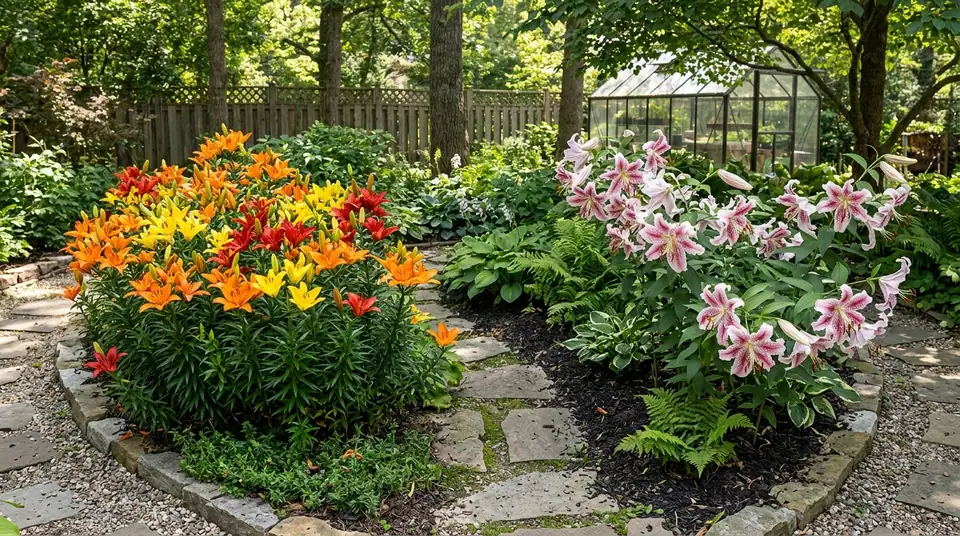
Yes, you can grow them together, but you must account for their differing soil and sunlight needs. Plant them in slightly separated pockets where you can adjust the soil pH and provide Oriental lilies with afternoon shade while letting Asiatic lilies bask in full sun.
Do lilies come back every year?
Yes, both Asiatic and Oriental lilies are fully hardy herbaceous perennials. They die back to the ground each winter, retreat into their underground bulbs, and reliably emerge bigger and more vigorous each subsequent spring.
How do I store lily bulbs over the winter?
In USDA Zones 3 through 8, lily bulbs are left safely in the ground over winter. If you live in a colder zone without reliable snow cover or in an area prone to waterlogged winter soils, dig the bulbs up after the foliage dies, brush off the soil, and store them in slightly damp peat moss inside a perforated bag at 35°F to 45°F (1°C to 7°C) until spring.
Related Guides
📋 Table of Contents ▼ Click to expand
Tags:
Keep reading
🌿 Related Plants You Might Like






PlantSavvyWorld
Editorial team
PlantSavvyWorld is an independent botanical education project. Articles are drafted with AI assistance, then edited and checked against university extension services, botanical garden collections and other published horticultural sources.