

Do Deer Eat Mint
Written with AI assistance, edited and checked against horticultural sources.
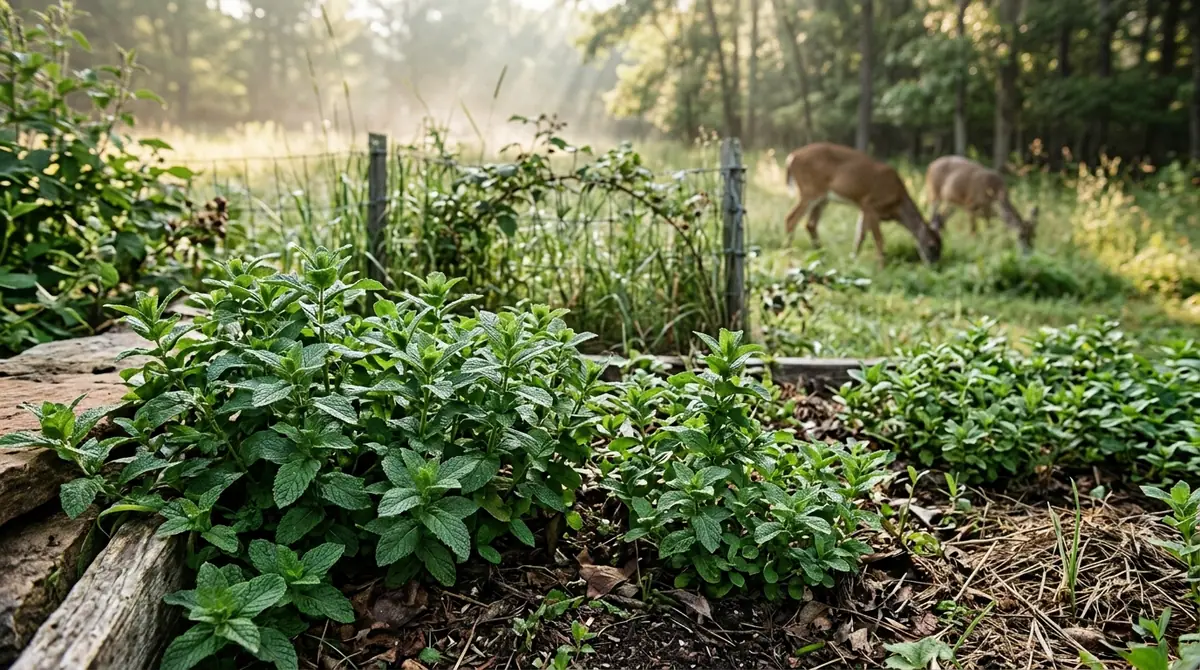
Stepping out onto my lower patio last May with a steaming mug of black coffee, I froze. The large cedar planter overflowing with my prized 'Kentucky Colonel' spearmint looked like it had survived a lawnmower accident. Stems were snapped at jagged 45-degree angles, leaves were stripped bare, and unmistakable cloven hoofprints pressed into the damp potting mix confirmed my midnight visitor. For years, every gardening blog on the internet had promised me that aromatic herbs were completely safe from wildlife because of their pungent essential oils. Standing there in the morning dew, watching a white-tailed doe casually strip the remaining foliage off my chocolate mint, I realized botanical theory and hungry wildlife often read entirely different scriptural manuals.
1. Botanical Overview & Natural Habitat
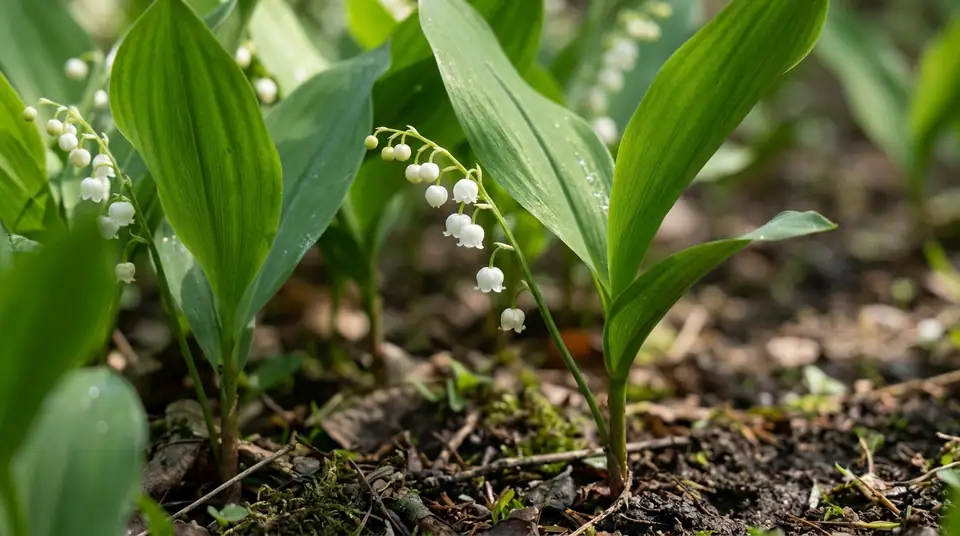
In their native Eurasian and North American riparian habitats, these volatile compounds serve as a chemical defense mechanism, deterring most herbivorous mammals and insects. However, deer feeding behavior is highly situational. When browse pressure is high, or during early spring when tender, high-nitrogen new growth emerges, the concentration of these deterrent oils is often lower. Furthermore, individual deer populations develop regional taste habits; a herd in rural Vermont with an abundance of forest forage will turn its nose up at a patch of peppermint, while suburban deer in a fragmented habitat with depleted food sources will happily browse your herb garden for moisture and calories.
2. Essential Environmental & Care Requirements
Growing mint successfully requires mimicking its favored damp, woodland-edge ecosystem. Whether you are planting in containers to halt world domination or establishing a dedicated garden bed, specific environmental parameters govern plant vigor and, by extension, oil production.
| Parameter | Optimal Condition | Common Mistake | Why It Matters |
|---|---|---|---|
| Soil pH | 6.0 to 7.0 (Slightly acidic to neutral) | Planting in highly acidic soil (< 5.0) | Locks out essential macronutrients, stunting root development and reducing leaf yield. |
| Moisture | Consistently moist; 1 inch (2.5 cm) of water weekly | Allowing soil to dry out completely | Drought stress concentrates oils defensively, making leaves unpalatably bitter or dropping foliage. |
| Temperature | 55°F to 70°F (13°C to 21°C) | Exposing to prolonged heat waves > 90°F (32°C) | Extreme heat induces premature bolting, leaf scorch, and bitter flavor profiles. |
| Sunlight | Full sun to partial shade (4–6 hours daily) | Deep, dense shade | Reduces essential oil synthesis, resulting in leggy, weak stems that deer break easily. |
💡 Pro-Tip: If you live in an area with high deer pressure, plant your mint right alongside ultra-pungent companions like lavender (Lavandula angustifolia) and rosemary (Salvia rosmarinus). The overlapping scent profiles confuse a deer's olfactory tracking, masking the subtle shifts in menthol levels that signal tender new growth.
3. Step-by-Step Cultivation, Feeding & Propagation
Growing mint is wonderfully straightforward, but managing its vigor requires a methodical approach. Follow these precise steps to establish a healthy, resilient patch that can withstand both environmental stressors and occasional herbivory.
- Select and Prepare the Site: Choose a location receiving 4 to 6 hours of direct sunlight daily with well-draining loam. If planting directly in the ground, sink a 12-inch (30.5 cm) deep physical barrier, such as a heavy-duty plastic root-control bag or a bottomless metal bucket, leaving 2 inches (5 cm) exposed above the soil line to prevent runaway stolons.
- Amend the Planting Medium: Work a 2-inch (5 cm) layer of aged compost into the top 6 inches (15 cm) of soil to improve moisture retention and provide slow-release organic nutrients.
- Planting Depth and Spacing: Dig individual planting holes 4 inches (10 cm) deep and 12 inches (30.5 cm) apart. Place nursery starts in the holes, ensuring the crown sits level with the surrounding soil surface. Fill in and gently tamp down to eliminate air pockets.
- Initial Watering: Soak the root zone thoroughly with 1 inch (2.5 cm) of water immediately after planting. Maintain this consistent moisture level, providing supplemental irrigation every 5 to 7 days if natural rainfall is lacking.
- Pruning and Harvesting for Vigor: Once plants reach 8 inches (20 cm) in height, prune the main growing tips back by one-third. This forces lateral branching, creating a dense, bushy habit rather than sparse, upright stalks that are easily trampled or browsed by deer. For more detailed perennial care guidelines, consult the Royal Horticultural Society growing advice.
4. Common Problems, Pests & Troubleshooting
Even tough-as-nails herbs run into roadblocks. When your mint garden shows signs of distress, diagnosis requires looking closely at environmental factors and wildlife signs.
If you notice entire sections of your mint patch disappearing overnight down to the soil line, do not automatically blame insects. While mint rust (Puccinia menthae) creates distinct orange pustules on undersides of leaves and spider mites cause stippled yellowing, clean, angled stem cuts are the signature of mammalian herbivores. Deer leave ragged breaks because they lack upper incisors, pulling and tearing vegetation rather than slicing it cleanly.
⚠️ Important Caution: Never apply synthetic systemic pesticides to edible mint plants. Because mint leaves are harvested continuously for culinary use, chemical residues will persist in the foliage and enter your food chain. Rely instead on physical exclusion methods, such as erecting a 7-foot (2.1 m) garden fence if deer pressure is severe.
5. Frequently Asked Questions
Do deer eat mint plants?
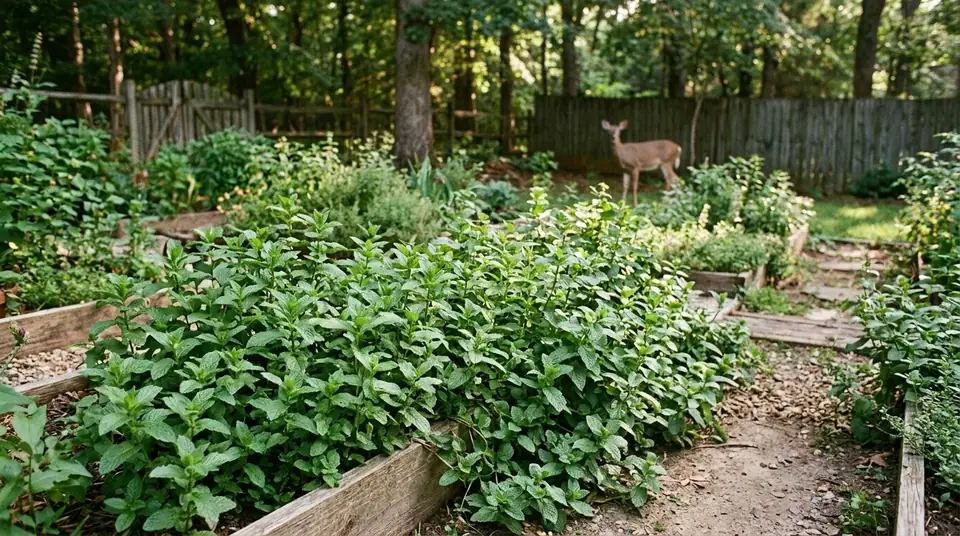
Yes, deer will eat mint plants, especially when food sources are scarce, during early spring when new growth is tender, or if the plants are heavily fertilized and watered, which dilutes the concentration of deterrent essential oils. While mint is generally considered deer-resistant, no plant is entirely deer-proof.
Why did deer eat my mint if it smells so strong?
A deer's sense of smell is adapted to locate food, but hunger overrides scent aversion. Young mint shoots contain lower levels of menthol and volatile oils than mature leaves. Furthermore, habituated suburban deer that have lost their fear of human landscapes regularly browse aromatic herbs when preferred woodland browse is depleted.
Will damaged mint grow back after deer eat it?
In most cases, yes. Mint features an aggressive, underground root system filled with stored carbohydrates. Even if deer graze the above-ground foliage down to the dirt, the plant will typically push out fresh shoots from its underground rhizomes within 14 to 21 days, provided the soil remains consistently moist.
How can I protect my mint from deer without using chemicals?
Physical barriers are the most effective non-toxic solution. Grow your mint in raised beds enclosed by lightweight netting, place containers on elevated patios at least 30 inches (76 cm) off the ground, or surround ground-level patches with a temporary 7-foot (2.1 m) wire garden fence. Interplanting with spiky ornamentals or strongly scented alliums can also provide mild visual and olfactory confusion.
Related Guides
📋 Table of Contents ▼ Click to expand
Tags:
Keep reading
🌿 Related Plants You Might Like






PlantSavvyWorld
Editorial team
PlantSavvyWorld is an independent botanical education project. Articles are drafted with AI assistance, then edited and checked against university extension services, botanical garden collections and other published horticultural sources.