
Ixora Maui Red Plant
Written with AI assistance, edited and checked against horticultural sources.
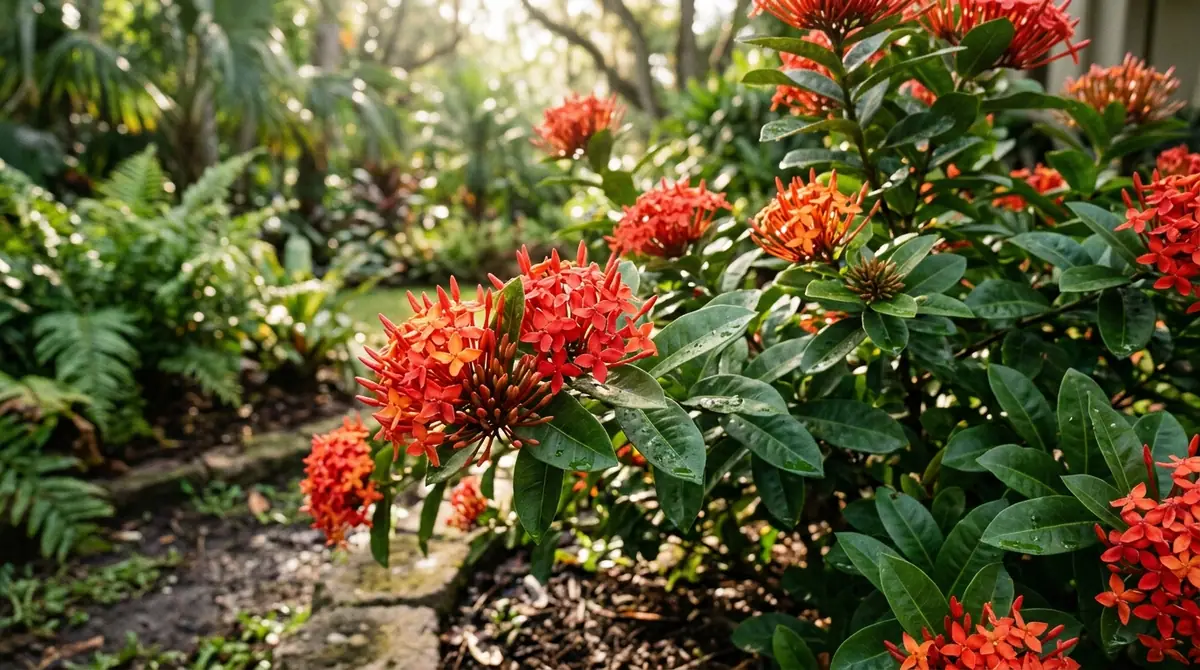
The sweat was dripping onto my field notebook as I stood inspecting a struggling hedge of Ixora in a gardener's Naples, Florida courtyard, watching its signature dark green leaves turn an unmistakable, chlorotic yellow between the veins. The soil pH was sitting stubbornly at 7.2, and the irrigation was cycling every single night. That morning in the field taught me more about the unforgiving nature of tropical shrubs than any textbook: the ixora maui red plant does not negotiate with alkalinity or soggy feet. When you treat it right—giving it the acidic soil, heavy sun, and consistent moisture it demands—it rewards you with a blaze of fiery red flower clusters that can stop traffic from across the street. Horticultural practice has spent decades unlocking the precise parameters this cultivar needs to thrive, whether you are shaping a formal privacy hedge or managing a specimen container on a sun-drenched patio.
1. Botanical Overview & Natural Habitat

Morphologically, the ixora maui red plant is distinguished by its dense, branching habit and leathery, lanceolate leaves that emerge with a bronze tint before maturing to a glossy, deep emerald green. The leaves typically measure 3 to 4 inches (7.6 to 10 cm) in length and are arranged in opposite pairs or whorls along stiff, woody stems. The true signature of this plant, however, is its inflorescence. The flowers are tubular, roughly 1 inch (2.5 cm) long, and aggregate into dense, rounded corymbs—often called trusses—measuring 3 to 5 inches (7.6 to 12.7 cm) across. Unlike species that bloom in fleeting pulses, 'Maui Red' produces these blazing scarlet clusters continuously from late spring through autumn, and year-round in USDA Hardiness Zones 10 through 11.
Mature specimens typically reach a height and spread of 3 to 4 feet (0.9 to 1.2 m) when managed in a landscape setting, though unpruned plants in tropical climates can eventually stretch up to 6 feet (1.8 m) tall. This compact stature makes it an ideal selection for foundation plantings, mass color beds, or medium-height formal hedges. Because it responds exceptionally well to shearing, you can easily maintain crisp architectural lines without sacrificing its heavy blooming capacity.
While my primary focus here is tropical ornamental design, gardeners shifting gears to temperate edible crops often ask me how regional microclimates dictate planting calendars. For instance, timing is just as critical when figuring out when to plant carrots in zone 8a to avoid bitter roots, or determining when to plant brussel sprouts in zone 7 so the heads experience a proper frost sweetening. Similarly, vegetable growers managing distinct regional frosts must know when to plant beets in utah or when to plant beets in kansas to hit those narrow spring and fall harvest windows.
2. Essential Environmental & Care Requirements
Understanding the wild origins of the ixora maui red plant immediately clarifies its environmental tolerances. It is an obligate calcifuge, meaning it strongly dislikes alkaline soils. To prevent the interveinal chlorosis I witnessed in that Naples courtyard, your soil must maintain an acidic pH range between 5.5 and 6.5. If the pH climbs above 6.8, iron and manganese become chemically unavailable to the root system, halting healthy growth. Amend native alkaline soils liberally with Canadian sphagnum peat moss, elemental sulfur, or well-rotted leaf mold prior to installation.
| Parameter | Optimal Condition | Common Mistake | Why It Matters |
|---|---|---|---|
| Soil pH | 5.5 – 6.5 | Planting in alkaline soils (pH > 7.0) | High pH locks out essential micronutrients like iron, causing severe chlorosis. |
| Sunlight | Full sun (6+ hours direct light) | Planting in deep shade | Insufficient light drastically reduces flower truss production and causes leggy stems. |
| Watering | Evenly moist, well-draining | Allowing prolonged drought or soggy feet | Drought drops flower buds; waterlogged soil causes root rot (Phytophthora). |
| Temperature | 65°F – 90°F (18°C – 32°C) | Exposure to frost (< 32°F / 0°C) | Frost kills terminal growth and can cause complete defoliation or plant death. |
| Humidity | 60% – 80% relative humidity | Placing in arid, dry indoor air | Low humidity causes leaf scorch, bud drop, and invites spider mite infestations. |
Light exposure dictates performance. While the ixora maui red plant can tolerate partial shade, placing it in full sun—meaning a minimum of 6 hours of direct daily sunlight—maximizes bloom density. In scorching desert climates, however, provide afternoon shade to prevent leaf scorch.
Water management requires precision. The root ball should never dry out completely, yet it must never sit in standing water. Water deeply when the top 1 inch (2.5 cm) of soil feels dry to the touch, ensuring moisture penetrates down to the full 8 to 10 inches (20 to 25 cm) of the root zone.
Temperature is a hard boundary. The plant is reliably perennial only in USDA Zones 10 and 11. When winter temperatures dip below 32°F (0°C), cellular damage occurs rapidly. If you live in cooler regions, treat your 'Maui Red' as a container specimen and move it indoors to a bright, humid sunroom before the first autumn frost. For insights on managing cold-sensitive tropicals alongside cool-season vegetables, you can reference guidelines on when to plant bok choy zone 7 or even review fall squash timelines such as when to plant pumpkins in southern california.
💡 Pro-Tip: If your local tap water is hard and alkaline, watering your ixora maui red plant with it will slowly push your container or garden soil pH upward over time. Harvest rainwater or use an acidifying fertilizer formulation with chelated iron to buffer high-alkalinity irrigation water.
3. Step-by-Step Cultivation, Feeding & Propagation
Establishing a thriving hedge or specimen of the ixora maui red plant relies on proper initial planting and an ongoing maintenance routine. Follow this proven protocol for installation and care:
- Site Selection and Soil Preparation: Choose a location receiving full sun with well-drained, organically rich earth. Dig a hole twice as wide as the nursery container and equal in depth. Mix 30% organic compost and acidifying peat moss into the excavated native soil.
- Planting: Gently slide the shrub out of its container, teasing out any circling roots with your fingers to prevent girdling. Set the plant in the hole so the top of the root ball sits 0.5 inches (1.3 cm) above the surrounding grade to account for settling. Backfill halfway, tamp gently, water thoroughly to settle air pockets, then fill the remainder of the hole and water again.
- Mulching: Apply a 2-to-3-inch (5-to-7.6 cm) layer of pine bark mulch or pine needles around the base of the plant. Keep the mulch 2 inches (5 cm) away from the main woody stem to prevent collar rot.
- Fertilization Schedule: Apply a slow-release, acid-forming granular fertilizer formulated for azaleas and camellias three times a year—early spring, mid-summer, and early autumn. Follow product label rates, typically scattering 1 to 2 tablespoons (15 to 30 ml) around the drip line and watering it in thoroughly.
- Pruning for Shape and Blooms: Prune immediately after the heavy spring flush or in late winter before new growth emerges. Shear the outer shell lightly to encourage branching, and cut out any dead, crossing, or interior-facing stems to improve air circulation.
Propagation of the ixora maui red plant is most successfully achieved via semi-hardwood stem cuttings taken in late spring or early summer. Select healthy, non-flowering shoots measuring 4 to 6 inches (10 to 15 cm) in length. Make a clean, 45-degree cut just below a leaf node using sterilized pruning shears. Strip the lower leaves off the bottom half of the cutting to expose two or three nodes. Dip the basal end into a rooting hormone powder containing indole-3-butyric acid (IBA) to accelerate callus formation.
Insert the cutting 2 inches (5 cm) deep into a pre-moistened propagation medium consisting of a 1:1 ratio of perlite and peat moss. Enclose the container in a clear plastic bag or propagation dome to maintain a 90% relative humidity level, placing it in bright, indirect light at a stable temperature of 75°F to 80°F (24°C to 27°C). Roots typically develop within 30 to 45 days. Once a gentle tug reveals firm root resistance, transplant the young starts into individual 4-inch (10 cm) pots filled with an acidic potting mix.
4. Common Problems, Pests & Troubleshooting
Even with meticulous care, the ixora maui red plant can encounter environmental stress and pest pressures. Recognizing early warning signs prevents minor issues from escalating into plant decline.
Interveinal Chlorosis: As discussed, yellow leaves with dark green veins point directly to iron deficiency caused by high soil pH or waterlogged roots that have damaged root hairs. Correct the pH using elemental sulfur and apply a foliar spray of chelated iron for immediate green-up. For deep horticultural insights on plant pathology and nutrient management, consult the resources provided by the University of Florida IFAS Extension.
Leaf Scorch and Bud Drop: If flower buds drop before opening, or if leaf margins turn brown and crispy, the plant is experiencing drought stress, excessive wind exposure, or sudden temperature fluctuations. Ensure a deep, consistent watering schedule and site the plant away from harsh, drying drafts or reflected heat from concrete walls.
Pest Infestations: Aphids, scale insects, and spider mites are the primary arthropod pests affecting ixora. Aphids cluster on tender new shoots, while armored scales appear as small, immobile bumps on stems and undersides of leaves. Spider mites thrive in hot, dry conditions, creating fine webbing and stippling foliage.
- Treatment: Blast minor outbreaks with a strong stream of water from a hose to physically dislodge pests. For persistent populations, apply horticultural oil or insecticidal soap, ensuring thorough coverage of both upper and lower leaf surfaces. For authoritative guidance on safe pest management practices, refer to the Royal Horticultural Society (RHS).
⚠️ Important Caution: Never apply heavy doses of high-nitrogen turf fertilizer near your ixora maui red plant. Excess nitrogen stimulates a flush of soft, vulnerable green growth that acts as an open invitation for aphids and scale insects, while simultaneously burning the sensitive root system.

5. Frequently Asked Questions
Can the ixora maui red plant survive outdoors in northern climates during winter?
No, the ixora maui red plant is strictly tropical and cannot survive freezing temperatures. It thrives exclusively in USDA Hardiness Zones 10 through 11. If you live in USDA Zone 9 or colder, you must grow 'Maui Red' in a container and bring it indoors before temperatures drop below 40°F (4°C).
Why is my ixora maui red plant dropping its flower buds?
Bud drop is almost always triggered by sudden environmental stress. Common culprits include erratic watering (letting the soil swing from bone-dry to soaking wet), insufficient sunlight, or sudden drafts of cold air. Maintain a consistent soil moisture level and ensure the plant receives at least 6 hours of direct sun daily.
How often should I fertilize my potted ixora maui red plant?
Potted specimens require regular feeding because nutrients leach out of containers rapidly during watering. Apply a water-soluble, acid-forming fertilizer formulated for acid-loving plants every 4 to 6 weeks throughout the active growing season (spring through autumn). Withhold fertilizer entirely during the slower winter months.
How do I lower my garden soil pH for an ixora maui red plant?
To lower your soil pH into the ideal 5.5 to 6.5 range, incorporate generous amounts of Canadian sphagnum peat moss, composted pine bark, or leaf mold into the root zone. For a faster chemical adjustment, apply agricultural elemental sulfur according to package directions, allowing 4 to 8 weeks for soil microbes to process the sulfur and acidify the earth before planting.
Related Guides
📋 Table of Contents ▼ Click to expand
Tags:
🌿 Related Plants You Might Like
PlantSavvyWorld
Editorial team
PlantSavvyWorld is an independent botanical education project. Articles are drafted with AI assistance, then edited and checked against university extension services, botanical garden collections and other published horticultural sources.