

When to Plant Beets in Kansas
Written with AI assistance, edited and checked against horticultural sources.
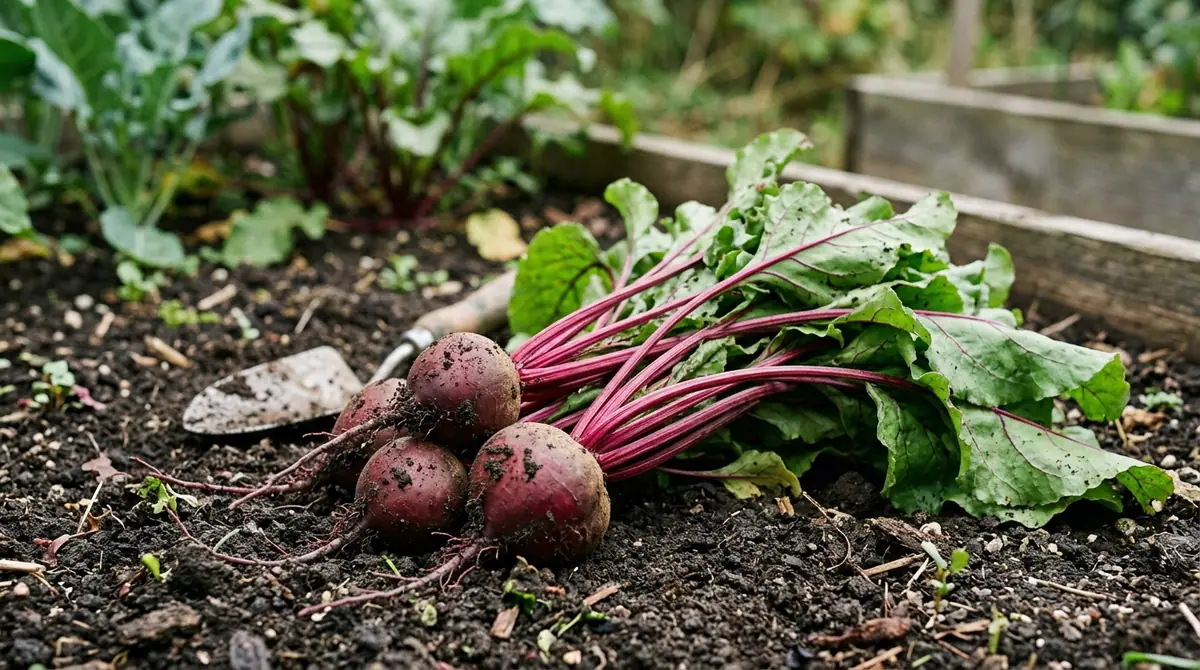
Planting beets in the Sunflower State involves navigating notoriously volatile weather that swings from late-winter freezes to scorching summer blowtorches, ideally when soil is damp and temperatures hover right around 55°F (13°C). Because beets (Beta vulgaris) are cool-season workhorses, timing the sowing window right between these extremes dictates whether the harvest yields sweet, tender globes or woody, bitter bullets.

1. Botanical Overview & Natural Habitat
The cultivated beet (Beta vulgaris subsp. vulgaris) belongs to the Amaranthaceae family, sharing a deep genetic lineage with spinach, quinoa, and Swiss chard. Native historically to the Mediterranean basin, wild sea beets (Beta vulgaris subsp. maritima) grew along coastal cliffs and salt marshes, which explains our modern garden beet's high tolerance for alkaline soils and moderate salinity.
What we commonly call a beet "seed" is actually a botanical structure known as a corky multi-germ conceptacle, or glomerule. Each of these hard, wrinkled capsules typically contains two to six true seeds. When you plant one beet seed, you will almost always see multiple seedlings emerge, necessitating careful thinning down the road.
Beets are biennial plants, meaning they complete their vegetative growth cycle in year one—storing sugars, minerals, and starches in an enlarged hypocotyl (the swelling root) and taproot—and flower, set seed, and die in year two. In Kansas gardens, we treat them as hardy annuals harvested during their first season. Their physiological sweet spot for growth rests between 50°F and 65°F (10°C to 18°C). When exposed to prolonged temperatures below 50°F (10°C) during their early seedling stage, or prolonged erratic cold snaps later, the plant can mistake the chill for an approaching winter, triggering an unwanted biological response called bolting—prematurely sending up a flower stalk and rendering the root woody and fibrous.
For Kansas growers, our continental climate splits our gardening year into two distinct beet-growing windows: a spring crop sown as soon as the soil can be worked, and a fall crop sown in late summer to mature as autumn temperatures cool down.
2. Essential Environmental & Care Requirements
To grow high-yield, sweet roots in Kansas, you must mimic the cool, moisture-retentive, yet well-drained conditions of their ancestral Mediterranean home while buffering them against our sudden prairie weather shifts.
| Parameter | Optimal Condition | Common Mistake | Why It Matters |
|---|---|---|---|
| Soil pH | 6.0 – 7.5 | Planting in acidic soils below 6.0 | Acidic soils restrict nutrient uptake, causing stunted growth and susceptibility to fungal diseases like scab. |
| Soil Texture | Loamy, well-amended, stone-free | Heavy, unamended Kansas heavy clay | Compacted clay prevents the hypocotyl from expanding, resulting in deformed, stubby, or forked roots. |
| Sunlight | Full sun (6 to 8 hours daily) | Shading under tall summer crops | Insufficient light slows photosynthesis, drastically reducing sugar accumulation in the roots. |
| Watering | 1 inch (2.5 cm) per week consistently | Erratic wet-and-dry cycles | Irregular moisture causes the expanding root to rupture, leading to corky skin and woody textures. |
| Temperature | 50°F – 65°F (10°C – 18°C) | Sowing too late into hot summer | High heat forces bitterness, halts root expansion, and triggers premature bolting. |
Soil preparation in Kansas is uniquely challenging due to our heavy regional clay. Incorporating well-rotted organic compost several weeks before planting breaks up compaction and boosts moisture retention without waterlogging. Beets also have a high demand for boron—a micronutrient frequently deficient in weathered Midwestern soils. A lack of boron results in internal black spot, a physiological disorder where the core of the beet turns dark and corky. If your soil tests low, amending with a balanced organic fertilizer containing micronutrients prevents this issue.
Sunlight is non-negotiable. While Kansas summers are intensely bright, spring and autumn daylight is ideal. Ensure your beet beds aren't overshadowed by neighboring perennials or early-season crops. If you are timing your spring beds alongside other cool-season projects, you might find similarities in soil prep when organizing other efforts, much like planning When to Transplant Flower Seedlings or setting out culinary herbs like cilantro; check out When to Transplant Cilantro Seedlings for insights on managing delicate root systems in early-season Kansas dirt.
3. Step-by-Step Cultivation, Feeding & Propagation
Getting your timing right in Kansas means looking at your local last spring frost date, which typically ranges from late March in Zone 7a (Wichita) to late April in Zone 5b/6a (northwestern Kansas).
- Spring Sowing Window: Sow seeds outdoors 3 to 4 weeks before your average last frost date. For most of eastern Kansas, this falls between March 15 and April 1. Soil temperatures should reach at least 45°F (7°C), though 50°F to 85°F (10°C to 29°C) is the absolute germination range.
- Fall Sowing Window: Sow seeds 8 to 10 weeks before your first average autumn frost (usually occurring between mid-October and early November statewide). For most Kansas gardeners, this means planting your fall crop between mid-July and mid-August, even while summer temperatures are still peaking. To help seeds germinate in warm August soil, shade the rows with burlap or row covers and keep them damp until sprouts emerge.
💡 Pro-Tip: If late winter lingers and you are itching to get your garden moving, pre-soak your beet glomerules in lukewarm water for 12 to 24 hours before planting. This softens the hard corky shell and washes away natural germination inhibitors, cutting your field emergence time down by nearly a week.
Follow this step-by-step cultivation protocol to ensure success:
- Bed Preparation: Clear the planting bed of all debris. Work organic compost into the top 6 to 8 inches (15 to 20 cm) of soil to loosen clay and ensure optimal drainage. Rake the surface smooth.
- Sowing Depth: Dig shallow furrows spaced 12 to 18 inches (30 to 45 cm) apart. Place the beet seeds 0.5 inches (1.3 cm) deep, dropping one seed every 2 to 3 inches (5 to 7.5 cm).
- Covering and Firming: Cover the seeds with fine soil or a layer of vermiculite, then gently tamp the earth down with the back of a rake to ensure good seed-to-soil contact.
- Initial Watering: Water the bed gently using a fine-rose nozzle to avoid displacing seeds. Keep the soil evenly moist until germination occurs, which typically takes 7 to 14 days depending on soil warmth.
- The Critical Thinning Phase: Once your seedlings reach 2 to 3 inches (5 to 7.5 cm) tall, thin them out. Because each multi-germ seed yields multiple plants, you must snip away the excess with scissors, leaving one strong seedling every 3 to 4 inches (7.5 to 10 cm). Do not pull them out, as tugging disturbs the delicate roots of the plant you want to keep. Eat your thinnings—they make a fantastic, earthy addition to early-season salads.
- Mulching: Apply a light layer of clean straw or shredded leaves around the base of the established seedlings to suppress weeds and lock in moisture against drying Kansas winds.
- Feeding and Maintenance: Side-dress with a low-nitrogen, high-phosphorus and potassium organic fertilizer 4 weeks after emergence. Nitrogen drives excessive leafy top-growth at the expense of root development. Maintain a steady watering cadence of roughly 1 inch (2.5 cm) per week.
As your garden transitions through the seasons, the timing principles you learn with root crops will serve you well when managing warm-season counterparts later in the year, such as timing When to Start Tomatoes Indoors Zone 6 or handling summer pruning tasks like When to Top Pepper Plants.
4. Common Problems, Pests & Troubleshooting
Even with immaculate timing, Kansas weather and local fauna can throw curveballs at your beet patch.
- Leaf Miners (Pegomya hyoscyami): These small flies lay white, oval eggs on the undersides of beet leaves. The larvae tunnel inside the leaf tissue, creating unsightly transparent blisters or mines.
- Solution: Inspect leaves weekly. Crush eggs manually with your fingers, or prune off heavily infested leaves. Use floating row covers immediately after planting to physically block adult flies from reaching your crop. For comprehensive management strategies tailored to regional pests, consult the Kansas State University Research and Extension publication archives.
- Cercospora Leaf Spot: A common fungal disease characterized by small circular spots with brown-to-purple borders that appear on the leaves during humid, wet spring conditions.
- Solution: Practice strict crop rotation, never plant beets in the same spot two years in a row, and water at the base of the plants early in the day so foliage dries quickly. For additional agricultural extension guidance, reference the University of Missouri Extension horticulture guides, which share similar Midwestern climate challenges.
- Damping-Off: A fungal soil-borne disease that attacks newly germinated seedlings at the soil line, causing them to pinch, topple, and die.
- Solution: Avoid overwatering cold spring soils, ensure proper drainage by amending heavy clay, and wait until soil temperatures consistently top 45°F (7°C) before sowing.
- Woody Roots and Poor Bulbing: Caused by delayed thinning, erratic soil moisture, or high summer heat.
- Solution: Always thin your plants on time and maintain consistent irrigation. If a severe Kansas heatwave hits mid-season, shade cloth can help keep soil temperatures manageable.
⚠️ Important Caution: Never use high-nitrogen lawn fertilizers near your root crops. Excess nitrogen causes lush, beautiful, dark green foliage while leaving your actual beet roots small, stunted, hairy, and flavorless.

5. Frequently Asked Questions
Can I grow beets through the hot Kansas summer?
No. Beets are cool-season crops that stall out, turn woody, and bolt when sustained temperatures exceed 85°F (29°C). If you attempt to grow them through July and August in Kansas, the roots will become fibrous, bitter, and inedible. Focus your efforts on an early spring crop and a robust fall crop instead.
What happens if a late Kansas freeze hits my young beet seedlings?
Established beet seedlings can tolerate light frosts down to 28°F (-2°C) quite well; in fact, a touch of frost often increases their natural sugar content. However, if your young plants experience prolonged freezing temperatures (below 25°F / -4°C) early in their life cycle, they may interpret the event as the end of winter and bolt prematurely once temperatures warm up. Use floating row covers to protect them during hard late-winter freezes.
How do I know when my Kansas beets are ready to harvest?
You do not need to wait until the end of the season to start harvesting. You can begin pulling baby beets as soon as the shoulders of the roots reach 1 inch (2.5 cm) in diameter—usually about 50 to 60 days after sowing. Mature beets taste best when harvested at 2 to 3 inches (5 to 7.5 cm) across. If left in the ground too long past maturity, especially during erratic rain cycles, they become woody and develop a corky texture.
Can I transplant beet seedlings instead of direct sowing?
While it is technically possible to start seeds indoors and transplant them, it is rarely recommended. Beets have a sensitive taproot system. Any disruption, bending, or stunting of that primary root during transplanting can cause the mature beet to grow forked, deformed, or stunted. Direct sowing your seeds into the garden bed always yields the straightest, highest-quality roots.
Related Guides
- When to Plant Beets in Utah
- When to Start Beets Indoors
- When to Plant Asparagus in Kansas
- When to Plant Watermelon in Kansas
- When to Plant Sweet Potatoes in Kansas
📋 Table of Contents ▼ Click to expand
Tags:
Keep reading
🌿 Related Plants You Might Like






PlantSavvyWorld
Editorial team
PlantSavvyWorld is an independent botanical education project. Articles are drafted with AI assistance, then edited and checked against university extension services, botanical garden collections and other published horticultural sources.