

When to Plant Sweet Potatoes in Kansas
Written with AI assistance, edited and checked against horticultural sources.
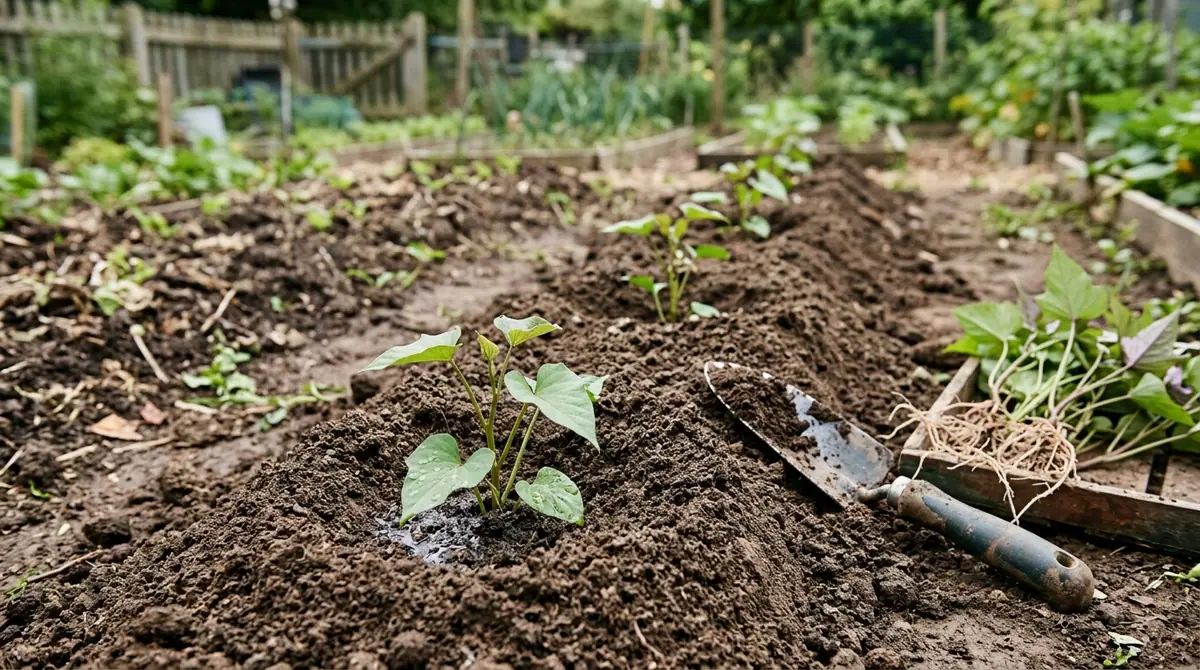
I stood knee-deep in red clay near Lawrence, Kansas, on a frosty May morning in 2018, holding a bundle of limp sweet potato slips that had cost me a small fortune to ship from a specialty grower. A sudden, unforecasted late frost had just blackened my tomato cages, and my heart dropped. Sweet potatoes (Ipomoea batatas) are tropical natives, and dropping those delicate rooted green stems into soil sitting at a stubborn 50°F (10°C) is a masterclass in how to rot a harvest before it even begins. That painful spring taught me that successful Kansas sweet potato production is entirely a game of thermal patience. If you time your planting to match our prairie soil's stubborn warm-up, you will unearth bushels of sprawling, nutrient-dense storage roots by autumn. If you rush it, you will get nothing.

1. Botanical Overview & Natural Habitat
Sweet potatoes (Ipomoea batatas) belong to the Convolvulaceae family, making them true morning glories rather than close kin to standard white potatoes (Solanum tuberosum), which belong to the Nightshade family. Native to tropical Central and South America, sweet potatoes evolved under warm, consistent photoperiods with deep, loose, well-draining soils.
Unlike regular potatoes grown from tubers or true seeds, sweet potatoes are cultivated almost exclusively from vegetative shoots called "slips." These slips are sprouted from mature, cured sweet potato roots (known as seed roots). Botanically, the edible portion we crave is a modified, enlarged root (an adventitious root swelling with starch and sugars) rather than an underground stem or tuber.
In the continental United States, and particularly in Kansas (which spans USDA Hardiness Zones 5b through 6b), the sweet potato acts as a tender, herbaceous perennial grown strictly as an annual. Because our growing season features a definitive, hard winter freeze, sweet potatoes must complete their entire life cycle—from slip planting to final harvest—within a strict 90-to-120-day window. Understanding this tropical origin dictates every single cultural decision we make on the windy Kansas plains, from soil temperature thresholds to our choice of resilient cultivars like 'Beauregard', 'Covington', or 'Georgia Jet'.
2. Essential Environmental & Care Requirements
Kansas presents a unique set of climatic variables. We experience scorching summer highs often exceeding 95°F (35°C), erratic spring rainfalls, and heavy winds that can batter sprawling vine growth. To thrive, sweet potatoes demand specific environmental parameters.
| Parameter | Optimal Condition | Common Mistake | Why It Matters |
|---|---|---|---|
| Soil Temperature | 65°F–85°F (18°C–29°C) | Planting when soil is below 60°F (15°C) | Cold soil causes slips to rot and halts root initiation. |
| Soil pH | 5.8 to 6.5 (slightly acidic) | Planting in heavy, unamended alkaline clay | High pH limits nutrient availability and causes misshapen roots. |
| Sunlight | Full sun (8+ hours daily) | Planting in partial shade under tree lines | Reduced solar radiation drops overall starch storage and yields. |
| Moisture | 1 inch (2.5 cm) of water weekly | Overwatering late in the season | Excessive late water splits roots and encourages fungal rot. |
When planning your layout, remember that sweet potatoes love warmth and abhor standing water. For companion planting strategies that maximize your garden's footprint, check out our guide on Sweet Potato Companion Plants: 8 Best Garden Friends & 3 Foes to Avoid. Additionally, while sweet potatoes are remarkably drought-tolerant once established, ensuring consistent moisture during the first 30 days after transplanting is critical for robust root architecture, much like managing moisture when When to Transplant Cucumber Seedlings: Stop Root Shock & Boost Growth. If you are transitioning from cool-weather root crops, you might also find our regional timing insights in When to Plant Strawberries in Kansas: Zone 6a/6b Seasonal Calendar helpful for structuring your spring garden calendar.
💡 Pro-Tip: In eastern Kansas counties like Douglas or Johnson, native soils are often heavy, compacted glacial till. Never bury your slips straight into unamended clay. Build raised beds or low ridges at least 8 to 12 inches (20 to 30 cm) high, incorporated with aged compost and sharp builder's sand, to allow the swollen roots to expand without hitting physical resistance.
3. Step-by-Step Cultivation, Feeding & Propagation
Timing your planting in Kansas depends heavily on your local frost-free dates. Across most of Kansas, the safe window to plant sweet potato slips outdoors opens two to three weeks after your last average spring frost, typically ranging from mid-May to early June. Do not rush this; soil temperature matters far more than the calendar date.
- Verify Soil Temperature: Use a digital soil thermometer inserted 4 inches (10 cm) deep into your garden beds. Wait until readings consistently register at or above 65°F (18°C) for three consecutive mornings.
- Prepare the Slips: Procure certified disease-free slips. If your slips arrived with roots wrapped in damp paper towels, trim any excessively long, tangled roots back to 2 inches (5 cm) to encourage lateral root branching upon planting.
- Shape the Rows: Form ridges spaced 36 to 48 inches (90 to 120 cm) apart. If using black plastic mulch to warm the Kansas soil quickly, lay it down one week before planting to heat the root zone.
- Plant the Slips: Dig horizontal or slightly angled trenches along your ridges. Insert each slip so that at least two-thirds of the stem (including several leaf nodes) is buried underground, spaced 12 inches (30 cm) apart within the row.
- Water In Deeply: Immediately apply a generous soaking of water—about 1 inch (2.5 cm)—around each newly planted slip to settle the soil and eliminate air pockets around the stem nodes.
- Apply Early Protection: If late May brings a sudden drop in Kansas nighttime temperatures below 50°F (10°C), temporarily drape floating row covers over your newly set slips to preserve ambient warmth.
- Manage Side Dressing and Fertility: Apply a balanced, low-nitrogen organic fertilizer (such as a 5-10-10 blend) at a rate of 2 pounds per 100 feet (1 kg per 30 meters) of row at planting. Avoid high-nitrogen fertilizers, which trigger an explosion of lush green vines at the complete expense of underground root development.
- Provide Curing and Harvest Timing: Cease all irrigation 2 to 3 weeks before your anticipated harvest date—usually just before the first expected autumn frost in late September or mid-October. Dig gently with a spading fork, curing the harvested roots in a warm, humid room (85°F/29°C at 85-90% relative humidity) for 7 to 10 days to heal skin wounds and sweeten starches.
For official state-specific horticultural recommendations, consult the Kansas State University Research and Extension portal, which offers localized vegetable production guides tailored to our distinct prairie microclimates.
⚠️ Important Caution: Never let your sweet potato slips sit in standing water during the first two weeks after planting. Saturated, cold Kansas spring soils combined with high microbial activity will instantly invite Fusarium wilt and stem rot, wiping out your entire crop before a single storage root can form.
4. Common Problems, Pests & Troubleshooting
Even with precise timing, Kansas weather and native pests can challenge your sweet potato crop. Here is how to diagnose and manage the most frequent issues:
- Yellowing Lower Leaves & Stunted Growth: Usually caused by planting too early into cold, wet soil. If temperatures drop below 50°F (10°C) for extended periods, the plant simply shuts down nutrient uptake. Remove affected lower foliage if rot sets in, and side-dress with a gentle application of compost tea once ambient heat returns.
- Tortoise Beetles and Flea Beetles: These small, metallic or spotted insects chew characteristic circular holes and lace patterns into young sweet potato leaves. While mature plants can outgrow cosmetic damage, heavy early infestations on tender slips can defoliate the plant. Apply organic neem oil or dust foliage with diatomaceous earth during the evening hours.
- Scurf (Monilochaetes infuscans): A fungal disease that causes brownish-black, superficial spots or blotches on the skin of the storage roots. It thrives in soils with high pH and excessive organic matter that is too fresh. Always plant certified disease-free slips, maintain a slightly acidic soil pH (5.8 to 6.5), and rotate your planting beds every three years.
- Vigorous Vines with No Roots: If your vines look like a lush jungle by August but digging up a test plant reveals only stringy roots, you likely applied too much nitrogen fertilizer or grew the crop in overly shaded conditions. Switch to a phosphorus- and potassium-heavy amendment next season and ensure full sun exposure.

5. Frequently Asked Questions
Can I just plant a sweet potato from the grocery store in my Kansas garden?
Supermarket sweet potatoes are frequently treated with chemical sprout inhibitors (such as isopropyl N-phenylcarbamate) to prevent them from growing in the bag. Even if they do sprout, they are often uncertified cultivars harboring fungal or viral pathogens. Always source certified disease-free slips from a reputable nursery or mail-order propagator.
What happens if a late frost hits my sweet potato slips in Kansas?
Sweet potato foliage is extremely tender and turns black and completely collapses at the very first touch of frost (32°F / 0°C). If you planted early and a surprise frost is forecasted, cover your slips immediately with frost cloth, buckets, or heavy bedsheets anchored with soil. If the main stem above ground is killed, inspect the underground nodes; if they remain firm and white, the plant may push out new replacement shoots once warmth returns.
How many sweet potatoes can I expect to harvest from a single slip?
Under ideal Kansas growing conditions with full sun, adequate moisture, and loose soil, a single healthy slip will yield anywhere from 1 to 3 pounds (0.45 to 1.4 kg) of usable storage roots, translating roughly to 5 to 10 substantial sweet potatoes per plant.
Do I need to cut back or "turn" my sweet potato vines during the summer?
No. Gardeners often wonder if they should prune the sprawling vines that race across their garden beds. You should never cut back healthy sweet potato vines. The leaves are the solar panels manufacturing the sugars that travel down into the developing roots. Trimming them reduces your final harvest weight significantly. Let them sprawl and root down at the nodes if they have space, or gently lift trailing vines if they threaten neighboring crops.
Related Guides
- When to Plant Beets in Kansas
- When to Plant Asparagus in Kansas
- When to Plant Watermelon in Kansas
- Sweet Memory Sky Flower
- Can Rabbits Eat Sweet Basil
📋 Table of Contents ▼ Click to expand
Tags:
Keep reading
🌿 Related Plants You Might Like





PlantSavvyWorld
Editorial team
PlantSavvyWorld is an independent botanical education project. Articles are drafted with AI assistance, then edited and checked against university extension services, botanical garden collections and other published horticultural sources.