

When to Plant Asparagus in Kansas
Written with AI assistance, edited and checked against horticultural sources.
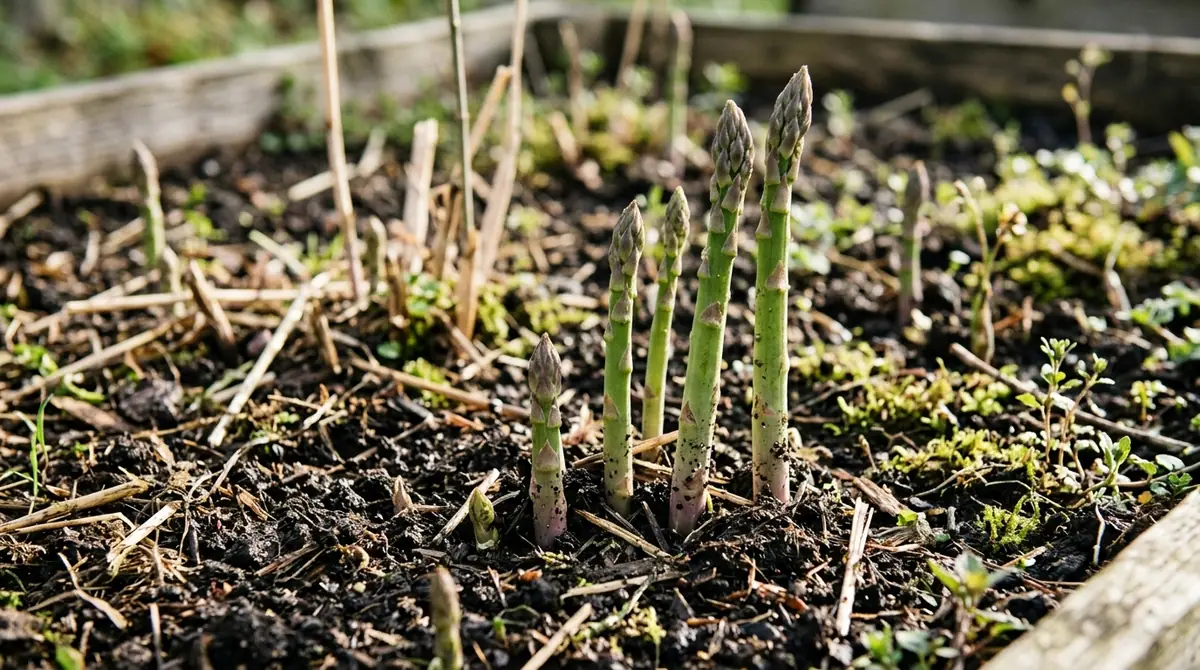
Planting Asparagus officinalis crowns too early in waterlogged Midwestern mud causes them to rot, while waiting until blistering summer winds take hold in June causes the crowns to dry out before establishing roots. For gardeners across the Sunflower State, timing the planting of this crop is a delicate negotiation between the unpredictable frost windows of USDA Hardiness Zones 5b through 7a and the plant's rigid biological clock.

1. Botanical Overview & Natural Habitat
Asparagus (Asparagus officinalis) is a long-lived, herbaceous perennial belonging to the Asparagaceae family. Unlike short-lived garden vegetables, a well-managed asparagus bed can yield succulent spears for 15 to 20 years. Botanically, what we harvest and eat are the young, emergent shoots (turions) originating from a subterranean network of fleshy storage roots attached to a central, woody crown.
Native to the coastal and river-floodplain ecosystems of western Europe, northwestern Africa, and western Asia, wild asparagus evolved in sandy, highly porous soils exposed to full sun and periodic maritime or continental droughts. This evolutionary history dictates its modern garden requirements. The plant is exceptionally well-suited to the continental climate of Kansas, provided its specific drainage needs are met. Kansas soils often feature heavy clay pans, particularly in eastern regions like Douglas and Johnson counties, or wind-blown loess in the west. Left unamended, these dense soils trap moisture around the rhizomes, leading to fatal fungal pathogens.
Asparagus is dioecious, meaning individual plants are strictly male or female. Female plants expend significant metabolic energy producing round, red berries containing seeds, which diminishes their spear production by 10% to 25%. Modern cultivars—such as the all-male hybrids 'Jersey Knight', 'Jersey Supreme', and 'Jersey Giant'—were bred to eliminate seed production entirely, channeling 100% of their carbohydrate reserves into thick, tender, high-volume spear production. If you are comparing this perennial's early-season establishment needs to other tender crops, you might find our guide on When to Transplant Flower Seedlings helpful for timing your wider garden layout.
2. Essential Environmental & Care Requirements
Establishing asparagus in Kansas requires strict adherence to environmental parameters. Because the state experiences temperature swings from -15°F (-26°C) in winter to 105°F (40°C) in mid-summer, getting the micro-environment right is non-negotiable.
| Parameter | Optimal Condition | Common Mistake | Why It Matters |
|---|---|---|---|
| Soil pH | 6.5 to 7.0 | Planting in acidic Kansas subsoils (< 6.0) | Acidic soils lock up micronutrients and inhibit nitrogen uptake, stunting spear density. |
| Soil Texture | Sandy loam to well-amended clay loam | Planting in compacted, heavy clay without organic matter | Water retention in clay causes crown rot (Fusarium and Phytophthora). |
| Sunlight | Full sun (8–10 hours daily) | Shading beds near large trees or north-facing walls | Insufficient light reduces photosynthetic carbohydrate storage in roots for the following season. |
| Irrigation | 1 inch (2.5 cm) of water per week | Frequent, shallow watering | Deep root systems (up to 5 feet / 1.5 meters) require deep, infrequent soaking to prevent surface root rot. |
| Soil Temperature | 50°F to 60°F (10°C to 15°C) at planting depth | Planting into frozen or sub-45°F (7.2°C) soil | Cold, wet soil stalls root growth, leaving dormant crowns vulnerable to soil-borne pathogens. |
To manage soil chemistry effectively in Kansas, consult the Kansas State University Research and Extension publications on vegetable gardening for regional soil testing protocols. For companion planting considerations or balancing bed layouts alongside early spring greens, review our guide on When to Transplant Cilantro Seedlings.
3. Step-by-Step Cultivation, Feeding & Propagation
The best time to plant asparagus crowns in Kansas is early spring—typically late March through mid-April, depending on whether you are gardening in USDA Zone 5b (around Colby or Goodland) or Zone 7a (around Wichita or Arkansas City). Soil temperatures must consistently reach 50°F (10°C) at a depth of 4 inches (10 cm).
💡 Pro-Tip: Do not purchase grocery store asparagus to harvest seeds for planting; it takes three years just to determine sex ratios. Always purchase dormant 1-year-old crown divisions certified disease-free from a reputable nursery. They possess established root systems that bypass a full year of slow seedling development.
Follow this exact step-by-step protocol to plant your bed:
- Site Selection and Weed Eradication: Select a permanent, full-sun location. Eliminate all perennial weeds (like field bindweed and quackgrass) the autumn before planting. Once asparagus is established, deep mechanical weeding damages fragile underground crowns.
- Trench Excavation: Dig a trench 8 to 12 inches (20 to 30 cm) deep and 12 inches (30 cm) wide. If planting multiple rows, space the trenches 4 feet (1.2 meters) apart to allow for mature fern canopy spread.
- Soil Amendment: Loosen the bottom of the trench with a garden fork. Incorporate a 2-inch (5 cm) layer of aged compost and a balanced organic fertilizer (such as a 5-10-10 blend) directly into the floor of the trench.
- Crown Placement: Create small, conical mounds of soil every 12 to 18 inches (30 to 45 cm) along the bottom of the trench. Drape the roots of each crown downward over the mound like an octopus, ensuring the central bud points straight up.
- Initial Backfilling: Cover the crowns with just 2 inches (5 cm) of native soil mixed with compost. Firm the soil gently around the roots to eliminate air pockets, then water thoroughly to settle the soil at 65°F to 70°F (18°C to 21°C) equivalent ambient moisture.
- Gradual Trench Filling: As the green spears emerge and grow 6 to 8 inches (15 to 20 cm) tall, pull another 2 inches (5 cm) of soil from the trench edges into the trench around the stems. Repeat this process every two to three weeks through late spring until the trench is entirely level with the surrounding grade. This gradual hilling encourages deep, stable root placement.
⚠️ Important Caution: Resist the urge to harvest any spears during the first growing season (Year 1). Even in Year 2, limit harvesting to a strict two-week window. The plant must be allowed to grow into dense, 5-foot (1.5-meter) ferns that photosynthesize and dump crucial carbohydrates back down into the root system for the following year's yield. Full harvesting is only safe to begin in Year 3.
4. Common Problems, Pests & Troubleshooting
Kansas weather extremes and soil characteristics frequently invite specific biological challenges to an asparagus patch.
- Asparagus Beetle (Crioceris asparagi and Crioceris duodecipunctata): These metallic blue-black or orange-spotted beetles chew on emerging spears and defoliate the summer ferns. Hand-pick adults in early morning when they are sluggish, or apply organic Spinosad or Neem oil during non-harvest windows. Introduce beneficial insects like lady beetles to manage larvae.
- Fusarium Crown and Foot Rot (Fusarium oxysporum f. Sp. asparagi): This fungal pathogen enters through wounds or natural cracks in roots, causing yellowing ferns, brown lesions on the lower stems, and eventual plant collapse. It thrives in poorly drained Kansas clay. Prevention is the only cure: use certified disease-free crowns, ensure immaculate soil drainage, and maintain a soil pH near 7.0.
- Purple Spot (Stemphylium vesicarium): Common during wet Kansas springs, this fungus creates sunken, elliptical purple lesions on spears and ferns. Prune away dead fern debris at the end of winter and discard or burn it to break the fungal spore cycle. Avoid overhead sprinkler irrigation; use drip tape instead.

5. Frequently Asked Questions
Can I plant asparagus in the fall in Kansas?
While spring is the gold standard, you can plant asparagus in late September or October in the southern half of Kansas (Zone 6b/7a) if you source fall-digging crowns. However, winter cold snaps in northern Kansas (Zone 5b) can heave unestablished crowns right out of the soil before deep roots form. Spring planting remains the safest horticultural practice across the state.
How many asparagus plants do I need for a family of four?
A productive family bed requires roughly 20 to 25 crown plants. This yields approximately 10 to 15 pounds (4.5 to 6.8 kg) of fresh spears over an extended 6- to 8-week harvest season once the bed matures in its third year.
Why are my asparagus spears coming up skinny like pencils?
Thin spears indicate that the root system is young (common in Year 2 plants), stressed by drought, or overcrowded. It can also happen if the ferns from the previous year were cut down too early in autumn before the plant could store sufficient energy. Allow the ferns to yellow naturally before cutting them back to the soil line after the first hard freeze in late November.
Do I need to fertilize my established Kansas asparagus bed every year?
Yes. Asparagus is a heavy feeder. Apply a complete organic fertilizer or a thick 2-inch (5 cm) top-dressing of well-rotted manure or compost in early spring just before spear emergence. A second application of nitrogen can be side-dressed immediately after the harvest season concludes in late spring, fueling the lush summer fern growth necessary for next year's crop.
Related Guides
- When to Plant Beets in Kansas
- When to Plant Watermelon in Kansas
- When to Plant Sweet Potatoes in Kansas
📋 Table of Contents ▼ Click to expand
Tags:
Keep reading
🌿 Related Plants You Might Like



PlantSavvyWorld
Editorial team
PlantSavvyWorld is an independent botanical education project. Articles are drafted with AI assistance, then edited and checked against university extension services, botanical garden collections and other published horticultural sources.