

When to Transplant Cilantro Seedlings
Written with AI assistance, edited and checked against horticultural sources.
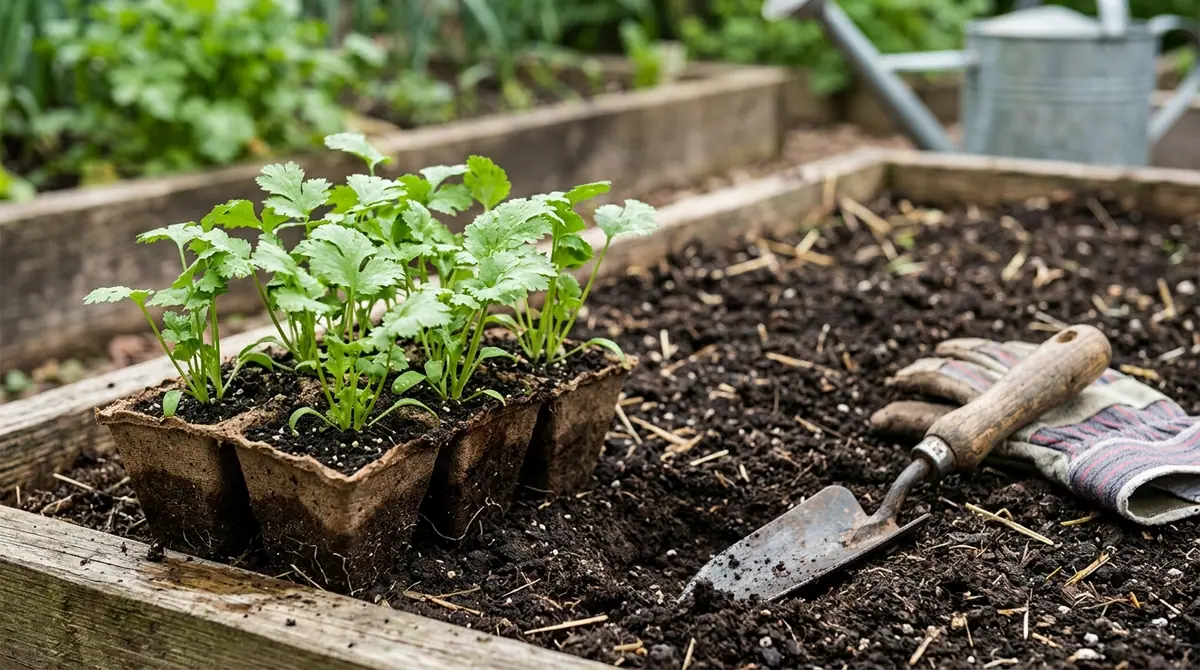
Cilantro seedlings that begin to yellow at their base at three weeks out from sowing often have taproots spiraling out of drainage holes. Waiting too long for warmer weather misses the tight biological window where cilantro (Coriandrum sativum) tolerates transplantation. If you wait too long to move those tender starts into the earth, their long taproot encounters resistance, panics, and bolts straight to seed before you can harvest a single leaf of salsa garnish.

1. Botanical Overview & Natural Habitat
Cilantro is a cool-season annual herb belonging to the Apiaceae (carrot and parsley) family. Native to regions spanning from Southern Europe and North Africa to Southwestern Asia, Coriandrum sativum evolved in climates characterized by cool, wet winters and warm, dry springs. This evolutionary history dictates every aspect of how the plant grows today.
Unlike leafy greens that can be handled roughly, cilantro features a pronounced, fragile taproot that plunges straight downward to anchor the plant and source deep moisture. Understanding this root architecture is the single most important factor in determining when to transplant cilantro seedlings. If you leave seedlings in plug trays or starter pots until they are root-bound, that primary taproot sustains irreversible damage upon extraction.
The plant's life cycle is strictly photoperiodic and temperature-sensitive. When ambient temperatures consistently exceed 75°F (24°C) and day lengths lengthen past 12 hours, the plant receives a hormonal cue that it has reached the end of its vegetative stage. It rapidly transitions to bolting—sending up a hollow, branching flowering stalk with umbels of tiny white or pinkish flowers—at which point the basal leaves turn bitter, fern-like, and sparse.
For companion planting insights or seasonal planning in different climatic zones, you might look at how cool-season crops behave alongside other regional favorites, such as tracking your planting calendars like you would when evaluating When to Plant Strawberries in Kansas: Zone 6a/6b Seasonal Calendar.
2. Essential Environmental & Care Requirements
To keep cilantro from bolting prematurely, you must replicate its preferred Mediterranean niche in your garden beds or containers.
Temperature is your primary boundary. Cilantro seeds germinate best when soil temperatures range between 55°F and 68°F (13°C to 20°C). Once transplanted, the seedlings thrive when daytime air temperatures hover between 50°F and 70°F (10°C to 21°C). While mature plants can endure light frosts down to 25°F (-4°C), young transplants require protection from hard freezes until they are thoroughly established.
Soil composition is equally critical. Because of that vulnerable taproot, cilantro demands loose, friable, well-draining loam with a pH between 6.0 and 6.8. Heavy clay soils cause moisture to pool around the root zone, inviting fungal pathogens like Pythium and Fusarium, while extremely sandy soils drain too rapidly, stressing the plant into early flowering.
Light exposure dictates the speed of vegetative growth. Cilantro requires full sun—at least 6 hours of direct daily sunlight—to produce lush, aromatic foliage. However, in southern climates or late spring plantings, providing afternoon shade during the hottest hours of the day can extend your harvest window by two to three weeks by preventing heat stress.
Water management requires consistency. The soil must remain evenly moist—never waterlogged, never bone dry. Allowing the soil to dry out completely between waterings acts as a secondary trigger for premature bolting.
| Parameter | Optimal Condition | Common Mistake | Why It Matters |
|---|---|---|---|
| Soil Temperature | 55°F – 68°F (13°C – 20°C) | Planting into frozen or hot soil | Slows root establishment and triggers shock responses. |
| Soil pH | 6.0 – 6.8 | Ignoring soil tests (acidic/alkaline extremes) | Locks out essential micronutrients like phosphorus and iron. |
| Sunlight | 6+ hours of direct sun | Deep shade or unmitigated scorching heat | Too little sun causes leggy growth; too much heat causes bolting. |
| Moisture | Evenly moist, well-draining | Cyclic flooding and severe drought | Drought stress instantly signals the plant to set seed. |
For a broader perspective on root sensitivity in other delicate garden staples, review our guide on When to Transplant Cucumber Seedlings: Stop Root Shock & Boost Growth.
3. Step-by-Step Cultivation, Feeding & Propagation
Timing is everything. You should transplant cilantro seedlings when they are 3 to 4 weeks old, standing roughly 3 to 4 inches (7.5 to 10 cm) tall, and possess exactly two to three sets of true leaves. Waiting until the plants are larger dramatically increases root trauma.
Here is the exact cultivation protocol I use in my professional landscape designs:
- Harden Off the Seedlings: Begin the transition process 7 to 10 days before your intended planting date. Place indoor-grown seedlings outdoors in a sheltered, shady spot for 1 hour on the first day, gradually increasing their exposure to direct sun and wind over the week until they can withstand a full 24 hours outside.
- Prepare the Bed: Clear the planting area of all debris and weeds. Work organic compost into the top 6 inches (15 cm) of soil to improve texture and fertility, ensuring no large clods remain that could deflect the growing taproot.
- Pre-Water the Cells: Water your seedling trays thoroughly 2 to 3 hours before transplanting. Moist root balls slide out of containers cleanly without tearing fragile root hairs.
- Dig Planting Holes: Space your holes 6 to 8 inches (15 to 20 cm) apart in rows spaced 12 inches (30 cm) apart. Dig each hole just deep enough to accommodate the root ball without burying the stem base.
- Extract with Care: Gently invert the seedling cell, supporting the base of the stems with your fingers. Never pull a seedling upward by its stem; instead, squeeze or tap the bottom of the cell container to ease the root mass free intact.
- Set and Firm: Place the seedling into the prepared hole at the exact same soil depth it was growing in previously. Gently press the surrounding soil around the root ball to eliminate air pockets, taking care not to compact the earth tightly.
- Initial Watering: Water the newly settled bed deeply and gently using a fine rose attachment on your watering can to settle the soil completely around the roots.
- Apply Mulch: Spread a light 1-inch (2.5 cm) layer of shredded leaf mold or clean straw around the base of the plants to retain moisture and suppress weeds.
💡 Pro-Tip: To maintain a continuous supply of fresh cilantro throughout the spring, stagger your seed-starting and subsequent transplanting dates every 14 days until daytime temperatures consistently exceed 75°F (24°C).
For regional adjustments, especially if you are balancing warm-season rotation crops like those discussed in When to Plant Onions in Southern California (Zone 9 & 10 Planting Calendar), adjust your spring timelines to beat regional heat waves.
4. Common Problems, Pests & Troubleshooting
Even with pristine timing, young cilantro transplants face environmental and biological hurdles.
Root Shock and Wilting: If your seedlings collapse or exhibit severe leaf curl within 48 hours of transplanting, root disturbance or rapid desiccation is usually the culprit. Always ensure your hardening-off protocol was not rushed, and keep the soil consistently damp during the first week post-transplant.
Damping-Off Disease: Caused by soil-borne fungi (Rhizoctonia or Pythium), this affliction causes seedlings to pinch at the soil line and topple over. Prevent this by ensuring exceptional airflow, avoiding over-saturation, and using sterilized potting mixes.
Aphids and Leafminers: Tender young foliage acts as a beacon for green peach aphids and leafminers. Inspect the undersides of leaves weekly. Blast light infestations away with a sharp stream of water, or introduce beneficial insects like ladybugs and lacewings. For authoritative guidance on managing persistent regional garden pests, consult the University of California Agriculture and Natural Resources Statewide Integrated Pest Management Program.
⚠️ Important Caution: Never apply high-nitrogen synthetic fertilizers to your cilantro transplants. Excess nitrogen forces rapid, succulent leaf production at the expense of root development, while simultaneously encouraging aphid populations and accelerating the bolting process. Rely instead on slow-release organic compost.

5. Frequently Asked Questions
Can I divide cilantro seedlings when transplanting?
No. Because cilantro develops a dominant taproot rather than a fibrous root mass, attempting to split or divide clustered seedlings will destroy the primary root and kill the plants. Thin your seedlings by snipping unwanted stems at the soil line with sharp scissors rather than pulling them out.
Why do my cilantro transplants immediately turn yellow and die?
Yellowing immediately after transplanting usually points to root damage incurred during handling, or severe overwatering that has induced root rot. Ensure your planting medium drains freely and that you handled the root ball with minimal disruption.
Is it better to direct sow cilantro or use transplants?
Direct sowing is biologically ideal for cilantro because it completely eliminates the risk of transplant shock to the taproot. However, if you have a short growing season or wish to get a jump start on spring, you can successfully transplant cilantro seedlings as long as you move them into the garden while they are very young (under 4 weeks old) and handle their roots with extreme care. For general horticultural guidance on managing herbaceous plants, consult the Royal Horticultural Society.
How long does it take for transplanted cilantro to recover from shock?
Healthy cilantro transplants generally exhibit temporary transplant stall for 3 to 5 days. Once new root tips anchor into the surrounding garden soil, visible upward vegetative growth resumes rapidly within a week.
Related Guides
- When to Transplant Snapdragon Seedlings
- When to Transplant Flower Seedlings
- When to Start Fertilizing Seedlings
- When to Repot Cucumber Seedlings
- When to Put Seedlings in Bigger Pot
📋 Table of Contents ▼ Click to expand
Tags:
Keep reading
🌿 Related Plants You Might Like


PlantSavvyWorld
Editorial team
PlantSavvyWorld is an independent botanical education project. Articles are drafted with AI assistance, then edited and checked against university extension services, botanical garden collections and other published horticultural sources.