

When to Start Fertilizing Seedlings
Written with AI assistance, edited and checked against horticultural sources.
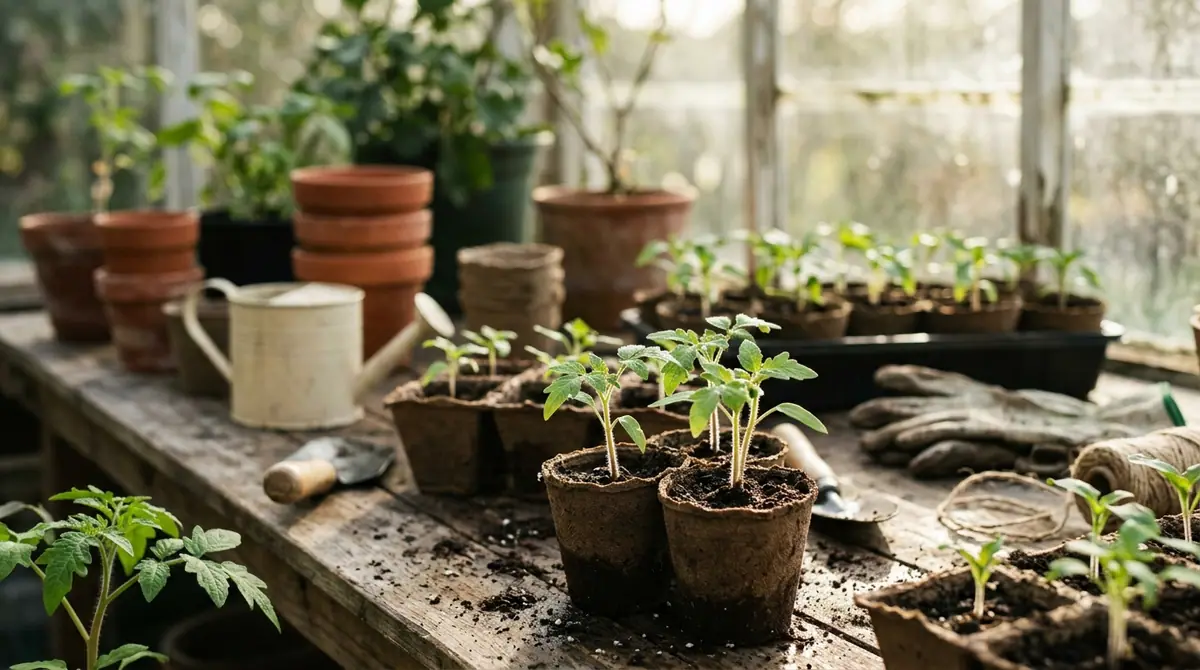
I can still smell the sharp, earthy tang of damp peat moss mixed with stale tap water from the basement staging racks of a greenhouse back in 2012. I had just pricked out three hundred delicate heirloom pepper seedlings into fresh cells, proud of my neat rows, when I made the classic rookie mistake. Eager to speed up their growth, I mixed up a batch of half-strength high-nitrogen liquid fertilizer and watered them all in thoroughly. Within forty-eight hours, the margins of their tiny cotyledons curled downward, crisped into a translucent brown, and half the tray collapsed from osmotic root burn. That expensive lesson taught me that a seedling's timeline is completely different from that of a mature plant. Let's look at the exact science of when and how to start feeding your young plants safely.
1. Botanical Overview & Natural Habitat

In their natural woodland or prairie habitats, seeds germinate in soil rich in humic matter, but their very first days do not rely on dissolved mineral ions from the earth. The seed coat imbibes water—typically at soil temperatures between 65°F and 75°F (18°C to 24°C)—triggering gibberellin hormones that wake up the embryo. The primary root (radicle) emerges downward, anchoring the plant, followed by the hypocotyl arching upward to push the cotyledons into the light.
During this initial stage, which lasts anywhere from 7 to 21 days depending on the species, the seedling lives entirely off the lipid, carbohydrate, and protein reserves stored within its seed structures. Providing synthetic or organic fertilizers during this phase is not only unnecessary; it is actively dangerous. The root hairs are undeveloped, and the delicate root osmotic pressure cannot handle high electrical conductivity (EC) in the growing medium.
It is only once the true leaves unfurl—the foliage displaying the unique venation and serration of the mature species—that the plant transitions from heterotrophic (relying on stored food) to autotrophic (manufacturing its own food via photosynthesis and taking up raw mineral ions from the soil). For those tracking timelines for heavier feeder crops down the road, this physiological shift is just as critical when planning When to Plant Pumpkins in Southern California or timing indoor starts before learning When to Transplant Tomatoes.
2. Essential Environmental & Care Requirements
Fertilizing seedlings successfully requires managing a delicate balance of light, moisture, and media chemistry. If any single environmental factor lags, adding fertilizer will only accelerate stress rather than growth.
Light is the primary driver of nutrient uptake. Seedlings grown under inadequate window light stretch into pale, weak "leggy" stems incapable of supporting vascular transport. Provide 14 to 16 hours of high-output LED or T5 fluorescent light daily, keeping fixtures 2 to 4 inches (5 to 10 cm) above the canopy.
The growing medium must be sterile, lightweight, and low in initial nutrient charge—typically a blend of Canadian sphagnum peat moss, perlite, and vermiculite. Soil-less mixes prevent damping-off fungi (such as Pythium and Rhizoctonia) while offering a blank slate for controlled feeding.
| Parameter | Optimal Condition | Common Mistake | Why It Matters |
|---|---|---|---|
| Media pH | 5.8 to 6.2 | Using garden soil (pH > 7.0) | Locks out phosphorus and micronutrients like iron |
| Water Temperature | 68°F to 72°F (20°C to 22°C) | Using ice-cold tap water | Shocks root hairs and halts nutrient uptake temporarily |
| Electrical Conductivity (EC) | 0.5 to 0.8 mS/cm | Full-strength commercial liquid feed | Causes chemical root burn and plasmolysis |
| Light Duration | 14–16 hours daily | Less than 10 hours of natural light | Weakens photosynthesis, rendering added nutrients useless |
Maintain relative humidity around 50% to 60% with gentle air circulation from a small oscillating fan to strengthen stem girth through thigmomorphogenesis (mechanical stimulation). For gardeners expanding their sowing schedules to include cool-season crops, understanding these foundational baselines is just as vital whether you are mapping out When to Plant Carrots in Zone 8a or preparing delicate brassica starts for When to Plant Brussel Sprouts in Zone 7.
3. Step-by-Step Cultivation, Feeding & Propagation
When the time arrives to begin feeding your seedlings, precision matters far more than volume. Follow this tested protocol to transition your young plants from pure water to a balanced nutrient regime without risking fertilizer burn.
- Wait for the True Leaves: Inspect your seedlings daily. Do not apply any fertilizer while the plant is displaying only its embryonic seed leaves (cotyledons). Wait until at least one or two sets of true leaves are fully visible and expanding.
- Select the Right Formulation: Choose a water-soluble, balanced fertilizer formulated for young plants or foliage, ideally with a moderate N-P-N ratio like 10-10-10 or 20-20-20 containing chelated micronutrients. For organic growers, liquid fish hydrolysate or diluted worm casting tea works exceptionally well.
- Dilute Aggressively: Mix the fertilizer to one-quarter (1/4) of the manufacturer's recommended strength. If the package calls for 1 teaspoon per gallon, use only 1/4 teaspoon per gallon (approx. 1.2 ml per 3.8 liters) of water.
- Pre-Moisten the Medium: Never apply fertilizer to dry potting mix. Water your seedling trays lightly with plain, pH-balanced water 24 hours prior to feeding to protect the root tips from direct chemical contact.
- Apply via Bottom Watering: Fill a shallow tray with your diluted nutrient solution and set the seedling cell flat inside for 10 to 15 minutes. Allow the root ball to wick up the moisture from below, which encourages deep root development and prevents stem rot.
- Drain Completely: Remove the cell flat and let it drain thoroughly. Never let seedling roots sit in standing stagnant water, which suffocates roots and invites fungal pathogens.
- Monitor and Step Up: Feed every second or third watering as the plant increases in size. Gradually increase the concentration to half-strength (1/2) only when the plant has developed robust root systems filling a 2-inch (5 cm) pot.
💡 Pro-Tip: Always check the back of your potting mix bag before planning your feeding schedule. Many commercial seedling soils (such as Pro-Mix BX or Sunshine Mix #4) contain a "starter charge" of lime and wetting agents, and some even include low-dose slow-release fertilizer that feeds your plants for the first 14 to 21 days automatically. Always let the plant tell you it's hungry—indicated by a slight lightening of green leaf color—rather than following a rigid calendar.
For broader seasonal planting strategies utilizing well-nourished starts, you can cross-reference these indoor feeding protocols with outdoor timing guides such as When to Plant Bok Choy Zone 7 or regional root crop schedules like When to Plant Beets in Utah. To deepen your technical knowledge on plant nutrition chemistry, consult the Royal Horticultural Society Plant Nutrition Guide.
4. Common Problems, Pests & Troubleshooting
Even experienced growers occasionally run into issues during the vulnerable seedling stage. Recognizing symptoms early allows you to course-correct before permanent damage occurs.
- Salt Crust on the Soil Surface: A white, powdery crust forming on the top of your seed-starting mix indicates over-fertilization or high mineral content in your irrigation water. Flush the medium immediately by running plain, pH-balanced water through the cell until it streams freely from the drainage holes.
- Chlorosis (Yellowing Leaves with Green Veins): If lower leaves turn pale yellow while veins remain green, your potting mix pH has likely drifted too high (> 6.5), locking up iron and magnesium. Test your runoff water pH and adjust your fertilizer solution downward using horticultural acid if necessary.
- Edema (Bumpy, Water-Blistered Foliage): Caused by irregular watering combined with high humidity and poor air circulation. The internal water pressure builds up until plant cells rupture, creating corky, scab-like bumps on the underside of leaves. Increase your fan speed and reduce soil moisture retention.
- Fungus Gnats (Bradysia species): Tiny black flies hovering over your seedling trays. While adult gnats are harmless nuisances, their subterranean larvae feed on fine root hairs, stunt growth, and vector root rot diseases. Allow the top 1 inch (2.5 cm) of your growing medium to dry out completely between waterings, and apply biological larvicides containing Bacillus thuringiensis israelensis (Bti) to break their life cycle.
⚠️ Important Caution: Never use granular, slow-release chemical fertilizer pellets (like Osmocote) in seed-starting mixes. These products rely on specific soil temperatures and micro-bial breakdown rates designed for outdoor garden beds; in indoor seed trays, they frequently release unpredictable, toxic surges of salts that will instantly incinerate young roots.

5. Frequently Asked Questions
Can I use regular houseplant fertilizer on my vegetable seedlings?
Yes, but you must alter the dilution rate significantly. Most standard houseplant fertilizers are too concentrated for tender seedlings. Dilute any balanced liquid houseplant food down to 10% to 20% of the normal label recommendation (roughly 1/5 strength) to prevent shocking the young root system.
How do I know if my seedlings are hungry?
Seedlings communicate hunger through visual cues. When the initial cotyledons yellow and drop off—which is normal—but the subsequent true leaves take on a pale, lime-green, or yellowish cast rather than a vibrant, healthy green, and overall vertical growth stalls despite adequate light, it is time to introduce a weak liquid feed.
Is organic fertilizer better for seedlings than synthetic fertilizer?
Neither is inherently better, but they behave differently. Synthetic liquid fertilizers provide immediate, bioavailable ions that give fast results but carry a higher risk of chemical burn if overapplied. Organic liquid feeds (such as kelp extract or fish emulsion) release nutrients more gradually and support beneficial microbial life, though they can sometimes attract fungus gnats if over-applied or allowed to sit on the soil surface.
Should I fertilize seedlings before transplanting them outdoors?
Yes, providing a half-strength dose of fertilizer rich in phosphorus (such as a 5-10-5 formulation) about 7 to 10 days before hardening off helps stimulate strong root development. This gives the plants an extra reserve of energy to draw upon as they adjust to the environmental stresses of wind, direct sun, and fluctuating outdoor soil temperatures.
Related Guides
- When to Transplant Snapdragon Seedlings
- When to Transplant Flower Seedlings
- When to Transplant Cilantro Seedlings
- When to Repot Cucumber Seedlings
- When to Put Seedlings in Bigger Pot
- 5 Simple Ways to Start Living a Permaculture Lifestyle
📋 Table of Contents ▼ Click to expand
Tags:
Keep reading
🌿 Related Plants You Might Like



PlantSavvyWorld
Editorial team
PlantSavvyWorld is an independent botanical education project. Articles are drafted with AI assistance, then edited and checked against university extension services, botanical garden collections and other published horticultural sources.