

When to Transplant Tomatoes
Written with AI assistance, edited and checked against horticultural sources.
1. Botanical Overview & Natural Habitat

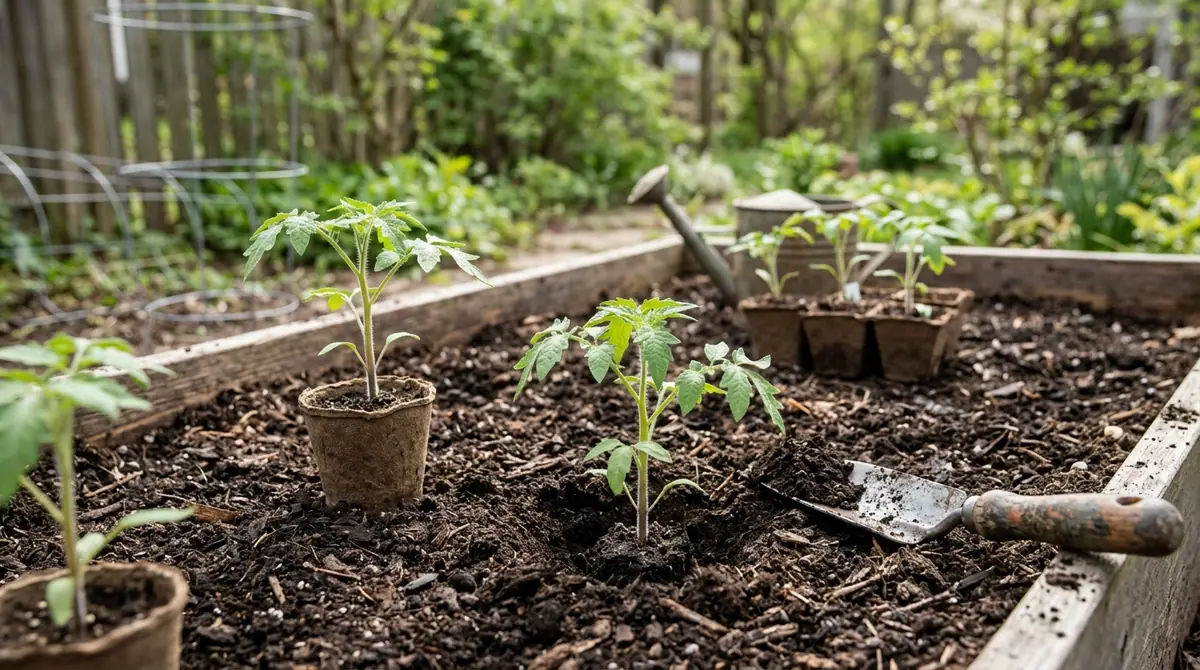
Unlike cold-hardy brassicas that store sugars to resist freezing, Solanum lycopersicum possesses zero frost tolerance. Cellular damage occurs the moment internal plant fluids freeze, rupturing cell walls and causing immediate, irreversible collapse. Furthermore, the root systems of tomatoes are remarkably dynamic. When a young seedling is grown in a standard 2-inch (5 cm) container, its roots quickly circle the perimeter, waiting for environmental cues to expand. When transplanted into rich, warming soil, these roots release biochemical signals that stimulate rapid lateral branching, provided the soil temperature has reached a minimum threshold of 60°F (15.5°C).
Understanding this botanical heritage helps explain why a premature move stunts growth. If you are timing your seed starting strategies using insights from When to Start Tomatoes Indoors Zone 6, you know that matching your indoor timeline to outdoor soil warming is a delicate dance. If planted in cold soil below 55°F (12.8°C), phosphorus uptake halts entirely, leading to the classic purpling of stems and lower leaves that signals severe nutrient lockout. For further reading on plant physiology and optimal growing conditions, consult the comprehensive resources provided by the Royal Horticultural Society.
2. Essential Environmental & Care Requirements
Before a single root touches garden soil, you must verify that your growing site meets the rigorous environmental demands of Solanum lycopersicum. Tomatoes are absolute sun-worshipers requiring a minimum of 8 full hours of direct, unobstructed sunlight daily. Shaded locations result in leggy, disease-prone vines that drop their blossoms before pollination can occur.
Soil composition is equally critical. Tomatoes demand a loose, loamy soil structure rich in organic matter, with an optimal pH range between 6.0 and 6.8. If your soil is heavy clay, the root zone will suffer from hypoxia during heavy spring rains, inviting root rot pathogens like Pythium and Phytophthora.
| Parameter | Optimal Condition | Common Mistake | Why It Matters |
|---|---|---|---|
| Soil Temperature | 60°F–70°F (15.5°C–21.1°C) | Planting when soil is below 55°F (12.8°C) | Cold soil halts phosphorus absorption and stalls root development. |
| Air Temperature | 70°F–85°F (21.1°C–29.4°C) days | Moving plants out during late frosts | Freezing temperatures instantly rupture cell walls, killing tissue. |
| Sunlight | 8+ hours of direct sun | Planting in partial shade | Insufficient light reduces photosynthesis and causes blossom drop. |
| Soil pH | 6.0 to 6.8 | Ignoring soil testing | Incorrect pH locks out essential micronutrients like calcium and iron. |
Temperature monitoring should never rely on guesswork. Invest in a digital soil thermometer inserted 4 inches (10 cm) deep into your garden beds to confirm conditions are stable for at least three consecutive days before proceeding. For guidance on managing other warmth-loving crops in your landscape, refer to our expert advice on When to Top Pepper Plants.
💡 Pro-Tip: Never rely on air temperature alone when deciding to transplant. Soil retains cold long after the spring air feels comfortable. Always verify soil temperatures with a dedicated stem thermometer at a 4-inch (10 cm) depth to ensure your tomatoes don't suffer severe transplant shock.
3. Step-by-Step Cultivation, Feeding & Propagation
The physical act of transplanting is a major physiological shock for a greenhouse-nurtured seedling. To minimize this trauma and ensure rapid establishment, follow this exact botanical protocol.
- Harden Off Your Seedlings: Begin the 7-to-10-day hardening-off process exactly two weeks before your anticipated transplant date. Place your indoor-grown seedlings outdoors in a sheltered, shady spot for 1 hour on day one, gradually increasing exposure to direct sun and wind over 10 days to toughen their cuticles.
- Prepare the Planting Beds: Amend your garden soil with 2 to 3 inches (5 to 7.5 cm) of aged compost and a balanced organic slow-release fertilizer. Dig planting holes spaced 24 to 36 inches (60 to 90 cm) apart, ensuring each hole is twice as wide as the root ball.
- Strip Lower Foliage: Carefully remove the bottom sets of leaves from each tomato seedling, leaving only the top tuft of foliage. This prepares the stem for deep planting, which is unique to tomatoes.
- Plant Deeply: Place the tomato plant into the trench or deep hole, burying up to two-thirds of the stem horizontally or vertically. Tomatoes possess latent meristematic cells along their entire stems that will instantly transform into a massive, vigorous adventitious root system upon soil contact.
- Install Support Structures: Immediately insert your tomato cages, stakes, or Florida weave trellises directly into the soil next to the root ball. Waiting until the plant is established risks severe, irreversible damage to the newly developed root network.
- Water and Mulch: Water the root zone deeply with 1 gallon (3.8 liters) of water per plant to settle the soil around the roots. Apply a 2-inch (5 cm) layer of organic straw or shredded bark mulch to suppress weeds and prevent soil-borne fungal spores from splashing onto lower leaves.
⚠️ Important Caution: Never skip the hardening-off phase. Exposing tender indoor seedlings directly to intense UV radiation, wind, and wide temperature swings without a 10-day acclimation period will cause severe leaf scorch, stem stunting, and can easily kill the plant.
4. Common Problems, Pests & Troubleshooting
Even with perfect timing, transplanted tomatoes face environmental and biological hurdles. Recognizing these symptoms early allows for rapid corrective action.
Transplant Shock and Purpled Stems: If your newly set tomatoes turn a dark purple color along the stems and underside of the leaves, do not panic. This is almost always a physiological response to cold soil temperatures that temporarily locks out phosphorus. Once ambient soil temperatures rise above 60°F (15.5°C), the coloration will fade as nutrient uptake resumes.
Flea Beetles and Cutworms: Tender young transplants are prime targets for chewing insects. Flea beetles create tiny "shot-hole" patterns in leaves, while subterranean cutworms slice through tender stems at the soil line overnight. Protect your investment by wrapping stems in a 2-inch (5 cm) collar of stiff cardboard at planting time, and deploy floating row covers for the first 14 days post-transplant. For broader insights on managing early-season pests across different garden varieties, check out our guide on When to Transplant Snapdragon Seedlings.

5. Frequently Asked Questions
How many weeks after the last frost should I transplant tomatoes?
You should generally transplant tomatoes outdoors 2 to 3 weeks after your absolute last average spring frost date, provided that night-time air temperatures consistently remain above 50°F (10°C) and soil temperatures have reached 60°F (15.5°C). Planting too early in cold earth will permanently stunt their growth potential.
Is it better to plant tomatoes deep or shallow?
Always plant tomatoes significantly deeper than they grew in their nursery containers. You can bury up to two-thirds of the main stem, either vertically in a deep hole or horizontally in a trench. Tomato stems possess specialized cells that develop adventitious roots along the buried length, resulting in a much larger, drought-tolerant root system.
Can I transplant tomato seedlings that have started flowering indoors?
Yes, you can transplant flowering tomatoes, but it places extra stress on the plant. If your indoor seedlings have set blossoms before you can move them outside, gently pinch off the first set of flowers. This directs the plant's limited energy away from premature fruit production and toward establishing a robust, deep root system in the garden bed.
What should I do if a late frost threatens my newly transplanted tomatoes?
Act immediately by covering your transplants before sunset with heavy frost cloth, inverted buckets, or cloches that reach all the way to the soil line to trap radiant earth heat. Secure the edges with rocks or soil. Remove the covers the following morning once ambient air temperatures rise safely above 45°F (7.2°C) to prevent solar heat buildup.
Related Guides
- Can You Transplant Roses in the Fall
- When to Transplant Japanese Maple
- How to Transplant a Japanese Maple Tree
- When is the Best Time to Transplant a Plant
- When to Transplant Snapdragon Seedlings
- When to Plant Tomatoes in Mn
- When to Plant Tomatoes in Bay Area
- How Much Sun Do Tomatoes Need
📋 Table of Contents ▼ Click to expand
Tags:
Keep reading
🌿 Related Plants You Might Like

PlantSavvyWorld
Editorial team
PlantSavvyWorld is an independent botanical education project. Articles are drafted with AI assistance, then edited and checked against university extension services, botanical garden collections and other published horticultural sources.