

When to Top Pepper Plants
Written with AI assistance, edited and checked against horticultural sources.
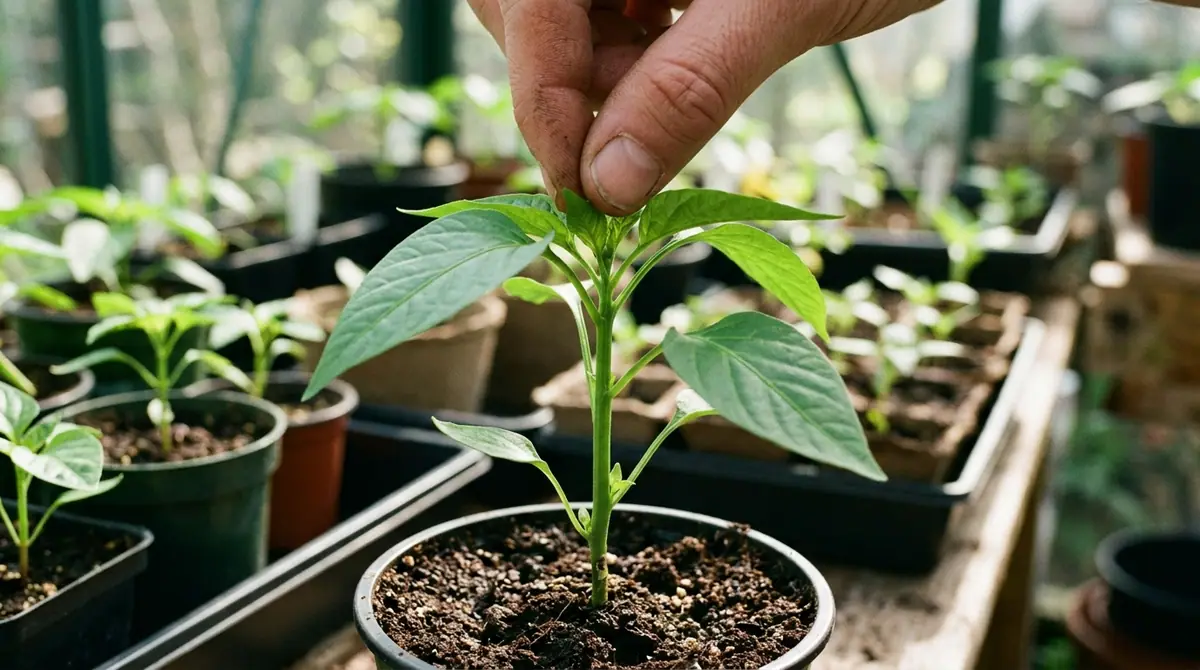
When a leggy Capsicum annuum 'Early Jalapeño' main stem stands at 9 inches (23 cm) tall with spindly internodes, clipping the terminal growing tip right above the third node benefits the plant's long-term structure. Within ten days, four dormant lateral buds activate, transforming a single, weak, fruit-heavy flagpole into a robust, multi-stemmed bush that ultimately yields double the harvest of un-topped neighbors.

1. Botanical Overview & Natural Habitat
Peppers belong to the Solanaceae (nightshade) family and originate primarily from the tropical and subtropical regions of Central and South America. In their native habitats, perennial wild peppers like Capsicum frutescens and Capsicum chinense grow under intense equatorial sunlight, where they naturally develop woody stems and broad, sprawling canopies to maximize photosynthetic capture and protect their fruit from sunscald.
Botanically, a pepper plant's growth habit is dictated by its terminal bud, which produces auxins—plant hormones that suppress the development of lateral axillary buds lower down on the stem. Left to its own devices, a young pepper plant funnels all its metabolic energy upward, creating a tall, fragile main stem. When we discuss when to top pepper plants, we are intentionally interfering with this natural hormonal hierarchy.
Understanding root architecture is equally vital to this process; for a deeper dive into below-ground dynamics, consult our How Deep Do Pepper Plant Roots Go? Pot Size & Substrate Depth Guide. In container culture, root restriction combined with proper stem architecture determines overall plant resilience. Furthermore, pairing your nightshades strategically can mitigate pest pressures—learn more about beneficial layouts in our Sweet Potato Companion Plants: 8 Best Garden Friends & 3 Foes to Avoid. When you remove the apical tip, auxin levels in the main stem drop rapidly, signaling cytokinin hormones to surge in the lower nodes. This biological shift forces the plant to build a dense, vase-shaped framework capable of supporting a heavy fruit load without snapping at the soil line.
2. Essential Environmental & Care Requirements
To successfully recover from topping, pepper plants require precise environmental parameters. Mechanical pruning creates an open wound, making environmental hygiene critical for disease prevention.
| Parameter | Optimal Condition | Common Mistake | Why It Matters |
|---|---|---|---|
| Temperature | 70°F to 85°F (21°C to 29°C) day; 60°F to 65°F (15°C to 18°C) night | Exposing freshly topped plants to temperatures below 55°F (13°C) | Cold stress halts metabolic recovery, inviting fungal pathogens into the pruning wound. |
| Light Intensity | 14 to 16 hours daily under high-intensity grow lights (or direct sun) | Leaving plants in low light post-topping | Low light prevents lateral shoots from photosynthesizing efficiently, stalling bush development. |
| Substrate pH | 6.0 to 6.8 | Allowing pH to drop below 5.5 or rise above 7.2 | Nutrient lockout prevents the uptake of calcium and magnesium needed for cellular repair. |
| Watering | Allow top 1 inch (2.5 cm) to dry out between deep waterings | Keeping soil perpetually waterlogged | Saturated media starves roots of oxygen, leading to root rot on recovering plants. |
For authoritative guidance on nightshade crop management and soil nutrition, consult the University of California Agriculture and Natural Resources Garden Web. Their research-backed publications provide deep insights into regional vegetable production.
💡 Pro-Tip: Always sharpen and sanitize your pruning snips with isopropyl alcohol (70% concentration or higher) immediately before and between plants. Transferring tobacco mosaic virus or bacterial leaf spot via dirty blades can wipe out an entire crop in days.
3. Step-by-Step Cultivation, Feeding & Propagation
Timing is everything. If you top a pepper plant too early, when it has only two true leaves, you risk stalling its growth permanently. If you top it too late, after it has already formed flower buds and woody tissue on the main stem, the plant will struggle to redirect its energy effectively.
As a general rule, the ideal window for when to top pepper plants is when the seedling reaches 8 to 12 inches (20 to 30 cm) in height and possesses at least 4 to 6 distinct nodes of true leaves. For parallel insights into managing other heavy-yielding garden crops, reference our guide on How to Grow Huge Tomato Plants: Pruning, Trenching & Heavy Yields.
Step-by-Step Topping Protocol
- Verify Plant Maturity: Inspect your pepper seedling. Ensure it has established a thick, sturdy main stem and at least 4 to 6 sets of true leaves, typically occurring 6 to 8 weeks after germination.
- Sanitize Equipment: Wipe your pruning shears or razor blade thoroughly with 70% isopropyl alcohol to eliminate lingering pathogens.
- Locate the Terminal Node: Identify the absolute top growth tip (the apical meristem) where new leaves are emerging. Count down to the 4th or 5th node from the soil line.
- Execute a Clean Cut: Make a decisive, clean cut straight across the main stem, leaving a tiny stub of about 1/8 inch (0.3 cm) above the chosen node, or cut flush if experienced. Avoid crushing or tearing the stem.
- Apply Balanced Nutrition: Water the root zone with a dilute, balanced organic fertilizer (such as a 5-5-5 fish emulsion blend) enriched with kelp extract to stimulate rapid cellular division and reduce transplant shock.
- Increase Air Circulation: Position a gentle oscillating fan nearby to circulate air around the fresh wound, encouraging rapid callus formation within 24 to 48 hours.
- Monitor Lateral Response: Within 7 to 14 days, observe the axillary buds at the remaining nodes swelling and pushing out vigorous new branches.
⚠️ Important Caution: Never top pepper plants that are showing signs of environmental stress, nutrient deficiency, or pest infestation. A stressed plant lacks the stored carbohydrates and metabolic vigor required to heal the wound and push out lateral growth, often resulting in plant decline or death.
4. Common Problems, Pests & Troubleshooting
Even with meticulous technique, growers occasionally encounter issues following the topping process. Diagnosing these symptoms early ensures your crop bounces back quickly.
- Stalled Growth / No Lateral Bud Activation: If your plant sits dormant for more than 14 days without pushing new side shoots, temperatures are likely too low or light levels are insufficient. Move the plant to a warmer location maintained at 75°F to 80°F (24°C to 27°C) and provide supplemental LED lighting.
- Stem Dieback / Botrytis Infection: If the cut end turns brown, mushy, or black, a fungal pathogen has entered the wound. Sterilize your shears, cut the stem back 1 inch (2.5 cm) below the infected tissue into healthy green wood, and dust the fresh cut with powdered cinnamon as a natural antifungal agent.
- Aphid Infestations on New Growth: The tender, flush green growth emerging after topping is a prime target for green peach aphids (Myzus persicae). Inspect the undersides of new leaves weekly. Blast infestations off with a sharp stream of water or apply organic insecticidal soap every 5 to 7 days until populations clear.

5. Frequently Asked Questions
Should I top all types of pepper plants, or just bell peppers?
You can top almost all Capsicum annuum, Capsicum chinense, and Capsicum frutescens varieties, including bell, jalapeno, habanero, and cayenne peppers. However, ornamental pepper varieties and extremely short-season dwarf cultivars rarely benefit from topping because their natural growth habit is already compact. Additionally, large-fruited Capsicum annuum types respond most dramatically, doubling or tripling their eventual yield potential.
What happens if I top my pepper plants too late?
If you wait until the plant has already begun flowering or the main stem has turned woody and thick, topping causes severe stress. The plant will take weeks to recover, and instead of triggering bushy lateral growth, it may force weak, erratic shoots from the base or fail to branch entirely. Always aim to top your seedlings indoors before they are transplanted into the garden or final containers.
Can I root the top cutting I snipped off?
Yes! The terminal cutting can easily be propagated into a brand-new, genetically identical clone. Strip away the lower leaves, dip the cut end in rooting hormone powder, and stick it into a moist, sterile propagation mix of perlite and peat moss (50/50 ratio). Keep it under a humidity dome at 75°F (24°C), and root development should occur within 14 to 21 days.
Do I need to put anything on the wound after cutting?
In most indoor and greenhouse environments, clean air circulation is entirely sufficient for the wound to naturally callous over within 24 hours. However, in humid or damp environments where fungal spores are prevalent, dusting the wound lightly with horticultural cinnamon or powdered sulfur provides an effective organic barrier against pathogens without blocking natural healing.
Related Guides
- When to Pick Poblano Pepper
- Epsom Salt for Pepper Plants
- When to Start Pepper Seeds Indoors Zone 5
- How Deep Do Pepper Plant Roots Go? Pot Size & Substrate Depth Guide
📋 Table of Contents ▼ Click to expand
Tags:
Keep reading
🌿 Related Plants You Might Like

PlantSavvyWorld
Editorial team
PlantSavvyWorld is an independent botanical education project. Articles are drafted with AI assistance, then edited and checked against university extension services, botanical garden collections and other published horticultural sources.