

Epsom Salt for Pepper Plants
Written with AI assistance, edited and checked against horticultural sources.
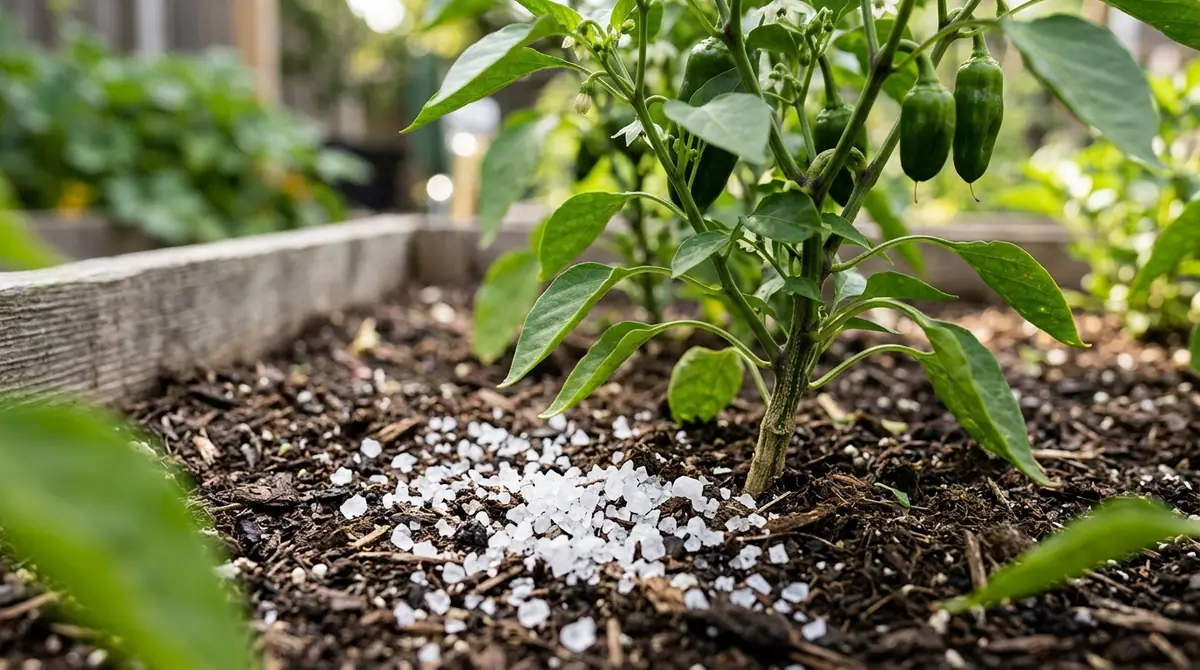
When humidity hovers at 82% and midday temperatures push 94°F (34°C), 'Blocky Bell' pepper canopies can develop a severe downward cupping and interveinal chlorosis, with lower leaves turning a pale, sickly yellow between green veins even while soil moisture meters register a steady 65% field capacity and pH is locked at a healthy 6.4. Magnesium starvation can silently halt photosynthesis, but dissolving two tablespoons of pharmaceutical-grade magnesium sulfate into a gallon of tepid water and executing a targeted foliar spray will prompt chlorophyll synthesis to rebound within 72 hours, returning deep green to the mesophyll tissues and resuming fruit set at an accelerated rate for struggling Solanaceae crops.
1. Botanical Overview & Natural Habitat
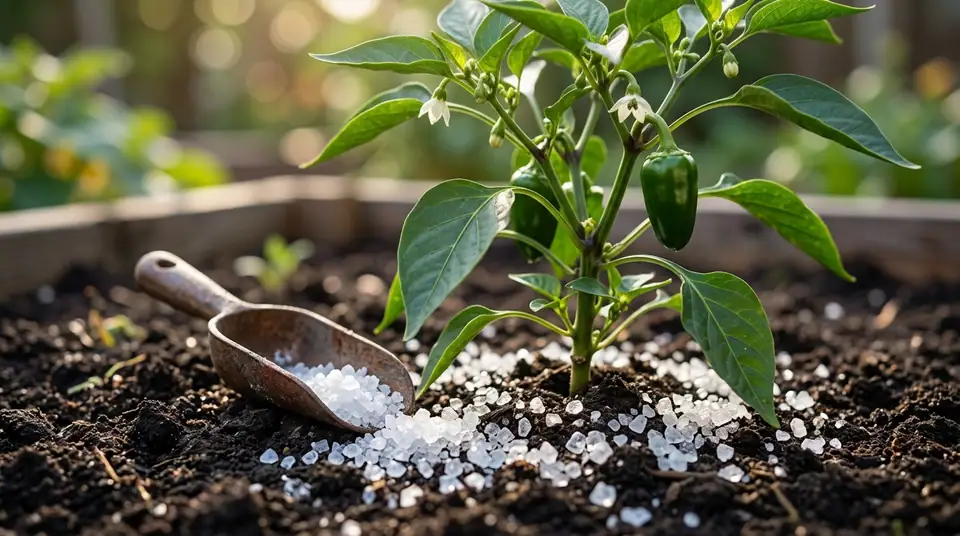
Botanically, Capsicum annuum, Capsicum chinense, and other cultivated species are tender perennial subshrubs treated as annuals in temperate agricultural zones. Their root systems are predominantly taproot-oriented in early stages, transitioning into a dense, fibrous lateral network that spreads 18 to 24 inches (45 to 60 cm) horizontally and reaches depths of 12 to 18 inches (30 to 45 cm).
Magnesium ($Mg^{2+}$) is the central atom of the chlorophyll molecule, sitting directly at the heart of the porphyrin ring that captures light energy during photosynthesis. Without an adequate supply of magnesium, chlorophyll synthesis drops off precipitously, leading to the characteristic interveinal chlorosis where older leaves yellow while veins remain green. Sulfur ($SO_4^{2-}$), the second component of Epsom salt (magnesium sulfate heptahydrate, $MgSO_4 \cdot 7H_2O$), is equally vital. It is a fundamental constituent of amino acids like cysteine and methionine, drives nitrogen utilization, and assists in the synthesis of plant oils and capsaicinoids—the chemical compounds responsible for a pepper's fiery heat. Understanding these native physiological needs helps us replicate their ideal geochemical environment in home gardens, much like determining When to Start Pepper Seeds Indoors Zone 5 to secure a robust root system before summer heat arrives.
2. Essential Environmental & Care Requirements
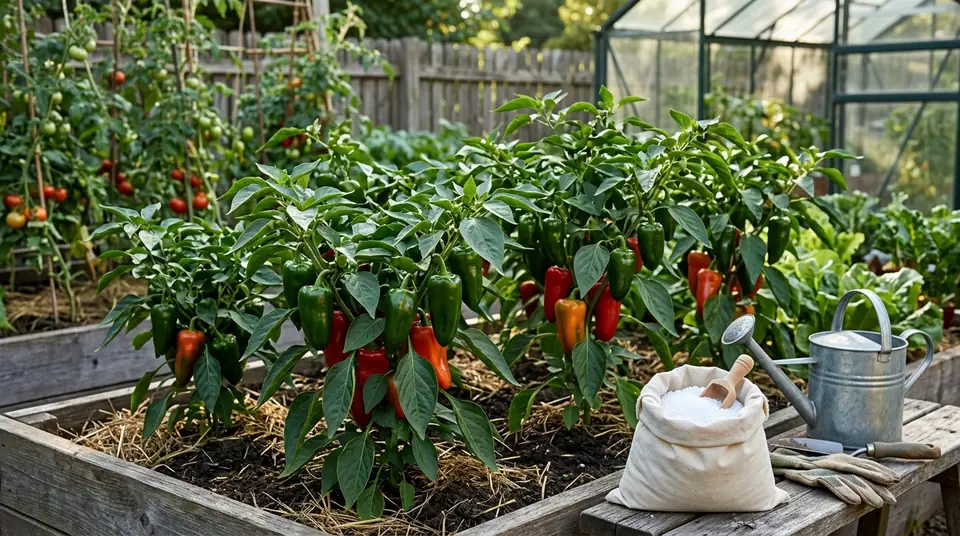
To maximize the efficacy of Epsom salt treatments, you must first ensure your peppers are receiving optimal baseline care. Magnesium sulfate is a supplement, not a cure-all; it will not overcome fundamental deficiencies in light, water, or macronutrients.
Peppers require full sun exposure, defined as a minimum of 6 to 8 hours of direct, unobstructed sunlight daily. Soil temperatures must remain warm, ideally between 70°F and 85°F (21°C to 29°C) for optimal nutrient uptake, while air temperatures should hover between 75°F and 85°F (24°C to 29°C) during the day and drop no lower than 60°F (15°C) at night. Prolonged temperatures above 95°F (35°C) will cause blossom drop regardless of magnesium levels, as pollen becomes sterile under extreme heat stress.
Soil structure is equally critical. Peppers demand loose, loamy, well-draining soil with a pH ranging from 6.0 to 6.8. If your soil is heavily compacted or waterlogged, root respiration drops, shutting down active ion transport and preventing the uptake of both water and dissolved minerals like magnesium.
| Parameter | Optimal Condition | Common Mistake | Why It Matters |
|---|---|---|---|
| Soil pH | 6.0 – 6.8 | Allowing soil to drift below 5.5 | Low pH locks up magnesium and phosphorus while increasing toxic aluminum solubility. |
| Soil Temperature | 70°F – 85°F (21°C – 29°C) | Planting out when soil is below 60°F (15°C) | Cold roots cannot actively transpire or absorb mineral ions efficiently. |
| Moisture Level | Consistent 60% field capacity | Alternating between drought and saturation | Erratic watering causes root dieback and blossom end rot, mimicking nutrient deficiency. |
| Magnesium Application | 1 tbsp per gallon for foliar spray | Dumper-truck broadcasting without soil tests | Excess magnesium can antagonize calcium and potassium uptake, creating secondary imbalances. |
For gardeners looking to maximize their harvest space, pairing peppers with compatible companions can drastically improve microclimate resilience; explore our guide on Zucchini Companion Plants Good Bad to optimize your layout design.
3. Step-by-Step Cultivation, Feeding & Propagation
Applying Epsom salt incorrectly can throw off your soil's delicate nutrient balance. Because magnesium, calcium, and potassium share similar ionic charge pathways in the soil exchange complex, flooding the root zone with excess magnesium can inadvertently block calcium uptake, triggering cellular breakdown in developing fruit walls. Follow this methodical protocol to safely incorporate Epsom salt into your pepper cultivation routine.
- Conduct a Baseline Soil Test: Before adding any mineral amendments, use a reliable testing kit or send a sample to your local agricultural extension service—such as the Clemson Cooperative Extension—to confirm an actual magnesium deficiency.
- Prepare the Correct Dilution Ratios: For standard soil drenches, dissolve 1 tablespoon of pharmaceutical-grade Epsom salt per gallon (3.8 liters) of water. For emergency foliar sprays targeting acute interveinal chlorosis, use 2 tablespoons per gallon of water with a single drop of organic castile soap acting as a surfactant.
- Time Your Applications to Plant Phenology: Administer your first soil drench at the transplanting stage to encourage rapid root establishment. Apply a second dose when the first true flower buds appear to support cell division, and a final booster application at the onset of peak fruiting.
- Execute the Application Technique: For soil drenches, pour 1 quart (946 ml) of the solution directly into the root zone around the base of each established plant. For foliar applications, use a fine-mist pump sprayer to coat both the upper and lower surfaces of the leaves early in the morning, ensuring the spray dries before direct afternoon sun hits the foliage.
- Monitor and Adjust: Observe plant response over a 14-day observation window. New leaf growth should emerge deep green and structurally robust without curling or marginal chlorosis.
💡 Pro-Tip: Never apply dry Epsom salt crystals directly into planting holes or scatter them un-dissolved around stems unless you are working them thoroughly into a very large volume of moist soil. Concentrated salt pockets can cause osmotic shock, pulling vital moisture out of delicate feeder roots and burning root hairs.
When your plants reach mid-season and begin heavy branch development, you may find that managing structural weight requires physical intervention; refer to our technical breakdown on When to Top Pepper Plants to encourage sturdier, self-supporting scaffolds.
4. Common Problems, Pests & Troubleshooting
Even with meticulous Epsom salt routines, pepper plants remain vulnerable to abiotic disorders and biological pests. It is easy to misdiagnose structural issues when symptoms overlap.
Magnesium Deficiency vs. Natural Senescence
True magnesium deficiency always begins on the oldest leaves at the bottom of the plant, progressing upward as the plant translocates mobile magnesium ions to new growth tips. If yellowing starts at the top canopy leaves, look instead for iron, manganese, or sulfur lockouts caused by overwatering or alkaline soil pH above 7.2.
Blossom End Rot: The Calcium-Magnesium Confusion
Gardeners frequently reach for Epsom salt when they spot water-soaked, sunken black patches on the bottom of their bell peppers, mistakenly believing it cures blossom end rot.
⚠️ Important Caution: Epsom salt will not cure blossom end rot. This frustrating disorder is caused by localized calcium deficiency within the rapidly expanding fruit tissue, typically triggered by irregular watering cycles rather than a lack of soil calcium. Pouring magnesium sulfate onto soil that already has an adequate magnesium-to-calcium ratio will actually exacerbate blossom end rot by competing with calcium uptake channels.
Pest Pressures in Stressed Plants
5. Frequently Asked Questions
How often should I put Epsom salt on my pepper plants?
You should apply Epsom salt no more than once every 3 to 4 weeks during the active growing season. Over-application builds up excess sulfur and magnesium in the soil profile, which can disrupt the uptake of vital macronutrients like calcium and potassium, ultimately stunting plant development and reducing overall yields.
Can I use Epsom salt on peppers in pots?
Yes, container-grown peppers benefit immensely from Epsom salt because frequent watering leaches soluble minerals out of potting mix rapidly. For potted plants, reduce your concentration to 1 teaspoon per gallon of water applied once a month during routine irrigation to prevent mineral accumulation in confined root zones.
Does Epsom salt make peppers hotter?
While magnesium and sulfur play supporting roles in the enzymatic pathways that synthesize capsaicin, Epsom salt is not a magic catalyst for extreme heat. A plant's capsaicin levels are primarily determined by its genetic cultivar and environmental stress factors like drought and intense sunlight, rather than soil magnesium levels alone.
Can you put too much Epsom salt on pepper plants?
Excessive application of magnesium sulfate leads to soil salinity spikes, damages delicate root hairs via osmotic pressure, and creates nutrient antagonisms that block calcium absorption. Always rely on visual confirmation of deficiency symptoms or soil testing data before applying amendments to your garden beds.
Related Guides
- Epsom Salt for Peppers and Tomatoes
- Epsom Salt for Peppers
- When to Pick Poblano Pepper
- When to Top Pepper Plants
- When to Start Pepper Seeds Indoors Zone 5
📋 Table of Contents ▼ Click to expand
Tags:
Keep reading
🌿 Related Plants You Might Like
PlantSavvyWorld
Editorial team
PlantSavvyWorld is an independent botanical education project. Articles are drafted with AI assistance, then edited and checked against university extension services, botanical garden collections and other published horticultural sources.