

When to Pick Poblano Pepper
Written with AI assistance, edited and checked against horticultural sources.
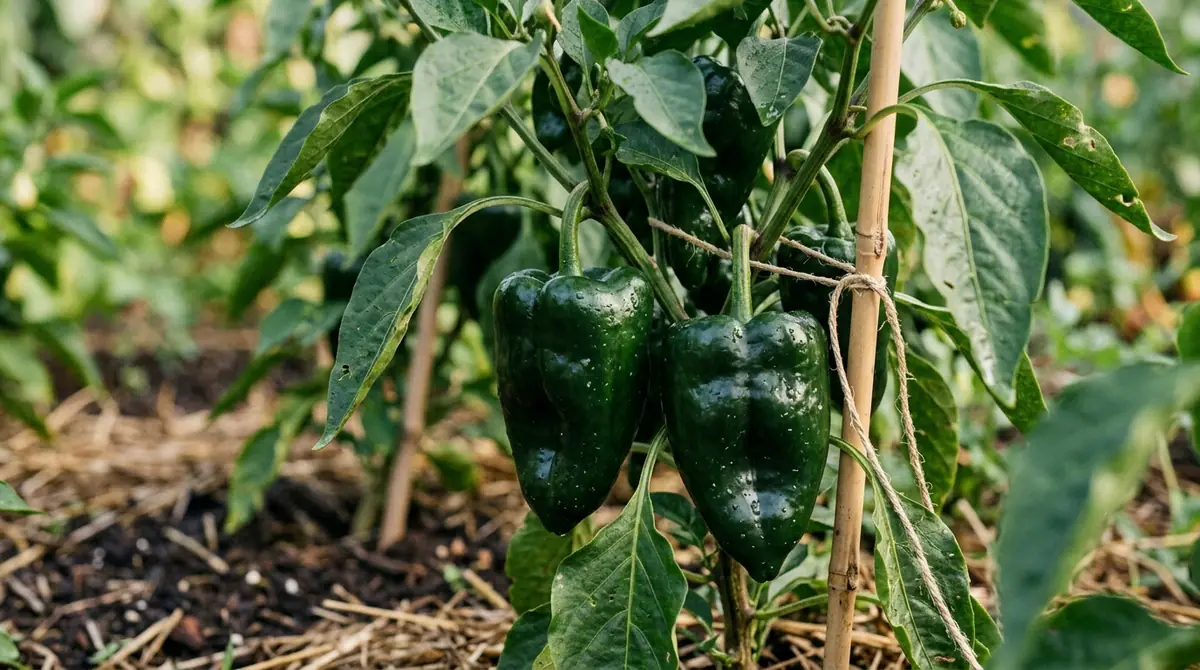
I stood in trial gardens last August holding a pepper that defied every textbook description I had memorized in graduate school. It was a rich, glossy emerald green, measuring exactly 5 inches (12.7 cm) in length, yet it hung heavy with the subtle, leather-like texture that tells an experienced grower the plant has reached peak physiological maturity for its green stage. Twenty feet away, a row of tomatoes that I had timed alongside these peppers was going through its own growth phase—reminding me of how precision timing governs every successful harvest, much like when I map out When to Transplant Tomatoes each spring. Knowing precisely when to pick poblano pepper fruits determines whether you harvest a mild, crisp culinary workhorse or a sweet, fiery ancho chile packed with complex capsaicin profiles.
1. Botanical Overview & Natural Habitat

Poblano leaves are lanceolate to ovate, dark green, and arranged alternately along sympodial branching stems. The flowers are small, typically solitary, nodding, and feature five white to yellowish petals surrounding central yellow anthers. Once pollinated by bees or wind, the ovary develops into a pendulous, heart-shaped or tapering fruit characterized by its broad shoulders and deeply lobed apex.
In its immature state, the fruit possesses a thick, fleshy pericarp, a glossy dark green skin, and mild heat levels ranging from 1,000 to 2,000 Scoville Heat Units (SHU). Left on the vine to undergo full botanical ripening, the fruit transitions from green through deep mahogany to a brilliant crimson red. In this fully mature, dried state, it is known as an ancho chile, featuring a wrinkled exterior, deep raisin-like sweetness, and heightened aromatic complexity.
For optimal root establishment and branching, your soil preparation requires the same meticulous attention I advocate when planning When to Plant Beets in Utah, ensuring adequate aeration and drainage before the first seed hits the soil.
2. Essential Environmental & Care Requirements
Poblanos demand specific climatic and edaphic conditions to yield heavy, unblemished fruit. Native to high-altitude, subtropical regions of central Mexico, they thrive in environments providing intense sunlight coupled with moderate humidity.
| Parameter | Optimal Condition | Common Mistake | Why It Matters |
|---|---|---|---|
| Soil Temperature | 70°F to 85°F (21°C to 29°C) for germination | Planting in soil below 60°F (15°C) | Cold soil causes root rot, stunts growth, and induces permanent transplant shock. |
| Soil pH | 6.2 to 6.8 slightly acidic to neutral | Ignoring pH extremes below 5.5 or above 7.5 | Extreme pH locks out essential micronutrients like calcium and phosphorus. |
| Sunlight | 6 to 8 hours of direct, unfiltered sunlight | Placing in partial shade | Insufficient light reduces photosynthesis, dropping blossoms and lowering yields. |
| Watering Depth | 1 to 1.5 inches (2.5 to 3.8 cm) per week | Frequent, shallow sprinkling | Deep watering encourages robust, downward taproot development. |
Soil structure must be loose, loamy, and rich in organic matter. Heavy clay soils retain excessive moisture, suffocating the fine feeder roots and inviting fungal pathogens such as Phytophthora capsici.
When managing garden calendars for diverse brassicas or solanaceous crops, growers often juggle overlapping windows; timing your pepper beds aligns well with the planning rigor required for When to Plant Brussel Sprouts in Zone 7.
Air circulation is equally critical. Dense canopies trap stagnant humidity, facilitating fungal spore germination. Maintain a spacing of 18 to 24 inches (46 to 61 cm) between individual plants within rows spaced 30 inches (76 cm) apart.
3. Step-by-Step Cultivation, Feeding & Propagation
Growing high-yielding poblano plants requires a disciplined operational protocol from seed tray to final harvest. Follow these precise steps to maximize your crop performance:
- Seed Germination: Sow seeds indoors 8 to 10 weeks before your final expected spring frost date. Plant seeds 0.25 inches (0.6 cm) deep in sterile seed-starting mix. Maintain a consistent soil temperature of 80°F (27°C) using a propagation heating mat. Emergence typically occurs within 10 to 14 days.
- Hardening Off: Transition seedlings outdoors gradually over a 14-day period once nighttime temperatures reliably stay above 55°F (13°C). Begin with 1 hour of filtered morning sun, increasing exposure daily until plants tolerate full, direct sunlight.
- Transplanting: Dig holes spaced 18 inches (46 cm) apart. Amend each planting hole with 1 cup of compost and 1 tablespoon of organic bone meal to supply slow-release phosphorus. Bury seedlings slightly deeper than they grew in their pots—up to the first true leaves—to encourage adventitious root growth along the buried stem.
- Irrigation Management: Deliver 1.5 inches (3.8 cm) of water weekly via drip irrigation or soaker hoses. Avoid overhead splashing to prevent foliar disease transmission. Allow the top 2 inches (5 cm) of soil to dry completely between watering cycles.
- Fertilization Regime: Apply a balanced, low-nitrogen organic fertilizer (such as a 5-10-10 blend) when transplanting. Side-dress with organic kelp meal and composted manure once the first fruit sets to sustain continuous flowering without causing excessive vegetative green growth at the expense of fruit production.
- Harvesting: Harvest green poblanos 65 to 80 days post-transplant when fruits measure 4 to 6 inches (10 to 15 cm) long, possess firm, glossy skin, and resist slight thumb pressure. Cut stems cleanly with shears rather than pulling to prevent branch breakage. For red ancho chiles, leave fruits on the vine for an additional 30 to 45 days until color shifts completely to deep crimson.
💡 Pro-Tip: If your region experiences a sudden autumn temperature drop below 50°F (10°C) while your poblanos are still ripening to red, harvest the entire plant by its base and hang it upside down in a warm, dry basement or garage. The remaining energy stored in the stalks will successfully push your green poblanos through their final color transformation into sweet red anchos.
For additional guidance on maximizing regional crop yields, consult the University of California Division of Agriculture and Natural Resources for localized vegetable management insights.
4. Common Problems, Pests & Troubleshooting
Even with pristine care, poblano peppers encounter biological pressures that can compromise your harvest if left unaddressed.
- Blossom End Rot: Appearing as sunken, leathery, black patches on the distal end of the fruit, this physiological disorder is caused by localized calcium deficiency. It is rarely caused by a true lack of calcium in the soil; rather, it results from erratic watering fluctuations that inhibit the plant's ability to transpire and transport calcium up to developing fruits. Maintain strict soil moisture consistency.
- Aphids (Myzus persicae): These soft-bodied sap-sucking insects congregate on the undersides of tender new leaves and flower buds, excreting sticky honeydew that fosters black sooty mold. Control populations early by releasing predatory lady beetles (Hippodamia convergens) or applying potassium salts of fatty acids (insecticidal soap).
- Bacterial Leaf Spot (Xanthomonas campestris pv. vesicatoria): Water-soaked spots on leaves that evolve into dark, necrotic lesions with yellow halos. Prevent spread by utilizing certified disease-free seed, practicing a mandatory 3-year crop rotation schedule, and avoiding working in the garden when foliage is wet with dew or rain.
- Sunscald: White, papery, blistered patches on the side of the pepper exposed to intense afternoon solar radiation. Prevent this by maintaining a healthy, dense foliar canopy through balanced nitrogen-potassium feeding, or by providing 30% shade cloth during peak summer heatwaves.

5. Frequently Asked Questions
How do I know when a poblano pepper is ready to pick?
A poblano pepper is ready to harvest in its green state when it reaches 4 to 6 inches (10 to 15 cm) in length, develops a deep, glossy dark green hue, and feels firm and thick when gently squeezed. The skin should have a leathery sheen, and the shoulder of the pepper where it attaches to the stem should feel rigid. If you want sweet red ancho chiles, leave the fruit on the vine until it transitions completely from green to deep mahogany and finally to bright crimson red, which takes an additional 4 to 6 weeks.
Can you eat poblano peppers when they turn red?
Yes, absolutely. When poblano peppers turn red, they are fully mature botanically. While green poblanos are earthy, slightly bitter, and mild (1,000 to 2,000 SHU), red poblanos—traditionally called anchos—become sweeter, fruitier, and develop a more complex, raisin-like flavor profile. Their capsaicin content also increases slightly as sugars concentrate during the ripening process. They are exceptional when dried for moles or roasted into rich sauces.
What happens if I pick poblano peppers too early?
Picking poblanos too early results in underripe fruit that lacks the characteristic thick flesh, earthy flavor, and structural integrity needed for roasting and stuffing (such as making chiles rellenos). Immature peppers will taste grassy, appear pale or yellowish-green, and often feel pliable or spongy under thumb pressure. Furthermore, premature harvesting reduces the overall yield capacity of the plant by disrupting its natural fruiting cycle.
Why are my poblano peppers turning red on the plant?
Color change is a natural part of the pepper's life cycle. Poblanos naturally transition from green to red as they mature and their seeds inside become viable for reproduction. If you want to keep your harvest green, pick the fruits as soon as they reach full size. If you prefer red ancho chiles, let them change color on the vine. For broader botanical reference material on plant maturity cycles, consult the Royal Horticultural Society guidelines on vegetable cultivation.
Related Guides
- When to Pick Pumpkins Off Vine
- When to Pick Snap Peas
- When to Pick Peas
- When to Pick Pea Pods
- When Are Peas Ready to Pick
- How to Pick the Perfect Ears of Corn
📋 Table of Contents ▼ Click to expand
Tags:
Keep reading
🌿 Related Plants You Might Like

PlantSavvyWorld
Editorial team
PlantSavvyWorld is an independent botanical education project. Articles are drafted with AI assistance, then edited and checked against university extension services, botanical garden collections and other published horticultural sources.