

When to Pick Pumpkins Off Vine
Written with AI assistance, edited and checked against horticultural sources.
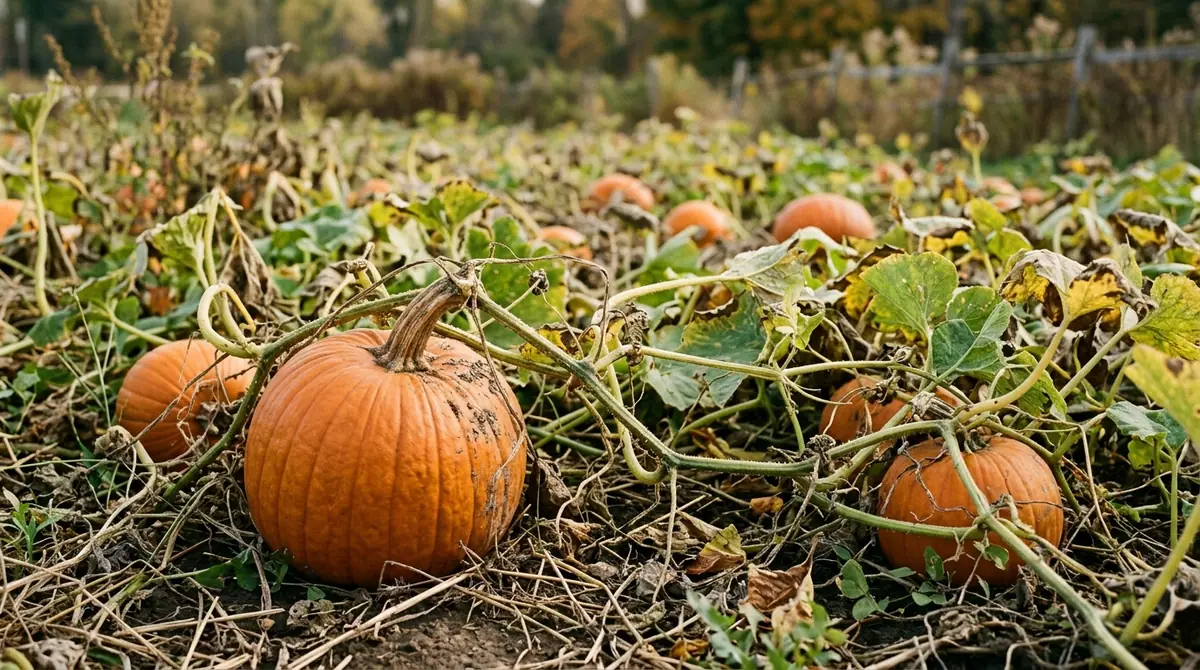
It has been 115 days since the initial pollination of the female blossom when 'Howden' pumpkin vines finally turn brittle and brown. Applying pressure with a thumbnail provides a tactile test where the skin resists just enough, refusing to puncture; this final confirmation of maturity separates a hollow, rotting winter squash from a sturdy porch decoration or a deeply flavored pie filling that will store for months.

1. Botanical Overview & Natural Habitat
Pumpkins (Cucurbita species, most commonly Cucurbita pepo, C. Moschata, and C. Maxima) belong to the Cucurbitaceae family, a lineage of trailing or climbing annual vines originating from the river valleys and tropical lowlands of Central and South America. Botanically, a pumpkin is a pepo—a specialized type of berry featuring a hard, thick outer rind enclosing a fleshy interior and numerous flat seeds embedded in a fibrous matrix.
In their native Mesoamerican habitats, these vines evolved to sprawl across warm, fertile soils, utilizing deep, exploratory taproots and secondary adventitious roots to pull immense quantities of moisture and nutrients up to the fruit. The domestication of pumpkins parallels that of maize and beans; indigenous peoples selected for traits that prolonged the fruit's storage life, enabling a crucial source of carbohydrates and vitamin-rich seeds during the lean winter months.
Understanding this evolutionary background dictates how we handle them today. The thick, woody stem that connects the pumpkin to the vine functions as a vital lifeline and, later, a natural protective seal. When you harvest a pumpkin, you are severing a specialized vascular network of xylem and phloem. If cut incorrectly, you open a direct gateway for opportunistic fungal pathogens like Fusarium and Phytophthora to infiltrate the flesh, causing rapid post-harvest collapse.
For those planning a comprehensive backyard harvest calendar, timing your cucurbits often coincides with cool-season adjustments elsewhere in the garden, much like timing When to Plant Carrots in Zone 8a or deciding When to Plant Beets in Utah as summer temperatures break.
2. Essential Environmental & Care Requirements
Achieving the ideal harvest window begins long before you test the rind with your fingernail. Pumpkins require precise environmental inputs throughout their 90-to-120-day lifecycle to reach the internal maturity necessary for long-term storage.
| Parameter | Optimal Condition | Common Mistake | Why It Matters |
|---|---|---|---|
| Soil Temperature | 70°F to 95°F (21°C to 35°C) for germination; 60°F+ (15°C+) for root function | Planting in cold, wet spring soil below 60°F (15°C) | Stunts early root development, inviting seed rot and damping-off pathogens. |
| Soil pH | 6.0 to 6.8 with high organic matter | Allowing soil to drop below 5.5 | Impedes nutrient uptake, particularly calcium, leading to blossom-end rot. |
| Watering Depth | 1 to 2 inches (2.5 to 5 cm) of water weekly, tapering off near harvest | Overhead sprinkler irrigation wetting the leaves and ripening fruit | Promotes devastating foliar diseases like powdery mildew and fruit-rotting fungi. |
| Sunlight Exposure | Full sun, minimum 6 to 8 hours daily | Growing in partial shade under tree canopies | Reduces sugar synthesis in the fruit and keeps rinds thin and soft. |
💡 Pro-Tip: As your pumpkins approach their final sizing phase in late summer, slide a small piece of cedar shingle, a plastic tray, or a thick layer of straw underneath each fruit. Direct contact with damp autumn soil is the single most common vector for soil-borne fungal rot during the final weeks of ripening.
When transitioning your garden beds from summer cucurbits to autumn brassicas, keep your local frost dates in mind—timing is just as critical here as it is when figuring out When to Plant Brussel Sprouts in Zone 7 or managing When to Plant Bok Choy Zone 7.
3. Step-by-Step Cultivation, Feeding & Propagation
To ensure your pumpkins reach peak maturity right on schedule, follow this rigorous step-by-step management protocol through the final month of the growing season:
- Calculate Days to Maturity (DTM): Consult your seed packet or plant tag. Count backward from your region's average first fall frost date to establish your target planting window, ensuring the fruit has 90 to 120 days of frost-free weather depending on the cultivar. For regional adjustments, review guides like When to Plant Pumpkins in Southern California where microclimates extend the season considerably.
- Shift Nutritional Input: Transition the vine's feeding schedule around day 60. Cease high-nitrogen fertilizers, which encourage lush, vegetative vine growth at the expense of fruit maturation. Apply a low-nitrogen, high-phosphorus, and high-potassium organic fertilizer (such as a 5-10-10 blend) to strengthen cell walls and concentrate sugars within the developing pepos.
- Restrict Irrigation: Gradually reduce watering frequency as the pumpkin rinds transition to their final solid coloration. Allow the top 3 inches (7.5 cm) of soil to dry out completely between waterings. This controlled water stress signals the plant to stop expanding the fruit and instead begin hardening the outer epidermis and curing the internal seed coat.
- Prune Excess Vine Growth: Snip off the terminal growing tips of the main vines approximately 3 to 4 weeks before your anticipated harvest. This stops the plant from expending energy on new blossoms and immature fruit sets that will never ripen, forcing all available photosynthates directly into the existing pumpkins.
- Perform the Thumbnail Resistance Test: Inspect the rind. Press your thumbnail firmly into the skin of the pumpkin. If the skin resists puncture and leaves no indentation, the fruit has achieved structural maturity.
- Inspect the Stem (Peduncle): Look closely at the attachment point where the stem meets the vine. A mature pumpkin features a stem that is visibly drying, turning woody, and developing small corky fissures or cracks.
- Execute the Clean Cut: Using a pair of sterilized bypass pruners or a sharp, disinfected knife, cut the stem cleanly, leaving a 3-to-4-inch (7.5-to-10-cm) handle attached to the fruit. Never snap, twist, or carry a pumpkin by its stem; breaking the stem flush with the fruit creates an open wound that invites immediate bacterial soft rot.
For professional insights on soil management and disease prevention during this late-season phase, consult the University of Minnesota Extension Pumpkin Production Guide.
4. Common Problems, Pests & Troubleshooting
Even with careful planning, late-season challenges can threaten your harvest. Here is how to diagnose and manage them:
- Sunscald: Occurs when intense late-summer sun beats down on exposed rinds, causing bleached, sunken, or leathery white patches. Fix: Gently drape a light-colored cloth or a single layer of shade cloth over developing fruit if foliage has died back due to powdery mildew.
- Powdery Mildew (Podosphaera xanthii): A white, talcum-powder-like fungal growth that coats leaves in late August and September. While it rarely kills the fruit directly, it defoliates the vine prematurely, exposing the fruit to sunscald and halting the final sugar accumulation process. Fix: Apply a preventative copper fungicide or potassium bicarbonate spray at the first sign of white spots.
- Vine Borers (Melittia cucurbitae): Larvae that tunnel into the base of the main stem, causing sudden wilting of entire vine runs. Fix: Slit the stem lengthwise, remove the white grub, and bury the wounded stem node in moist soil to encourage adventitious root recovery.
- Premature Soft Rot: Bacterial breakdown occurring when fruit is left on wet soil or harvested without a proper stem handle. Fix: Immediately discard infected fruit to prevent the spread of bacteria to neighboring healthy pumpkins.
⚠️ Important Caution: Never harvest and store a pumpkin that has experienced a hard freeze (temperatures dropping below 28°F / -2°C for more than a few hours). Frozen water inside the plant cells expands and ruptures cell walls. While the pumpkin may look acceptable initially, it will rapidly turn to liquid mush within days of being brought indoors. If a light frost (32°F / 0°C) threatens your unharvested crop, cover the fruit overnight with old blankets or straw bales, and harvest them the following morning once temperatures rise.

5. Frequently Asked Questions
Can pumpkins ripen off the vine?
Unlike tomatoes or bananas, pumpkins do not produce significant amounts of ethylene gas internally to drive post-harvest ripening on their own. If you pick a completely green, immature pumpkin, it will not turn orange off the vine; it will simply shrivel and rot. However, if a pumpkin has already turned fully orange and attained its final mature color on the vine, but you must harvest it early due to a hard freeze, it will successfully cure and harden its skin indoors.
How long do harvested pumpkins last?
The storage lifespan depends heavily on the curing process and the specific cultivar. Standard field pumpkins (Cucurbita pepo) typically last 2 to 3 months when stored in optimal conditions. Thick-shelled varieties like 'Long Island Cheese' or Cucurbita moschata types (such as 'Butternut' or 'Muscade de Provence') can easily store for 4 to 6 months. To maximize longevity, cure your harvested pumpkins in a warm, well-ventilated space (80°F to 85°F / 27°C to 29°C with 80% humidity) for 10 to 14 days, then move them to a cool, dry location (50°F to 55°F / 10°C to 13°C) with good air circulation.
Why is my pumpkin vine dying before the pumpkin is orange?
If your vine is dying back rapidly in late summer due to squash vine borers, powdery mildew, or natural senescence, check the color of the pumpkin. If the fruit has reached its full size and shows a faint yellow-orange blush beneath its skin, you can cut it from the vine and complete its color development in a sunny, indoor south-facing window. If the pumpkin is entirely dark green and smaller than its genetic potential, it lacks the internal maturity to survive off the vine and must be discarded.
Should I wash my pumpkins after picking them?
Yes, but do it carefully to eliminate surface bacteria and fungal spores that shorten storage life. Wash harvested pumpkins in a mild sanitizing solution consisting of 1 tablespoon (15 ml) of household chlorine bleach per gallon (3.78 liters) of water. Wipe the exterior thoroughly with a soft cloth, and then dry them completely with towels. Never skip the drying step; lingering surface moisture is the primary catalyst for post-harvest mold outbreaks during storage.
For additional horticultural standards on post-harvest handling and storage longevity, reference the Royal Horticultural Society (RHS) Vegetable Storage Guidelines.
Related Guides
- When to Pick Poblano Pepper
- When to Pick Snap Peas
- When to Pick Peas
- When to Pick Pea Pods
- When Are Peas Ready to Pick
- When to Plant Pumpkins in Nc
- When to Plant Pumpkins in Maryland
- When to Plant Pumpkins in Ky
📋 Table of Contents ▼ Click to expand
Tags:
Keep reading
🌿 Related Plants You Might Like
PlantSavvyWorld
Editorial team
PlantSavvyWorld is an independent botanical education project. Articles are drafted with AI assistance, then edited and checked against university extension services, botanical garden collections and other published horticultural sources.