
When to Pick Pea Pods
Written with AI assistance, edited and checked against horticultural sources.
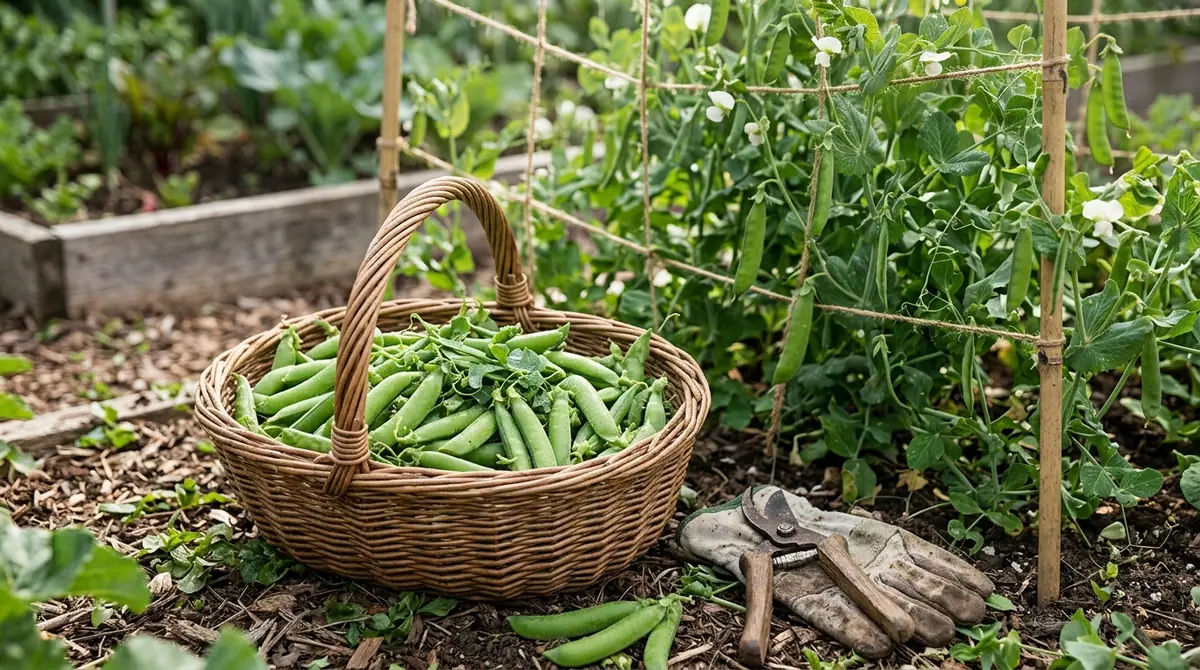
I stood in trial gardens this past April, holding a plump, glossy sugar snap pea pod between my thumb and forefinger, wondering if I had waited just one day too long. The tendrils on the trellis were beginning to dry into wire, and the afternoon temperature had already climbed to 72°F (22°C)—dangerously close to the threshold where sweet pod sugars convert to mealy starch. When I snapped the pod open, the satisfying crisp sound and the electric-green sweetness of the peas inside confirmed I had hit the harvest window precisely. Learning when to pick pea pods is the single most critical factor in determining whether your harvest tastes like sugary candy or starchy cardboard.

1. Botanical Overview & Natural Habitat
Peas (Pisum sativum) are cool-season annual legumes belonging to the Fabaceae family. Native to the Mediterranean basin and the Near East, their evolutionary history explains their strong preference for temperate climates. In their wild habitat, they germinate during the damp, cool winters and spring months, racing to complete their reproductive cycle before the scorching, arid Mediterranean summer sets in.
I always remind home gardeners that the pea pod is biologically a fruit—specifically, a legume or pod containing seeds derived from a single ovary. From an ecological standpoint, the plant invests vast amounts of photosynthetic energy into filling these pods with starchy, protein-rich cotyledons to ensure the survival of the next generation. Understanding this physiological drive explains when to pick pea pods: if left on the vine too long, the plant signals the seeds to mature, converting soluble sugars into complex carbohydrates and lignifying the pod walls to protect the seeds inside.
Botanically, the three main culinary types of peas diverge in their internal sugar and fiber profiles:
- Garden/Shelling Peas: The pods are fibrous, inedible, and flat to rounded. You harvest them when the seeds inside are plump and rounded, but before the pod turns yellowish or loses its bright green sheen.
- Snow Peas: These are harvested when the pods are completely flat and the seeds are barely visible as tiny bumps. The culinary value lies in the tender, unlignified pod wall, not the undeveloped seeds.
- Sugar Snap Peas: A genetic cross between shelling and snow peas, these possess thick, fleshy pod walls packed with high concentrations of sucrose. They are ready when the pods are plump, rounded, and glossy, yet still snap cleanly when bent.
2. Essential Environmental & Care Requirements
To produce high yields of sweet, tender pods, your cultural practices must mimic the cool, moisture-retentive conditions of the plant's native range. Peas thrive when daytime temperatures hover between 55°F and 65°F (13°C to 18°C). Temperatures consistently exceeding 85°F (29°C) will shock the plant, halting blossom set and forcing premature pod maturation.
Soil composition is equally vital. Because peas form a symbiotic relationship with Rhizobium leguminosarum bacteria in their root nodules to fix atmospheric nitrogen, they require well-draining, loamy soil with a neutral pH between 6.0 and 7.5. Avoid heavy nitrogen fertilizers, which stimulate lush, vegetative vine growth at the expense of flowers and pods. Instead, ensure consistent moisture—delivering approximately 1 inch (2.5 cm) of water per week—without ever letting the root zone become waterlogged, as Pythium root rot will quickly decimate the crop.
| Parameter | Optimal Condition | Common Mistake | Why It Matters |
|---|---|---|---|
| Soil Temperature | 45°F to 75°F (7°C to 24°C) | Planting too early in frozen mud or too late in hot summer soil | Extreme temperatures cause seed rot and stunt early root development. |
| Soil pH | 6.0 to 7.5 | Allowing soil to become overly acidic (< 6.0) | Acidic soils inhibit the activity of nitrogen-fixing root bacteria. |
| Watering Depth | 1 inch (2.5 cm) per week | Overhead splashing and erratic moisture swings | Inconsistent water causes pod drop and bitter, tough-skinned peas. |
| Sunlight Exposure | Full sun (6 to 8 hours daily) | Shading plants behind taller summer crops | Insufficient light reduces photosynthesis, lowering sugar content in the pods. |
For gardeners looking to diversify their cool-season edible plots, timing is everything; similar precision is required when managing transition crops like deciding when to transplant cilantro seedlings as spring transitions into early summer warmth.
3. Step-by-Step Cultivation, Feeding & Propagation
Growing exceptional peas requires meticulous attention from soil preparation to the final harvest snap. Follow this rigorous protocol to maximize your yields and ensure your pods reach peak flavor.
- Site Selection and Soil Preparation: Select a bed that receives full sun. Work organic compost into the top 6 to 8 inches (15 to 20 cm) of soil to improve structure and moisture retention. Avoid adding synthetic high-nitrogen fertilizers.
- Inoculation and Sowing: Dust your pea seeds with a commercial Rhizobium inoculant right before planting to guarantee active nitrogen fixation. Sow seeds 1 inch (2.5 cm) deep and space them 2 inches (5 cm) apart in rows spaced 18 to 24 inches (45 to 60 cm) apart.
- Trellising Installation: Install vertical supports—such as twiggy brush, wire netting, or string trellises—at the time of planting. Climbing varieties can reach heights of 6 feet (1.8 meters) or more and require immediate structural guidance once germination occurs.
- Moisture Management: Maintain even soil moisture using drip irrigation or soaker hoses to keep foliage dry. Apply a 2-inch (5 cm) layer of clean straw mulch around the base of the stems to suppress weeds and cool the root zone.
- Observation and Harvest Timing: Begin monitoring your plants daily approximately 55 to 70 days after emergence, depending on the cultivar. Inspect the pods every morning when the plant's turgor pressure is highest. Use one hand to stabilize the vine stem and your other hand to gently snap or snip the pod stem away, preventing branch breakage.
💡 Pro-Tip: Never yank or pull pea pods straight off the vine with a single hand. The stems are surprisingly fibrous and brittle; pulling can tear the vine or strip the bark, leaving the plant vulnerable to fungal pathogens like Botrytis cinerea. Always use a two-handed technique—holding the vine with one hand while snapping the pod downward with the other.
As your spring pea crop winds down and summer temperatures begin to climb, you can clear the beds and transition your garden spaces to warm-season crops, keeping in mind best practices for timing such as when to start tomatoes indoors zone 6 or managing earlier seed schedules detailed in when to start tomato seeds indoors zone 6.
4. Common Problems, Pests & Troubleshooting
Even with optimal care, pea crops face several classic physiological and biological hurdles. Powdery mildew (Erysiphe pisi) is the most prevalent fungal adversary, appearing as a white, talcum-powder-like coating on leaves and pods during humid, warm days with high night-to-day temperature swings. To mitigate mildew, space your plantings to ensure maximum airflow and water exclusively at the base of the plants. For comprehensive guidance on managing plant pathogens and cultural best practices, consult the resources provided by the Royal Horticultural Society.
Aphids and pea weevils can also colonize tender shoot tips and chew distinct notches out of leaf margins. Introduce beneficial insects like lady beetles and parasitic wasps, or spray persistent aphid colonies with a focused application of insecticidal soap.
Physiologically, flat or empty pods are often the result of poor pollination caused by unseasonably hot weather during bloom, which causes flower blossoms to abort before fertilization can occur. If daytime temperatures spike above 85°F (29°C), temporarily shading your pea rows with 30% shade cloth can extend your harvest window by several days.
⚠️ Important Caution: Never harvest or handle pea vines when the foliage is soaking wet from rain or morning dew. Moving through damp plants easily transmits fungal spores—particularly powdery mildew and bacterial blight—from infected leaves to healthy tissue across your entire patch.

5. Frequently Asked Questions
How do I know when sugar snap peas are ready to pick?
Sugar snap peas are ready when the pods are plump, rounded, and glossy bright green, and you can clearly feel the individual peas inside filling out the pod wall. If you bend a mature snap pea pod, it should snap cleanly in half with a crisp pop, revealing juicy, sweet peas inside. If the pod feels leathery or rubbery when bent, or if the seeds look white and starchy, you have waited too long.
What happens if I leave peas on the vine too long?
When pods are left on the vine past their prime, the plant's hormonal signals shift toward seed maturation. Sugars inside the peas rapidly convert into complex starches, making them mealy and flavorless. Simultaneously, the pod walls develop tough, fibrous lignin layers. Furthermore, leaving mature pods on the vine signals the plant that its reproductive goal has been met, causing it to shut down flower production and end the harvest season prematurely.
Can you pick peas after the plant starts turning yellow?
You can still pick remaining green pods from a yellowing vine, but their quality will likely be degraded. Yellowing foliage indicates that the annual plant has reached the end of its natural life cycle, often triggered by heat stress or root senescence. Any pods left on a yellowing vine should be tested for tenderness immediately; if the pods are tough or the seeds are hard, harvest them to use as dry soup peas rather than fresh green vegetables. For official agricultural trials and research-backed data on legume maturity rates, refer to resources provided by Oregon State University Extension Service.
Should I wash pea pods immediately after harvesting?
Do not wash pea pods immediately after picking unless you plan to cook or eat them right away. Introducing moisture to harvested pods accelerates rot and encourages mold growth during short-term storage. Instead, place unwashed pods into a perforated plastic bag and store them in the crisper drawer of your refrigerator at 32°F to 35°F (0°C to 2°C) with high humidity, where they will retain their crisp sweetness for up to five to seven days. Wash them thoroughly in cool water immediately before preparation.
Related Guides
- Seeds and Pods
- When to Pick Poblano Pepper
- When to Pick Pumpkins Off Vine
- When to Pick Snap Peas
- When to Pick Peas
📋 Table of Contents ▼ Click to expand
Tags:
Keep reading
🌿 Related Plants You Might Like
PlantSavvyWorld
Editorial team
PlantSavvyWorld is an independent botanical education project. Articles are drafted with AI assistance, then edited and checked against university extension services, botanical garden collections and other published horticultural sources.