

When to Pick Peas
Written with AI assistance, edited and checked against horticultural sources.
1. Botanical Overview & Natural Habitat

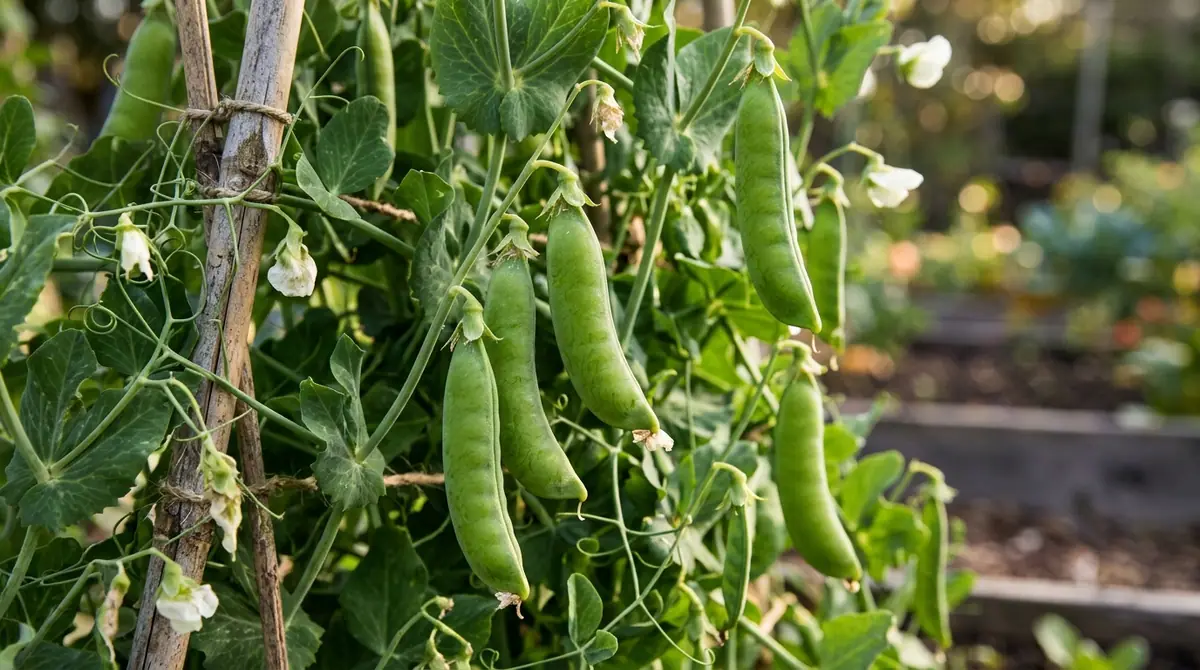
Botanically, a pea pod is a dehiscent fruit known as a legume, containing a single row of seeds attached along the inner suture. As a cool-season crop, Pisum sativum thrives when daytime temperatures hover between 55°F and 65°F (13°C to 18°C). When temperatures consistently exceed 75°F (24°C), the plant’s physiological clock shifts dramatically. Metabolism accelerates, vegetative growth stalls, and the sugars stored inside the developing seeds rapidly convert into insoluble starches. This process, known as mealing, ruins the crisp, succulent texture desired in culinary applications.
To master harvest timing, you must first distinguish between the three primary cultivar groups:
- English or Garden Peas (Pisum sativum var. sativum): These produce rounded pods that must be shelled before eating. You are harvesting the immature seeds inside.
- Snow Peas (Pisum sativum var. saccharatum): These possess flat, edible pods with very small, undeveloped seeds. The entire pod is consumed.
- Snap Peas (Pisum sativum var. macrocarpon): These feature thick, rounded, crisp walls packed with sweet, plump seeds. Both pods and seeds are eaten fresh.
When timing your garden layout, you might also consider interplanting with other early-season crops. For instance, just as you manage your cool-season legumes, you may find yourself timing tasks like learning When to Transplant Cilantro Seedlings to make the most of your spring beds before summer heat sets in.
2. Essential Environmental & Care Requirements
Peas are remarkably unfussy about soil fertility because they form a symbiotic relationship with Rhizobium bacteria, which fix atmospheric nitrogen into a plant-usable form. However, they are remarkably sensitive to soil structure, moisture consistency, and thermal extremes.
The ideal soil pH sits between 6.0 and 7.5. Anything below 5.5 inhibits the crucial nitrogen-fixing bacteria and locks up essential phosphorus. Drainage is non-negotiable; soggy clay soil suffocates the root system within 48 hours and invites soil-borne fungal pathogens like Pythium and Fusarium.
| Parameter | Optimal Condition | Common Mistake | Why It Matters |
|---|---|---|---|
| Soil Temperature | 45°F to 60°F (7°C to 15°C) | Planting too early in freezing mud | Seeds rot before germination due to fungal activity. |
| Air Temperature | 55°F to 65°F (13°C to 18°C) | Exposing plants to 80°F+ (26°C+) | Heat induces blossom drop and premature starch conversion in pods. |
| Soil Moisture | Consistently damp, 1 inch (2.5 cm) weekly | Alternating drought and flooding | Irregular watering causes pod splitting and bitter, tough skins. |
| Sunlight | Full sun, 6 to 8 hours daily | Shading out in partial garden corners | Low light reduces photosynthetic sugar production in pods. |
Maintaining steady soil moisture is particularly vital during the pod-fill stage. If the plant experiences drought stress when pods are swelling, the cellular walls toughen instantly, yielding stringy pods that defy even the most careful kitchen preparation. For more detailed guidance on optimizing regional climate zones for early crops, consult resources like the Oregon State University Extension Service for regionally specific planting calendars.
3. Step-by-Step Cultivation, Feeding & Propagation
Growing exceptional peas requires strict adherence to planting depths, spacing, and support structures. Because peas do not transplant well due to their fragile taproots, direct sowing is always the preferred method.
Follow this sequential protocol for a bountiful harvest:
- Site Preparation and Inoculation: Clear the bed of winter debris. Dust your dry pea seeds with a commercial Rhizobium leguminosarum inoculant right before planting to guarantee maximum nitrogen fixation.
- Sowing the Seeds: Direct sow seeds 1 to 1.5 inches (2.5 to 3.8 cm) deep in rows spaced 2 inches (5 cm) apart. If planting multiple rows, keep them 18 to 24 inches (45 to 60 cm) apart.
- Installing Supports: Erect trellises, netting, or branching brush immediately after sowing, before seedlings emerge. Waiting until vines are 6 inches (15 cm) tall risks damaging the delicate root systems.
- Mulching and Watering: Apply a 2-inch (5 cm) layer of clean straw or shredded leaves around the base of emerging seedlings to suppress weeds and conserve soil moisture. Water deeply once a week if natural rainfall is lacking.
- Monitoring and Pinching: Once vines reach their mature height, monitor for apical dominance. Just as you might learn When to Top Pepper Plants to encourage branching, letting bush peas reach their terminal height naturally is standard, but keeping the lower canopy airy prevents rot.
- Executing the Harvest: Begin checking pods daily once flowering concludes. For shelling peas, harvest when pods feel completely packed and firm, but are still bright green. For snap peas, harvest when the pods are plump and round, but before the seeds bulge aggressively against the pod wall. For snow peas, harvest when the pods are flat and the peas inside are no larger than the head of a pin.
💡 Pro-Tip: Always use two hands when harvesting peas. Hold the vine gently with one hand and pinch or snip the stem just above the pod with your other hand. Pulling a pod off with one hand can easily snap the brittle vine or strip the bark, opening a wound for fungal spores.
4. Common Problems, Pests & Troubleshooting
Even with pristine timing, environmental stressors and opportunistic pests can derail your harvest.
Powdery Mildew (Erysiphe pisi): This fungal disease appears as a white, powdery dust on leaves and stems during late spring when warm days and cool, dewy nights coincide. Prevent it by ensuring proper plant spacing (at least 2 inches between plants) and watering only at the base early in the morning. If infection occurs, prune severely affected lower leaves to improve airflow.
Aphids (Acyrthosiphon pisum): These sap-sucking green insects cluster on tender growing tips and flower buds, stunting pod development. Blast them off with a sharp stream of water from your garden hose, or introduce beneficial insects like lady beetles and parasitic wasps.
⚠️ Important Caution: Never apply high-nitrogen synthetic fertilizers to your pea patch thinking it will boost pod production. Excess nitrogen triggers explosive, lush green foliage growth at the direct expense of flowers and pods, while simultaneously making the plant vastly more attractive to sap-sucking aphids.

5. Frequently Asked Questions
How do I know when shelling peas are ready to pick?
Examine the pods closely. A ripe shelling pea pod should feel completely filled, firm, and rounded, with a vibrant, glossy green color rather than a dull, yellowish-green. Squeeze a pod gently between your thumb and forefinger; if the individual peas feel distinct, plump, and firm inside the pod cavity without any empty gaps, they are at peak sugar content. If the pod color begins to fade to a pale whitish-green or the skin feels leathery, you have waited too long, and the interior peas will be starchy.
Can you pick peas too early?
Yes. Picking English or snap peas too early results in flat, underdeveloped pods with watery, insipid flavor and virtually no starch or complex sugar development. Snow peas are the sole exception, as they are intentionally harvested while completely flat. For shelled and snap varieties, patience is required, but monitor daily during warm spring spells because pods can transition from underripe to overripe in less than 48 hours.
What happens if you leave peas on the vine too long?
When peas are left on the vine past their prime, the plant's biological imperative shifts entirely to seed production. The sugars inside the peas convert rapidly into starches, the pod walls become fibrous, tough, and stringy, and the outer skin of the pod turns yellow or brown. Furthermore, leaving mature pods on the vine signals the plant that its reproductive cycle is complete, causing it to shut down flower production and prematurely terminate the life of the vine.
Do pea plants produce more if you pick them?
Yes. Regular, thorough harvesting stimulates the plant to continue producing flowers and setting new pods. Peas are determinate or semi-determinate depending on the variety, but they rely on continuous picking to prevent seed set. If pods are left to mature on the vine, the plant concludes its mission and stops investing energy into new blossoms. Harvesting every single day during peak season guarantees an extended harvest window lasting several weeks.
Related Guides
- When to Pick Snap Peas
- When Are Peas Ready to Pick
- When to Pick Poblano Pepper
- When to Pick Pumpkins Off Vine
- When to Pick Pea Pods
📋 Table of Contents ▼ Click to expand
Tags:
Keep reading
🌿 Related Plants You Might Like
PlantSavvyWorld
Editorial team
PlantSavvyWorld is an independent botanical education project. Articles are drafted with AI assistance, then edited and checked against university extension services, botanical garden collections and other published horticultural sources.