

When to Plant Pumpkins in North Carolina
Written with AI assistance, edited and checked against horticultural sources.
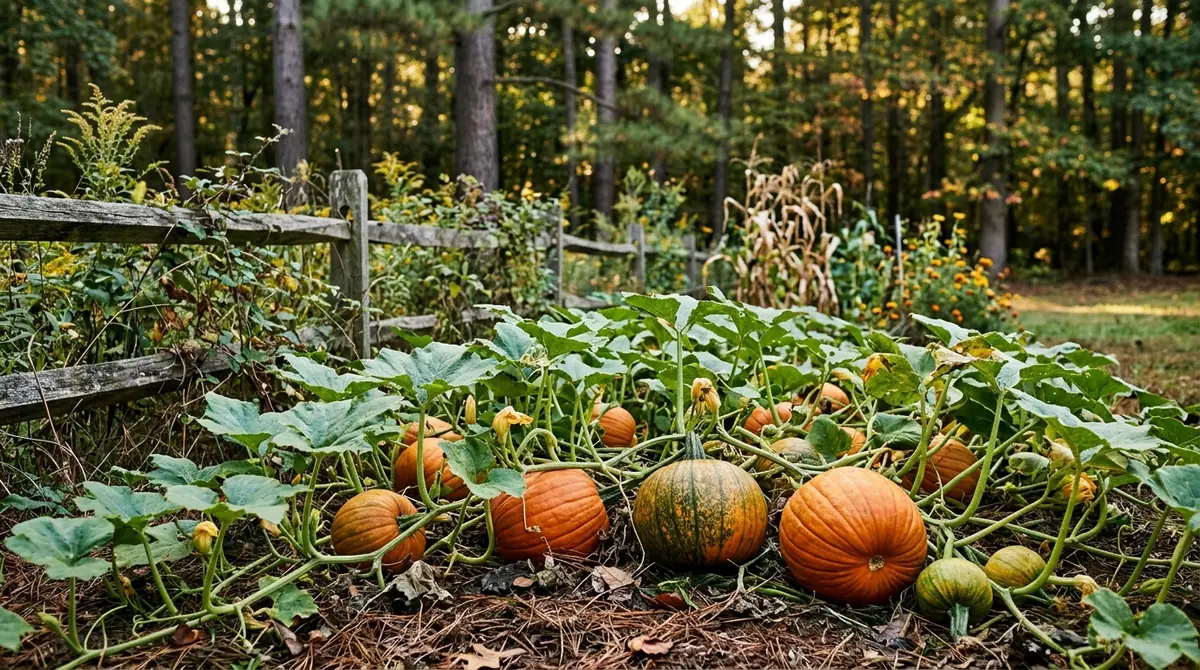
Planting 'Howden' pumpkin seeds too early in stubborn earth risks a sudden torrential downpour crusting the soil and suffocating emerging cotyledons. Growing pumpkins in North Carolina requires balancing the state's distinct geographic zones, stifling summer humidity, and soil thermodynamics, ensuring that whether the goal is a massive Jack-o'-lantern for the porch or delicate pie pumpkins for the kitchen, timing is correct.
1. Botanical Overview & Natural Habitat
In North Carolina, stretching from the sandy soils of the Tidewater (USDA Zone 8b/9a) up to the rugged frost pockets of the Blue Ridge Mountains (USDA Zone 6a), the natural habitat varies wildly. While pumpkins thrive in warm, frost-free climates with abundant sunshine, the state's humid summers introduce unique physiological challenges, such as rapid foliar disease development and blossom drop caused by night temperatures remaining above 75°F (24°C).
Understanding your local microclimate dictates your entire scheduling window. Just as you must calculate root depth constraints when managing crops like those discussed in our How Deep Do Pepper Plant Roots Go? Pot Size & Substrate Depth Guide, pumpkin vines require deep, expansive root zones that interact intimately with North Carolina's native soil horizons. If you are timing your cucurbit transitions, you might also find parallels in the hardening-off principles outlined in our When to Transplant Cucumber Seedlings: Stop Root Shock & Boost Growth guide.
2. Essential Environmental & Care Requirements
Pumpkin vines are greedy plants that demand specific parameters to reach their genetic potential. Below is a breakdown of the critical environmental factors required for success in North Carolina.
| Parameter | Optimal Condition | Common Mistake | Why It Matters |
|---|---|---|---|
| Soil Temperature | 70°F–85°F (21°C–29°C) | Planting when soil is below 60°F (15°C) | Cold, wet soil causes seeds to rot before germination. |
| Soil pH | 6.0 to 6.8 | Ignoring soil tests in acidic NC clay | Highly acidic soils lock up essential phosphorus and calcium. |
| Sunlight | 6 to 8+ hours of direct sun | Planting in partial shade under tree canopies | Low light reduces photosynthesis, stunting fruit sugar development. |
| Watering Depth | 1 to 2 inches (2.5 to 5 cm) per week | Frequent, shallow surface sprinkling | Shallow watering encourages shallow root systems susceptible to drought. |
| Spacing | 50 to 100 sq. Ft. Per large vine | Crowding plants closer than 3 feet apart | Dense spacing restricts airflow, drastically increasing fungal pathogens. |
💡 Pro-Tip: North Carolina Piedmont clay holds moisture well but packs down like concrete. Work 3 to 4 inches of aged compost and expanded shale into your planting hills to break surface tension and ensure oxygen reaches the developing taproot.
3. Step-by-Step Cultivation, Feeding & Propagation
Timing is dictated by your harvest target. If you want bright orange pumpkins ready for Halloween (October 31st), and your variety requires 100 days to maturity, you must count backward from early August, factoring in North Carolina's brutal mid-summer heat stress.
For the Piedmont and Coastal Plain (Zones 7b–9a), direct sow between May 15 and June 15. For the Mountain region (Zones 6a–7a), sow between May 25 and June 10 to avoid late spring frosts.
- Perform a Soil Test: Submit a sample to the NC State Extension Soil Testing Program in early spring to calibrate pH and nutrient levels.
- Build Planting Hills: Construct raised mounds 4 to 6 inches (10 to 15 cm) high and 3 feet (90 cm) wide to enhance soil drainage and warmth.
- Sow the Seeds: Plant 4 to 5 seeds per hill at a depth of 1 inch (2.5 cm). Orient seeds horizontally to prevent fungal rot on the radicle.
- Thin the Seedlings: Once seedlings reach 3 to 4 inches (7.5 to 10 cm) tall and show their first true leaves, snip (do not pull) the weaker specimens, leaving the 2 strongest vines per hill.
- Apply Mulch: Surround the base with a thick layer of clean wheat straw or shredded hardwood bark to suppress weeds and prevent soil-borne pathogens from splashing onto the leaves.
- Fertilize Strategically: Side-dress with a low-nitrogen, high-phosphorus organic fertilizer (such as bone meal or a 5-10-10 blend) when vines begin to run, and transition to a balanced feed once female blossoms appear.
⚠️ Important Caution: Avoid high-nitrogen synthetic fertilizers once the vines begin flowering. Excessive nitrogen triggers lush, vegetative vine growth at the expense of blossoms, resulting in zero fruit set.
4. Common Problems, Pests & Troubleshooting
North Carolina's climate presents distinct hurdles for pumpkin growers. High humidity acts as an incubator for foliar diseases.
Powdery Mildew and Downy Mildew
These fungal conditions appear as white, powdery spots on leaves or angular yellow patches. Prevent them by spacing vines adequately and watering exclusively at the base via drip irrigation. Treat early outbreaks with copper fungicide or a preventative bio-fungicide containing Bacillus subtilis.
Vine Borers (Squash Vine Borer)
The larvae of this clear-winged moth bore into the base of the main stem, causing sudden midday wilting and a frass-filled entry hole.
- Prevention: Wrap the lower 12 inches (30 cm) of the main stem with aluminum foil or floating row covers until female flowers open.
- Remedy: Slit the stem lengthwise with a razor blade, remove the grub, and bury the wounded stem in moist soil to encourage adventitious rooting.
Blossom-End Rot

5. Frequently Asked Questions
Can I plant pumpkins in July in North Carolina?
Yes, in the Coastal Plain and Piedmont regions (Zones 7b–9a), you can plant fast-maturing (80-to-90-day) varieties as a second crop up until mid-July for an October harvest. However, watch out for high pest pressure and heat stress during early seedling development.
What happens if I plant pumpkins too early in North Carolina?
If you plant before the soil consistently hits 65°F (18°C)—typically before mid-May in the mountains or late April down east—the seeds will sit in cold, damp soil and rot. Surviving seedlings will also experience stunted growth and susceptibility to damping-off fungi.
How many pumpkins can I expect per vine?
Standard vining pumpkins typically produce 2 to 4 large fruit per plant, while smaller pie varieties and mini-pumpkins (Cucurbita pepo) can yield 6 to 12 fruit. Pinching off secondary lateral vines can channel energy into fewer, larger specimens.
Do pumpkins need full sun in North Carolina's intense summer?
Yes, pumpkins require a minimum of 6 hours of direct sunlight. While North Carolina summers are intensely hot, afternoon shade will reduce fruit yield, slow sugar accumulation, and keep foliage wet longer, increasing vulnerability to fungal diseases.
Related Guides
- When to Plant Pumpkins in South Carolina
- When to Plant Strawberries in North Florida
- What Zone is North Dakota for Planting
- What Zone is South Carolina in for Planting
- What Zone is South Carolina for Plants
📋 Table of Contents ▼ Click to expand
Tags:
Keep reading
🌿 Related Plants You Might Like


PlantSavvyWorld
Editorial team
PlantSavvyWorld is an independent botanical education project. Articles are drafted with AI assistance, then edited and checked against university extension services, botanical garden collections and other published horticultural sources.