

When to Plant Pumpkins in Southern California
Written with AI assistance, edited and checked against horticultural sources.
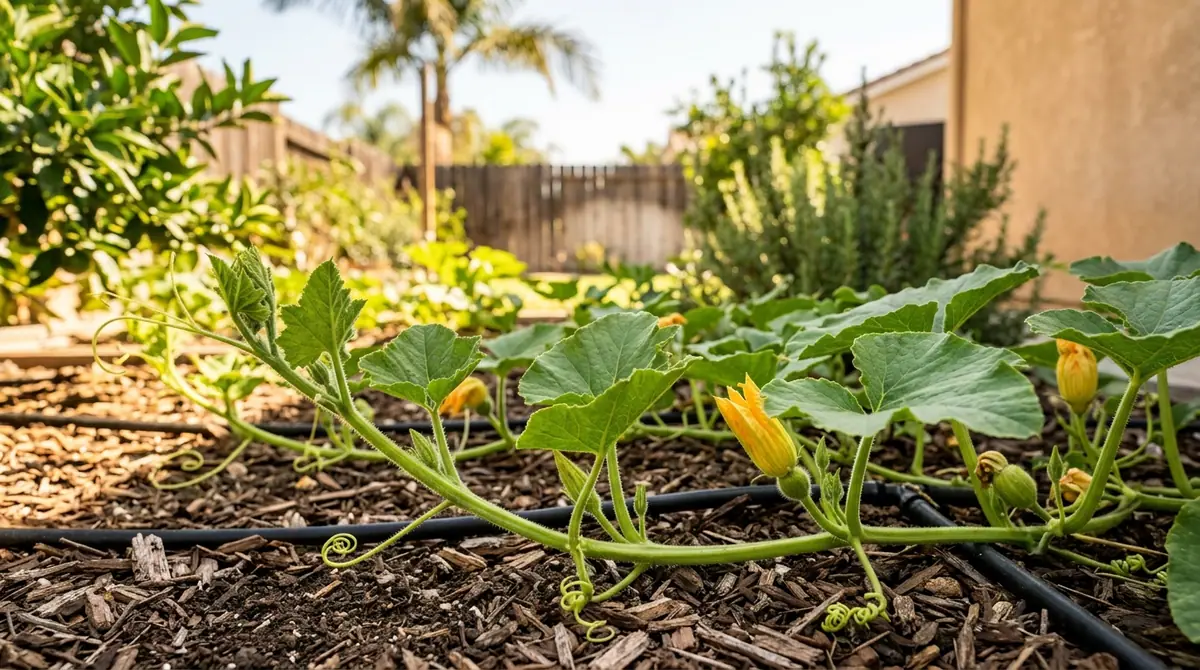
Last July, standing in a gardener's backyard in the San Fernando Valley while the afternoon asphalt radiated a punishing 98°F (36.6°C), I watched a pristine patch of young pumpkin vines crisp at the edges within forty-eight hours. The homeowner had followed generic gardening calendars printed for the Midwest, planting seeds in April and watching them scorch before the female blossoms could even set. Southern California gardening is entirely its own beast. Here, timing your cucurbits isn't just about avoiding frost; it is about outsmarting the coastal marine layer, navigating microclimates from Santa Monica to Riverside, and timing your harvest so your jack-o'-lanterns don't rot on the vine before October arrives. Beautiful region, I am going to walk you through the exact science of when and how to plant pumpkins so you harvest heavy, vibrant fruit instead of dehydrated disappointment.
1. Botanical Overview & Natural Habitat

When you introduce Cucurbita species to the Mediterranean climate of Southern California, you encounter a fascinating interplay of coastal fog and inland baking heat. Southern California spans USDA Hardiness Zones 9a through 11b, encompassing starkly different microclimates. Coastal zones (Sunset Zones 23 and 24) experience cool, damp summers blanketed by the "June Gloom" marine layer, which can delay fruit set and invite powdery mildew. Inland valleys (Sunset Zones 18 through 21) feature scorching summer afternoons where temperatures routinely exceed 90°F (32.2°C), forcing plants to drop their blossoms to conserve water.
Unlike cool-season crops that prefer the gentle conditions you might read about when planning When to Transplant Snapdragon Seedlings, pumpkins demand long, warm days and substantial root space. Their root systems can plunge down to 4 feet (1.2 meters) and spread laterally up to 10 feet (3 meters) or more per vine. Because they are monoecious—producing separate male and female flowers on the same plant—they rely heavily on native bees and honeybees for pollination. Timing your planting ensures that peak flowering aligns with peak pollinator activity rather than periods of extreme heat stress or unrelenting coastal fog.
2. Essential Environmental & Care Requirements
To successfully grow pumpkins in Southern California, you must dial in your environmental parameters precisely. The table below outlines the critical growing conditions required for robust development.
| Parameter | Optimal Condition | Common Mistake | Why It Matters |
|---|---|---|---|
| Soil Temperature | 70°F to 85°F (21.1°C to 29.4°C) | Planting too early in cold, wet spring soil | Cold soil causes seeds to rot before germination and stunts early root growth. |
| Sunlight | Full sun, 6 to 8+ hours daily | Shading vines behind fences or architectural structures | Insufficient light reduces photosynthesis, weakening vines and dropping yields. |
| Soil pH | 6.0 to 6.8 slightly acidic to neutral | Ignoring extreme SoCal alkaline soils (pH > 7.5) | Alkaline conditions lock up essential micronutrients like iron and phosphorus. |
| Watering Depth | 1 to 2 inches (2.5 to 5 cm) per week, deep soaking | Frequent, shallow surface watering | Shallow watering encourages weak, surface-level roots vulnerable to drought stress. |
| Planting Depth | 1 inch (2.5 cm) | Burying seeds too deep (>2 inches / 5 cm) | Deep planting exhausts the cotyledons' energy reserves before breaking the soil surface. |
Soil preparation in Southern California requires extra attention due to our native clay or sandy loam compositions. If you are gardening in heavy coastal clay, incorporate well-rotted compost and organic matter to improve drainage and break up compaction, keeping in mind the soil management principles often discussed when timing When to Transplant Flower Seedlings. For inland gardeners dealing with fast-draining, sandy desert-edge soils, heavy mulching with straw or shredded bark is non-negotiable to retain soil moisture during Santa Ana wind events.
💡 Pro-Tip: In Southern California's intense sun, standard overhead watering can scorch leaves and encourage fungal spores. Install drip irrigation or soaker hoses beneath a 3-inch (7.6 cm) layer of organic mulch to deliver water directly to the root zone while keeping surface foliage dry.
3. Step-by-Step Cultivation, Feeding & Propagation
Getting the timing right is your first major hurdle. In Southern California, the general rule is to plant your pumpkin seeds or seedlings between late April and mid-June. This schedule ensures that your plants mature during the warmest months of late summer, allowing the fruit to ripen on the vine just in time for autumn decoration or culinary harvest in September and October. If you plant too early (March), cool soil will rot your seeds; if you plant too late (July), young fruit will cook under August heatwaves before reaching maturity.
Follow this sequential protocol for establishing your pumpkin patch:
- Select and Prepare the Site: Choose a location with unobstructed southern or western exposure. Clear an area at least 6 feet (1.8 meters) in diameter per hill. Work a 4-inch (10 cm) layer of aged steer manure or compost into the top 12 inches (30 cm) of soil to ensure high fertility.
- Sow the Seeds: Wait until soil temperatures consistently register above 70°F (21.1°C) at a depth of 4 inches (10 cm). Plant 4 to 6 seeds per hill, pushing them vertically or flat into the soil at a depth of exactly 1 inch (2.5 cm). Space hills approximately 6 to 8 feet (1.8 to 2.4 meters) apart.
- Manage Germination and Thinning: Keep the soil evenly moist but not waterlogged. Germination typically occurs within 7 to 10 days at optimal temperatures. Once your seedlings reach 4 inches (10 cm) tall and exhibit their true leaves, select the two strongest, most vigorous seedlings per hill and snip the rest at the soil line with clean shears to avoid disturbing remaining roots.
- Implement Fertilization Schedules: When vines begin to run (typically 4 weeks after emergence), side-dress the plants with a balanced organic vegetable fertilizer high in nitrogen to support rapid vine growth. Once female flowers appear—distinguished by the tiny, bulbous miniature pumpkin at the base of the petals—switch to a low-nitrogen, high-phosphorus and potassium fertilizer to encourage robust fruit set and root development, mirroring the nutrient adjustments used when monitoring When to Top Pepper Plants.
- Train and Prune Vines: Guide your vines outward to prevent tangling. Once each vine has set 2 to 3 pumpkins, pinch off the growing tip of the main vine approximately 2 feet (60 cm) beyond the last set fruit. This redirects the plant's photosynthetic energy away from vegetative runner growth and directly into sizing up your developing pumpkins.
- Protect Developing Fruit: As pumpkins begin to swell, gently slide a small piece of plywood, a terra cotta saucer, or a thick layer of straw underneath each fruit. This isolates the rind from damp soil, preventing fungal ground rot and discouraging insect pests from chewing through the bottom.
To deepen your understanding of regional cucurbit performance and agricultural extensions suited to Mediterranean climates, consult the University of California Agriculture and Natural Resources (UCANR) catalog for localized vegetable gardening guides.
4. Common Problems, Pests & Troubleshooting
Even with perfect timing, Southern California's unique climate introduces specific hurdles for pumpkin growers. Powdery mildew (Podosphaera xanthii) is the single most common affliction, appearing as a white, talcum-powder-like dusting on leaves during high-humidity coastal mornings or evenings with heavy dewfall. To manage this organically, spray foliage proactively every 7 to 14 days with a mixture of water, a few drops of liquid castile soap, and organic horticultural oil or potassium bicarbonate. Avoid high-nitrogen fertilizers late in the season, as tender new leaf growth is exceptionally susceptible to mildew colonization.
⚠️ Important Caution: Never use synthetic copper-based fungicides excessively in Southern California garden soils. Repeated application can lead to copper accumulation in the soil, which becomes toxic to beneficial soil microbes and earthworms over time.
Insect pests also demand vigilance. Squash bugs (Anasa tristis) and cucumber beetles (Acalymma vittatum) are relentless predators in our region. Inspect the undersides of your pumpkin leaves weekly for clusters of shiny, bronze-colored eggs and scrape them off manually. If adult squash bugs appear, hand-pick them at dawn when they are sluggish, or lay down wooden boards near the vines; the bugs will gather underneath them overnight, making them easy to collect and destroy in soapy water. For heavy infestations, floating row covers used during the first 4 weeks of plant growth will exclude pests entirely until pollination requires removing the covers.

5. Frequently Asked Questions
Can I grow pumpkins in containers in a small Southern California backyard?
Yes, absolutely. Compact, bush-type pumpkin varieties such as 'Sugar Pie', 'Baby Pam', or 'Jack Be Little' perform exceptionally well in large containers holding a minimum of 15 to 20 gallons (57 to 75 liters) of high-quality potting mix. Ensure your container has ample drainage holes, receives at least 6 hours of direct sun, and is fed with a slow-release organic fertilizer because potted plants leach nutrients faster than garden beds.
Why are my pumpkin flowers falling off without producing fruit?
This is normal and rarely a cause for alarm. The first wave of flowers produced by pumpkin plants are almost exclusively male flowers designed to provide pollen. Female flowers, which feature a miniature swollen fruit at the base of the petals, appear roughly 1 to 2 weeks later. If female flowers drop after opening, it is typically due to a lack of pollination or extreme heat stress that has temporarily sterilized the pollen.
When exactly should I harvest my pumpkins in Southern California?
Harvest your pumpkins when the rind is deep in color, hard enough that it resists being punctured by your thumbnail, and the stem has begun to woody up and dry out. In Southern California, this usually occurs between 90 and 120 days after planting, translating to late September through October. Always cut the pumpkin from the vine with clean pruning shears, leaving a sturdy 3-to-4-inch (7.5 to 10 cm) stem attached; never lift a pumpkin by its stem, or it may snap off and cause the fruit to rot prematurely.
Do I need to hand-pollinate my pumpkins in urban Southern California areas?
While native bees and honeybees do a stellar job in many neighborhoods, urban and densely built suburban environments sometimes suffer from low pollinator traffic. If you notice female flowers opening without setting fruit, you can easily hand-pollinate them in the early morning. Pluck a freshly opened male flower, peel back its yellow petals to expose the pollen-laden stamen, and gently brush it against the sticky center stigma inside the open female flower. For further botanical verification on pollination biology and regional vegetable production, refer to resources provided by the Royal Horticultural Society (RHS).
Related Guides
- When to Plant Tomatoes Southern California
- When to Plant Tomatoes in Southern California
- When to Plant Strawberries in Southern California
- When to Plant Onions in Southern California (Zone 9 & 10 Planting Calendar)
- When to Plant Pumpkins in Northern California
- When to Plant Pumpkins in Nc
- When to Plant Pumpkins in Maryland
- When to Plant Pumpkins in Ky
📋 Table of Contents ▼ Click to expand
Tags:
Keep reading
🌿 Related Plants You Might Like






PlantSavvyWorld
Editorial team
PlantSavvyWorld is an independent botanical education project. Articles are drafted with AI assistance, then edited and checked against university extension services, botanical garden collections and other published horticultural sources.