

When to Plant Tomatoes in Southern California
Written with AI assistance, edited and checked against horticultural sources.
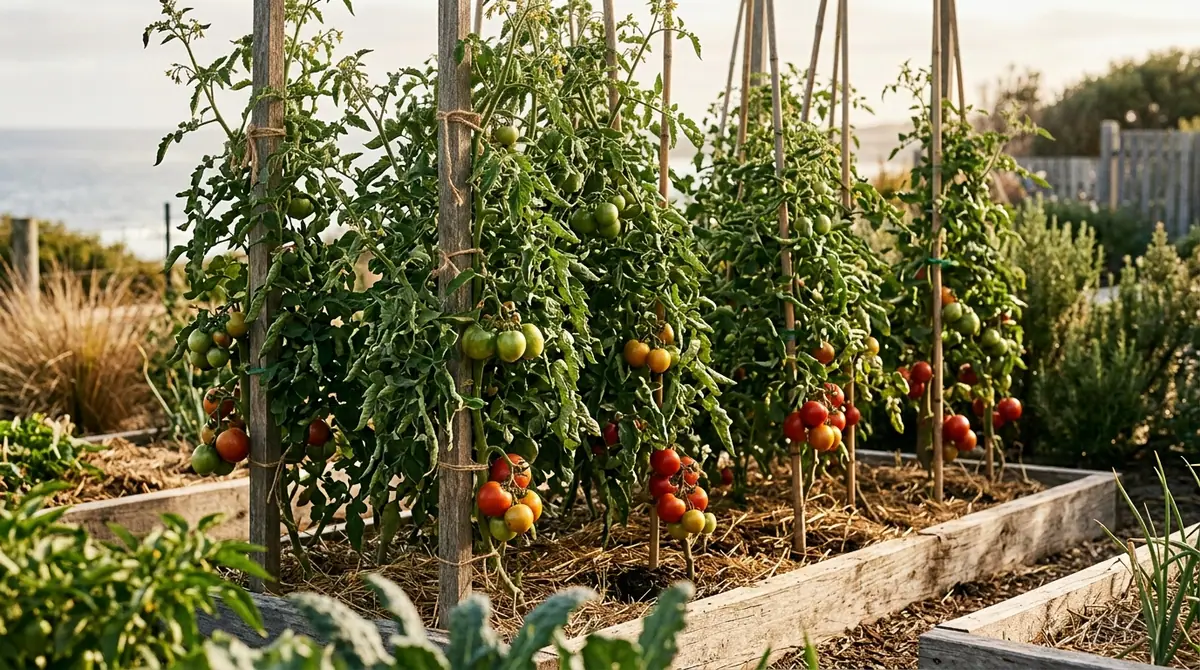
A digital probe stubbornly reading 52°F (11.1°C) in March indicates that heirloom 'Brandywine' starts should not be pushed out immediately. In Southern California, rushing the season because of a warm 80°F (26.7°C) February afternoon is the quickest way to stunt yields. Tomatoes (Solanum lycopersicum) are absolute sun-and-heat lovers. Plant them too early into cold, wet coastal earth, and they will turn purple, sulk, and stall out. Plant them at precisely the right microclimatic window, however, and you will harvest slicing tomatoes until Thanksgiving.

1. Botanical Overview & Natural Habitat
Tomatoes are tender perennial vines native to the high-elevation tropical Andes of western South America, stretching through Peru, Ecuador, and Bolivia. In their native habitat, they grow as short-lived perennials in rocky, well-draining soils under intense, equatorial UV light, experiencing warm days and cooler nights. When Spanish explorers brought them back to Europe, botanists initially classified them in the Solanaceae (nightshade) family, grouping them closely with deadly nightshades and potatoes due to their toxic foliage and alkaloids (tomatine and solanine).
Botanically, the part of the plant we eat is a fruit—specifically a fleshy, multi-seeded berry that develops from a superior ovary after pollination. In Southern California's unique Mediterranean climate, our mild winters allow us to treat these tropical perennials as warm-season annuals, or in frost-free pockets of Zone 10b, sometimes as short-lived bi-annuals. However, our coastal June gloom, intense interior valley heatwaves, and variable soil compositions require precise timing.
Whether you are designing a high-yield kitchen garden or balancing companion layouts alongside crops like those detailed in our When to Plant Onions in Southern California (Zone 9 & 10 Planting Calendar) guide, understanding their native warmth requirements dictates your entire seasonal planting schedule.
2. Essential Environmental & Care Requirements
To successfully grow robust tomatoes in Southern California, you must manage three critical environmental vectors: soil temperature, ambient sunlight, and root-zone aeration.
Tomatoes will not actively grow when soil temperatures drop below 60°F (15.5°C). The ideal germination and root-establishment range sits firmly between 70°F and 85°F (21.1°C to 29.4°C). If you are gardening near the coast (Zones 10a/10b), your marine layer often delays soil warming until late April. Inland valleys (Zones 9a/9b) warm up much faster, often permitting a March planting if protected from late frost.
Sunlight is another non-negotiable factor. Tomatoes require a minimum of 8 full hours of direct, unfiltered sunlight daily. In interior Southern California regions like the San Fernando or Coachella Valleys, afternoon shade cloth (30% to 40% reduction) is sometimes necessary during July and August to prevent blossom drop caused by temperatures exceeding 90°F (32.2°C).
For subterranean depth, root health is paramount. If you are comparing root architectures across your solanaceous crops, you can reference How Deep Do Pepper Plant Roots Go? Pot Size & Substrate Depth Guide to understand how tomato taproots and adventitious roots require deep, loose loam to forage effectively for moisture and micronutrients.
| Parameter | Optimal Condition | Common Mistake | Why It Matters |
|---|---|---|---|
| Soil Temperature | 65°F – 75°F (18.3°C – 23.9°C) | Planting when soil is below 60°F (15.5°C) | Cold soil inhibits phosphorus uptake, causing stunted, purpling foliage and root rot. |
| Sunlight Exposure | 8+ hours of direct sun | Planting in partial shade or northern exposures | Insufficient light reduces photosynthesis, leading to leggy vines and poor fruit set. |
| Soil pH | 6.0 to 6.8 (slightly acidic) | Ignoring native alkaline SoCal clay (pH 7.5+) | High pH locks up iron and calcium, triggering blossom end rot and chlorosis. |
| Watering Volume | 1–2 inches (2.5–5 cm) per week, deep soak | Frequent shallow watering | Shallow watering encourages surface root development, making plants drought-vulnerable. |
💡 Pro-Tip: If you cannot wait for natural soil warming in early spring, lay down black plastic mulch across your raised beds two weeks before your planned planting date. It acts as a solar collector, boosting subterranean soil temperatures by up to 8°F (4.4°C) down to a depth of 6 inches (15 cm).
3. Step-by-Step Cultivation, Feeding & Propagation
Mastering the Southern California tomato timeline requires aligning your sowing and transplanting dates with local regional frost dates. In coastal zones, start seeds indoors in January for a March transplant. In inland valleys, sow seeds in February for an April transplant.
When your starts reach 6 to 8 inches (15 to 20 cm) tall, follow this precise field cultivation protocol:
- Harden Off Your Seedlings: Move your indoor-started tomatoes outdoors to a sheltered, partially shaded patio for 7 to 10 days, slowly increasing their direct sun exposure to eliminate transplant shock.
- Amend the Substrate: Dig a trench or a deep hole in well-draining loam enriched with aged compost and organic bone meal. Ensure the target planting site avoids the damp conditions that often plague early root systems, keeping your setup clean and well-aerated similar to the principles used when managing delicate starts like those in When to Transplant Cucumber Seedlings: Stop Root Shock & Boost Growth.
- Strip Lower Foliage: Remove the lower sets of leaves from your tomato seedling, leaving only the top tuft of foliage.
- Plant Deeply: Bury the tomato stem horizontally or vertically up to two-thirds of its total height, burying 4 to 6 inches (10 to 15 cm) of bare stem underground. Every buried hair-like trichome on that stem will transform into a vigorous adventitious root, doubling your root mass within 14 days.
- Install Support Structures: Drive your stakes, cages, or heavy-duty Florida weave systems into the earth immediately at planting time to avoid damaging the developing root ball later.
- Apply Initial Hydration & Mulch: Water deeply with 1 gallon (3.8 liters) of water per plant to settle the soil around the roots. Top-dress the basin with 2 inches (5 cm) of organic arborist wood chips or straw mulch, leaving a 1-inch (2.5 cm) clearance around the main stem to prevent collar rot.
4. Common Problems, Pests & Troubleshooting
Even in the idyllic climate of Southern California, tomato cultivation presents unique regional challenges. Knowing how to diagnose stressors early saves the harvest.
- Blossom End Rot (BER): Appears as a sunken, leathery black patch on the bottom of developing fruit. This is not a pathogen, but a physiological calcium deficiency caused by erratic soil moisture fluctuations. In Southern California’s hot, dry interior winds, plants transpire rapidly, halting calcium transport to the distal end of the fruit. Maintain consistent moisture levels and amend alkaline soils with gypsum if calcium is deficient.
- Tomato Hornworms (Manduca quinquemaculata): These massive green caterpillars can strip a vine of its leaves and green fruit overnight. Look for dark green frass on lower leaves. Hand-picking is effective, or apply Bacillus thuringiensis (Bt) while caterpillars are small.
- Powdery Mildew & Tomato Yellow Leaf Curl Virus: Coastal humidity often brings powdery mildew, while whiteflies vector destructive viruses inland. Prune interior foliage to maximize airflow. For authoritative management strategies on regional pests, consult the UC Statewide Integrated Pest Management Program (UC IPM).
- Sunscald: Occurs when intense afternoon sunlight scorches fruit exposed by aggressive pruning, leaving white, blistered patches. Maintain a healthy canopy of protective foliage to shield developing fruit.
⚠️ Important Caution: Never water your tomato foliage via overhead sprinklers late in the evening. Southern California's warm nights combined with leaf wetness create an ideal incubator for fungal pathogens like Alternaria solani (Early Blight) and Phytophthora infestans (Late Blight), which can defoliate an entire crop within a week.

5. Frequently Asked Questions
When is the absolute best month to plant tomatoes in coastal Southern California?
In coastal zones (like Santa Monica, San Diego, and Long Beach), the marine layer suppresses spring temperatures. The optimal window to plant out nursery starts is mid-to-late April, once nighttime lows consistently remain above 55°F (12.8°C) and soil temperatures pass 60°F (15.5°C).
Can I grow tomatoes year-round in Southern California?
While Southern California features one of the mildest climates in the United States, tomatoes are strictly warm-season annuals. Frost-free pockets in Zone 10b may keep vines alive through mild winters, but fruit production halts when day lengths shorten below 10 hours and temperatures drop. For truly year-round edible gardening strategies, consult resources provided by the Southern California Horticultural Society. Most gardeners pull spent vines in December and replant fresh starts in spring.
Why are my tomato flowers dropping off without setting fruit?
Blossom drop is almost always triggered by temperature extremes. If daytime temperatures spike above 90°F (32.2°C) or nighttime lows drop below 55°F (12.8°C), pollen becomes sterile, and the plant aborts the flower. High winds and extreme humidity variations also disrupt pollination.
How much water do established Southern California tomatoes need per week?
Established plants require approximately 1 to 2 inches (2.5 to 5 cm) of water per week, delivered deeply 2 to 3 times weekly rather than via daily light sprinklings. During peak summer heatwaves in inland valleys (Zones 9a/9b), mature plants in full production may require up to 3 inches (7.5 cm) of water weekly to prevent drought stress and fruit cracking.
Related Guides
- When to Plant Tomatoes Southern California
- When to Plant Pumpkins in Southern California
- When to Plant Strawberries in Southern California
- When to Plant Onions in Southern California (Zone 9 & 10 Planting Calendar)
- When to Plant Tomatoes in California
- When to Plant Pumpkins California
📋 Table of Contents ▼ Click to expand
Tags:
Keep reading
🌿 Related Plants You Might Like



PlantSavvyWorld
Editorial team
PlantSavvyWorld is an independent botanical education project. Articles are drafted with AI assistance, then edited and checked against university extension services, botanical garden collections and other published horticultural sources.