

When to Plant Pumpkins California
Written with AI assistance, edited and checked against horticultural sources.
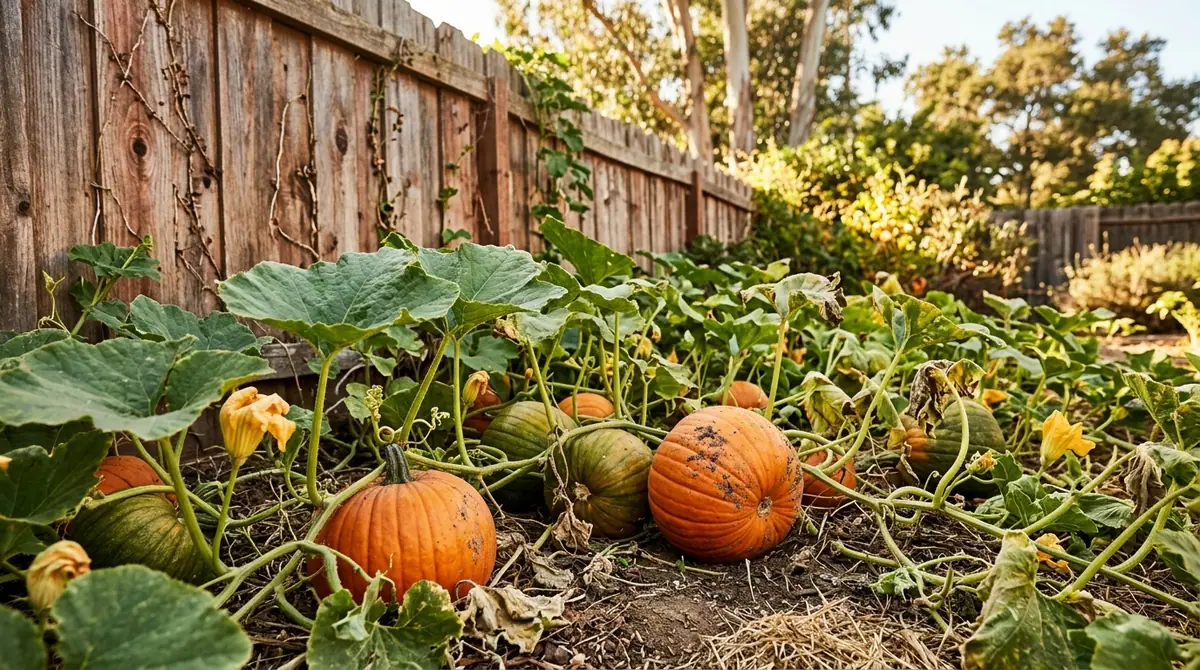
I was kneeling in my experimental plot in Davis back in mid-May, running my fingers through the crumbly, sun-warmed loam, wondering if I had jumped the gun on my jack-o'-lantern seeds. The morning air still carried that sharp Central Valley chill, but the soil thermometer read a stable 68°F (20°C). That is the exact threshold where Cucurbita pepo stops hesitating and starts racing. Getting the timing right in California is an exercise in balancing microclimates—from the foggy coastal belts of San Francisco to the scorching desert floors of Coachella—and if you miss that narrow planting window, you end up with either rotting seeds in cold mud or scorched vines gasping for water by August. I have mapped out the precise science of when and how to get your pumpkin patch thriving across the Golden State's unique growing zones.
1. Botanical Overview & Natural Habitat

In California, this evolutionary blueprint requires careful imitation. While cucurbits love heat, they are profoundly sensitive to frost and sudden temperature drops below 50°F (10°C). Understanding their root architecture is just as critical as managing the foliage. Much like when assessing how deep do pepper plant roots go? Pot size & substrate depth guide, pumpkin plants develop an aggressive, deep taproot system that can plunge down 3 to 4 feet (90 to 120 cm) if the soil is uncompacted, accompanied by a wide lateral network spanning up to 10 feet (3 meters) in all directions.
Because California encompasses USDA Zones 5 through 10, planting times vary drastically. In Southern California's milder zones, you can often sneak in an early crop similar to how you would plan when to plant onions in Southern California (Zone 9 & 10 planting calendar), whereas mountain regions require a much tighter summer window.
2. Essential Environmental & Care Requirements
To cultivate prize-winning pumpkins in California, you must dial in four core environmental factors: temperature, light, water, and soil nutrition.
Temperature and Sunlight: Pumpkins require full sun, meaning a minimum of 6 to 8 hours of direct, unfiltered sunlight daily. Seed germination requires soil temperatures between 70°F and 90°F (21°C to 32°C). If you plant when soil dips below 60°F (15°C), the seeds simply rot before breaking the testa.
Watering Dynamics: These plants are massive water consumers due to their giant leaves and high fruit moisture content. They need roughly 1 to 2 inches (2.5 to 5 cm) of water per week, doubling down during fruit swell. However, overhead watering invites fungal diseases like powdery mildew—a constant battle in California’s coastal and valley microclimates. Drip irrigation or soaker hoses are non-negotiable for professional results.
Soil Composition: Pumpkins demand rich, loamy, well-draining soil with a pH between 6.0 and 6.8. Heavy California clay can suffocate the developing root system, while pure sandy soils drain nutrients too quickly. Amending native soil with aged compost is mandatory.
| Parameter | Optimal Condition | Common Mistake | Why It Matters |
|---|---|---|---|
| Soil Temperature | 70°F – 90°F (21°C – 32°C) | Planting too early in cold, wet spring soil | Cold soil causes seeds to rot and stunts early root development. |
| Sunlight | 6–8+ hours of direct sun | Planting in partial shade under tree lines | Reduces photosynthesis, leading to weak vines and few female flowers. |
| Soil pH | 6.0 – 6.8 | Ignoring soil tests in highly alkaline zones | Extreme pH locks out essential micronutrients like phosphorus and iron. |
| Spacing | 50–100 sq. Ft. Per plant | Crowding vines too close together | Limits root spread and restricts airflow, inviting powdery mildew. |
For official regional frost dates and microclimate data, consult the UC Master Gardener Program to pinpoint your exact county schedule.
3. Step-by-Step Cultivation, Feeding & Propagation
Timing your planting in California depends entirely on your harvest goal. For an October Halloween harvest, work backward: most standard carving pumpkins require 90 to 120 days from direct sowing to maturity. This means coastal and interior valley gardeners typically plant between mid-April and late June.
If you are transitioning seedlings that were started indoors—a process that requires delicate handling, similar to figuring out when to transplant cucumber seedlings: stop root shock & boost growth—you must time it so they go into the ground precisely two to three weeks after the last frost date.
💡 Pro-Tip: When direct-sowing, plant 3 to 4 seeds in a small mound (or "hill") spaced 6 feet apart. Once the seedlings reach 4 inches (10 cm) tall, use clean shears to snip away the weakest competitors, leaving only the single strongest vine per hill. Never pull them out; yanking roots disturbs the soil biome of the survivor.
Here is your exact execution protocol:
- Site Preparation: Clear a 4-foot circle for each planting hill. Work a 3-inch (7.5 cm) layer of aged steer manure and balanced organic compost into the top 12 inches (30 cm) of soil.
- Sowing Depth: Poke holes 1 inch (2.5 cm) deep into the soil. Drop 3 seeds horizontally into each hole to ensure uniform orientation of the emerging radicle.
- Moisture Management: Water the hills gently using a fine rose attachment. Keep the topsoil consistently moist—like a wrung-out sponge—until germination occurs in 7 to 10 days.
- Early Feeding & Mulching: Once vines reach 12 inches (30 cm) long, side-dress the base with a high-nitrogen organic fertilizer (like blood meal or fish emulsion) to fuel rapid foliage growth. Apply a 2-inch layer of straw mulch around the base to suppress weeds and lock in soil moisture.
- Flowering & Pollination Shift: Around mid-summer, switch your fertilizer to a low-nitrogen, high-phosphorus and potassium blend (such as bone meal or kelp meal). High nitrogen at this stage will cause rampant vine growth at the expense of blossoms.
- Fruit Protection: When pumpkins reach the size of a softball, slide a small piece of untreated wood or a plastic mat underneath each fruit. This breaks ground contact and prevents fungal rot from damp California soil.
4. Common Problems, Pests & Troubleshooting
Even with perfect timing, California growers face a predictable lineup of antagonists. Powdery mildew is Public Enemy Number One, appearing as white, talcum-powder-like spots on leaves during foggy coastal mornings or humid valley nights. Prevent this by practicing wide spacing, watering only at the base, and applying a preventative spray of potassium bicarbonate or neem oil at the first sign of trouble.
Insect pests include squash bugs and cucumber beetles, which vector bacterial wilt. Hand-picking adults at dawn—when they are sluggish—and deploying floating row covers during the seedling stage will protect your crop.
⚠️ Important Caution: Never apply synthetic broad-spectrum insecticides during peak bloom. You will kill off native bees and honeybees, which are entirely responsible for pollinating your female pumpkin flowers. If you must treat pests, do so strictly at dusk after bee activity has ceased.
For broader ornamental landscaping context when designing your edible garden beds, you can review design strategies inspired by the complete guide to coleus plants: 50+ varieties, care, propagation & landscaping to create stunning structural contrast with large-leafed tropicals and trailing vines.

5. Frequently Asked Questions
What month should I plant pumpkins in Southern California?
In Southern California (Zones 9 and 10), you should plant your pumpkins between late April and early June. This allows the vines to mature during the peak heat of August and September without having the fruit sit too long in blistering desert or coastal basin heat, ensuring a solid harvest by late October.
Can I grow pumpkins in containers on a California balcony?
Yes, provided you choose compact, bush-type varieties like 'Sugar Pie' or 'Jack Be Little' rather than massive giant Atlantic varieties. You will need a container that holds at least 15 to 20 gallons (57 to 75 liters) of premium potting mix, equipped with excellent drainage holes and reinforced with regular liquid organic feeding every two weeks.
Why are my pumpkin flowers falling off without making fruit?
The first wave of flowers produced by a pumpkin vine are almost exclusively male flowers on long, thin stems. They are designed to provide pollen and naturally drop off after a few days. Female flowers—which feature a tiny, bulbous miniature pumpkin at the base of the petals—will appear shortly afterward. If female flowers drop, it is usually due to poor pollination or extreme heat stress above 95°F (35°C).
How long does it take for a pumpkin to grow from seed to harvest?
Most standard carving and pie pumpkins require between 90 and 120 days of frost-free weather from the day you sow the seed to the day you cut the stem. Giant varieties grown for competition can take up to 130 to 150 days and require strict pruning and hand-pollination protocols.
Related Guides
- When to Plant Pumpkins in Southern California
- When to Plant Pumpkins in Northern California
- When to Pick Pumpkins Off Vine
- When to Plant Tomatoes Southern California
- When to Plant Tomatoes in Southern California
📋 Table of Contents ▼ Click to expand
Tags:
Keep reading
🌿 Related Plants You Might Like






PlantSavvyWorld
Editorial team
PlantSavvyWorld is an independent botanical education project. Articles are drafted with AI assistance, then edited and checked against university extension services, botanical garden collections and other published horticultural sources.