

When to Plant Pumpkins in Northern California
Written with AI assistance, edited and checked against horticultural sources.
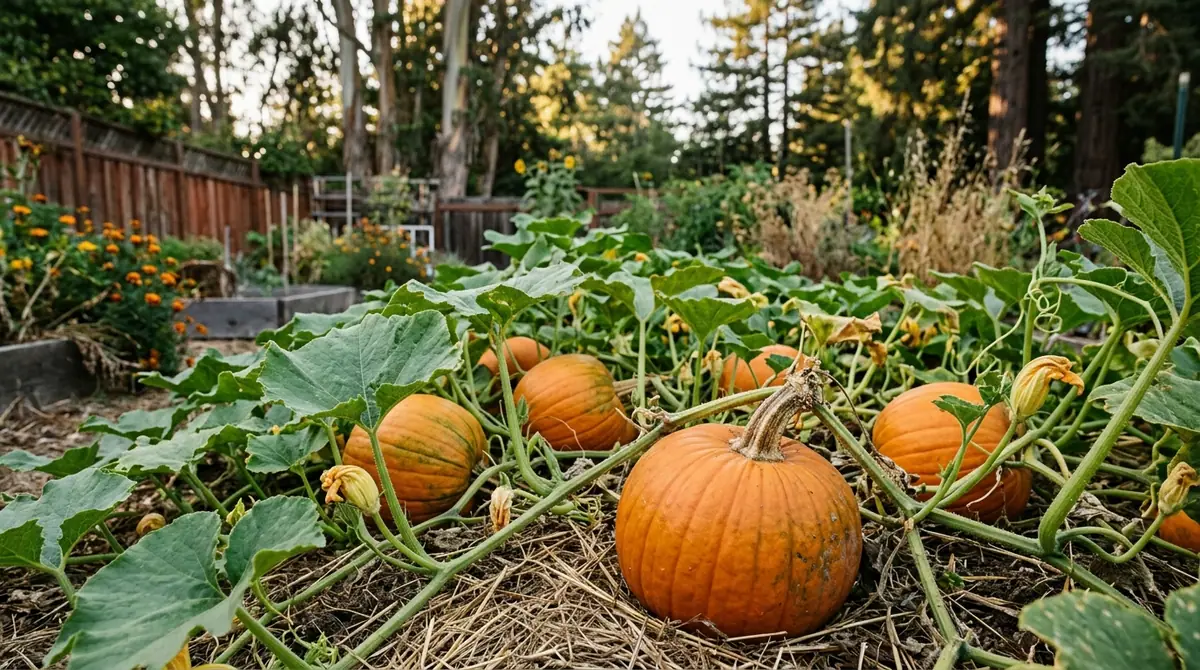
A sudden late frost can blacken the tender cotyledons of direct-sown pumpkin batches. Northern California's Mediterranean climate plays tricks on cucurbits because coastal fog zones, interior valley heatwaves, and microclimates mean a blanket calendar date simply does not work.

Here is your definitive guide to timing, planting, and harvesting pumpkins across Northern California.
1. Botanical Overview & Natural Habitat
Pumpkins belong to the genus Cucurbita, which falls within the sprawling Cucurbitaceae family. Most cultivated pumpkins belong to Cucurbita pepo, C. Maxima, or C. Moschata. Native to the river valleys and tropical highlands of the Americas, these plants evolved as sprawling annual vines that thrive in high-heat, high-moisture environments with relentless sunshine.
In Northern California, our long, dry summers mimic the natural habitat of these tropical and subtropical annuals, but our spring nights are treacherous. Pumpkins are frost-sensitive therophytes—plants that complete their life cycle in a single frost-free season, surviving the winter strictly as dormant seeds.
Morphologically, the pumpkin plant features aggressive, hairy, pentagonal stems and large, palmate, lobed leaves designed to maximize solar interception. They are monoecious plants, meaning individual vines bear separate male and female flowers on the same plant. The male flowers emerge first on long, slender pedicels, signaling the arrival of the female flowers (identifiable by the miniature, unfertilized ovary at the base of the petals) roughly 7 to 10 days later.
Successful fruit set depends entirely on native pollinators—primarily squash bees (Peponapis pruinosa) and honeybees—transferring heavy, sticky pollen from the anthers to the multi-lobed stigma. Because northern coastal air can be damp and heavy, poor morning pollination is a common hurdle in counties like San Francisco, Marin, and parts of the East Bay.
| Parameter | Optimal Condition | Common Mistake | Why It Matters |
|---|---|---|---|
| Soil Temperature | 70°F to 95°F (21°C to 35°C) | Planting when soil is below 60°F (15°C) | Cold, wet soil causes seeds to rot before germination. |
| Air Temperature | 75°F to 85°F (24°C to 29°C) | Expecting rapid growth in coastal marine layers | Low daytime temps stall photosynthesis and vine expansion. |
| Soil pH | 6.0 to 6.8 | Planting in heavy, unamended clay | Highly acidic or alkaline soil locks up vital micronutrients. |
| Direct Sunlight | 8 to 10 hours daily | Shading vines under fruit trees or fences | Insufficient light drops blossoms and reduces sugar content. |
2. Essential Environmental & Care Requirements
To grow massive, disease-free pumpkins in Northern California, you must master the delicate balance of our regional microclimates.
Temperature and Microclimates
Northern California spans USDA Hardiness Zones 7a through 10b. If you garden in the Sacramento Valley (Zone 9b/10a), your summer air temperatures routinely soar above 95°F (35°C), which can cause blossom drop if the plant lacks moisture. Conversely, if you garden in coastal San Francisco or Humboldt County (Zone 10a/9b), your high summer temperatures may hover at 65°F (18°C), drastically lengthening days-to-maturity.
Soil Composition and Drainage
Pumpkins are heavy feeders with massive root systems that can stretch down 3 to 4 feet into the earth. If you are working with the dense, adobe-like clay common in the Santa Clara Valley or parts of the North Bay, you must amend your beds heavily. Incorporate 3 to 4 inches of aged compost and aged manure into the top 12 inches of soil to create a loose, friable loam. For optimal root penetration advice tailored to cucurbits, review our How Deep Do Pepper Plant Roots Go? Pot Size & Substrate Depth Guide.
Watering Regimes
Watering must be deep and consistent. Pumpkins are roughly 90% water, and an actively growing vine demands up to 1 to 2 inches of water per week. In the Central Valley, this means frequent deep soakings. Use drip irrigation or soaker hoses placed directly at the base of the plant. Avoid overhead watering entirely; moisture sitting on cucurbit leaves for more than a few hours is an open invitation for fungal pathogens.
⚠️ Important Caution: Never let your pumpkin vines undergo severe drought stress followed by a heavy watering. This drastic fluctuation causes developing fruit to split open instantly, ruining months of work.
3. Step-by-Step Cultivation, Feeding & Propagation
Timing your planting depends entirely on your specific Northern California microclimate and your target harvest window. Count backward 90 to 120 days from your desired harvest date (usually late September for autumn displays).
- Interior Valleys (Sacramento, Chico, Fresno): Plant seeds directly or set out transplants between April 15 and May 15.
- Coastal Regions (San Francisco, Monterey, Eureka): Wait until May 1 to June 1 when the soil has truly warmed up and coastal marine layers begin to thin.
- Foothills (Auburn, Placerville, Redding): Target May 1 to May 25 after the final danger of a stray spring frost has passed.
Follow this systematic propagation and cultivation protocol to ensure success:
- Prepare the Planting Mounds: Clear a 4-foot circle for each vine. Work a 5-gallon bucket’s worth of aged compost and a cup of organic balanced granular fertilizer (such as a 4-4-4 blend) into the top 12 inches of soil. Shape the earth into a broad, flat-topped mound 6 inches high to encourage fast solar warming and exceptional drainage.
- Sow the Seeds: Push 3 to 4 seeds 1 inch (2.5 cm) deep into the center of each mound. Space large field pumpkin varieties at least 6 to 8 feet apart in all directions, as single vines can easily cover 50 to 100 square feet of landscape. If you are transplanting nursery starts or plants grown indoors, handle them with immense care—cucurbits despise root disturbance. For more insights on safe transitions, check out our guide on When to Transplant Cucumber Seedlings: Stop Root Shock & Boost Growth.
- Thin the Seedlings: Once your seedlings reach 3 to 4 inches tall and display their first true leaves, select the single most vigorous, thick-stemmed plant per mound. Snip away the weaker competitors at the soil line using clean shears; do not pull them, as pulling will disturb the roots of the champion plant.
- Mulch and Train the Vines: Apply a 3-inch layer of clean straw or shredded bark around the base of the plant to suppress weeds and retain precious soil moisture. As the secondary vines begin to race outward, gently train them in the direction you want them to grow, anchoring heavy runners with small wire landscape staples if necessary.
- Feed for Fruit Set: When the vine begins to blossom, switch your fertilizer regimen. Reduce high-nitrogen formulas (which cause massive, leafy growth with zero fruit) and apply a phosphorus- and potassium-rich organic bloom fertilizer every 21 days.
- Protect and Cure the Fruit: Once a fruit reaches softball size, slip a small piece of cardboard or a cedar shingle underneath it to prevent rot from direct contact with damp California soil. When the stem turns woody and the rind resists a thumbnail indentation in late September, cut the pumpkin from the vine with a sharp knife, leaving a 4-inch stem attached, and cure it in the sun for 10 days.
💡 Pro-Tip: To cultivate massive prize-winning pumpkins, limit each vine to a single developing fruit. Pinch off all subsequent female flowers and snip the terminal growing tip of the main vine after it reaches 12 feet, forcing the plant to channel 100% of its photosynthetic energy into one giant orange masterpiece.
4. Common Problems, Pests & Troubleshooting
Even in our sun-drenched climate, Northern California growers encounter specific biotic and abiotic stresses when managing pumpkin patches.
Powdery Mildew (Podosphaera xanthii)
This is the single most prevalent issue for Northern California gardeners, driven by our heavy coastal fogs and dramatic nightly temperature drops. It manifests as a white, powdery talcum-like coating on upper and lower leaf surfaces.
- Solution: Prune away severely infected interior leaves to maximize airflow. Spray preventatively every 7 to 14 days with potassium bicarbonate, sulfur-based fungicides, or fermented milk solutions (diluted 1:9 with water) at the first sign of grey-white dusting.
Squash Vine Borer (Melittia cucurbitae) and Cucumber Beetles
The squash vine borer larva bores into the main stem near the soil line, causing sudden, catastrophic wilting of the entire vine. Striped and spotted cucumber beetles chew holes in young leaves and transmit bacterial wilt.
- Solution: Cover young plants with floating row covers until female flowers open and pollination is required. If you spot entry holes and sawdust-like frass near the vine base, slice open the stem lengthwise with a razor blade, remove the white grub, and bury the wounded stem node in moist soil; the vine will often root downward and recover.
Blossom End Rot
Caused by a localized calcium deficiency within the fast-growing fruit, exacerbated by erratic watering schedules in our hot interior valleys. The bottom of the miniature pumpkin turns sunken, black, and leathery.
- Solution: Maintain an unwavering, deep irrigation schedule. For official regional guidelines on diagnosing local soil nutrient imbalances, consult the UC Statewide Integrated Pest Management Program (UC IPM). Additional research-backed plant health practices can also be explored through the Royal Horticultural Society (RHS).

5. Frequently Asked Questions
Can I plant pumpkins in July in Northern California?
Yes, but you must select early-maturing, compact bush varieties (such as 'Spacemaster' or 'Jack Be Little') that require only 80 to 90 days to reach maturity. Planting standard giant carving pumpkins in July will result in an unready, green harvest when the first autumn frosts arrive in November.
Why are my pumpkin flowers falling off without making fruit?
The first wave of flowers produced by a pumpkin vine is exclusively male; these naturally drop off the plant after shedding their pollen. If female flowers (those with a tiny swelling at the base of the petals) are dropping, it is usually due to a lack of insect pollination during cool, foggy mornings or extreme heat stress that sterilizes pollen.
How many pumpkins will one vine produce?
Standard vining pumpkins typically yield 2 to 4 large fruits per plant if left unmanaged. Smaller pie varieties or miniature ornamental cultivars can produce anywhere from 6 to 12 fruits per vigorous vine over an extended Northern California growing season.
Do pumpkins need full sun in Northern California coastal areas?
Yes, absolute full sun is non-negotiable. While coastal Northern California offers comfortable summer temperatures, our frequent overcast mornings and marine layers reduce total photosynthetic light. Planting pumpkins in anything less than 8 full hours of direct sunlight will stunt vine vigor, lower sugar levels in the fruit, and invite persistent fungal outbreaks.
Related Guides
- When to Plant Pumpkins in Southern California
- When to Plant Pumpkins California
- When to Pick Pumpkins Off Vine
- When to Plant Tomatoes Southern California
- When to Plant Tomatoes in Southern California
📋 Table of Contents ▼ Click to expand
Tags:
Keep reading
🌿 Related Plants You Might Like
PlantSavvyWorld
Editorial team
PlantSavvyWorld is an independent botanical education project. Articles are drafted with AI assistance, then edited and checked against university extension services, botanical garden collections and other published horticultural sources.