

When to Plant Pumpkins in Maryland
Written with AI assistance, edited and checked against horticultural sources.
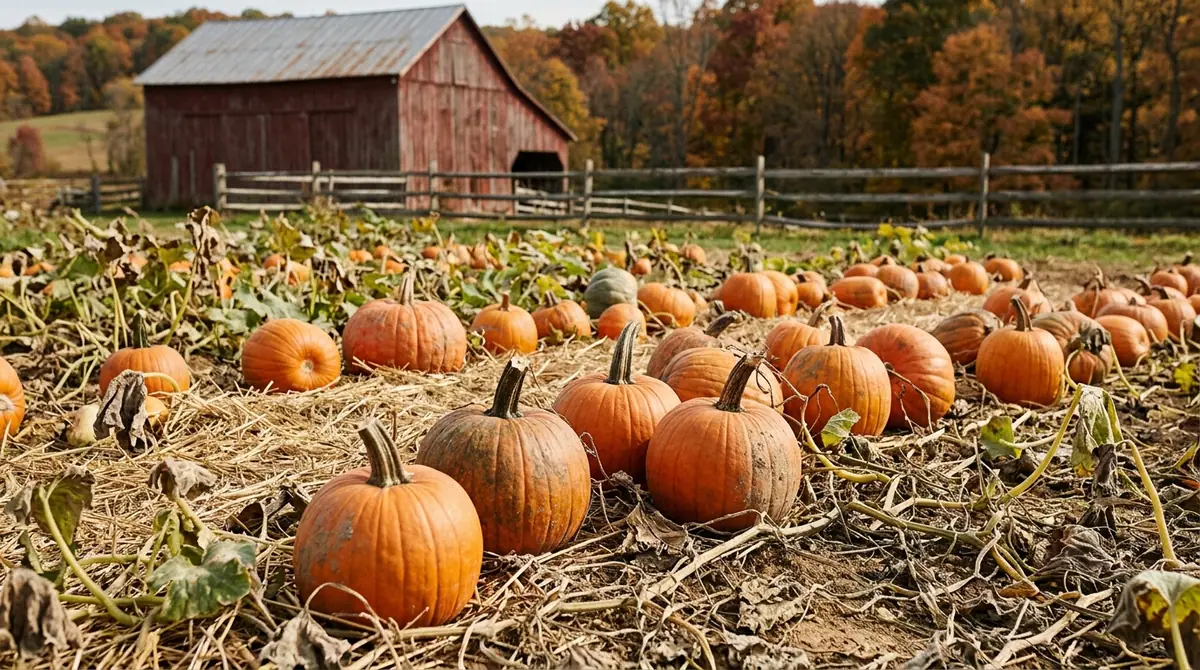
Rushing pumpkins into soil hovering around 55°F (13°C) in late April causes 'Connecticut Field' pumpkins to sulk with pale, chlorotic leaves. Pumpkins demand warmth, a long runway of frost-free days, and rich, forgiving soil; determining when to plant pumpkins in Maryland requires respecting the state's distinct transition zones, from the humid coastal flatlands of the Eastern Shore to the cooler rolling hills of Garrett County.
1. Botanical Overview & Natural Habitat

In Maryland—spanning USDA Hardiness Zones 6a through 8a—pumpkins find a generally hospitable home, provided you align your sowing schedule with the local frost-free window. Maryland’s frost-free dates typically range from mid-April in the lower southern counties and the Eastern Shore to mid-to-late May in the colder mountainous regions of Western Maryland.
Because pumpkins require between 75 and 120 days of frost-free growth depending on the cultivar, timing is everything. If you plant too early, cold spring soils invite damping-off pathogens like Pythium and Rhizoctonia, leaving you with rotting seeds instead of sprouts. If you plant too late in Maryland, your fruits will fail to reach full color and size before the heavy autumn frosts arrive in October.
For those managing diverse garden ecosystems, balancing seasonal cucurbits alongside other crops requires careful root and spatial management, much like understanding How Deep Do Pepper Plant Roots Go? Pot Size & Substrate Depth Guide.
2. Essential Environmental & Care Requirements
To grow heavy, unblemished pumpkins in the Old Line State, you must meet exact environmental baselines.
Soil temperatures must reach a consistent 65°F to 70°F (18°C to 21°C) at a depth of 2 inches (5 cm) before direct-sowing seeds. Pumpkins thrive in loamy, well-draining soils rich in organic matter, preferring a soil pH between 6.0 and 6.8. Heavy Maryland clays, common in the Piedmont region, must be amended generously with compost to prevent water-logging and compaction.
Water requirements are high; mature vines demand roughly 1 to 2 inches (2.5 to 5 cm) of water per week, delivered preferably via drip irrigation or soaker hoses to keep broad foliage dry and less susceptible to powdery mildew.
| Parameter | Optimal Condition | Common Mistake | Why It Matters |
|---|---|---|---|
| Soil Temperature | 65°F – 70°F (18°C – 21°C) | Planting when soil is below 60°F (15°C) | Cold soil causes seeds to rot before germination. |
| Soil pH | 6.0 – 6.8 | Ignoring soil tests (pH < 5.5) | Low pH locks up essential phosphorus and calcium. |
| Sunlight | 6+ hours of direct sun | Shading by larger structures or trees | Insufficient light reduces photosynthesis and fruit sugar content. |
| Spacing | 50–100 sq ft per plant (vining types) | Crowding plants closer than 3 feet apart | Dense canopies trap moisture, triggering fungal outbreaks. |
💡 Pro-Tip: When planning your Maryland pumpkin patch, take inspiration from companion planting strategies used in successful orchard and greenhouse systems, similar to the light management principles required for indoor specimens like the Lipstick Plant (Aeschynanthus Radicans) Complete Care & Bloom Guide.
3. Step-by-Step Cultivation, Feeding & Propagation
Getting pumpkins from seed to harvest in Maryland requires a structured approach. Depending on whether you are aiming for carving pumpkins, baking pie types, or giant Atlantic Giants, your planting window will fall between late May and early June for direct sowing, or mid-to-late May for transplanting.
- Select the Right Cultivar: Choose varieties suited to your space and harvest goal. Standard jack-o'-lantern types like 'Howden' need roughly 110 days, while smaller pie pumpkins like 'Sugar Pie' mature in 90 to 100 days.
- Prepare the Planting Site: Clear a circle 4 to 6 feet (1.2 to 1.8 m) in diameter for each hill. Work in a 3-inch (7.5 cm) layer of aged manure or compost into the top 10 inches (25 cm) of soil.
- Sow Seeds at Proper Depth: Plant 4 to 6 seeds per hill, pushing them 1 inch (2.5 cm) deep into the soil. If direct sowing in Maryland, time this for late May after the last frost date has safely passed.
- Thin the Seedlings: When seedlings reach 3 to 4 inches (7.5 to 10 cm) tall and have their first true leaves, snip (do not pull) the weaker plants, leaving the 2 strongest vines per hill.
- Apply Mulch and Manage Moisture: Surround the base with a thick layer of clean straw to suppress weeds and prevent soil from splashing onto developing fruits during heavy Maryland summer thunderstorms.
- Feed and Train Vines: Side-dress with a balanced organic vegetable fertilizer (such as a 5-10-10 blend) when vines begin to run. Train secondary vines to grow outward to maximize space, mirroring structural planning seen when managing dense groundcovers or handling tasks like When to Transplant Cucumber Seedlings: Stop Root Shock & Boost Growth.
⚠️ Important Caution: Never walk directly over the root zones of established pumpkin vines. Their feeder roots are extremely delicate and sit close to the soil surface; compacting this soil reduces the plant's ability to take up water and nutrients during peak fruit expansion.
4. Common Problems, Pests & Troubleshooting
Maryland's humid summers create an ideal breeding ground for several persistent pumpkin pests and diseases.
Powdery mildew (Podosphaera xanthii) is almost guaranteed to appear by late August, showing up as white, powdery spots on leaves. Combat this by ensuring wide spacing for air circulation and applying preventative organic copper sprays or potassium bicarbonate at the first sign of infection.
Squash vine borers (Melittia cucurbitae) are another major threat. These moth larvae bore into the main stems near the soil line, causing sudden wilting of the entire vine. You can monitor for their red eggs on stem bases in June and physically remove borers by slitting the stem lengthwise, burying the wounded area in moist soil to encourage rooting.

5. Frequently Asked Questions
When is the exact best time to plant pumpkins in Maryland?
For most of Maryland, direct-sow seeds between May 20 and June 10. If starting seeds indoors in pots, sow them around May 1 to May 15 so you can transplant them out after the soil warms up and the danger of frost has passed.
Can I grow pumpkins in containers in Maryland?
Yes, but you must choose bush-type varieties (such as 'Bush Sugar Pie' or 'Spacemaster') rather than sprawling vining cultivars. Use a container that holds at least 15 to 20 gallons (57 to 76 liters) of high-potency potting mix, and ensure it receives full sun all day.
Why are my pumpkin flowers falling off without producing fruit?
The first flowers that appear on pumpkin vines are almost exclusively male. They provide pollen and naturally drop off after a few days. Female flowers—which feature a tiny, marble-sized baby pumpkin at the base of the petals—will appear shortly after. If female flowers drop later, it is usually due to poor pollination or extreme summer heat stress.
How many pumpkins should I let each vine produce?
If you are growing standard jack-o'-lantern types, limit the vine to 2 or 3 well-formed fruits to ensure they reach maximum size and vibrant color. If you are growing miniature varieties, you can allow up to 8 or 10 fruits per vine. For comprehensive guidance on regional vegetable planting schedules outside of Maryland, reference the advice found in guides like When to Plant Strawberries in Kansas: Zone 6a/6b Seasonal Calendar.
Related Guides
- When to Pick Pumpkins Off Vine
- When to Plant Pumpkins in Southern California
- When to Plant Pumpkins Nc
- When to Plant Pumpkins in Texas
- When to Plant Pumpkins in Tennessee
📋 Table of Contents ▼ Click to expand
Tags:
Keep reading
🌿 Related Plants You Might Like

PlantSavvyWorld
Editorial team
PlantSavvyWorld is an independent botanical education project. Articles are drafted with AI assistance, then edited and checked against university extension services, botanical garden collections and other published horticultural sources.