

When to Plant Pumpkins in Texas
Written with AI assistance, edited and checked against horticultural sources.
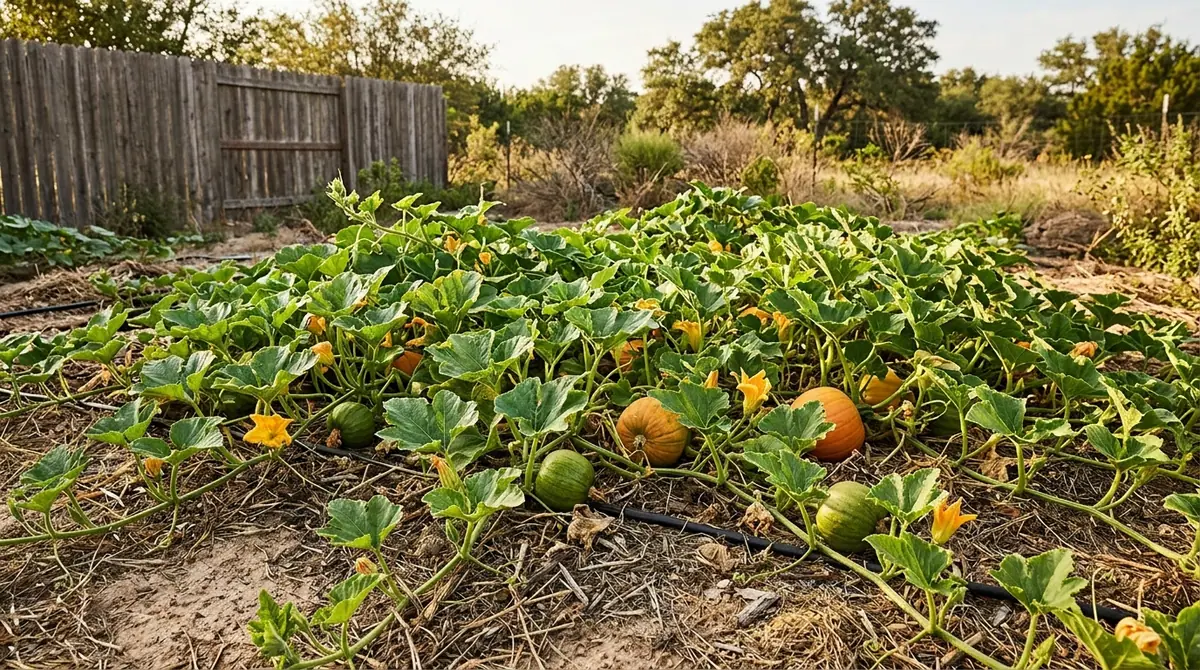

1. Botanical Overview & Natural Habitat
Pumpkins (Cucurbita pepo, Cucurbita moschata, and Cucurbita maxima) are sprawling, tender annual vines belonging to the Cucurbitaceae family. Botanically adapted to the warm, seasonally wet river valleys of Mesoamerica, these plants evolved to thrive under conditions of intense sunlight, high humidity during vegetative growth, and dry conditions during fruit maturation. They possess a shallow yet extensive fibrous root system, though they can send taproots down to 24 inches (60 cm) or deeper if the soil profile allows.
In Texas, understanding your specific hardiness zone—ranging from USDA Zone 6a in the Panhandle (minimum winter temperatures of -10°F to -5°F / -23°C to -21°C) down to Zone 10a in the Lower Rio Grande Valley (30°F to 35°F / -1°C to 2°C)—is critical because pumpkins cannot tolerate frost. However, unlike northern states with a single spring-to-fall season, Texas growers must choose between two distinct planting windows:
- The Summer Planting Window (Late Spring to Early Summer): Aimed at a fall harvest, seeds are sown in June or early July in North/Central Texas. This allows the vines to establish during the heat, with fruit setting as temperatures begin to dip slightly in September.
- The Spring Planting Window (Early Spring): Common in South and Coastal Texas, planting occurs in late February through March after the last frost date, securing a harvest before the true, sterilizing heat of July arrives.
If you are transitioning your landscape focus from edible vines to tropical indoor species during the off-season, you might enjoy reading our Lipstick Plant (Aeschynanthus Radicans) Complete Care & Bloom Guide for year-round botanical engagement. Similarly, if your garden planning extends to companion crops, take a look at our insights on root depth management in the How Deep Do Pepper Plant Roots Go? Pot Size & Substrate Depth Guide.
2. Essential Environmental & Care Requirements
To successfully cultivate pumpkins in Texas, you must engineer an environment that mimics their native tropical-to-subtropical origin while managing our unique climatic extremes.
Temperature is the primary limiting factor. Pumpkins thrive when daytime ambient temperatures range between 75°F and 90°F (24°C to 32°C) and nighttime temperatures stay above 60°F (15°C). When temperatures consistently exceed 95°F (35°C) during pollination, pollen viability drops dramatically, and plants will frequently drop their male and female blossoms, halting fruit set entirely.
Soil composition is equally critical. Texas soils are notoriously variable, featuring everything from heavy alkaline blackland clay to loose coastal sands. Pumpkins demand a loamy, rich, well-draining soil with an optimal pH between 6.0 and 6.8. Heavy clay holds too much water, leading to root rot (Pythium and Phytophthora species), while sandy soils dry out too quickly in the July sun. Amending native soils with a 3-to-4-inch (7.5 to 10 cm) layer of aged compost is non-negotiable.
| Parameter | Optimal Condition | Common Mistake | Why It Matters |
|---|---|---|---|
| Soil Temperature | 70°F – 85°F (21°C – 29°C) | Planting when soil is below 60°F (15°C) | Cold, wet soil causes seeds to rot before germination. |
| Watering Volume | 1 to 2 inches (2.5 to 5 cm) per week | Shallow, daily sprinkling | Promotes shallow root systems vulnerable to drought. |
| Sun Exposure | Full sun (6 to 8+ hours daily) | Partial shade under oak trees | Reduces sugar production, slows growth, and invites powdery mildew. |
| Soil pH | 6.0 to 6.8 | Ignoring native alkaline caliche soils | Locks out vital micronutrients like iron and manganese. |
For deep dives into managing seasonal planting schedules across different regional climates, consult the expert recommendations provided by the Texas A&M AgriLife Extension Service.
3. Step-by-Step Cultivation, Feeding & Propagation
Growing exhibition-grade pumpkins in Texas requires a disciplined, chronological approach. Follow this step-by-step cultivation protocol to maximize your yield.
- Site Selection and Soil Preparation: Choose a location receiving at least 8 hours of direct sunlight. Clear a 6-foot (1.8 m) diameter circle for each hill. Incorporate 4 inches (10 cm) of well-rotted manure and compost into the top 12 inches (30 cm) of soil to ensure optimal drainage and nutrient availability.
- Direct Sowing: Because pumpkins possess sensitive taproots that resent root disturbance, direct seeding is vastly superior to transplanting. If you must start indoors, reference strategies similar to those outlined in our guide on When to Transplant Cucumber Seedlings: Stop Root Shock & Boost Growth. For direct sowing in Texas, wait until soil temperatures consistently read 70°F (21°C) at a depth of 4 inches (10 cm).
- Planting Depth and Spacing: Plant seeds 1 inch (2.5 cm) deep. Sow 4 to 5 seeds per hill, spacing hills roughly 6 to 8 feet (1.8 to 2.4 m) apart in all directions to accommodate the sprawling vines.
- Thinning: Once seedlings reach 3 to 4 inches (7.5 to 10 cm) tall and exhibit their first true leaves, use clean snips to cut away the weakest seedlings, leaving the two strongest plants per hill. Do not pull them out, as doing so will tear the delicate root systems of the remaining plants.
- Irrigation Management: Deliver water directly to the soil via drip irrigation or soaker hoses, aiming for 1.5 to 2 inches (3.8 to 5 cm) of water weekly. Keep foliage dry to minimize fungal spore germination.
- Fertilization Schedule: Apply a balanced organic fertilizer (such as a 10-10-10 blend) when vines begin to run. Transition to a high-phosphorus and high-potassium fertilizer (like a 5-10-10 blend) once female blossoms appear to support fruit development and sugar synthesis.
- Fruit Support and Protection: Once pumpkins reach the size of a softball, gently slide a piece of cardboard, a wooden shingle, or a plastic mat underneath each fruit. This prevents direct contact with damp Texas soil, which invites soil-borne rots and insect pests.
💡 Pro-Tip: In Central and South Texas, intense afternoon sun can scorch developing pumpkins, turning their rinds a bleached, corky yellow. Protect your ripening fruit by draping breathable, lightweight shade cloth (providing 30% to 40% blockage) over the canopy during the peak intensity of July and August.
4. Common Problems, Pests & Troubleshooting
Texas gardeners face a unique gauntlet of biological and environmental stressors when growing cucurbits. Identifying issues early is the difference between a bountiful harvest and total crop collapse.
- Powdery Mildew (Podosphaera xanthii): This fungal disease appears as white, talcum-powder-like spots on leaves, thriving in high humidity and warm temperatures. Prevent it by ensuring wide plant spacing for airflow and watering exclusively at the base of the plant. Treat early infections with bi-weekly applications of potassium bicarbonate or neem oil.
- Vine Borers (Melittia cucurbitae): A devastating pest in Texas, the squash vine borer larva bores into the main stem near the soil line, causing the entire runner to wilt and die abruptly. Look for small entry holes accompanied by frass (sawdust-like excrement). Injecting Bacillus thuringiensis (Bt) directly into the stem or wrapping the lower 12 inches (30 cm) of the stem with aluminum foil at planting time provides effective mechanical and biological control.
- Blossom Drop: If your pumpkin vines produce hundreds of flowers but no fruit, high heat is usually the culprit. When daytime temperatures exceed 90°F (32°C) and nighttime lows stay above 75°F (24°C), pollen becomes sterile. Patience is your only remedy; once autumn temperatures moderate, fruit set will resume naturally.
- Sunscald: Direct, blistering sun exposure on unshaded fruit causes white, sunken, leathery patches that quickly become entry points for secondary bacterial rots. Maintain adequate leaf canopy cover, and use artificial shade cloth if vine damage exposes the fruit.

5. Frequently Asked Questions
What month should I plant pumpkins in North Texas?
In North Texas (Dallas/Fort Worth metroplex, USDA Zone 8a), the ideal window to direct-sow pumpkin seeds for an autumn harvest is between June 1st and June 25th. This timing ensures your plants mature their fruit just as daytime temperatures drop below the 90°F (32°C) threshold in September and October.
Can I grow pumpkins in South Texas or Houston?
Yes, but you must shift your calendar entirely. In Houston and South Texas (Zones 9a through 10a), summer heat is too intense for a traditional fall harvest. Instead, plant pumpkins in early spring (late February through mid-March) after all danger of frost has passed. This allows the plants to set fruit in April and May before the brutal heat of July arrives.
How long do Texas pumpkins take to grow from seed to harvest?
Depending on the cultivar, most pumpkins require between 85 and 120 days from the day of direct sowing to full maturity. Miniature varieties like 'Jack Be Little' mature on the faster end (85–90 days), while large jack-o'-lantern and prize-winning Atlantic Giant types require the full 110–120 days.
Why are my pumpkin flowers falling off without making pumpkins?
The first flowers produced by pumpkin vines are almost exclusively male. They provide pollen and naturally drop off the plant after a few days—this is entirely normal. Female flowers (identifiable by a tiny, miniature pumpkin swelling at the base of the petals) will appear 7 to 10 days later. If female flowers are dropping, it is typically caused by heat-induced pollen sterility or a lack of pollinator activity.
Related Guides
- When to Pick Pumpkins Off Vine
- When to Plant Pumpkins in Southern California
- When to Plant Pumpkins Nc
- When to Plant Pumpkins in Tennessee
- When to Plant Pumpkins in South Carolina
- How Many Pumpkins Per Plant
📋 Table of Contents ▼ Click to expand
Tags:
Keep reading
🌿 Related Plants You Might Like
PlantSavvyWorld
Editorial team
PlantSavvyWorld is an independent botanical education project. Articles are drafted with AI assistance, then edited and checked against university extension services, botanical garden collections and other published horticultural sources.