

Do Peonies Grow in Texas
Written with AI assistance, edited and checked against horticultural sources.
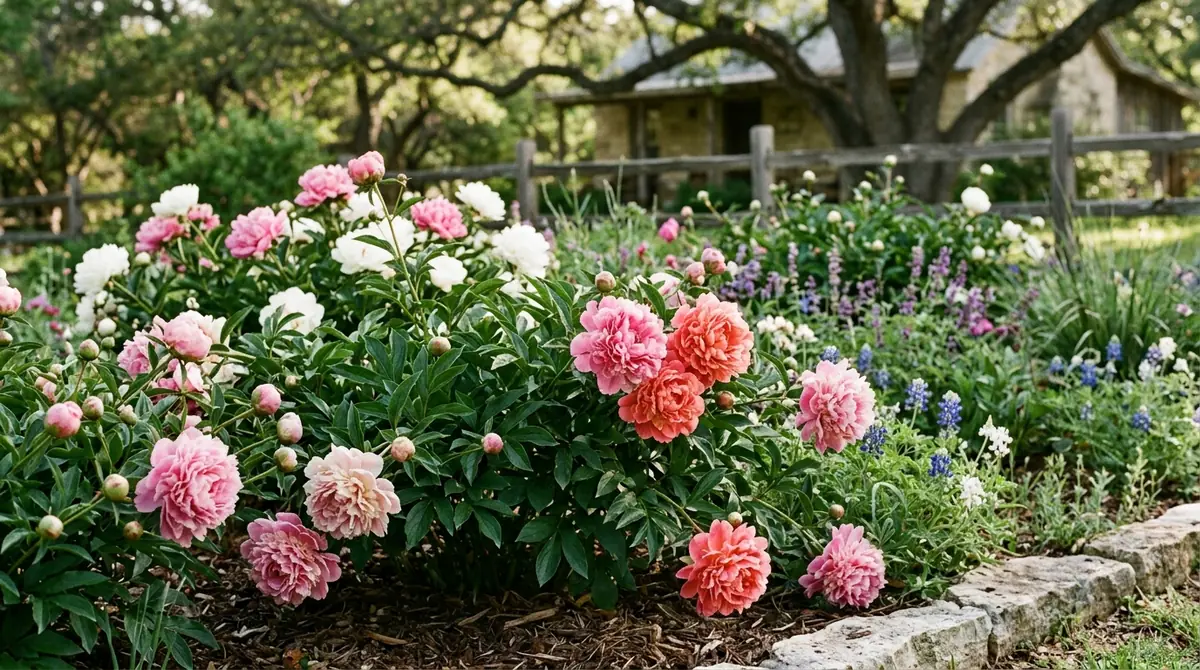
I stood sweating in my Austin landscape design studio one mid-May, holding a wilting, imported herbaceous peony stem that had completely collapsed under a brutal 95°F (35°C) afternoon sun. Growers wanted that lush, romantic cottage-garden aesthetic along her front walkway, but the Texas climate had other plans. That afternoon failure forced me to stop treating garden plants like regional accessories and start respecting thermal physics. The short answer to "do peonies grow in Texas" is a qualified yes, but only if you understand that standard garden varieties from northern nurseries will treat most of the Lone Star State like a slow-roast oven.
1. Botanical Overview & Natural Habitat
Peonies belong to the genus Paeonia, the sole genus in the family Paeoniaceae. Originating primarily in temperate regions of Asia, Southern Europe, and Western North America, these plants evolved to endure cold, freezing winters and mild, dry summers. Herbaceous species die back entirely to the underground root system each autumn, storing energy in fleshy, tuberous roots to fuel an explosive flush of foliage and blooms when spring temperatures rise.
The single greatest physiological barrier to growing peonies in Texas is their requirement for vernalization—a specific duration of winter cold required to break bud dormancy and trigger flowering. Traditional herbaceous and intersectional (Itoh) peonies require a specific number of chill hours (temperatures consistently maintained between 32°F and 45°F, or 0°C to 7°C). Most classic varieties, such as 'Sarah Bernhardt' or 'Festiva Maxima', demand 500 to 1,000 chill hours.
In Texas, growing zones range drastically from USDA Hardiness Zone 6a in the high panhandle down to Zone 9b in the Rio Grande Valley. Cities like Houston (Zone 9a) and San Antonio (Zone 8b) rarely accumulate more than 300 to 400 chill hours during a mild winter. Furthermore, Texas summers bring sustained ambient temperatures exceeding 90°F (32°C) paired with high humidity, which stresses the plant's vascular system, invites fungal pathogens, and prompts premature dormancy.
Despite these challenges, gardeners in North Texas (Zones 7b to 8a, including Dallas-Fort Worth) can successfully cultivate low-chill herbaceous cultivars and Itoh hybrids. Gardeners in Central and South Texas must pivot to specific heat-tolerant selections or treat herbaceous peonies as short-lived perennials, much like how we approach timing our crops when we learn When Do You Plant Tomatoes in Texas to outsmart summer thermal limits.
2. Essential Environmental & Care Requirements
To keep peonies alive in Texas clay or sandy loam, you must engineer an artificial microclimate that mimics their native habitat as closely as possible.
Sunlight exposure requires strategic planning. In USDA Zone 5 or 6, peonies demand full sun—at least 6 to 8 hours of direct daily light. In Texas, however, baking afternoon sun will scorch foliage and fry delicate flower buds before they can open. Plant your peonies where they receive 4 to 6 hours of gentle morning sun, followed by dappled afternoon shade or protection from the searing rays between 1:00 PM and 6:00 PM.
Soil composition is often the ultimate make-or-break factor. Peonies despise "wet feet." Heavy Texas vertisols (blackland prairie clay) hold onto water stubbornly, leading rapidly to Phytophthora root rot. Your planting site must feature soil amended generously with compost, expanded shale, or coarse horticultural sand to achieve rapid, reliable drainage. The ideal soil pH ranges between 6.5 and 7.0, though slightly alkaline Texas soils (pH 7.2 to 7.8) are generally tolerated if drainage is unimpeded.
Water management must be disciplined. Newly planted bare-root peonies require about 1 inch (2.5 cm) of water per week during their establishment phase in the cooler months. Once established, they possess moderate drought tolerance due to their deep taproots and tuberous reserves. However, during July and August droughts, they require deep, infrequent irrigation delivered directly to the root zone via drip lines or soaker hoses. Never wet the foliage; overhead watering in humid Texas conditions is an open invitation for leaf spot and botrytis blight.
| Parameter | Optimal Condition | Common Mistake | Why It Matters |
|---|---|---|---|
| Soil Drainage | Highly permeable loam with organic matter | Planting in heavy, unamended Texas clay | Water retention causes fatal fungal root rot |
| Sun Exposure | Morning sun (4-6 hours) + afternoon shade | Full all-day exposure to 95°F+ sun | Scorches leaves and desiccates flower buds |
| Planting Depth | Eyes positioned 1 to 2 inches below soil | Burying roots deeper than 3 inches (7.6 cm) | Deep burial prevents bud activation and inhibits blooms |
| Chill Hours | 400–500+ hours (32°F to 45°F / 0°C to 7°C) | Selecting ultra-high-chill northern varieties | Insufficient cold prevents the biological signaling required to bloom |
💡 Pro-Tip: If you are designing a larger landscape that incorporates perennials alongside edible crops—similar to the layout principles you would use when planning How to Grow a Wild Food Forest Self Sufficiency Garden—position your low-chill peonies on the eastern edge of a deciduous tree canopy. This provides natural morning light and crucial afternoon shade while allowing nutrient cycling through natural leaf litter.
3. Step-by-Step Cultivation, Feeding & Propagation
Growing peonies successfully in Texas requires strict adherence to planting timelines. Never plant bare-root peonies in spring; the sudden shift into heating soil triggers shock.
- Select Low-Chill Cultivars: Choose varieties bred for southern performance. Outstanding choices for Texas include 'Monsieur Jules Elie', 'Karl Rosenfield', or Itoh hybrids like 'Bartzella' and 'Cora Louise', which tolerate heat and humidity far better than standard lactiflora types. Purchase healthy 3-to-5 eye bare roots from reputable specialty nurseries.
- Time Your Planting Window: Plant bare roots between November and January when daytime temperatures drop below 60°F (15°C) and the plants are completely dormant. This gives the root system 60 to 90 days to anchor itself before spring top-growth breaks.
- Prepare the Planting Hole: Dig a hole 18 inches (45 cm) wide and 18 inches (45 cm) deep. Backfill the lower half with a 50/50 mix of native soil and well-rotted compost, incorporating 2 tablespoons of low-nitrogen, high-phosphorus organic fertilizer (such as bone meal) to stimulate root development.
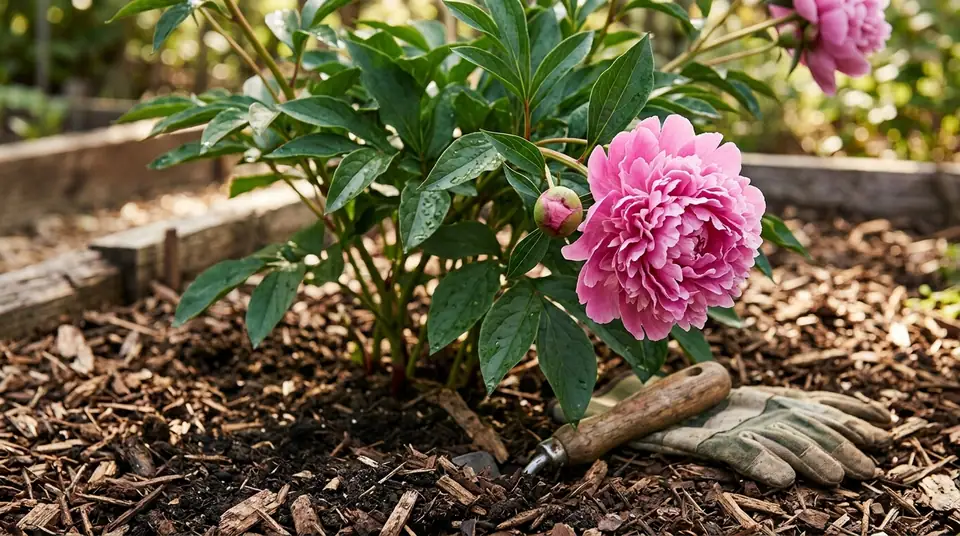
- Position the Eyes Correctly: This is the single most critical step. Set the bare root so the pink growing points (eyes) face upward and sit no deeper than 1 to 2 inches (2.5 to 5 cm) below the final soil surface. If you bury them 4 or 5 inches deep—a common error—the plant will grow lush green foliage year after year but will produce zero flowers.
- Backfill and Settle: Gently fill in the remaining soil around the roots without compacting it excessively. Tamp lightly by hand to eliminate large air pockets, then water thoroughly with 1 gallon (3.7 liters) of water to settle the soil matrix.
- Apply Protective Mulch: Apply a 2-inch (5 cm) layer of shredded hardwood mulch across the root zone to insulate against erratic Texas winter temperature swings (where it can be 75°F on Tuesday and 25°F on Wednesday). Keep the mulch pulled 2 inches away from the actual stem crowns to prevent moisture-trapping collar rot.
- Manage Spring Fertility & Maintenance: As shoots emerge in March, apply a balanced organic granular fertilizer around the drip line. Avoid high-nitrogen synthetic fertilizers, which trigger weak, sappy stem growth that readily collapses under summer winds.
When establishing your garden layout, remember that integrating perennials requires the same strategic spacing and soil prep that you would apply when timing seasonal garden installations, such as checking When to Plant Pumpkins in Texas or mapping out early spring bed preparations.
⚠️ Important Caution: Never prune herbaceous peony stems to the ground during the active growing season. Premature cutting starves the tuberous roots of the photosynthetic energy they need to survive the upcoming Texas summer. Wait until the foliage turns completely brown and dies back naturally after the first hard autumn freeze, then clip stems cleanly at ground level and discard the debris in the trash to eliminate overwintering fungal spores.
4. Common Problems, Pests & Troubleshooting
Peonies in Texas face a unique suite of environmental and pathological pressures. Recognizing symptoms early separates a thriving specimen from a lost investment.
Botrytis Blight (Botrytis paeoniae) This is the most destructive fungal disease facing southern peonies. It thrives in humid, wet spring conditions.
- Symptoms: Young stems turn black and rot near the soil line; flower buds turn brown and fail to open ("bud blast"); large, irregular brown spots appear on leaves, often featuring a faint gray mold layer during damp mornings.
- Solution: Prune out infected tissue immediately, cutting 6 inches below the visible damage into healthy wood. Sterilize your pruning shears in a 10% bleach solution or isopropyl alcohol between every cut. Improve air circulation by thinning surrounding perennials and avoiding overhead irrigation.
Ants on Peony Buds Gardeners frequently panic when they see swarms of ants crawling over developing peony buds.
- Reality: Ants are entirely harmless to the plant. They are simply harvesting the sweet, sugary nectar secreted by the buds. They do not damage the petals and actually help deter destructive pests like thrips. Do not spray harsh insecticides on the buds; simply brush the ants off gently if bringing cut flowers indoors.
Powdery Mildew Appearing in late summer as daytime temperatures peak and humidity fluctuates, this fungus coats leaves in a white, talcum-powder-like substance.
- Solution: While unsightly, powdery mildew late in the season rarely kills established plants because the peony is already preparing for dormancy. Prevent it by ensuring your plants receive adequate morning sun and sufficient spacing (at least 3 feet / 90 cm apart) to encourage cross-ventilation.
5. Frequently Asked Questions
Can I grow tree peonies in Texas instead of herbaceous peonies?
Yes, tree peonies (Paeonia suffruticosa) often perform better in Texas than traditional herbaceous varieties. Because their woody stems do not die back to the ground each winter, they require fewer chill hours to break dormancy and set blooms. They thrive in Zones 7 through 9 when provided with afternoon shade and well-draining, alkaline-tolerant soil.
Why are my Texas peonies growing tall green leaves but no flowers?
The culprit is almost always planting depth. If the crown "eyes" were buried deeper than 2 inches (5 cm) below the soil surface, the plant lacks the thermal cues and biological signaling required to initiate flower buds. Dig up the plant in November, lift it gently, and replant it so the eyes sit right near the soil surface. Insufficient sun exposure or excess nitrogen fertilizer can also suppress flowering.
When is the best time to divide overgrown peonies in Texas?
Divide and transplant peonies only in the fall (November through December) when they are fully dormant. Dig up the entire root clump carefully, wash away excess soil with a gentle stream of water to locate the eyes, and use a sharp, sterilized knife to cut the root mass into sections. Ensure each division contains at least 3 to 5 distinct eyes and a healthy portion of the storage root system before replanting immediately.
Do Itoh peonies survive the summer heat in Central and South Texas?
Itoh peonies (interspecific hybrids between herbaceous and tree peonies) show exceptional resilience in Texas compared to pure herbaceous types. Their robust, disease-resistant foliage withstands summer heat much longer into July and August. While they still appreciate afternoon shade in zones south of Dallas, varieties like 'Bartzella' have proven capable of surviving and flowering reliably in USDA Zone 8.
Related Guides
- Mulch for Peonies
- Growing Peonies in Containers
- Do You Cut Back Peonies in the Fall
- Peonies from Seed
- Cherry Trees in Texas
- Best Flowering Shrubs for Texas
📋 Table of Contents ▼ Click to expand
Tags:
Keep reading
🌿 Related Plants You Might Like
PlantSavvyWorld
Editorial team
PlantSavvyWorld is an independent botanical education project. Articles are drafted with AI assistance, then edited and checked against university extension services, botanical garden collections and other published horticultural sources.