

Growing Peonies in Containers
Written with AI assistance, edited and checked against horticultural sources.
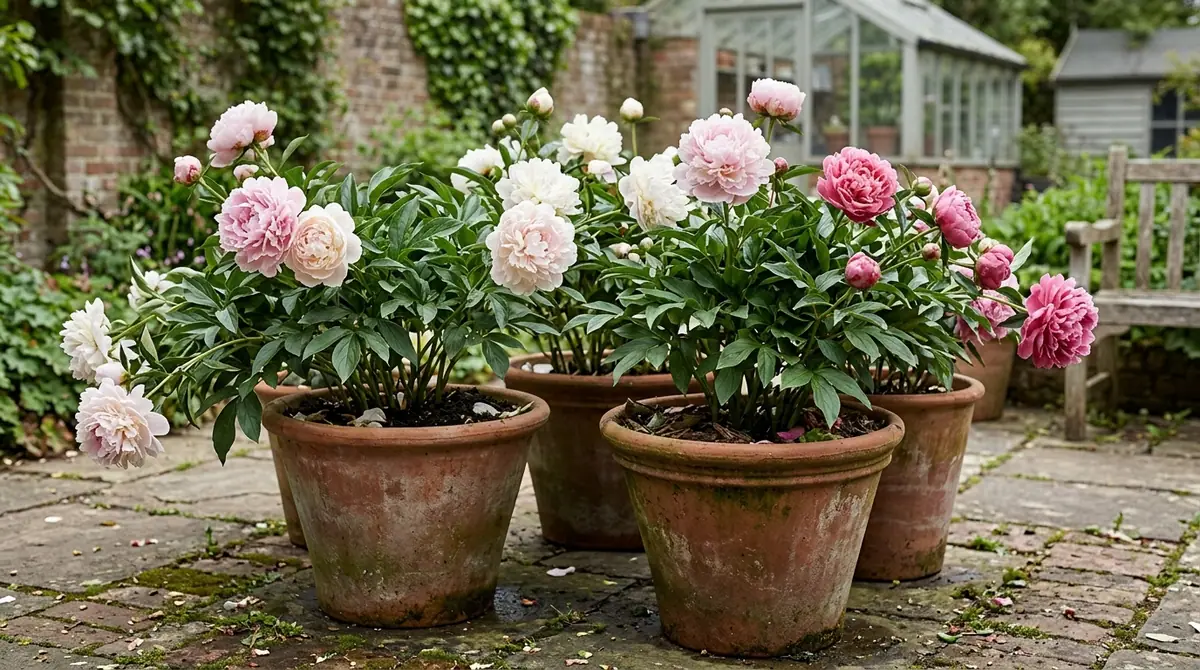
When a clay pot cracks right down the middle during the third hard freeze of January, splitting a five-gallon terracotta vessel holding a prized 'Sarah Bernhardt' peony, exposed fleshy pink roots are left shivering at 24°F (-4°C). Peonies are relentless survivors, but they demand absolute precision when their root systems are restricted to artificial boundaries, making it essential to master growing peonies in containers to enjoy magnificent blooms on a balcony, patio, or urban terrace just as successfully as in a sprawling country garden.
1. Botanical Overview & Natural Habitat
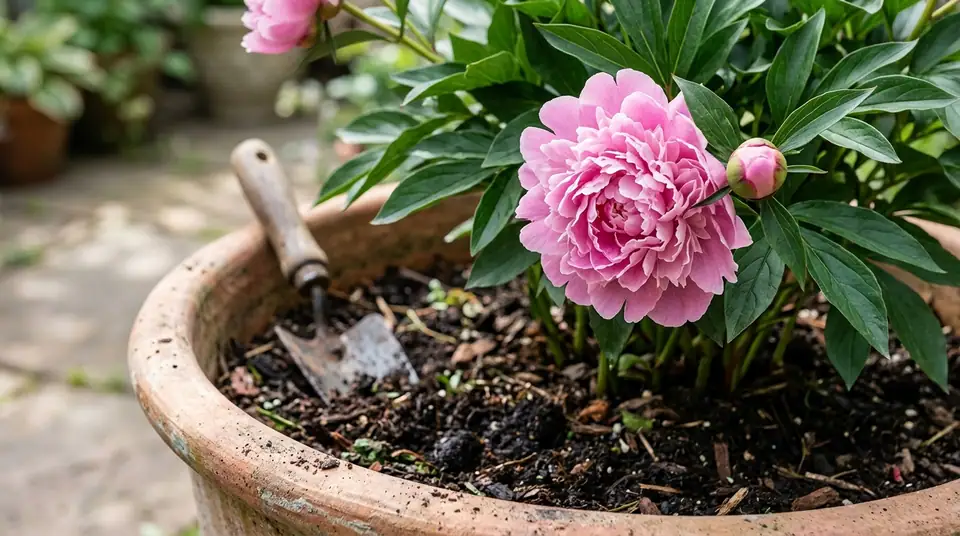
When we transition these plants to pots, we are artificially constraining a root system that naturally spans 24 to 36 inches (61 to 91 cm) in width and depth. Herbaceous peonies (Paeonia lactiflora) die back completely to the ground each autumn, retreating into underground buds known as "eyes." Itoh peonies—crosses between herbaceous and tree peonies—retain a woody base while dying back partially. True tree peonies (Paeonia suffruticosa) maintain permanent woody stems above ground. For container gardening, herbaceous and Itoh varieties perform best because their root dynamics adapt more readily to deep pots than the sprawling, woody root balls of mature tree peonies.
| Parameter | Optimal Condition | Common Mistake | Why It Matters |
|---|---|---|---|
| Container Volume | Minimum 5 to 7 gallons (19 to 26 liters) | Using a pot under 12 inches (30 cm) wide | Restricts tuber expansion, leading to stunted foliage and zero blooms. |
| Soil Temperature | 40°F to 55°F (4°C to 13°C) for chilling | Exposing pots to extreme, unbuffered sub-zero winds | Destroys root integrity and kills dormant subterranean eyes. |
| Ambient Humidity | 40% to 60% relative humidity | High humidity with stagnant air | Encourages fungal outbreaks like Botrytis blight on dense foliage. |
| Sunlight Exposure | 6 to 8 hours of direct, unfiltered sun | Shading the base of the plant | Reduces photosynthetic energy storage required for next year's flower buds. |
2. Essential Environmental & Care Requirements
Replicating a field environment inside a portable vessel requires strict attention to microclimates, light, and thermodynamics. Peonies are sun worshippers; they require a minimum of 6 hours of direct sunlight daily. If you are placing your containers on a balcony, ensure balconies facing south or west receive this solar duration. Avoid deep shade or dappled light under heavy tree canopies, which results in lush green foliage at the expense of floral development.
Temperature management is the single most critical factor for container-grown peonies. Peonies need a cold dormancy period—requiring roughly 500 to 1,000 chill hours at temperatures between 35°F and 45°F (1.7°C and 7.2°C)—to trigger bloom production. In open ground, the surrounding earth insulates roots from wild temperature swings. In containers, however, root balls are vulnerable. When winter lows plunge below 15°F (-9°C) for extended periods in hardiness zones 3 through 7, uninsulated pots can experience freeze-thaw cycles that push the plant out of the soil or rupture root tissues. Conversely, in spring, rapid warming can trick the plant into premature emergence.
Water management in pots differs dramatically from garden beds. Container soil dries out much faster, yet peonies despise "wet feet." Their thick, tuberous roots rot rapidly if left sitting in saturated medium. Conversely, allowing the pot to bake completely dry during bud formation in late spring will cause buds to abort and turn brown before opening.
💡 Pro-Tip: If you live in USDA Hardiness Zones 8 or 9, choose early-season herbaceous cultivars like 'Festiva Maxima' or select specific low-chill Itoh hybrids. Furthermore, place your containers on pot feet or bricks during winter to guarantee that drainage holes never become blocked by frozen ground or mud, which creates an anaerobic root zone.
3. Step-by-Step Cultivation, Feeding & Propagation
Growing peonies successfully in a confined space relies on starting with the right physical infrastructure. Before planting, ensure you understand the broader principles of intensive potted cultivation, similar to techniques used when you how to grow tomatoes in containers step by step guide or select best tomatoes for containers and grow in pots where root volume and drainage dictate success.
Follow this exact step-by-step sequence to plant your bare-root or potted peony:
- Select and Prepare the Container: Choose a frost-proof container with a minimum capacity of 5 to 7 gallons (19 to 26 liters) and a diameter of at least 16 to 18 inches (41 to 46 cm). Confirm the pot features multiple drainage holes measuring at least 0.5 inches (1.3 cm) across.
- Mix the Ideal Soil Medium: Combine 60% high-quality organic potting mix, 20% well-aged compost, and 20% horticultural perlite or coarse builder's sand. This ensures supreme aeration and prevents compaction over the multi-year lifespan of the plant.
- Position the Drainage Layer: Add a 1-inch (2.5 cm) layer of broken terra cotta shards or expanded clay pebbles to the bottom of the pot to keep drainage holes unobstructed.
- Establish Planting Depth (The Golden Rule): Fill the container until the soil surface sits about 3 inches (7.6 cm) below the rim. Place the bare-root tuber into the center. Crucial: Ensure the pink growth buds (eyes) point upward and sit no deeper than 1.5 to 2 inches (3.8 to 5 cm) below the soil surface. Planting peonies too deep is the number one reason they fail to bloom.
- Backfill and Settle: Gently work the soil medium around the thick roots, eliminating air pockets without compacting the earth aggressively. Water thoroughly until moisture runs freely from the bottom drainage holes, settling the soil around the tubers.
- Apply Protective Mulch: Top-dress the container with a 1-inch (2.5 cm) layer of shredded hardwood bark or pine straw, keeping the mulch 2 inches (5 cm) away from the central stems to prevent crown rot.
Feeding container peonies requires a disciplined approach. Because watering flushes nutrients out of potting soil faster than garden soil, apply a balanced, slow-release granular organic fertilizer (such as a 10-10-10 or 5-10-10 blend) in early spring just as red shoots emerge from the soil. Avoid high-nitrogen fertilizers; excess nitrogen stimulates excessive foliage growth at the direct expense of flowers and makes the plant vulnerable to fungal attacks.
Propagation of container peonies is best achieved through division every 4 to 5 years, typically performed in early autumn when the plant enters dormancy. Tip out the root ball, wash away the old soil with a gentle garden hose, and use a sharp, sterilized pruning saw or knife to slice the root mass into sections. Ensure each division contains at least 3 to 5 robust eyes and a healthy chunk of tuberous root. Replant immediately into fresh potting media.
4. Common Problems, Pests & Troubleshooting
Container gardening creates distinct environmental microclimates that can invite specific physiological and pathological issues. Monitoring your plants daily is your first line of defense.
- Botrytis Blight (Botrytis paeoniae): This is the most common fungal disease affecting peonies, thriving in cool, damp spring weather with high relative humidity. Symptoms include young stems turning black and rotting at the soil line, or flower buds turning brown and failing to open. Solution: Prune away infected tissue immediately, dispose of it in the trash (never compost diseased tissue), and apply a copper-based fungicide. Improve air circulation by spacing pots at least 3 feet (0.9 meters) apart.
- Powdery Mildew: Appearing as a white, powdery dusting on leaves in mid-to-late summer when humidity drops and nights are warm. Solution: Spray foliage with a mixture of water, a few drops of mild dish soap, and horticultural neem oil during the cool evening hours.
- Root Rot (Phytophthora species): Caused by overwatering or dense, waterlogged soil media. The foliage turns yellow, wilts suddenly, and the roots exhibit a mushy, brown, foul-smelling decay. Solution: Unpot the plant immediately, sterilize clean shears to cut away infected black roots, and repot in fresh, dry, well-draining media. Reduce watering frequency moving forward.
- Failure to Bloom: Usually caused by planting the root eyes too deep (more than 2 inches / 5 cm below the surface), lack of sunlight (under 6 hours), insufficient winter chilling hours, or excessive nitrogen fertilization.
⚠️ Important Caution: Never use standard garden soil straight from your yard in peony containers. Garden soil lacks adequate aeration, compacts severely under restricted container walls, and frequently harbors soil-borne pathogens like Verticillium wilt and nematode populations that thrive in confined root zones. Always formulate or purchase a dedicated, sterile potting medium.

5. Frequently Asked Questions
Can I leave my potted peony outside over winter?
Yes, provided you live within the hardiness range suitable for the specific cultivar (generally USDA Zones 3 through 8). However, because container root systems lack the thermal mass of the earth, temperatures dropping below 15°F (-9°C) can freeze the root ball solid and damage tissues. In zones 3 through 5, insulate containers by wrapping them in burlap filled with straw, or sink the entire pot into a protected garden bed for the winter months.
How often should I water a peony in a pot?
During the active growing season from spring through mid-summer, water your container deeply whenever the top 2 inches (5 cm) of soil feel dry to the touch. This typically translates to watering every 3 to 5 days, depending on ambient temperatures and wind speed. Reduce watering dramatically in late autumn as the plant goes dormant, keeping the soil only barely moist to prevent root desiccation without inducing rot.
Do container-grown peonies need staking?
Generally, yes. While dwarf or miniature cultivars may support their own weight, standard herbaceous and lush Itoh peonies produce heavy, double blooms that easily snap off their stems during heavy rainstorms or high winds. Install a circular metal peony ring or three-stake support system into the pot early in spring when shoots reach 6 inches (15 cm) tall, allowing the foliage to grow up through the grid naturally.
How many years will a peony live in a container?
A healthy peony can thrive in a large 10-to-15-gallon container for 4 to 6 years before it completely outgrows its bounds. Once the root system becomes root-bound, flowering will decline sharply. At that point, you must unpot the plant in autumn, divide the tuberous root mass into smaller sections with fresh eyes, and replant them into fresh potting mix or transplant them out into open garden beds.
Related Guides
- Mulch for Peonies
- Do Peonies Grow in Texas
- Do You Cut Back Peonies in the Fall
- Peonies from Seed
- Peony in Containers
📋 Table of Contents ▼ Click to expand
Tags:
Keep reading
🌿 Related Plants You Might Like






PlantSavvyWorld
Editorial team
PlantSavvyWorld is an independent botanical education project. Articles are drafted with AI assistance, then edited and checked against university extension services, botanical garden collections and other published horticultural sources.