

Best Tomatoes for Containers and Grow in Pots
Written with AI assistance, edited and checked against horticultural sources.
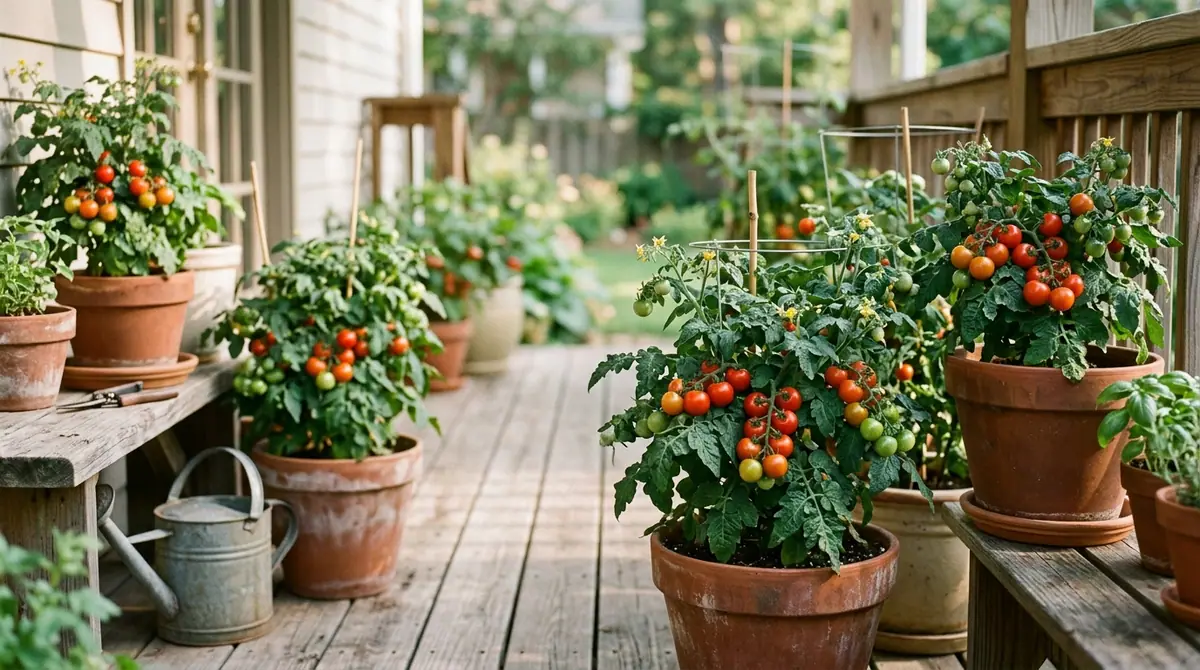
An indeterminate beefsteak tomato vine grown in a 10-gallon plastic tub of soil can collapse when the stem snaps under its own unchecked 6-pound fruit weight, completely starved of root space and nutrients. A garden-bed tomato cannot simply be shoved into a pot and expected to succeed, as container growing forces a complete rethinking of root volume, cultivar selection, and physical architecture. Exact cultivars and soil mechanics are required to transform confined spaces into high-yield food production zones.
1. Botanical Overview & Natural Habitat
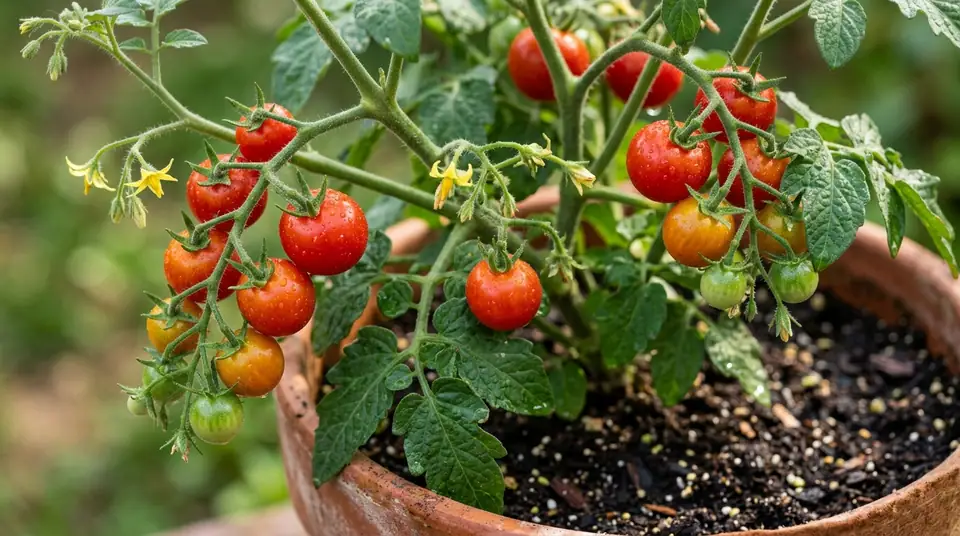
When adapting these vigorous plants to containers and pots, we must understand their architectural classifications: determinant and indeterminate. Determinant tomatoes—often called bush varieties—grow to a genetically predetermined height, typically 2 to 4 feet (60 to 120 cm), and set all their fruit within a concentrated 2- to 3-week window before the plant naturally declines. This predictable, compact growth habit makes them exceptional candidates for pots, window boxes, and smaller patios.
Indeterminate tomatoes, conversely, are vining perennials that continue growing, flowering, and fruiting indefinitely until frost or disease kills them. While some dwarf indeterminate varieties can thrive in confined spaces with heavy staking—as detailed in our guide on How to Grow Huge Tomato Plants: Pruning, Trenching & Heavy Yields—true standard indeterminates demand massive structural support. For urban food production and small-footprint gardening comparable to strategies used in How to Grow Butternut Squash in Small Spaces: Vertical Trellising Secrets, dwarf and micro-dwarf determinant cultivars are the absolute gold standard for container culture.
2. Essential Environmental & Care Requirements
Growing tomatoes successfully in pots requires strict management of environmental factors. Because root zones are exposed to ambient air temperatures rather than insulated by the earth, temperature fluctuations are immediate and intense.
Tomatoes are warm-season crops requiring full sun, defined as a minimum of 6 to 8 hours of direct, unobstructed sunlight daily. Photosynthesis rates drop precipitously when light levels fall below this threshold, resulting in leggy stems, poor flower set, and insipid, watery fruit. Ambient air temperatures should ideally remain between 70°F and 85°F (21°C and 29°C) during the day. When daytime temperatures consistently exceed 90°F (32°C), pollen sterility occurs, and blossoms drop off without setting fruit. Conversely, night temperatures dropping below 55°F (13°C) inhibit pollen release and stall fruit maturation.
Soil moisture management is the single most critical variable in container cultivation. Unlike garden beds where roots can chase deep moisture tables, potted plants rely entirely on the grower. The growing medium must possess a high cation exchange capacity (CEC) to hold nutrients, yet maintain a high air-filled porosity (AFP) of 10% to 20% to prevent root suffocation. Never use garden native soil in pots; it compacts into a dense, airless brick under daily watering. Instead, utilize a specialized, sterile potting mix composed of sphagnum peat moss, perlite, vermiculite, and aged compost with a slightly acidic pH ranging from 6.2 to 6.8.
| Parameter | Optimal Condition | Common Mistake | Why It Matters |
|---|---|---|---|
| Container Volume | 5 to 15 gallons (19 to 57 liters) depending on cultivar | Using 1-gallon pots for standard varieties | Restricts root expansion, causing premature stunting and rapid drought stress. |
| Soil Temperature | 65°F to 75°F (18°C to 24°C) | Placing pots directly on cold concrete slabs | Chills root hairs, halting nutrient and water uptake. |
| Watering Volume | Saturated until runoff occurs at container base | Frequent, shallow sips that only wet the topsoil | Promotes shallow root formation and induces blossom end rot. |
| pH Range | 6.2 to 6.8 | Allowing soil to drift above 7.5 or below 5.5 | Locks out essential micronutrients like calcium, iron, and phosphorus. |
💡 Pro-Tip: Elevate your containers 2 inches (5 cm) off the ground using pot feet or wooden blocks. This improves bottom-drainage airflow, prevents root-bound circling in the drainage holes, and stops soil-borne pathogens from splashing up onto lower foliage during heavy rainstorms. For deeper insights into plant health and disease prevention, consult the Royal Horticultural Society (RHS) guidelines on container cultivation.
3. Step-by-Step Cultivation, Feeding & Propagation
Growing container tomatoes requires a deliberate sequence of physical actions to maximize fruit yields in restricted volumes. Follow this step-by-step protocol for container success:
- Select the Right Container: Choose a pot with a minimum diameter of 12 inches (30 cm) and a volume of 5 gallons (19 liters) for dwarf varieties, scaling up to 15 gallons (57 liters) for larger determinate plants. Ensure the bottom features at least three drainage holes measuring a minimum of 0.5 inches (1.3 cm) in diameter.
- Prepare the Soil Matrix: Fill the container to within 3 inches (7.5 cm) of the rim with a premium, well-draining soilless potting mix. Incorporate a slow-release, balanced organic granular fertilizer (such as a 4-3-4 formula) and 1 cup of agricultural gypsum or bone meal to supply baseline calcium.
- Plant Deep: Strip off the lower set of leaves from your chosen tomato transplant. Dig a vertical hole deep enough to bury the lower half to two-thirds of the stem. Tomatoes possess adventitious hairs along their stems that will rapidly transform into a robust root network, vastly increasing water and nutrient absorption capabilities.
- Install Support Structures: Place a tomato cage or sturdy stake directly into the pot at the time of planting. Waiting until the root system is established risks puncturing the root ball and destabilizing the plant.
- Initial Watering: Saturate the potting mix thoroughly until water flows freely from the drainage holes. Apply a dilute water-soluble seaweed or kelp extract solution to minimize transplant shock and stimulate early root hair development.
- Implement Consistent Irrigation & Feeding: Water containers whenever the top 1 inch (2.5 cm) of soil feels dry to the touch. Once the first flowers appear, transition to a low-nitrogen, high-phosphorus and high-potassium liquid fertilizer (such as a 5-10-10 or 4-18-38 formulation) applied every 7 to 10 days to support heavy fruit set.
⚠️ Important Caution: Never let your container tomatoes dry out completely between waterings. Severe moisture fluctuations flush calcium away from developing fruit tissues, triggering blossom end rot—a physiological breakdown that turns the bottom of your tomatoes black, sunken, and leathery.
4. Common Problems, Pests & Troubleshooting
Container-grown tomatoes face unique pressures due to their close quarters and concentrated root environments. Identifying issues early prevents crop failure.
Nutrient deficiencies are exceptionally common in pots due to frequent watering leaching out mobile nutrients. Interveinal chlorosis (yellowing between green leaf veins on older leaves) typically indicates a magnesium deficiency; correct this immediately by applying a foliar spray of Epsom salts (1 tablespoon per gallon of water). If you notice upward curling and purpling of the youngest leaves, your plant is experiencing a phosphorus lockout caused by cold soil temperatures dipping below 50°F (10°C).
Pests such as aphids, whiteflies, and spider mites thrive in the warm, protected microclimates of patio containers. Because pots are often placed close to living spaces, avoid harsh synthetic chemical pesticides. Instead, knock pests off the undersides of leaves with a forceful jet of water, followed by a thorough application of insecticidal soap or horticultural oil. Ensure coverage reaches the leaf axils where pests congregate.
5. Frequently Asked Questions
What is the absolute best tomato variety to grow in a small pot on a sunny balcony?
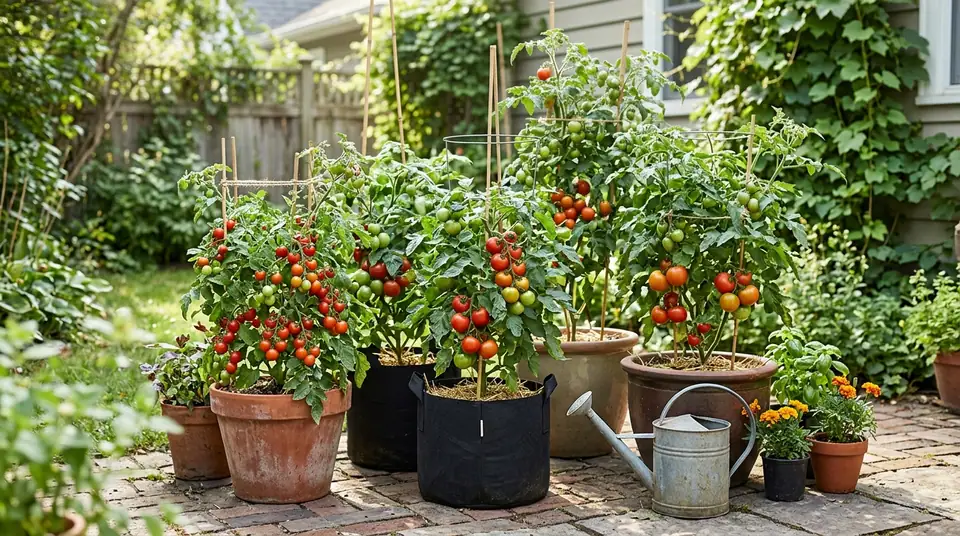
Micro-dwarf varieties like 'Micro Tom', 'Red Robin', and 'Florida Petite' are unmatched for small pots. They grow only 8 to 12 inches (20 to 30 cm) tall, require containers as small as 1 to 2 gallons (3.8 to 7.6 liters), and produce surprisingly high yields of sweet, bite-sized fruit without needing cages or staking.
Do I really need a 5-gallon bucket for a single tomato plant?
Yes, for standard dwarf and determinate patio varieties, a 5-gallon (19-liter) container is the minimum viable size. Anything smaller restricts root development so severely that the plant will dry out within hours on hot summer days, drastically reducing yields and causing chronic stress.
How often should I water my container tomatoes in the dead of summer?
During peak summer heat when ambient temperatures exceed 85°F (29°C), large container tomatoes require daily watering—and sometimes twice-daily watering (morning and late afternoon). Always check the soil moisture 2 inches (5 cm) deep; if it feels dry, irrigate until water flows freely from the base drainage holes.
Can I reuse old potting soil from my tomato containers next season?
It is not recommended to reuse old tomato potting soil without significant amendment. Spent potting mix is structurally degraded, depleted of macro-nutrients, and frequently harbors fungal spores and pest eggs from the previous season. If you must reuse it, dump the soil out, remove all old roots, sterilize it with solarization, and blend it 50/50 with fresh compost, perlite, and fresh potting mix.
Related Guides
- How to Grow Tomatoes in Containers Step By Step Guide
- Peony in Containers
- Growing Peonies in Containers
- How Do You Seal Terracotta Pots
- Problems with Olive Trees in Pots
📋 Table of Contents ▼ Click to expand
Tags:
Keep reading
🌿 Related Plants You Might Like






PlantSavvyWorld
Editorial team
PlantSavvyWorld is an independent botanical education project. Articles are drafted with AI assistance, then edited and checked against university extension services, botanical garden collections and other published horticultural sources.