
Problems with Olive Trees in Pots
Written with AI assistance, edited and checked against horticultural sources.
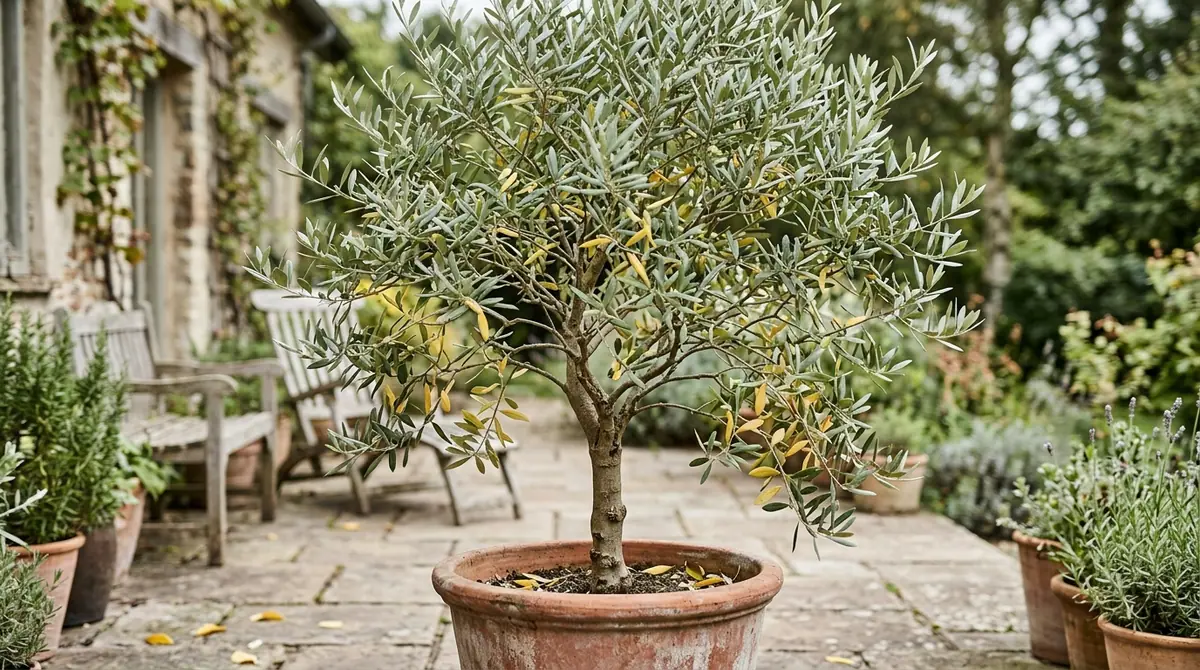
Last Tuesday, while consulting on a Mediterranean-themed rooftop terrace in downtown Chicago, I pulled a dwarf Arbequina olive tree out of its decorative ceramic container and found a tangled, rotting mass of brown roots swimming in standing water. The gardener was baffled. She had been watering it every single day because the top inch of soil felt dry, completely unaware that her gorgeous container was acting as a botanical drowning chamber. Potted olives look effortlessly chic, but translating their native, sun-scorched hillside resilience into a container environment requires understanding how drastically artificial a pot is compared to the earth.

1. Botanical Overview & Natural Habitat
The olive tree (Olea europaea) is an evergreen tree native to the coastal Mediterranean basin, the Levant, and parts of South Africa. Botanically classified within the family Oleaceae, they are legendary for their longevity, tough leathery leaves, and ability to thrive in poor, rocky soils where other fruit-bearing species perish.
In their natural habitat, olive roots do not stay wet. They send down a deep taproot when young, followed by an aggressive, wide-spreading lateral root system designed to scavenge for moisture across vast areas of arid terrain. The silvery-green, lanceolate leaves feature a dense coating of microscopic trichomes (hairs) that reflect intense sunlight and minimize transpirational water loss. When you move an olive tree into a pot, you abruptly truncate this vast root architecture. Instead of roots plunging 10 feet (3 meters) deep into well-drained calcareous earth, they are confined to a restricted volume of engineered soil.
💡 Pro-Tip: If you are transitioning your container olive to an indoor sunroom for winter, remember that olives need a distinct chilling period of roughly 35°F to 50°F (1.6°C to 10°C) for at least 6 to 8 weeks to trigger flower bud formation. Without this dormancy, your tree may survive indoors as a leafy green houseplant, but it will never set fruit.
This natural hardiness often misleads growers into thinking olives are indestructible house plants. They are not. They are full-sun, high-ventilation outdoor trees that tolerate container culture only when their native environmental parameters are meticulously simulated. When container rules are broken, olive trees manifest stress quickly through leaf drop, chlorosis, and dieback. If you enjoy experimenting with unconventional container environments, you might also find my guide on How to Grow Plants in Glass Pots helpful for understanding how root zones behave under artificial constraints.
2. Essential Environmental & Care Requirements
Recreating a Mediterranean mountainside on your patio or balcony comes down to four non-negotiable pillars: light, soil composition, thermal range, and hydration cadence.
Olves demand a minimum of 6 to 8 hours of direct, uninhibited sunlight daily. Placing a potted olive on a shaded north-facing balcony is an invitation for leggy growth, pest infestations, and eventual decline.
Soil drainage is the single most common failure point. Standard potting mix retains too much moisture and packs down too tightly, suffocating the roots. You need a gritty, fast-draining substrate mix comprising 40% coarse horticultural sand or perlite, 40% quality organic compost, and 20% crushed pumice or expanded clay.
| Parameter | Optimal Condition | Common Mistake | Why It Matters |
|---|---|---|---|
| Light | 6–8+ hours direct sun | Placing in partial shade | Causes leaf drop and weak shoots |
| Soil pH | 6.5 to 8.0 (alkaline/neutral) | Using acidic peat-heavy mixes | Locks out vital micronutrients |
| Watering | Soak-and-dry method | Frequent light sips | Rots roots or leaves lower root zone dry |
| Temperature | 60°F–85°F (15°C–29°C) | Sudden sub-freezing drafts | Causes massive defoliation |
Temperature management is equally critical. While mature, planted-out olives can handle brief freezes down to 15°F (-9.4°C), potted olives have exposed root balls. Container roots freeze much faster than ground roots. Once root temperatures drop below 20°F (-6.6°C) for extended periods, the cellular structure of the root ruptures, killing the plant. Conversely, baking a black plastic pot in 100°F (37.8°C) summer heat will cook the root tips, mimicking drought stress even when the soil is wet.
3. Step-by-Step Cultivation, Feeding & Propagation
Planting and maintaining an olive tree in a pot requires deliberate execution. Follow this step-by-step protocol to establish a healthy container specimen:
- Select the Container: Choose a pot at least 16 to 20 inches (40 to 50 cm) in diameter and depth for a young nursery sapling. Ensure it features multiple drainage holes at least 1 inch (2.5 cm) wide. Terracotta is ideal because its porous walls allow excess moisture to evaporate.
- Prepare the Drainage Layer: Place a 2-inch (5 cm) layer of broken pottery shards or washed gravel at the bottom of the pot to prevent the drainage hole from clogging with sediment.
- Mix the Substrate: Combine your custom Mediterranean soil mix (percolating sand, compost, pumice) in a wheelbarrow. Test the pH to ensure it reads between 6.5 and 8.0.
- Unbind the Root Ball: Gently slide the olive out of its nursery container. Use your fingers to loosen the outer 1 inch (2.5 cm) of root mass, teasing out any circling or girdling roots so they grow outward into the new soil.
- Position the Tree: Set the tree in the center of the pot. Ensure the root flare (where the trunk widens into the roots) sits level with or slightly above the soil surface. Planting too deep causes trunk rot.
- Backfill and Settle: Fill in the space around the root ball with your soil mix, tamping down gently every 4 inches (10 cm) of depth to eliminate major air pockets.
- Initial Watering: Water the container thoroughly until water runs freely out of the bottom drainage holes. Add more soil to the top if settling occurs.
- Initial Feeding & Pruning: Wait 30 days before applying any fertilizer to let new roots establish. If you need to shape the canopy or train branches, you can apply principles similar to those found in How to Prune Apple Trees for Maximum Fruit Yield to maintain an open center for light penetration.
For deeper guidance on Mediterranean arboriculture and pest management, consult the University of California Statewide Integrated Pest Management Program (UC IPM) for regionally verified care standards.
4. Common Problems, Pests & Troubleshooting
When a potted olive tree starts acting up, its symptoms are remarkably specific. Here is how to read and fix what your tree is telling you.
Sudden Leaf Drop
If your olive tree drops dozens of green or yellow leaves overnight, it is experiencing severe environmental shock. This is almost always triggered by a sudden transition—moving an outdoor tree indoors for winter, rapid underwatering followed by a massive drench, or a sharp temperature drop. Check your soil moisture meter; if it reads bone dry, give the pot a deep soak. If the soil is waterlogged, you must unpot the tree, trim away black, mushy roots with sterilized shears, and repot in fresh, dry soil.
Sticky Leaves and Black Sooty Mold
Finding a sticky, clear residue on your olive leaves means you have an infestation of scale insects or black scale (Saissetia oleae). These tiny, immobile pests look like small brown bumps along the stems and undersides of leaves. They excrete honeydew, which fuels the growth of a black, powdery fungus called sooty mold.
- The Fix: Scrub infested branches with a soft brush dipped in a solution of warm water and mild insecticidal soap. For severe infestations, spray horticultural oil during the cooler morning hours to smother the crawlers.
⚠️ Important Caution: Never apply horticultural oils or insecticidal soaps when ambient temperatures exceed 90°F (32°C). The oil acts as a lens under intense sunlight, magnifying UV rays and frying the olive leaves into crisp, brown paper.
Yellowing Leaves (Chlorosis)

5. Frequently Asked Questions
Why are the leaves on my potted olive tree curling inward?
Leaf curl on a container olive is typically a defensive mechanism against drought stress or extreme heat. When the roots cannot pull up water fast enough to keep up with transpirational demand on a 95°F (35°C) day, the leaves curl inward to minimize their surface area and conserve moisture. Deeply water your pot until it flushes through the bottom, and move it to a location that receives afternoon shade during peak summer heatwaves.
How often should I water an olive tree in a pot?
There is no calendar schedule for watering olives; instead, use the finger test. Push your index finger 2 inches (5 cm) deep into the soil. If it feels completely dry at that depth, water thoroughly until it runs out of the drainage holes. During scorching summer months, this might mean watering every 2 to 3 days, whereas in winter dormancy, it might drop to once every 2 to 3 weeks.
Can olive trees live indoors all year round?
Olive trees are fundamentally outdoor plants and will struggle immensely if kept indoors year-round. They require high-intensity light levels that standard indoor living rooms simply cannot provide, even directly next to a south-facing window. If you must grow them indoors due to harsh winters, place them under high-output LED grow lights for at least 10 to 12 hours a day and ensure optimal air circulation with a small oscillating fan.
Why won't my potted olive tree produce fruit?
Fruit production fails for three primary reasons: lack of age, lack of cross-pollination, or lack of winter chill hours. Most container-grown dwarf olives take 3 to 5 years to reach sexual maturity. Furthermore, while many cultivars are partially self-fertile, having a second distinct olive variety nearby drastically improves fruit set through cross-pollination by wind. Finally, ensure your tree experienced temperatures between 35°F and 50°F (1.6°C–10°C) over the winter to initiate the floral buds necessary for a harvest. For additional botanical references on orchard health, consult the Royal Horticultural Society (RHS) guidelines on container fruit cultivation.
Related Guides
- How Do You Seal Terracotta Pots
- Can Peony Be Planted in Pots
- How Do You Measure Flower Pots
- How to Grow Plants in Glass Pots
- Best Tomatoes for Containers and Grow in Pots
📋 Table of Contents ▼ Click to expand
Tags:
Keep reading
🌿 Related Plants You Might Like
PlantSavvyWorld
Editorial team
PlantSavvyWorld is an independent botanical education project. Articles are drafted with AI assistance, then edited and checked against university extension services, botanical garden collections and other published horticultural sources.