

How to Grow Plants in Glass Pots
Written with AI assistance, edited and checked against horticultural sources.
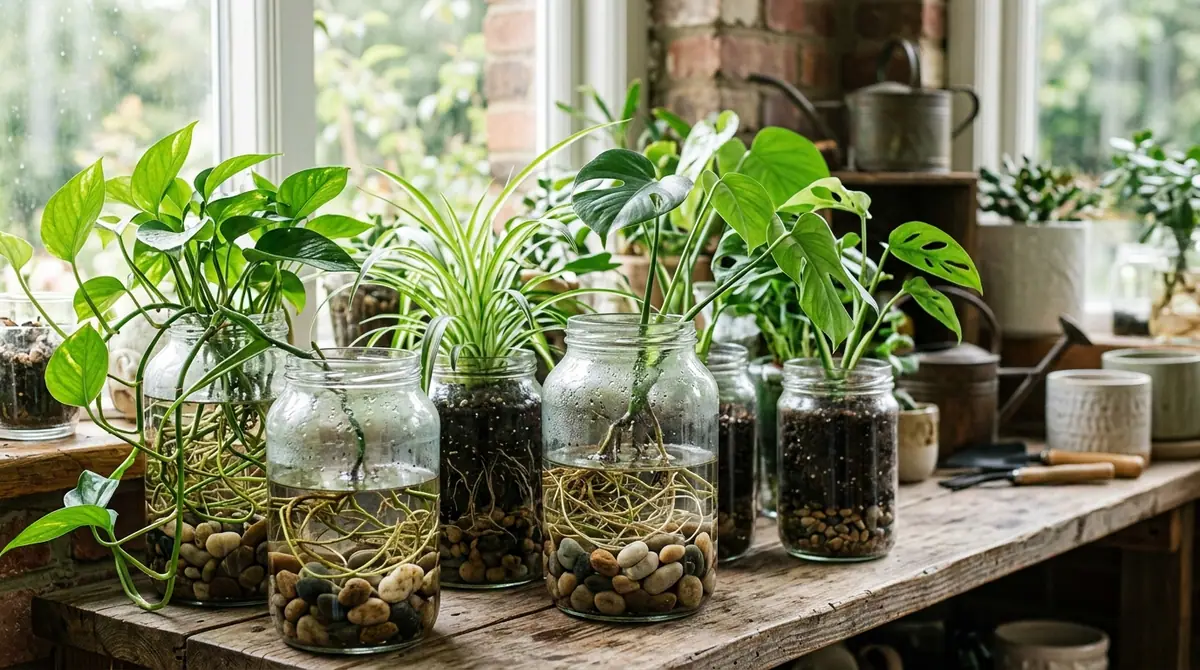
Growing Epipremnum aureum in glass pots is entirely possible, but it requires a fundamental shift in how you manage moisture, gas exchange, and root zones, or else the water can turn a murky, anaerobic brown, roots can grow slimy and translucent, and a foul sulfur smell can develop. Glass is an unforgiving medium because it acts as a literal fishbowl for plant roots, trapping light, heat, and water in ways standard porous terracotta or plastic containers never do.

1. Botanical Overview & Natural Habitat
To successfully cultivate plants in glass pots, you must first understand why glass creates such an unnatural environment for root systems. In nature, the vast majority of terrestrial plants develop roots underground in subterranean matrices composed of soil particles, organic matter, microbial networks, and continuous air pockets. These roots are adapted to total darkness and require constant oxygen exchange. When you place a plant in a glass container—whether it is a closed terrarium, a decorative vase filled with soil, or a water-propagation vessel—you subject the root zone to ambient light and drastically restricted airflow.
Glass pots generally fall into three distinct structural categories, each mimicking completely different ecological niches:
- Closed Terrariums: These recreate tropical understory microclimates or cloud forest floors. High relative humidity (frequently 80% to 100%) and constant condensation mimic environments found in the lower strata of the Amazon basin or Southeast Asian rainforests. Only moisture-loving, shade-tolerant epiphytes, ferns, and fittonias survive here.
- Open Glass Vessels (Soil-Based): These mimic shallow rock crevices or cliff sides where drainage is severely limited. Without a drainage hole, perched water tables form at the base of the glass, creating an anaerobic swamp zone unless heavily mitigated with inert drainage layers.
- Hydroponic Glass Jars (Water Culture): These mimic the marginal aquatic environments of wetlands or riverbanks where certain specialized plants develop water roots (aerenchyma) capable of absorbing dissolved oxygen directly from the water column rather than from soil air pockets.
Understanding your plant's native habitat dictates whether it can handle the stifling, humid confines of a closed glass jar or whether it requires the open-air circulation of a standard container. For broader indoor growing principles, you can reference our guide on How to Grow Strawberries Indoors: From Fruit Seeds to Sweet Berries. If you are looking to branch out your indoor cultivation projects, studying how different species manage moisture and nutrients will also help you master techniques like How to Grow Huge Tomato Plants: Pruning, Trenching & Heavy Yields.
2. Essential Environmental & Care Requirements
Growing plants in glass requires precise micro-management of light, temperature, and moisture because glass acts as a thermal amplifier and a light trap. Without drainage holes, every drop of water you add stays inside the vessel until it is transpired or evaporated.
Light management is your primary challenge. Because glass is transparent, light hits the root zone directly. In nature, root cells lack chlorophyll and are not designed for photosynthesis; exposing them to intense sunlight inside a clear glass pot encourages rapid algae growth, green water, and root stress. Keep glass containers in bright, indirect light rather than direct window sills. Direct sun shining through a curved glass vase acts like a magnifying lens, easily scorching leaves and superheating the interior water to lethal temperatures above 95°F (35°C).
| Parameter | Optimal Condition | Common Mistake | Why It Matters |
|---|---|---|---|
| Light Exposure | Bright, indirect light (foot-candle range: 1,000–2,500) | Placing clear glass directly on a scorching south-facing windowsill | Direct sun magnifies through curved glass, boiling roots and triggering aggressive algae blooms |
| Ambient Temperature | 65°F to 78°F (18°C to 26°C) | Exposing glass pots to drafty windows or sudden thermal swings | Glass lacks insulation; internal temperatures shift rapidly with room changes, shocking plant tissue |
| Water Quality | Filtered, room-temperature water or rain water | Using heavily chlorinated tap water straight from the faucet | Chemical additives and mineral salts build up rapidly in un-drained glass with nowhere to flush out |
| Layer Depth (Terrariums) | 1.5 to 2 inches (3.8 to 5 cm) of inert drainage gravel | Pouring soil directly against the bottom glass with no barrier | Soil packs down tightly, creating a stagnant, oxygen-depleted marsh that rots root systems |
💡 Pro-Tip: When designing open glass planters with soil, always add a 0.5-inch (1.3 cm) layer of horticultural charcoal beneath your soil mix. The activated carbon acts as a natural bio-filter, trapping heavy metals, neutralizing organic acids, and absorbing the sulfur odors that inevitably develop in stagnant glass environments.
For official scientific guidelines on indoor plant physiology and container cultivation limits, consult the Royal Horticultural Society (RHS) container gardening portal.
3. Step-by-Step Cultivation, Feeding & Propagation
Setting up a thriving glass planter requires a meticulous layering strategy. Whether you are building an open terrarium or establishing a water-cultivated hydroponic specimen, follow this exact sequence to ensure long-term success.
- Sterilize and Prep the Glass: Wash your glass container thoroughly with warm, soapy water, rinse completely, and wipe down the interior with a 10% isopropyl alcohol solution to eliminate fungal spores and microscopic algae hitchhikers.
- Construct the Drainage Matrix: Pour 1.5 to 2 inches (3.8 to 5 cm) of washed aquarium gravel, LECA (lightweight expanded clay aggregate), or decorative pebbles into the bottom of the vessel to act as a reservoir basin for excess irrigation water.
- Add the Filtration Layer: Cut a piece of porous landscape fabric or mesh to match the interior diameter of your glass pot, and lay it directly over your drainage gravel. This prevents fine soil particles from washing down and clogging your water reservoir.
- Incorporate Activated Charcoal: Spread a thin 0.5-inch (1.3 cm) layer of horticultural charcoal over the mesh barrier to maintain water purity and prevent anaerobic bacterial buildup.
- Add Specialized Substrate: Fill the vessel with 3 to 4 inches (7.6 to 10 cm) of a sterile, fast-draining, soilless potting mix formulated with perlite, orchid bark, and peat moss. Avoid heavy garden soil, which compacts suffocatingly inside glass walls.
- Plant and Settle: Carefully position your chosen plants (such as Fittonia albivenis, small ferns, or peperomias), pressing the root balls gently into the substrate. Water sparingly—using no more than 10% to 15% of the total soil volume—to moisten the mix without creating a pool at the bottom.
When feeding plants in glass, less is aggressively more. Because fertilizers cannot leach out through a drainage hole, excess salts accumulate rapidly in the glass matrix, burning root tips. Feed only during the active growing season (spring and summer) using a balanced, water-soluble liquid fertilizer diluted to one-quarter strength, applied once every 45 to 60 days.
If you are expanding your indoor gardening projects into edible spaces, you can also review our expert tips on How to Grow Butternut Squash in Small Spaces: Vertical Trellising Secrets to see how alternative containment strategies work.
4. Common Problems, Pests & Troubleshooting
Growing plants in glass presents unique pathology challenges. Because airflow is restricted, minor issues escalate into catastrophic failures within days.
Algae Blooms: If the interior glass turns green, your container is receiving too much direct light, too much fertilizer, or both. Algae competes directly with your plant for nutrients and oxygen. Remedy this by moving the container away from direct light windows, scrubbing the glass during your next scheduled maintenance, and cutting back entirely on fertilizer for 90 days.
Root Rot (Pythium and Phytophthora): If you notice a foul, earthy-sour smell and your plant's stems turn translucent brown and mushy at the base, you have severe root rot caused by stagnant water pooling at the bottom of the glass. Immediately unpot the plant, trim away all black, decaying roots with sterile shears, dip the remaining healthy roots in a 3% hydrogen peroxide solution diluted 1:4 with water, and repot into fresh, dry substrate.
Fungus Gnats: Common in open glass soil planters kept too wet. The adult flies are harmless annoyances, but their larvae feed on delicate root hairs. Allow the top 2 inches (5 cm) of soil to dry out completely between waterings, and top-dress the substrate with a 0.5-inch (1.3 cm) layer of fine horticultural sand or apply Bacillus thuringiensis israelensis (BTI) watering treatments every 14 days for two cycles.
⚠️ Important Caution: Never seal a glass container holding terrestrial houseplants unless it is an explicit closed-terrarium build housing strictly tropical, high-humidity species like mosses and miniature orchids. Sealing a standard houseplant in a glass jar traps excess moisture, instantly triggering fungal pathogens that will kill the specimen within 72 hours.

5. Frequently Asked Questions
Can I grow succulents in glass pots without drainage holes?
It is technically possible, but highly discouraged for beginners. Succulents store water in their leaves and require their soil to dry out completely between thorough waterings. In a glass pot with no drainage hole, any miscalculation in watering traps moisture at the bottom, leading to rapid stem rot. If you must use glass for succulents, stick exclusively to open, wide-rimmed glass bowls, use a 30% to 50% perlite/pumice soil mix, and water with a pipette or syringe only when the soil is 100% dry down to the glass base.
How do I stop green algae from growing inside my water-propagation glass jars?
Algae requires light, moisture, and nutrients to thrive. To prevent it, switch from clear glass to amber, cobalt blue, or opaque ceramic propagation vessels that block light from reaching the water. If you prefer the look of clear glass, change the water completely every 5 to 7 days, wash the interior of the glass with a bottle brush, and place the jar in a lower-light location out of direct sun exposure.
Do I need to fertilize plants grown strictly in water inside glass vases?
Yes, but in extreme moderation. Water-propagated plants or hydroponic specimens exhaust the initial trace minerals in the water within 3 to 4 weeks. Once roots reach 1 to 2 inches (2.5 to 5 cm) in length, add a hydroponic liquid fertilizer formulated for foliage plants diluted to one-eighth strength once a month. Over-fertilizing water cultures burns the delicate white water-roots and instantly triggers cloudy bacterial blooms.
What are the absolute best plants to grow in glass containers?
For closed terrariums, choose low-growing, humidity-loving species like Fittonia albivenis (nerve plant), Peperomia pellucida, creeping fig (Ficus pumila), and tropical mosses. For open glass soil pots, select drought-tolerant shade-lovers such as Sansevieria trifasciata 'Hahnii' (bird's nest snake plant) or hardy pothos varieties. For water-propagation glass jars, Epipremnum aureum (golden pothos), Philodendron hederaceum (heartleaf philodendron), and Tradescantia zebrina (wandering dude) develop robust, healthy water roots with minimal effort.
Related Guides
- Glass for Greenhouse
- How Do You Seal Terracotta Pots
- Problems with Olive Trees in Pots
- Can Peony Be Planted in Pots
- How Do You Measure Flower Pots
📋 Table of Contents ▼ Click to expand
Tags:
Keep reading
🌿 Related Plants You Might Like
PlantSavvyWorld
Editorial team
PlantSavvyWorld is an independent botanical education project. Articles are drafted with AI assistance, then edited and checked against university extension services, botanical garden collections and other published horticultural sources.