

How Do You Measure Flower Pots
Written with AI assistance, edited and checked against horticultural sources.
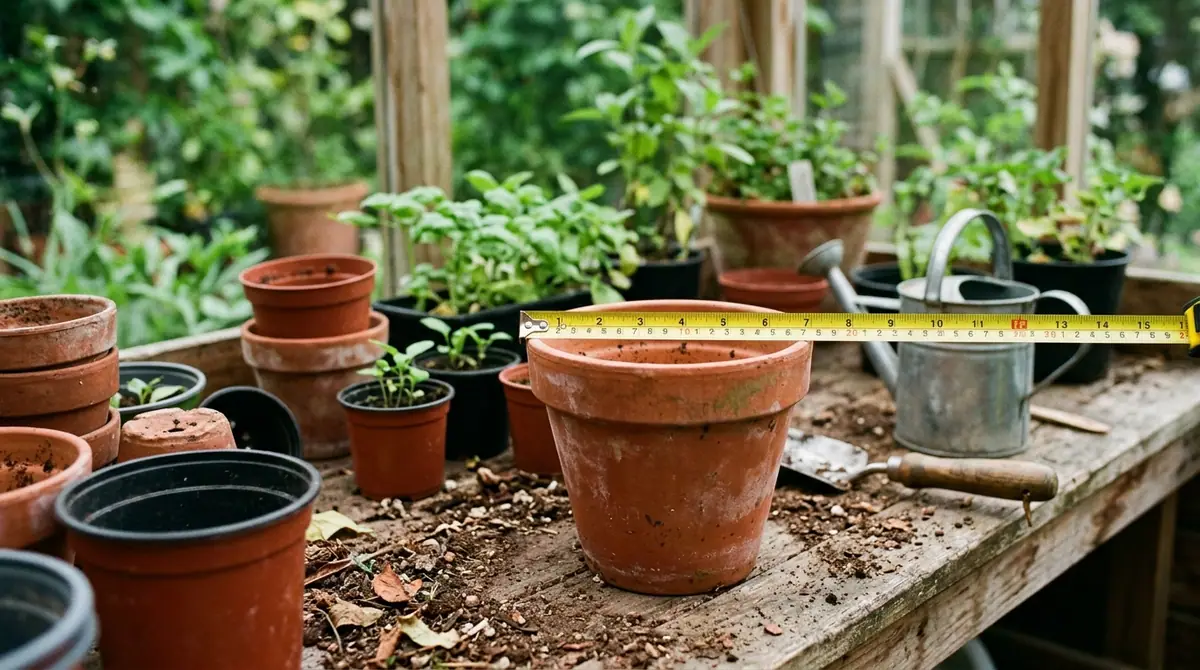
Last Tuesday morning, I stood knee-deep in soil at a nursery, holding a root-bound heirloom rose that simply refused to thrive. When I finally unpotted it, the root ball was locked in a rigid, circling cylinder, trapped because I had guessed the container size instead of measuring it properly. I see home gardeners make this sizing mistake every single day. Measuring flower pots is not just about fitting a container on a patio shelf; it is about providing the precise subterranean volume required for root respiration, water retention, and nutrient exchange.

1. Botanical Overview & Natural Habitat
In the wild, plant roots expand through uncompressed earth without artificial boundaries, seeking moisture gradients and pockets of organic matter. When we bring plants into containers, the flower pot becomes their entire ecosystem. The physical dimensions of this vessel dictate root architecture. Taprooted species require deep vertical depth, while fibrous-rooted perennials like ornamental grasses demand wider surface areas.
Understanding container volume is just as critical as understanding the soil medium itself. For instance, growing aquatic or moisture-loving specimens requires a completely different vessel geometry than arid succulents, which thrive when root zones are slightly restricted to prevent anoxic water logging. Furthermore, if you are experimenting with unique transparent vessels, be sure to review our insights on How to Grow Plants in Glass Pots to manage light exposure on root tissues.
To determine a pot's exact growing capacity, we must look at how manufacturers and horticulturists calculate dimensions. Standard industry sizing relies on top diameter, depth, and total volume capacity, usually measured in dry quarts or gallons.
| Parameter | Optimal Condition | Common Mistake | Why It Matters |
|---|---|---|---|
| Top Diameter | Measured rim-to-rim across the widest point | Measuring inside the lip or excluding the rim width | Determines plant spacing and canopy clearance |
| Pot Depth | Matches root zone length (e.g., 8–12 in / 20–30 cm) | Using shallow bowls for deep-rooting perennials | Restricts vertical root expansion and stunts top growth |
| Volume Capacity | Proportional to plant's mature root mass (1–5 gal / 3.8–18.9 L) | Guessing soil volume based on visual height alone | Leads to under-potting or chronic over-watering |
| Drainage Area | At least 5% of total base surface area | Relying on a single, tiny center drainage hole | Causes perched water tables and root rot |
2. Essential Environmental & Care Requirements
When you measure a flower pot, you are directly influencing the microclimate of the root zone. Container dimensions dictate soil temperature fluctuations, moisture evaporation rates, and nutrient leaching.
Root systems operate efficiently within specific thermal bands. For most temperate ornamentals, soil temperatures between 60°F and 75°F (15°C to 24°C) promote optimal root hair development. Small pots under 6 inches (15 cm) in diameter experience rapid temperature swings, exposing roots to freezing damage in winter and scorching heat in summer. Larger containers, measuring 12 inches (30 cm) or greater in diameter, offer thermal mass that buffers roots against extreme ambient shifts.
Water management is similarly tied to container geometry. A deep pot creates a taller perched water table at the base, meaning the lower 1 to 2 inches (2.5 to 5 cm) stay saturated much longer than the top layers. Therefore, measuring both the height and width ensures you select a potting mix with the correct air-filled porosity to match that specific vessel geometry. For more detailed scientific parameters on container media and water retention, consult the University of Florida IFAS Extension horticultural resources.
💡 Pro-Tip: When calculating soil volume for tapered pots, do not just multiply the top diameter by the depth. Because pots narrow at the base, use the average diameter (top diameter plus bottom diameter, divided by two) to calculate your true soil needs, or you will consistently buy 20% too much potting mix.
3. Step-by-Step Cultivation, Feeding & Propagation
Measuring a flower pot accurately requires more than a casual glance with a tape measure. Follow this precise protocol to evaluate your containers before planting:
- Clear and Clean the Vessel: Scrub the pot thoroughly to remove mineral crusts and organic debris that can obstruct the edges of your measuring tool.
- Measure the Top Diameter: Place your rigid tape measure across the absolute widest part of the opening, measuring from the outer rim to the outer rim. Record this number in inches and centimeters.
- Measure the Bottom Diameter: Flip the pot over and measure the width of the base from edge to edge. This is crucial for stability calculations and understanding the internal taper.
- Measure the Internal Depth: Insert your tape measure vertically from the top rim straight down to the inner floor of the pot. Subtract any raised bottom feet or internal water reservoir structures from this total depth to find the actual root-growth depth.
- Calculate Volume (If Unmarked): For standard round pots, use the standard botanical volume formula: multiply the radius of the top diameter squared, by the depth, by pi (3.1416), then divide by 231 to find the capacity in US gallons.
- Evaluate Drainage Provisions: Inspect the base to ensure drainage holes cover an adequate surface area. If measuring shows insufficient drainage, use a masonry bit to drill supplementary holes before adding soil.
Once your pot is measured and selected, match it to your plant's specific feeding schedule. Potted plants require regular nutrient replenishment because watering flushes out soluble minerals. Apply a balanced, slow-release granular fertilizer formulated for containers every 30 to 45 days during the active growing season, maintaining ambient soil moisture levels between 50% and 70% field capacity. For broader horticultural guidelines on container management, visit the Royal Horticultural Society container gardening advisory pages.
⚠️ Important Caution: Never size up a plant into a pot that is more than 2 inches (5 cm) wider in diameter than its current container. Moving a small root ball into an oversized pot leaves an excess of unused soil that stays wet too long, suffocating the roots and causing fatal root rot.
4. Common Problems, Pests & Troubleshooting
Mismeasuring flower pots or ignoring container dimensions leads to distinct physiological disorders in plants. When a pot is too small, roots circle endlessly, causing the plant to become root-bound, which chokes nutrient uptake and causes premature yellowing of lower leaves.
Conversely, pots that are measured incorrectly on the depth scale often suffer from stagnant lower root zones. This anoxic environment invites fungal pathogens such as Pythium and Phytophthora, which thrive in waterlogged, poorly aerated media. If you notice persistent fungus gnats hovering around your containers, it is frequently a symptom of an oversized pot holding excess moisture in the lower soil profile for days after watering.

5. Frequently Asked Questions
How do you measure the size of a flower pot?
Measure the top diameter from outer rim to outer rim, measure the total height from the base to the top rim, and measure the bottom base diameter. These three measurements give you the full dimensional profile needed for plant selection and soil calculation.
What does pot size 1 gallon actually mean?
A 1-gallon pot does not necessarily hold one exact US liquid gallon of water. In the nursery industry, a 1-gallon trade pot holds approximately 0.75 US liquid gallons (or about 2.8 to 3 liters) of dry potting medium, designed to accommodate a specific volume of root growth.
How do I know if my flower pot is too small for my plant?
Check for roots emerging from the bottom drainage holes, water running straight through the pot without soaking in because roots have replaced the soil, or top growth stalling entirely despite regular watering and feeding. These signs indicate it is time to measure up to a container that is 1 to 2 inches larger in diameter.
Should I measure the inside or outside diameter of a pot?
Always measure the outside diameter from rim to rim for spacing and saucer matching, but measure the inside depth to calculate the actual soil depth available for your plant's root system.
Related Guides
- Sweet Memory Sky Flower
- Chigger Flower
- When to Transplant Flower Seedlings
- How Do You Seal Terracotta Pots
- Problems with Olive Trees in Pots
📋 Table of Contents ▼ Click to expand
Tags:
Keep reading
🌿 Related Plants You Might Like






PlantSavvyWorld
Editorial team
PlantSavvyWorld is an independent botanical education project. Articles are drafted with AI assistance, then edited and checked against university extension services, botanical garden collections and other published horticultural sources.