

Sweet Memory Sky Flower
Written with AI assistance, edited and checked against horticultural sources.
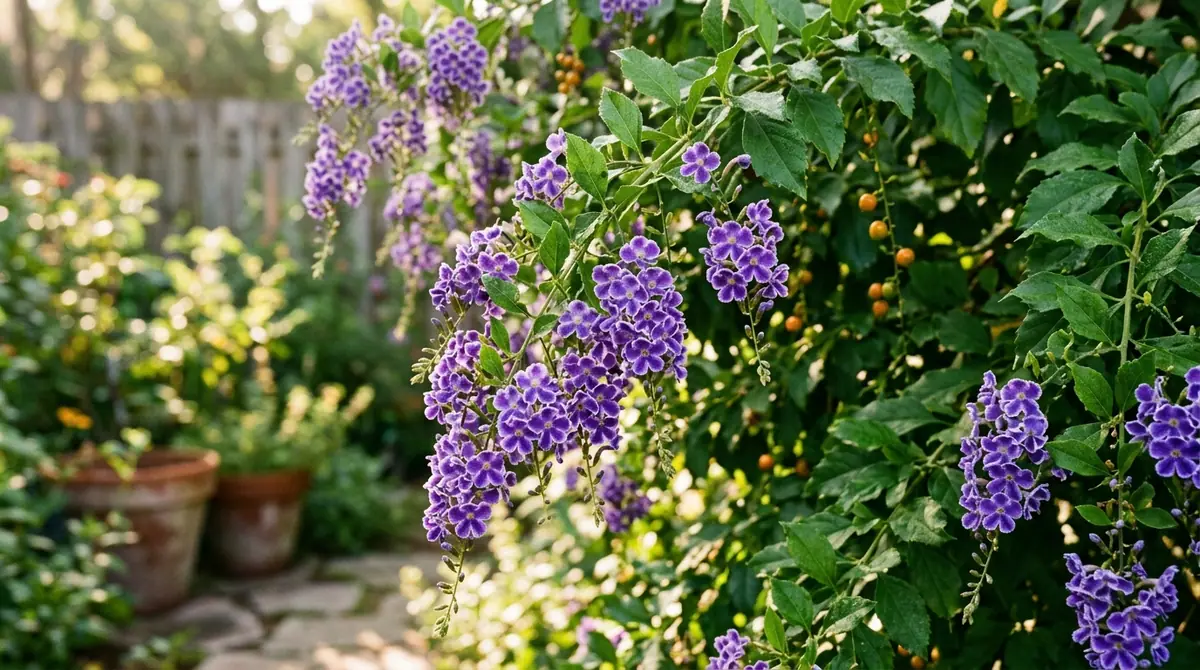
Trial gardens on a heavy, humid late July afternoon provide the truest test for tropical imports. A sudden 95°F (35°C) heatwave causes many perennials to completely shut down and drop their blooms like confetti. However, a single, sprawling specimen of the "Sweet Memory Sky Flower" (Duranta erecta 'Sweet Memory') features delicate, periwinkle-blue blossoms that dance unfazed on cascading stems while everything else around it withers.

1. Botanical Overview & Natural Habitat
The "Sweet Memory Sky Flower" is a distinct, highly floriferous cultivar of Duranta erecta (often classified as Duranta repens), belonging to the Verbenaceae family. Native to tropical regions spanning from Mexico down through South America and the Caribbean, this evergreen shrub thrives in high-light, frost-free environments where seasons are defined by wet and dry periods rather than freezing temperatures.
In its native scrublands and forest edges, Duranta erecta 'Sweet Memory' grows as a large, multi-stemmed woody shrub reaching heights of 8 to 15 feet (2.4 to 4.5 meters) with an equal spread if left unpruned. However, in cultivated landscapes, most gardeners maintain it between 4 to 6 feet (1.2 to 1.8 meters) through strategic heading-back cuts.
The physical characteristics of 'Sweet Memory' set it apart from older, wilder cultivars. It features glossy, oval-shaped green leaves arranged oppositely along slightly arching, often weeping stems. The flowers are the primary attraction: small, trumpet-shaped, intense violet-blue petals accented by pale white margins, grouped in terminal and axillary racemes up to 6 inches (15 cm) long. Unlike species forms that produce erratic color, 'Sweet Memory' delivers a consistent, saturated sky-blue hue.
Following the blooms, the plant produces clusters of round, golden-yellow berries (drupes) that hang in heavy, ornamental bunches. While these berries add visual texture to the autumn garden, they are a critical factor to manage if you have pets or young children, a detail I will cover in the safety section below. For a broader look at how flowering plants interact with edible crops in mixed garden beds, you can review our insights on Sweet Potato Companion Plants: 8 Best Garden Friends & 3 Foes to Avoid.
| Parameter | Optimal Condition | Common Mistake | Why It Matters |
|---|---|---|---|
| Light | 6 to 8 hours of direct sun daily | Planting in heavy shade | Reduces bloom count and causes leggy, weak stems |
| Soil pH | 6.0 to 7.0 (slightly acidic to neutral) | Extreme alkalinity (above 7.5) | Triggers iron chlorosis, resulting in yellowing leaves |
| Watering | Deep watering when top 2 inches (5 cm) are dry | Constant waterlogged soil | Invites root rot (Phytophthora species) |
| Temperature | 70°F to 85°F (21°C to 29°C) active growth | Exposure below 30°F (-1°C) | Causes severe dieback or complete plant death |
2. Essential Environmental & Care Requirements
Success with the sweet memory sky flower relies entirely on matching its native tropical preferences as closely as possible, regardless of whether you are growing it in-ground or in a container.
Light and Exposure
This plant demands full sun to produce its signature heavy flush of blue blossoms. Position your sky flower where it receives a minimum of 6 hours of direct sunlight daily. While it can survive in partial shade, the tradeoff is a drastic reduction in flower production and a looser, more sprawling growth habit that loses the dense, shrubby aesthetic most landscape designers prefer.
Soil Composition and Drainage
Well-draining soil is non-negotiable. Heavy clay soils that retain standing water for more than a few hours after a heavy rain will suffocate the root system. Amend native garden soils generously with compost or coarse sand to improve porosity. If you are planting in containers, use a high-quality, peat-based potting mix amended with perlite to ensure optimal aeration.
💡 Pro-Tip: When planting sky flowers in containers, always select a pot with drainage holes at least 1 inch (2.5 cm) in diameter. Durantas hate "wet feet," and a clogged drainage hole is the number one silent killer of container-grown specimens during heavy summer rainstorms.
Watering Protocols
Establish a regular watering cadence during the plant's first growing season. Water deeply—saturating the soil down to a depth of 8 to 10 inches (20 to 25 cm)—then allow the top 2 inches (5 cm) of soil to dry out completely before irrigating again. Once established in USDA Hardiness Zones 9 through 11, the plant exhibits moderate drought tolerance, though prolonged dry spells will cause it to drop leaves and cease flowering.
Temperature and Hardiness
The sweet memory sky flower is perennial in USDA Zones 9a through 11, where winter temperatures rarely dip below 25°F to 30°F (-4°C to -1°C). In cooler climates (Zones 4 through 8), treat it as an annual, an impressive patio container statement piece, or bring it indoors to a sunny south-facing window before the first autumn frost. For insights on timing your seasonal transitions, consult our guide on When to Transplant Flower Seedlings.
3. Step-by-Step Cultivation, Feeding & Propagation
Establishing a healthy sweet memory sky flower requires deliberate steps from the initial digging phase to seasonal maintenance. Follow this proven protocol for best results.
Step 1: Site Selection and Soil Preparation
Choose a location that receives full sun and is protected from harsh, freezing winter winds. Clear a circle 3 feet (1 meter) in diameter of all weeds and grass. Dig a hole twice as wide as the nursery container, but excavate it to the exact same depth as the root ball to prevent the plant from sinking.
Step 2: Planting the Specimen
Gently ease the sky flower out of its nursery container, teasing apart any circling roots with your fingers to break the root memory. Place the plant in the center of the hole, ensuring the top of the root ball sits 0.5 inches (1.3 cm) above the surrounding soil grade to account for natural settling. Backfill with a 50/50 mix of native soil and well-rotted compost, tamping down gently to eliminate large air pockets.
Step 3: Initial Irrigation and Mulching
Water the newly planted shrub thoroughly, applying at least 2 gallons (7.5 liters) of water to settle the soil around the root zone. Apply a 3-inch (7.5 cm) layer of organic hardwood mulch across the root zone to conserve moisture and suppress weeds, keeping the mulch pulled 2 inches (5 cm) away from the main woody stem to prevent rot.
Step 4: Fertilization Schedule
Feed your sky flower every 4 to 6 weeks throughout the active growing season (spring through early fall) using a balanced, slow-release granular fertilizer formulated for flowering shrubs, or a water-soluble formula rich in phosphorus and potassium. Avoid excessive high-nitrogen fertilizers, which will produce a massive wall of lush green foliage at the absolute expense of those prized blue flowers.
Step 5: Propagation via Stem Cuttings
To clone your favorite specimen, take semi-hardwood cuttings in late spring or early summer:
- Select healthy, non-flowering stem tips measuring 4 to 6 inches (10 to 15 cm) long.
- Cut cleanly just below a leaf node using sterilized pruning shears.
- Strip the leaves off the lower half of the cutting to expose bare nodes.
- Dip the cut end into rooting hormone powder to accelerate root initiation.
- Insert the cutting 2 inches (5 cm) deep into a pre-moistened medium of half perlite and half peat moss.
- Enclose the pot in a clear plastic bag to maintain high humidity, placing it in bright, indirect light until roots form in 21 to 28 days.
For those interested in expanding their garden repertoire to include root crops, check out our resource on When to Plant Sweet Potatoes in Kansas.
⚠️ Important Caution: All parts of the Duranta erecta species—especially the attractive golden-yellow berries—contain cardiac glycosides and saponins, making them toxic to dogs, cats, horses, and small children if ingested. Wear thick gardening gloves when pruning, as older stems on mature plants can feature sharp, hidden thorns that cause skin irritation.
4. Common Problems, Pests & Troubleshooting
Even with meticulous care, the sweet memory sky flower can occasionally encounter environmental stressors or pest pressures. Here is how to diagnose and correct them quickly.
Leaf Yellowing (Chlorosis)
If you notice the leaves turning a bright yellow while the veins remain distinctively green, your plant is likely suffering from iron chlorosis. This is rarely a lack of iron in the soil itself, but rather an indicator that the soil pH is too high (above 7.5), locking out iron availability.
- The Fix: Apply a chelated iron drench around the base of the plant and lower the soil pH by incorporating elemental sulfur or working acidic peat moss into the surrounding soil.
Whiteflies and Scale Insects
In warm, humid climates, whiteflies and armored scale insects frequently target the undersides of succulent new leaves and woody stems. They feed on plant sap, leaving behind sticky honeydew that fosters unsightly black sooty mold.
- The Fix: Blast the foliage thoroughly with a strong jet of water from a garden hose to disrupte their life cycles. For persistent infestations, thoroughly spray all leaf surfaces with horticultural insecticidal soap or neem oil, ensuring coverage of leaf undersides. Reapply every 7 days until the population is eradicated.
Bud Drop and Flower Failure
If your sky flower refuses to bloom or drops its flower buds before they open, the culprit is almost always insufficient light or erratic watering.
- The Fix: Relocate the container or prune back overhanging tree branches to guarantee the full 6 to 8 hours of daily sunlight. Standardize your watering routine so the root zone never experiences extreme, prolonged dry-down periods followed by saturation.

5. Frequently Asked Questions
Is sweet memory sky flower invasive?
In tropical and subtropical regions without winter freezes (such as parts of South Florida or coastal Australia), standard Duranta erecta species have escaped cultivation and are classified as invasive weeds due to birds spreading their seeds. However, 'Sweet Memory' produces significantly fewer viable seeds than wild-type species, though it is still wise to check local exotic pest plant council guidelines if you garden in frost-free zones.
How fast does sweet memory sky flower grow?
Under ideal conditions with consistent warmth and adequate moisture, 'Sweet Memory' is a rapid grower. You can expect it to add 2 to 3 feet (60 to 90 cm) of new structural growth per single growing season, making it an exceptional choice for quickly filling bare spots in a perennial border.
Can I grow sweet memory sky flower indoors?
Yes, you can successfully grow it indoors if you can provide the necessary environment. The primary challenge is light; it requires a south-facing window that receives intense, direct sun for most of the day. Supplement with full-spectrum horticultural LED grow lights for 12 hours daily if natural light falls short during winter months.
How do I prune my sky flower for maximum blooms?
Because Duranta blooms on new wood, heavy pruning should be performed in late winter or early spring before active growth resumes. Cut back last year's stems by one-third to encourage dense branching. Throughout the summer growing season, lightly clip the tips of unruly branches after a flush of flowers finishes to trigger immediate secondary branching and subsequent waves of blue blossoms.
Related Guides
- How Do You Measure Flower Pots
- Chigger Flower
- When to Transplant Flower Seedlings
- Can Rabbits Eat Sweet Basil
- How to Tell If a Sweet Potato is Bad
📋 Table of Contents ▼ Click to expand
Tags:
Keep reading
🌿 Related Plants You Might Like





PlantSavvyWorld
Editorial team
PlantSavvyWorld is an independent botanical education project. Articles are drafted with AI assistance, then edited and checked against university extension services, botanical garden collections and other published horticultural sources.