

How to Tell If a Sweet Potato is Bad
Written with AI assistance, edited and checked against horticultural sources.
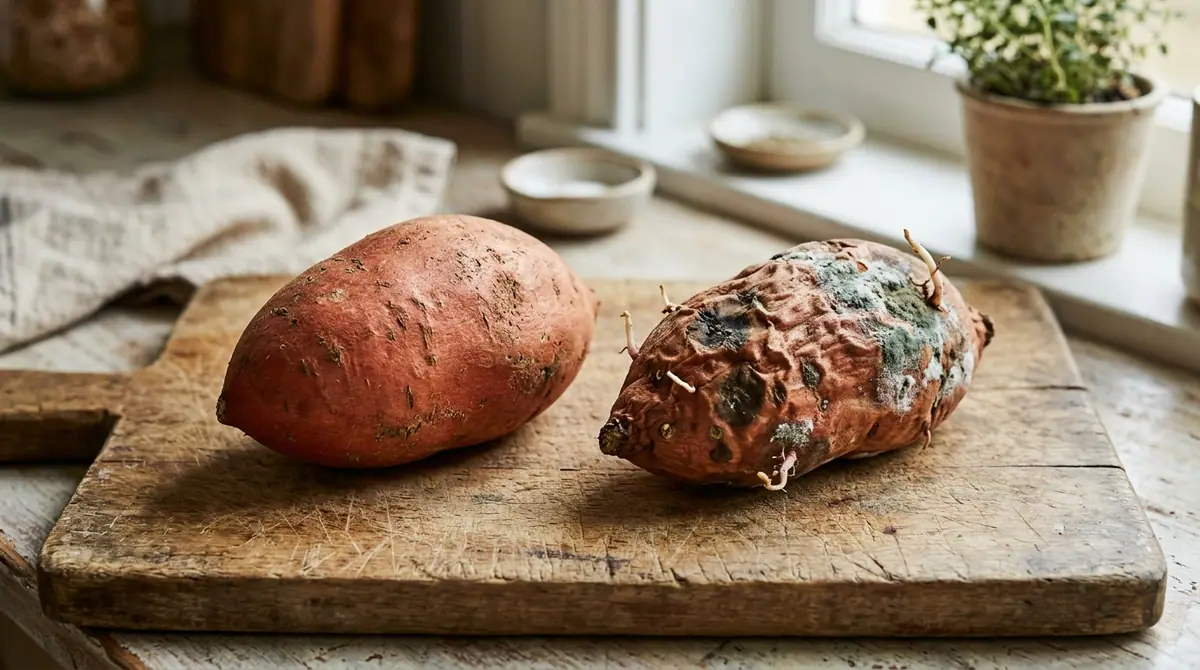
When unearthing a final row of 'Beauregard' sweet potatoes before the first hard freeze, slicing through a seemingly firm tuber can reveal a hollow, weeping core that smells faintly of acetone. When assessing whether a sweet potato (Ipomoea batatas) is past its prime or completely spoiled, looks can be intensely deceiving.

1. Botanical Overview & Natural Habitat
The sweet potato, Ipomoea batatas, is a dicotyledonous plant belonging to the morning glory family, Convolvulaceae. Unlike true potatoes (Solanum tuberosum), which are modified stems known as tubers belonging to the nightshade family, sweet potatoes are actually enlarged, fleshy storage roots (adventitious roots).
Native to the tropical regions of Central and South America, Ipomoea batatas was domesticated at least 5,000 years ago. As a trailing vine, it thrives naturally in warm, humid climates with well-drained, sandy-loam soils. Because they evolved as tropical perennials grown as annuals, their cellular structure is packed with water, starches, and sugars designed to sustain the plant through dry spells or cooler dormant periods.
When harvested, cured, and stored correctly, these storage roots enter a state of metabolic rest. However, because they are living botanical tissues containing roughly 77% water and 20% carbohydrates, they remain biologically active. Poor storage conditions trigger enzymatic breakdown, moisture loss, and microbial invasion by fungi and bacteria. Recognizing the physical markers of this decay requires an understanding of how healthy sweet potato tissues respond to stress versus how rotting tissues collapse.
2. Essential Environmental & Care Requirements
Preventing sweet potatoes from going bad prematurely begins long before they enter your kitchen pantry. It starts with proper cultural management in the garden. If you are planning your layout, you can consult our guide on Sweet Potato Companion Plants: 8 Best Garden Friends & 3 Foes to Avoid to ensure your vines grow vigorously without undue stress from competing neighbors or soil pathogens.
For regional growers, timing is everything; if you are gardening in the Midwest, review our specific timeline on When to Plant Sweet Potatoes in Kansas to align your planting dates with frost-free windows.
To give you a precise reference for keeping your harvest viable, the following table outlines the exact parameters required for long-term storage health.
| Parameter | Optimal Condition | Common Mistake | Why It Matters |
|---|---|---|---|
| Storage Temperature | 55°F to 60°F (13°C to 15°C) | Storing in a refrigerator | Temperatures below 50°F (10°C) cause chilling injury, hard cores, and internal browning. |
| Relative Humidity | 85% to 90% | Storing in bone-dry air | Low humidity causes rapid dehydration, making roots shrivel and rubbery. |
| Curing Temperature | 85°F to 90°F (29°C to 32°C) | Skipping the curing phase | Proper curing heals harvest wounds and triggers suberization to block pathogens. |
| Curing Duration | 4 to 7 days | Rushing straight to cool storage | Without curing, natural starches do not convert to sugars, and skins fail to toughen. |
| Soil Drainage | pH 5.8 to 6.5, loose sandy loam | Heavy, waterlogged clay soil | Excess water restricts oxygen, leading to anaerobic rot and fungal infections like Fusarium. |
💡 Pro-Tip: Never wash your sweet potatoes before storing them. Washing introduces excess moisture that invites bacterial soft rot (Erwinia). Brush off dry field dirt gently with a soft-bristled brush, and leave cleaning until the exact day you plan to cook them.
3. Step-by-Step Cultivation, Feeding & Propagation
Growing disease-free sweet potatoes that store well for months requires careful attention from slip propagation to harvest. Follow this step-by-step protocol to maximize the structural integrity of your harvest:
- Select Disease-Free Slips: Purchase certified virus-free slips or grow your own from healthy organic sweet potatoes suspended in water at 75°F (24°C). Discard any slips showing yellowing leaves or stem lesions.
- Prepare Ridged Beds: Form raised ridges spaced 36 to 48 inches (91 to 122 cm) apart. Raised beds improve drainage and ensure the soil temperature remains elevated.
- Plant at Correct Depth: Plant rooted slips 4 inches (10 cm) deep and 12 inches (30 cm) apart in the row, ensuring at least two nodes are buried beneath the soil line.
- Manage Irrigation: Provide 1 inch (2.5 cm) of water per week through mid-season. Cease irrigation 3 to 4 weeks before harvest to encourage the periderm (skin) to thicken and cure properly.
- Harvest Before Frost: Dig roots carefully using a spading fork placed at least 12 inches (30 cm) away from the plant base. Do this when soil temperatures drop below 60°F (15°C) in autumn, typically 90 to 120 days after planting.
- Execute Curing: Immediately move unwashed roots to a warm, humid location (85°F–90°F / 29°C–32°C at 90% relative humidity) for exactly 5 to 7 days to heal periderm cuts.
- Transition to Long-Term Storage: Move cured roots to a dark, well-ventilated space maintained at 55°F to 60°F (13°C to 15°C). Avoid plastic bags; use breathable crates or burlap sacks.
For further reading on optimizing your garden layout and disease prevention, consult the Royal Horticultural Society Sweet Potato Cultivation Guide for institutional insights.
4. Common Problems, Pests & Troubleshooting
When sweet potatoes begin to go bad, they exhibit distinct physical and chemical warning signs. I teach home gardeners to look for these five classic indicators of spoilage:
- Discoloration and Soft Spots: A healthy sweet potato is uniformly orange, purple, or red-brown with firm flesh. If you notice sunken, dark brown, or black patches that yield easily to thumb pressure, the cellular walls have collapsed due to fungal or bacterial invasion.
- Wrinkling and Shrivelling: While minor dehydration can cause a slight give in older roots, deeply shriveled, rubbery skin indicates severe moisture loss. These roots are not necessarily toxic, but their culinary value is zero, and they are prone to secondary rot.
- Sprouting: Sweet potatoes naturally break dormancy when exposed to warm, indoor ambient air (above 65°F / 18°C). Small sprouts are acceptable if the potato remains completely firm—simply cut them off. However, if the potato has turned soft, spongy, and shrunken while pushing out multiple long sprouts, it has metabolized its internal starches and is spent.
- Foul Odors and Mold: A bad sweet potato will often smell sour, musty, fermented, or chemically sharp (resembling alcohol or acetone). If you see white, green, or black mold fuzz on the skin—or if fluid leaks from the root when pressed—discard it immediately.
- Internal Black Rot or Pithiness: Sometimes a sweet potato looks fine externally, but slicing it reveals dry, black cavities or a stringy, pithy texture. This is often the result of field infections by fungi such as Ceratocystis fimbriata (black rot) or chilling injury from improper grocery store storage.
⚠️ Important Caution: Never taste or cook a sweet potato that is showing signs of widespread soft rot, black mold, or a pungent, foul odor. Fungal toxins and opportunistic bacteria can multiply rapidly in decaying starchy root tissues, posing significant food safety risks.

5. Frequently Asked Questions
Can you eat a sweet potato with black spots?
It depends on the nature of the spots. If the spots are small, superficial bruises or slight discoloration from where it rested against a stone in the garden, you can easily cut them out and cook the remaining firm flesh. However, if the black spots are sunken, accompanied by a bitter taste, or indicative of black rot (Ceratocystis fimbriata), discard the entire tuber.
Is it safe to cut the sprouts off a sweet potato and eat it?
Yes, provided the sweet potato is still firm and plump. Sprouts draw energy and moisture from the storage root, so heavy sprouting means the potato will soon become mealy and hollow. Cut away the sprouts and cook the root promptly. If the potato is soft, shriveled, and leaking liquid alongside the sprouts, throw it away.
Why did my sweet potatoes turn black in the middle?
Internal blackening usually points to one of two things: chilling injury from being stored below 50°F (10°C) (such as in a refrigerator) or a fungal disease called black rot picked up during the growing season. Chilled sweet potatoes develop cellular breakdown that causes internal discoloration and off-flavors.
How long do sweet potatoes last in the pantry?
When stored in optimal conditions—dark, well-ventilated, and maintained at 55°F to 60°F (13°C to 15°C)—cured sweet potatoes will last for 2 to 4 months. Storing them in a warm kitchen pantry (70°F+ / 21°C+) shortens their shelf life to roughly 2 to 3 weeks before they begin sprouting and softening.
Related Guides
- Sweet Potato Companion Plants: 8 Best Garden Friends & 3 Foes to Avoid
- Sweet Memory Sky Flower
- Can Rabbits Eat Sweet Basil
- When to Plant Sweet Potatoes in Kansas
📋 Table of Contents ▼ Click to expand
Tags:
Keep reading
🌿 Related Plants You Might Like


PlantSavvyWorld
Editorial team
PlantSavvyWorld is an independent botanical education project. Articles are drafted with AI assistance, then edited and checked against university extension services, botanical garden collections and other published horticultural sources.