Written with AI assistance, edited and checked against horticultural sources.
Rabbits love sweet basil (Ocimum basilicum) just as much as humans do, but letting them gorge on it unchecked is a fast track to digestive distress for wildlife, so whether sharing a sprig from the kitchen counter or looking into how to keep rabbits out of the garden 5 humane solutions that work, understanding the botanical profile of sweet basil and its effects on lagomorphs is essential.
1. Botanical Overview & Natural Habitat
Sweet basil (Ocimum basilicum) is a tender herbaceous annual belonging to the mint family, Lamiaceae. Native to tropical regions stretching from Central Africa to Southeast Asia, this aromatic powerhouse thrives in warm, humid climates and is classified under USDA Hardiness Zones 10 through 11 when grown as a perennial, though it is cultivated globally as a warm-season annual.
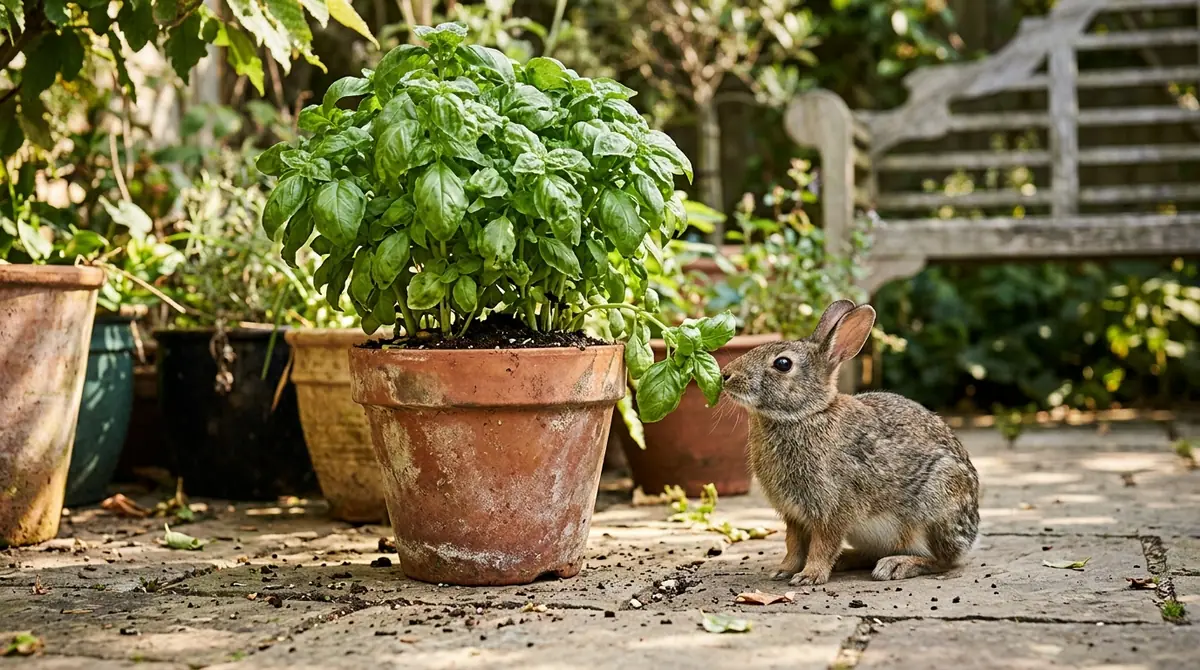
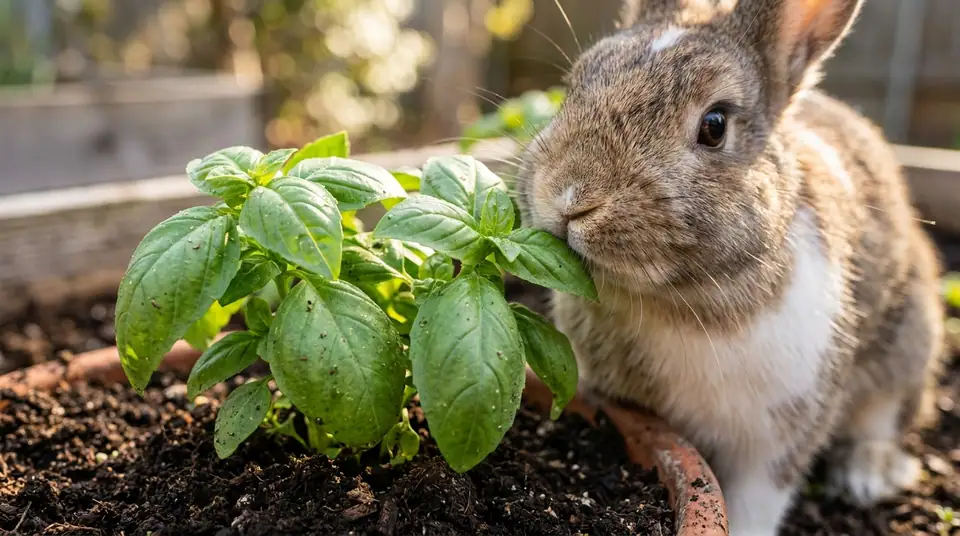
Small brown and white rabbit sniffing a fresh basil plant in a garden pot
Morphologically, sweet basil features square stems, opposite simple leaves that range from 1 to 4 inches (2.5 to 10 cm) in length, and terminal verticils of white to purplish flowers. The defining characteristic of Ocimum basilicum is its complex profile of volatile organic compounds—primarily linalool, eugenol, methyl chavicol (estragole), and cineole. These essential oils are manufactured in specialized glandular trichomes on the leaf surface as a natural defense mechanism against herbivores and pathogens.
For wild and domestic rabbits (Oryctolagus cuniculus), sweet basil is entirely non-toxic. The ASPCA and major veterinary agricultural databases confirm that sweet basil contains no compounds lethal to lagomorphs. However, the exact reason why rabbits target or reject basil comes down to individual palate and volatile concentration. While wild rabbits often nibble young, tender sweet basil leaves in a garden setting, the high concentration of aromatic essential oils means that many domestic rabbits will turn their noses up at a fresh sprig. If a rabbit does consume sweet basil, the essential oils and high fiber content require careful moderation. It should be treated strictly as an occasional culinary treat rather than a dietary staple, keeping portions to a few small leaves per week to prevent gastrointestinal upset or gas buildup in their sensitive cecums.
2. Essential Environmental & Care Requirements
Growing robust sweet basil requires mimicking its native tropical and subtropical understory origins. Getting these environmental parameters right ensures high leaf yields and healthy essential oil development. If you are timing your seasonal plantings, it helps to cross-reference our guide on when to start basil to ensure your seedlings emerge when soil temperatures are consistently safe.
Parameter
Optimal Condition
Common Mistake
Why It Matters
Soil Temperature
70°F to 85°F (21°C to 29°C)
Planting in cold soil below 60°F (15°C)
Cold soil causes root rot and severely stunts early seedling development.
Soil pH
6.0 to 7.5
Highly acidic soil below 5.5
Acidic conditions lock out vital macro-nutrients like calcium and magnesium.
Sunlight
6 to 8 hours of direct sun daily
Shading under taller canopy plants
Insufficient light reduces essential oil production, yielding bland leaves.
Watering Depth
1 inch (2.5 cm) per week
Frequent shallow surface watering
Shallow watering encourages weak, superficial root systems prone to drought.
Soil composition is critical for Ocimum basilicum. It demands rich, loamy, well-draining earth amended with compost. Waterlogged roots will quickly succumb to Fusarium oxysporum or Rhizoctonia root rot. When planning your layout, you can look at broader garden integrations, such as pairing herbs with root crops, referencing strategies similar to sweet potato companion plants: 8 best garden friends & 3 foes to avoid to maximize your raised bed polyculture efficiency.
💡 Pro-Tip: Never water sweet basil foliage late in the evening. Splashing water onto leaves combined with dropping nighttime temperatures invites downy mildew (Peronospora belbahrii), which can wipe out an entire crop in less than 48 hours. Always water at the base of the plant in the early morning hours.
Growing thick, lush sweet basil provides plenty of harvest for both your kitchen and your pets' occasional treats. Follow this sequential protocol for success:
Select and Prepare the Site: Choose a garden bed or container receiving at least 6 to 8 hours of direct sunlight. Work organic compost into the top 6 to 8 inches (15 to 20 cm) of soil to improve drainage and nutrient density.
Maintain Germination Conditions: Keep the soil consistently moist using a fine mist sprayer. Germination typically occurs within 7 to 14 days when ambient temperatures are maintained between 70°F and 75°F (21°C to 24°C).
Thin and Space Seedlings: Once seedlings reach 2 inches (5 cm) tall, thin them out so that final spacing is 8 to 12 inches (20 to 30 cm) apart, ensuring optimal air circulation between mature plants.
Pinch for Bushiness: When the main stem reaches a height of 6 inches (15 cm) and has at least 3 sets of true leaves, pinch off the central growing tip just above a node. This encourages lateral branching, doubling your leaf yield.
Harvest Strategically: Begin harvesting leaves once the plant is 8 inches (20 cm) tall. Always cut stems just above a pair of lower leaves rather than stripping individual leaves, which damages the plant architecture.
Even with meticulous care, sweet basil faces environmental and biological pressures. Understanding how to diagnose these issues preserves your harvest.
Leggy Stems and Sparse Leaves: This is almost always caused by inadequate light (less than 4 hours of direct sun). Move container-grown basil to a sunnier exposure or supplement indoor setups with full-spectrum LED grow lights for 12 hours daily.
Yellowing Lower Leaves: Typically points to overwatering or nitrogen deficiency. Allow the top 1 inch (2.5 cm) of soil to dry out completely between watering sessions, and side-dress with a balanced organic compost tea.
Blackened Stems at the Soil Line: Caused by damping-off fungi in cold, waterlogged soil. Discard infected plants immediately, sterilize containers with a 10% bleach solution, and ensure future plantings use sterile potting mix.
Chewed Leaves and Missing Stems: If you notice jagged, clean-cut missing foliage rather than fine skeletonized insect damage, you are likely dealing with mammalian herbivores. Cottontail rabbits and slugs are the primary culprits. While sweet basil is safe for rabbits to eat in small amounts, an unmanaged rabbit population will rapidly destroy your crop. Use physical barriers like 2-foot-tall (60 cm) chicken wire fencing buried 6 inches (15 cm) underground to block burrowing and jumping pests.
⚠️ Important Caution: Never feed your rabbit basil that has been treated with synthetic pesticides, systemic insecticides, or chemical fertilizers. The chemical residues concentrate in the volatile oils of the leaves and can cause severe systemic toxicity or fatal organ failure in small animals. Always wash home-harvested herbs thoroughly in cold water before offering them to pets.
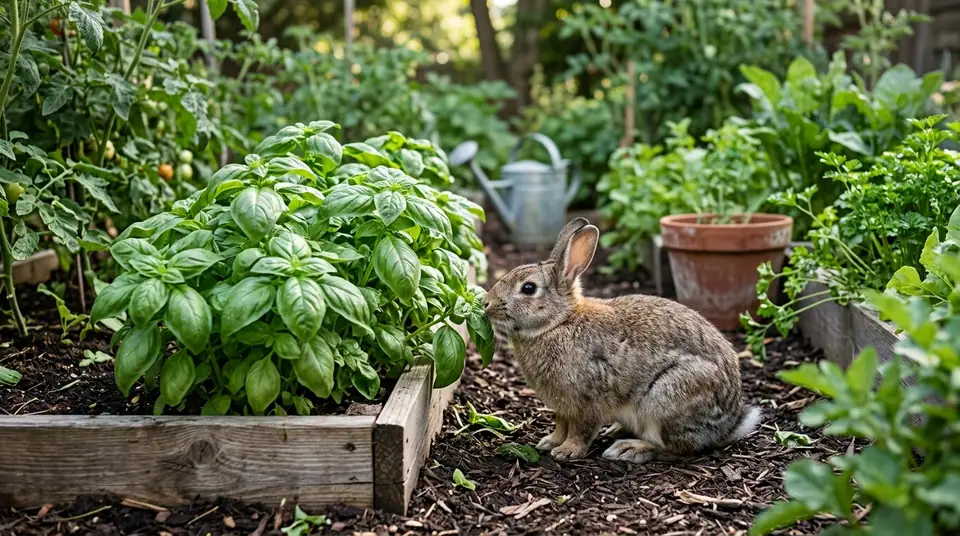
A small brown rabbit sitting by a fresh green basil plant in a garden bed
5. Frequently Asked Questions
Can domestic rabbits eat sweet basil every day?
No. Sweet basil should only be fed to domestic rabbits as an occasional, limited treat—no more than 2 to 3 small leaves once or twice a week. Because sweet basil is packed with strong essential oils and concentrated aromatic compounds, feeding it in large quantities can upset a rabbit’s delicate gastrointestinal flora and cause gas, bloating, or soft stools.
Are wild rabbits attracted to basil plants in the garden?
Yes. Wild eastern cottontails and jackrabbits will readily eat sweet basil, especially young, tender seedlings that lack the tougher, fully developed essential oil defenses of mature plants. If you find your garden basil plants mysteriously disappearing overnight, rabbits are one of the most common mammalian pests responsible for the damage.
Can rabbits eat the flowers of sweet basil?
Yes, sweet basil flowers are non-toxic to rabbits. However, flowering changes the chemical composition of the plant, driving energy away from leaf production and concentrating bitter compounds in the foliage and blooms. Most rabbits will find flowering basil less palatable, and letting basil flower will shorten the overall productive lifespan of your herb plants.
What parts of the sweet basil plant are safe for rabbits?
The leaves and tender green stems are entirely safe for rabbits to consume in moderation. Avoid feeding rabbits woody, thick brown stalks, as these pose a choking hazard and provide zero digestible nutritional value, potentially leading to gastrointestinal impaction if ingested in large quantities.
PlantSavvyWorld is an independent botanical education project. Articles are drafted with AI assistance, then edited and checked against university extension services, botanical garden collections and other published horticultural sources.