

Can Bunnies Have Basil
Written with AI assistance, edited and checked against horticultural sources.
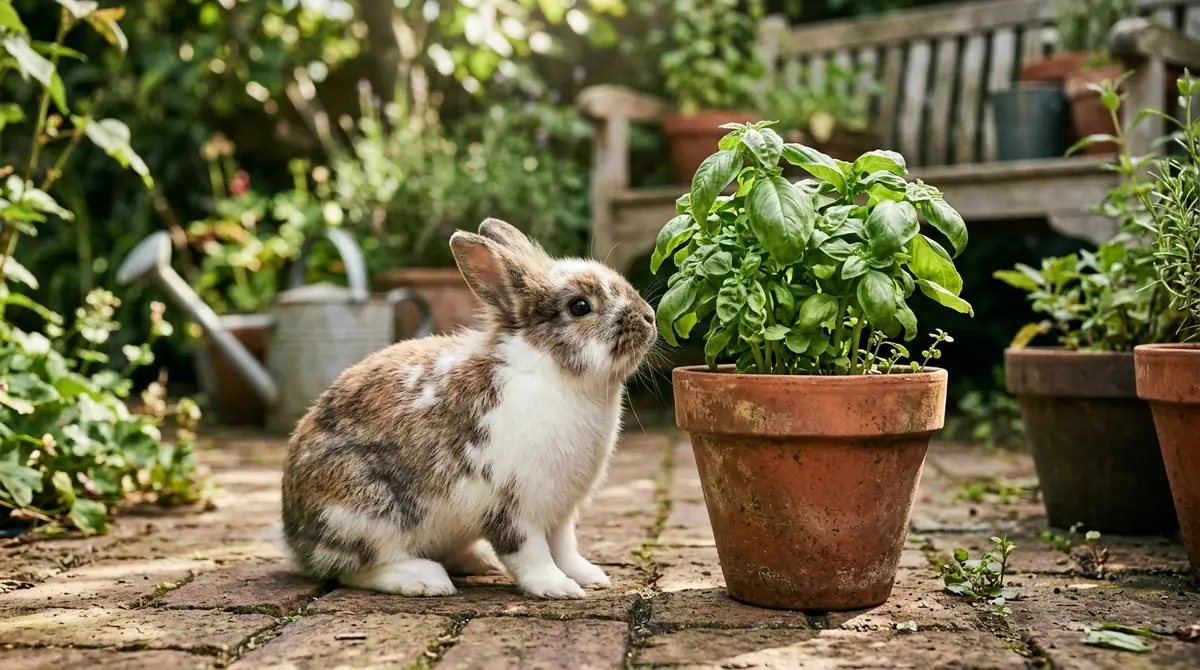
Last Tuesday morning, I walked out to my east-facing polytunnel with a pair of stainless steel shears to harvest a trug of Genovese basil (Ocimum basilicum) for the kitchen. Right as I snipped the terminal shoot, a flash of white-and-brown fur darted out from beneath the raised cedar beds. It was Barnaby, our resident 4-year-old Dutch rabbit, who had managed to slip past the lower wire mesh and was currently sitting comfortably inside a 12-inch (30.5 cm) deep container of damp seed-starting mix, blissfully chewing on a lower leaf of Ocimum basilicum.
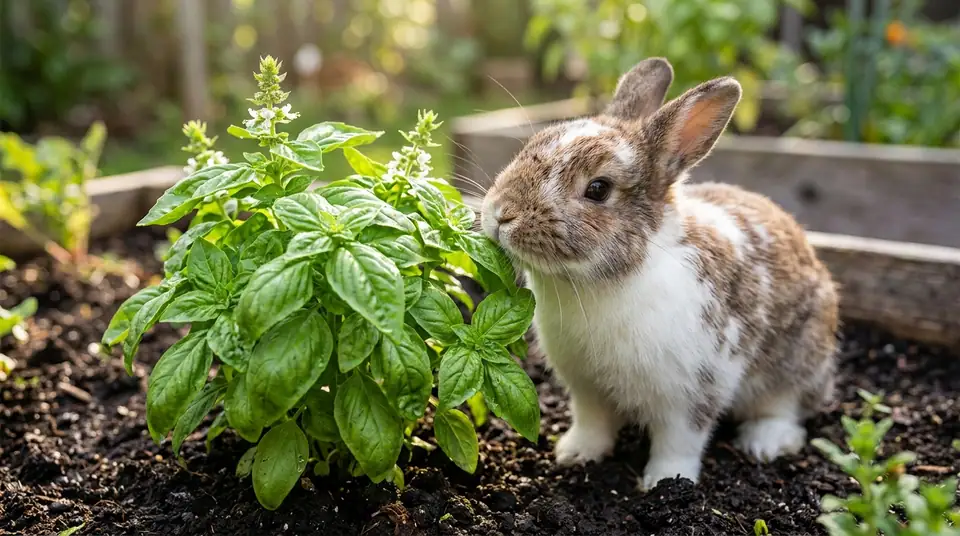
Whether you are growing lush culinary herbs in your backyard, looking into When to Start Basil, or wondering Does Basil Need Light to Germinate? Soil Depth & Sprouting Science, this guide provides an exhaustive look at keeping your garden and your rabbits safe and healthy.
1. Botanical Overview & Natural Habitat
Basil (Ocimum basilicum) belongs to the Lamiaceae family, a robust group of aromatic, square-stemmed plants that includes mint, rosemary, sage, and oregano. Native to tropical regions stretching from Central Africa to Southeast Asia, basil evolved under intense sunlight and consistent moisture conditions. Botanically, it is an annual herbaceous subshrub in temperate zones, though it can behave as a short-lived perennial in USDA Hardiness Zones 10 through 11.
The plant produces simple, decussate leaves—meaning they emerge in opposite pairs along the stem—packed with specialized epidermal structures called glandular trichomes. These tiny, hair-like glands synthesize and store volatile essential oils, including eugenol, linalool, and estragole, which give basil its unmistakable pungent aroma and sharp flavor profile.
In the wild, rabbits (Oryctolagus cuniculus) are obligate herbivores specialized for a high-fiber, low-calorie diet composed primarily of grasses, weeds, and woody browse. Their digestive tracts rely heavily on hindgut fermentation, where a specialized organ called the cecum houses a dense microbiome capable of breaking down tough structural carbohydrates like cellulose.
When a rabbit encounters a plant rich in volatile oils like basil, its physiological response is remarkably adaptable. Unlike dogs or cats, which can suffer severe hepatotoxicity from certain essential oils, domestic rabbits can process small amounts of aromatic herbs safely. Basil is entirely non-toxic to bunnies, meaning you do not need to panic if your pet sneaks a nibble off your indoor counter or outdoor raised bed. However, because basil lacks the fibrous structure of grass hays like timothy or orchard grass, it must be treated strictly as a botanical condiment rather than a dietary staple.
2. Essential Environmental & Care Requirements
If you are growing basil specifically to share as an occasional treat with your rabbit—or simply trying to keep your potted plants alive away from curious paws—you must replicate the plant's native tropical and subtropical microclimate. Basil refuses to thrive in mediocre conditions; it demands warmth, light, and well-draining soil.
| Parameter | Optimal Condition | Common Mistake | Why It Matters |
|---|---|---|---|
| Temperature | 70°F–85°F (21°C–29°C) | Exposing to temps below 50°F (10°C) | Cold halts metabolic processes and blackens foliage. |
| Soil pH | 6.0 to 7.5 | Highly acidic soil below 5.5 | Locks out essential micronutrients like calcium and magnesium. |
| Light Exposure | 6 to 8 hours of direct sun | Growing in deep shade | Reduces essential oil production, leading to bland, leggy plants. |
| Moisture Depth | Top 1 inch (2.5 cm) kept moist | Waterlogged, soggy root zones | Invites Fusarium wilt and root rot pathogens. |
Beyond these environmental baselines, soil texture is critical. Basil prefers a loamy, organic-rich medium with high biological activity. When designing herb gardens in landscapes frequented by domestic pets, always ensure your soil amendments are organic and free of synthetic systemic pesticides. Rabbits have sensitive mucous membranes and metabolize chemical residues far faster than humans do. For comprehensive guidelines on safe herb cultivation practices, consult the Royal Horticultural Society Growing Guide.
💡 Pro-Tip: If you grow basil indoors on a windowsill, rotate your containers 90 degrees every 48 hours. Because indoor light hits from a single directional angle, unilateral phototropism causes stems to stretch weakly toward the glass, creating structural instability that makes it easier for investigating bunnies to knock the pots right off the ledge.
3. Step-by-Step Cultivation, Feeding & Propagation
Growing an abundant supply of fresh basil for both your kitchen and your pets is straightforward if you follow a precise horticultural protocol. Here is how to take your basil from seed to harvestable forage safely:
- Select Quality Seed and Germination Medium: Purchase certified disease-free Ocimum basilicum seeds. Fill seed-starting trays with a sterile, fine-textured peat and perlite mix, ensuring the pH sits right around 6.5.
- Sow at the Correct Depth: Press the seeds lightly into the surface of the medium at a depth of no more than 0.25 inches (0.6 cm). Because basil seeds require adequate light exposure to trigger optimal enzyme activity and maximize germination percentages, never bury them deep in heavy soil.
- Maintain Warmth and Moisture: Place the trays in an environment where ambient temperatures remain consistently between 70°F and 75°F (21°C and 24°C). Mist the surface daily with a fine-spray water bottle to keep the top layer moist without washing the tiny seeds away. Emergence typically occurs within 7 to 14 days.
- Prick Out and Transplant: Once seedlings develop their first true set of leaves—usually around 21 days post-sowing—gently pot them up into individual 4-inch (10 cm) biodegradable pots using a rich, compost-amended potting soil.
- Pinch for Bushiness: When the main stem reaches a height of 6 inches (15 cm) and displays at least 4 pairs of true leaves, use clean pruning shears to pinch out the terminal growing tip right above a node. This breaks apical dominance, forcing lateral buds to break and creating a dense, multi-branched bush rather than a single tall stem.
- Harvest for Your Rabbit: Once the plant is well-established at 10 to 12 inches (25.4 to 30.5 cm) tall, harvest leaves by cutting just above a pair of lower side shoots. Wash the leaves thoroughly in cold water to remove any lingering soil particles or dust before offering a single leaf or two to your rabbit as a high-value treat. For further reading on plant care and safety standards, review resources provided by the NC State Extension Gardener program.
⚠️ Important Caution: Never feed your rabbit basil that has been treated with chemical fertilizers, synthetic insecticides, or systemic fungicides. Furthermore, avoid feeding wilted, yellowed, or moldy basil leaves, as decaying organic matter can harbor harmful bacteria and fungi that disrupt a rabbit's delicate gastrointestinal flora.
4. Common Problems, Pests & Troubleshooting
Even experienced growers run into hurdles when cultivating lush culinary herbs. When managing a garden that interacts with pets, diagnosing issues quickly prevents plant loss and keeps your furry foragers safe.
- Fusarium Wilt (Fusarium oxysporum f. Sp. basilicum): This soil-borne fungal pathogen enters the vascular system of the plant, causing leaves to yellow, twist, and drop off while stems turn brown internally.
- Solution: Remove and destroy infected plants immediately. Never compost diseased material if you plan to use the compost in pet-accessible garden beds. Practice a strict 3-year crop rotation schedule in raised beds.
- Downy Mildew (Peronospora belbahrii): Characterized by yellow chlorotic patches on the upper leaf surfaces and a grayish, fuzzy spore mass underneath. It thrives in high-humidity indoor environments or damp greenhouses.
- Solution: Increase air circulation using oscillating fans, water strictly at the base of the plant in the early morning hours rather than overhead, and space container plants at least 8 to 12 inches (20.3 to 30.5 cm) apart.
- Aphids and Fungus Gnats: Soft-bodied sap-sucking insects that cluster on tender new growth or thrive in over-saturated seed-starting soils.
- Solution: Introduce beneficial nematodes or apply pure, food-grade insecticidal soap sprays sparingly. Always wash harvested leaves thoroughly under running water before offering them to your rabbit to eliminate any residual insect debris.
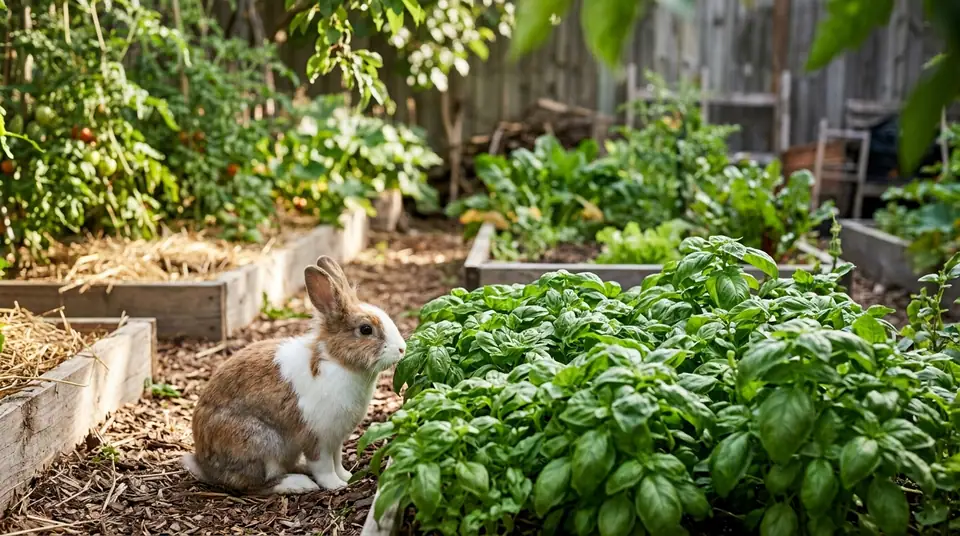
A brown and white bunny sitting next to lush green basil plants in a garden bed
5. Frequently Asked Questions
Can rabbits eat basil leaves every day?
No, basil should not be fed to rabbits on a daily basis. Because it is high in calcium and packed with potent essential oils, feeding it daily can lead to mineral imbalances, urinary sludge, or digestive upset. Offer it strictly as an occasional treat—no more than one or two leaves, two to three times per week.
Can bunnies eat basil stems and flowers?
Yes, rabbits can safely consume the tender green stems and flowering tops of the basil plant. However, as basil matures and transitions into the flowering stage, the stems become woody and fibrous, which makes them less palatable and harder for rabbits to digest efficiently.
What varieties of basil are safest for rabbits?
All culinary varieties of Ocimum basilicum—including Genovese, Thai basil, lemon basil, and cinnamon basil—are non-toxic to rabbits. Genovese and sweet basil are generally the most palatable and well-tolerated due to their milder flavor profiles compared to highly pungent or spicy specialty cultivars.
What should I do if my rabbit eats too much basil?
Monitor your rabbit closely for signs of gastrointestinal distress, such as lethargy, decreased appetite, abnormal droppings, or bloating. Ensure unlimited access to fresh timothy hay and clean water to help move any excess food through their digestive tract. If symptoms persist for more than a few hours, consult an exotic animal veterinarian immediately.
Related Guides
- Can Bunnies Eat Basil
- Can Rabbits Have Basil
- Can Rabbits Eat Fresh Basil
- Can Rabbits Eat Sweet Basil
- When to Start Basil
📋 Table of Contents ▼ Click to expand
Tags:
Keep reading
🌿 Related Plants You Might Like






PlantSavvyWorld
Editorial team
PlantSavvyWorld is an independent botanical education project. Articles are drafted with AI assistance, then edited and checked against university extension services, botanical garden collections and other published horticultural sources.