Written with AI assistance, edited and checked against horticultural sources.
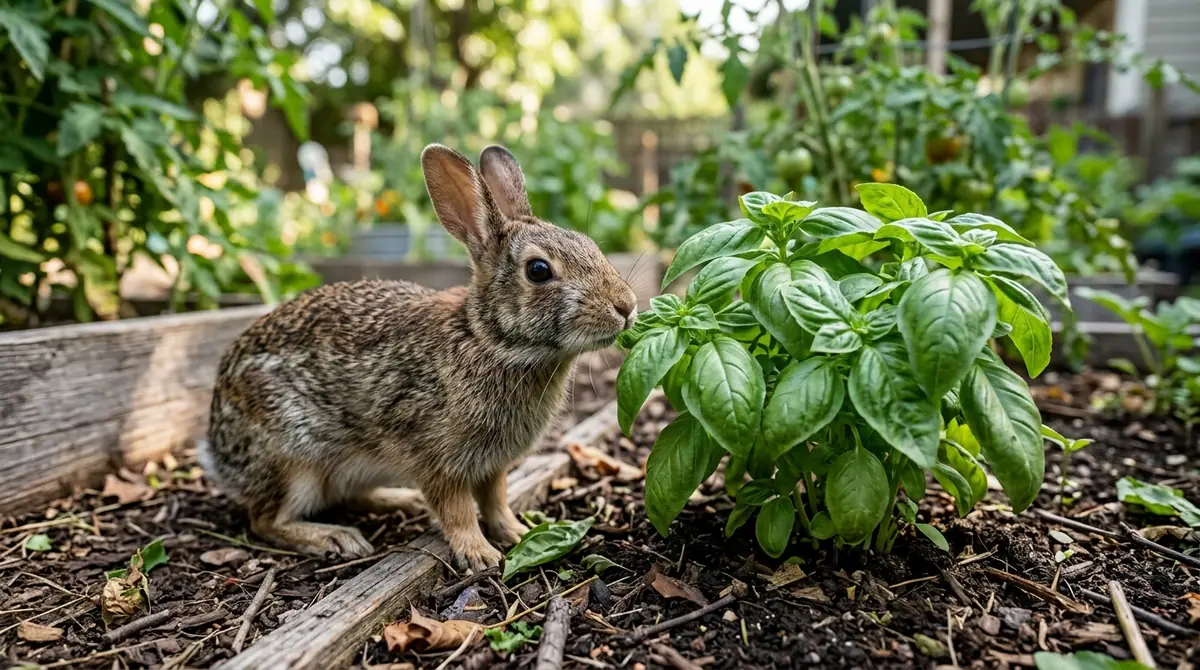
Stepping out into trial gardens one brisk morning last May, I found that a family of wild cottontails had bypassed my rows of tender lettuce and completely stripped a pristine patch of Genovese basil down to bare, bleeding stems. My first instinct was frustration, but my second was botanical curiosity: given the pungent essential oils in Ocimum basilicum, why were rabbits actively seeking out an herb that humans cultivate precisely because its chemical defenses are so overwhelmingly aromatic? For readers balancing a passion for culinary herbs with backyard wildlife management, the core question is simple yet nuanced: can rabbits eat fresh basil?
The short answer is yes, rabbits can eat fresh basil safely, but with strict nutritional caveats regarding volume, essential oil concentrations, and calcium content. Basil is non-toxic to lagomorphs, yet its high concentration of volatile compounds like estragole and linalool means it should be treated as an aromatic culinary garnish or medicinal treat rather than a dietary staple. In this guide, we will examine the botanical profile of basil, evaluate its safety and nutritional impact on rabbits, and explore how you can successfully cultivate this herb while managing garden wildlife using humane strategies detailed in our guide on How to Keep Rabbits Out of the Garden 5 Humane Solutions That Work.
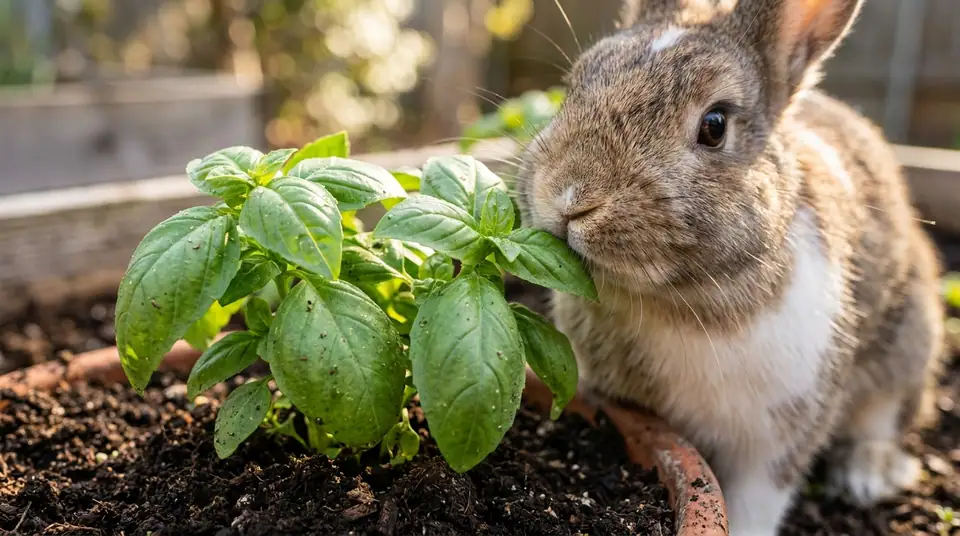
Small brown and white rabbit sniffing a fresh basil plant in a garden pot
1. Botanical Overview & Natural Habitat
Basil belongs to the Lamiaceae family, commonly known as the mint or deadnettle family. Morphologically, Ocimum basilicum is characterized by distinct square stems, opposite decussate leaf arrangements, and specialized glandular trichomes that store volatile aromatic oils. These secondary metabolites—primarily terpenes, phenylpropanoids, and essential oils—evolved precisely to deter herbivory by insects and mammals. Yet, domestic and wild rabbits (Sylvilagus floridanus) often bypass these bitter chemical deterrents, attracted by the high moisture content, tender vascular tissue, and micronutrient profile of the fresh leaves.
In its native tropical and subtropical habitats spanning Central Africa to Southeast Asia, basil grows as a tender perennial subshrub, though it is cultivated globally as an annual in temperate zones. The root system is moderately fibrous, anchoring the plant while relying on a delicate balance of moisture and aeration. When considering whether your pet rabbit can graze on your harvest, you must understand that wild rabbits eat a wide array of foraged greens, but their digestive tracts are finely tuned to high-fiber, low-sugar, low-calcium roughage like grass hays. Basil, while packed with vitamins A, K, and C, is relatively high in calcium and concentrated aromatic oils that can disrupt a rabbit's delicate cecal flora if overconsumed. To master the timing of when to plant your crops before any furry foragers arrive, consult our guide on When to Start Basil.
2. Essential Environmental & Care Requirements
Growing healthy, vibrant basil requires strict adherence to specific environmental parameters. Because stressed plants produce higher concentrations of bitter essential oils—which ironically might still attract determined rabbits while altering the palatability—maintaining optimal growing conditions is vital for both plant health and culinary quality.
Parameter
Optimal Condition
Common Mistake
Why It Matters
Temperature
70°F to 85°F (21°C to 29°C)
Exposing seedlings to temperatures below 50°F (10°C)
Cold shock stunts root development and turns foliage black or necrotic.
Soil pH
6.0 to 7.5
Planting in highly acidic soils below 5.5
Locks out essential macronutrients like phosphorus and magnesium, leading to chlorosis.
Light Exposure
6 to 8 hours of direct sunlight daily
Shading plants in northern exposures or dim indoor corners
Reduces photosynthesis and lowers leaf surface area, yielding spindly stems.
Watering Depth
Moisten soil to a depth of 6 inches (15 cm)
Shallow, daily sprinkling that wets only the top surface
Encourages weak, shallow root systems instead of deep, drought-tolerant anchorage.
Basil requires well-draining loam amended with organic compost. Water your plants deeply whenever the top 1 inch (2.5 cm) of soil feels dry to the touch, ideally early in the morning to prevent fungal pathogens like Fusarium wilt from establishing on the foliage. For a deeper scientific dive into how light interacts with seed germination before the growing phase even begins, review our analysis on Does Basil Need Light to Germinate? Soil Depth & Sprouting Science.
Whether you are growing basil for your kitchen table or sharing a modest leaf with a pet bunny, establishing a robust crop requires a methodical approach. Follow this numbered step-by-step sequence to cultivate high-yield, healthy basil plants:
Select and Prepare the Site: Choose a garden bed or container that receives a minimum of 6 hours of direct sunlight daily. Work organic compost into the top 8 inches (20 cm) of soil to improve drainage and nutrient retention.
Sow the Seeds: Plant basil seeds at a shallow depth of 0.25 inches (0.6 cm). Tamp the soil lightly over the seeds to ensure good seed-to-soil contact, keeping in mind that basil seeds benefit from a touch of light to trigger optimal germination.
Maintain Moisture and Heat: Keep the seedbed evenly moist using a fine mist sprayer. Maintain ambient temperatures between 70°F and 75°F (21°C to 24°C) to encourage uniform sprouting within 7 to 14 days.
Thin and Space: Once seedlings develop their first true set of leaves, thin them out to a spacing of 8 to 12 inches (20 to 30 cm) apart to ensure adequate air circulation and prevent fungal outbreaks.
Pinch for Bushiness: When the main stem reaches a height of 6 inches (15 cm), pinch out the terminal growing tip just above a set of lateral leaves. This encourages branching and doubles your harvest potential.
Harvest Strategically: Harvest leaves continuously by snipping stems just above a leaf node. Never harvest more than one-third of the plant at a single time to maintain its photosynthetic capacity.
💡 Pro-Tip: If you are growing basil outdoors in an area populated by wild rabbits, do not rely on the plant's natural scent to repel them. While humans find the volatile oils intensely aromatic, local lagomorphs often develop a taste for sweet basil cultivars like Genovese or Thai basil, treating them as gourmet treats. Physical barriers remain your absolute best defense.
4. Common Problems, Pests & Troubleshooting
Cultivating Ocimum basilicum is generally straightforward, but several environmental and biological stressors can derail your harvest.
Leaf Wilting and Stem Rot: Caused primarily by Fusarium oxysporum, a soil-borne fungus that clogs the plant's vascular system. Prevent this by practicing crop rotation and ensuring your soil drains freely. Never let basil sit in stagnant waterlogged conditions.
Nutrient Deficiencies: Interveinal chlorosis (yellowing between the leaf veins) typically points to a nitrogen or magnesium deficiency. Top-dress your soil with aged vermicompost or apply a balanced, organic liquid fertilizer diluted to half strength every 14 days.
Foliar Pests (Aphids and Whiteflies): These sap-sucking insects congregate on the undersides of tender basil leaves, leaving a sticky honeydew residue. Introduce beneficial predatory insects such as ladybugs, or spray the foliage gently with an organic potassium salts of fatty acids solution.
Wildlife Grazing: When rabbits or deer treat your herb garden as a personal salad bar, visual and olfactory deterrents rarely work long-term. For authoritative guidance on biological pest management and plant protection standards, consult the Royal Horticultural Society (RHS) resource portal. Additionally, for comprehensive university-backed research on sustainable vertebrate pest control methods, review the publications available through the University of California Agriculture and Natural Resources (UC ANR) catalog.
⚠️ Important Caution: Never feed your pet rabbit basil that has been treated with systemic pesticides, synthetic insecticides, or chemical fertilizers. These toxic compounds are readily absorbed into the plant's vascular system and can cause severe gastrointestinal distress, organ failure, or neurological damage in small herbivores. Always wash homegrown or store-bought organic basil thoroughly in cool water before offering it as a treat.
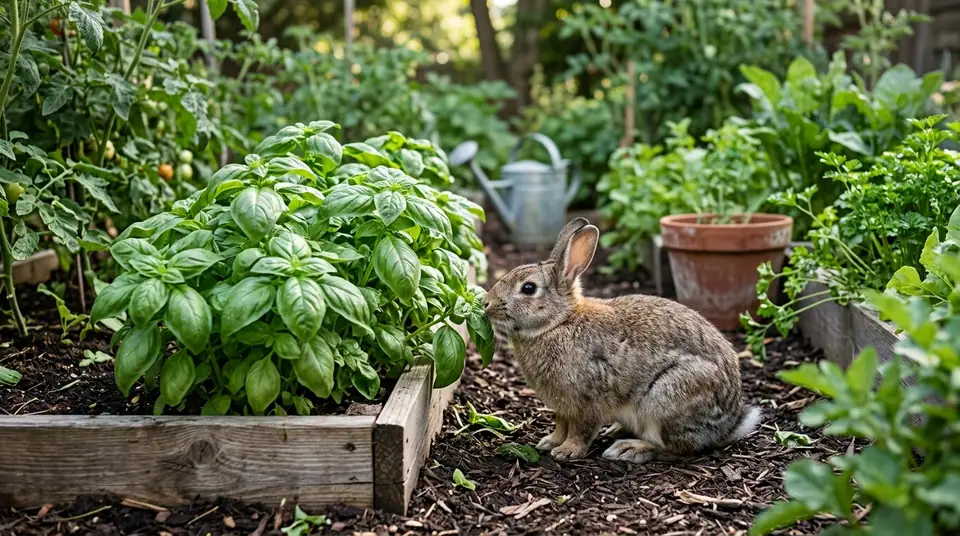
A small brown rabbit sitting by a fresh green basil plant in a garden bed
5. Frequently Asked Questions
Can pet rabbits eat sweet basil every day?
No, pet rabbits should not eat sweet basil every day. Basil is considered an aromatic herb and should be offered only as an occasional treat—no more than one or two small leaves two to three times a week. Feeding too much basil can upset the delicate balance of volatile oils in their digestive tract and contribute excessive calcium, which increases the risk of urinary sludge or bladder stones in adult rabbits.
Are wild rabbits immune to the strong scent of basil?
Wild rabbits are not immune to basil's scent, but their palate varies significantly based on individual preference and food availability. While the strong essential oils act as a deterrent for many animals, hungry wild rabbits frequently ignore the aromatic warnings and consume fresh basil leaves down to the dirt, especially when tender spring growth emerges.
Can rabbits eat dried or flowering basil?
Rabbits should not eat dried basil, and flowering basil should be avoided as well. Dried herbs have a concentrated level of essential oils and lack the vital water content of fresh greens, making them far too harsh for a rabbit's sensitive gut. Flowering basil undergoes a chemical shift where the leaves become bitter, woody, and tough, rendering them unpalatable and hard to digest.
What should I do if my rabbit ate a whole basil plant?
If your indoor pet rabbit managed to escape its enclosure and consume an entire potted basil plant, monitor them closely over the next 24 hours. Watch for signs of gastrointestinal stasis, such as lethargy, refusal to eat, teeth grinding, or a lack of fecal output. Ensure they have continuous access to fresh timothy hay and clean water, and contact your exotics veterinarian immediately if digestive slowdown occurs.
PlantSavvyWorld is an independent botanical education project. Articles are drafted with AI assistance, then edited and checked against university extension services, botanical garden collections and other published horticultural sources.